
Operations · Engineering · Trends
Hands-on playbooks, product updates and cross-border insights from the CCloudPhone team.

Cloud Phone Anti-Association for Cross-Border E-Commerce: Fingerprint Isolation Alone Isn't Enough — IP and Network Layers Must Be Done Together
Cloud phones do a great job of isolating device fingerprints for cross-border e-commerce sellers running multiple accounts. But if every account still logs in through the same exit IP, the risk of account association remains high. This article explains the three layers platforms use to detect linked accounts, reveals four common network-layer mistakes that quietly undo fingerprint isolation, and lays out the essential IP and network measures: one account per IP, IP quality, environment consistency, and long-term stability. Combine the device, network, and behavior layers to build a complete anti-association setup for your store accounts.

ARM Physical Board Cloud Phones vs Containerized Cloud Phones: The Real Difference Between Hardware Isolation and Shared Kernel
Cloud phones on the market follow two main technical routes: ARM physical boards and containerization. In the physical board approach, each cloud phone maps to a real ARM board with an independent kernel and hardware-level isolation, delivering authentic device parameters and stable long-term performance. The containerized approach spins up large numbers of Android instances on a single server that share one kernel — high density and low cost, but weaker isolation and stability. This article compares the two across architecture, kernel mechanics, device authenticity, performance stability, and use cases, so you can understand what truly separates them and pick the cloud phone solution that fits your business.

Static vs Dynamic IP on Cloud Phones: Real Test Data on Account Survival Rates
With identical devices and identical daily routines, the IP alone changed 30-day account survival rates by nearly 20 percentage points. We ran a controlled test with 400 freshly registered accounts in three groups: dedicated static IP reached a 92.1% survival rate, standard dynamic IP 75.0%, and frequently rotated dynamic IP only 68.3%. This article breaks down the full test methodology, the risk-control events behind the numbers, and practical advice on choosing between static and dynamic IPs for different account farming scenarios. The gap opened within the first week, when risk-control screening is at its strictest.
Cloud Phone Multi-Instance IP Isolation: The Complete Pipeline from Proxy Entry Configuration to Independent Network Egress
Running multiple accounts on cloud phones? IP is the core signal risk-control systems use to link accounts. This guide breaks the complete isolation pipeline into three nodes — proxy entry configuration, in-instance traffic binding, and independent network egress — compares four common proxy types, and walks through a six-step setup on ChangChang Cloud Phone (ccloudphone) plus four pre-launch verifications. Learn to avoid shared proxies, DNS leaks and unstable IPs, and build a true one-device-one-IP multi-account matrix.
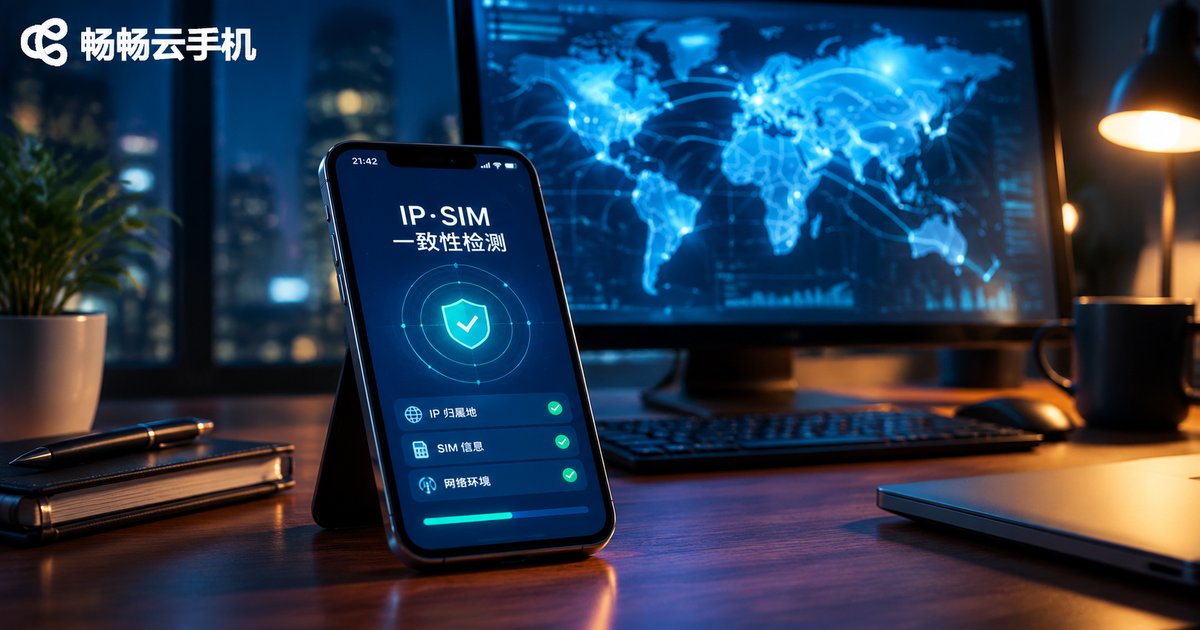
Cloud Phone Exit IP and SIM Operator Mismatch: Risk Triggers and a Consistency Checklist
Cloud phone account safety is never just about changing your IP. Risk control systems cross-check your exit IP geolocation, SIM carrier codes (MCC/MNC), phone number region, timezone, language, and location data. When the IP and SIM information contradict each other — a US exit IP paired with a Chinese carrier SIM, for example — platforms may escalate verification, throttle reach, freeze payments, or ban accounts outright. This article breaks down exactly how these checks work, lists the most common mismatch scenarios with risk levels, and gives you a 10-point consistency checklist to run before launching any account, plus how ccloudphone helps make environment consistency the default.

What Is IP-Based Simulation in Cloud Phone Proxy Settings? Geo, Timezone, Language and SIM Linkage Explained
In cloud phone proxy settings, IP-based simulation makes the entire device environment follow your proxy IP automatically: the IP's geolocation drives device location, timezone, system language and SIM carrier details, so the cloud phone behaves like a genuine local device inside and out. This article explains how the geo-timezone-language-SIM linkage works step by step, why it matters far more than simply changing an IP, and where it delivers the most value, from cross-border e-commerce stores to overseas social media accounts and app localization testing. You will also learn how to enable the feature in one place with ccloudphone and keep every device profile consistent.
One Proxy List per Cloud Phone or a Shared Proxy Pool? Choosing the Right IP Strategy for Multi-Account Anti-Association
When running multiple cloud phone instances, your IP strategy can make or break account anti-association. This article compares two approaches — binding one dedicated proxy list to each cloud phone versus letting all devices share one proxy pool — across stability, cost, and risk-control performance. The core weakness of a shared pool is uncontrollable IP purity, since addresses may carry the reputation of other users' behavior, while dedicated proxies are limited by higher cost and single points of failure. The recommended answer is a tiered hybrid: static dedicated IPs for core accounts, small same-city rotation lists for regular accounts, and a shared pool with session stickiness for warming and testing accounts. Four implementation rules and a FAQ are also included.
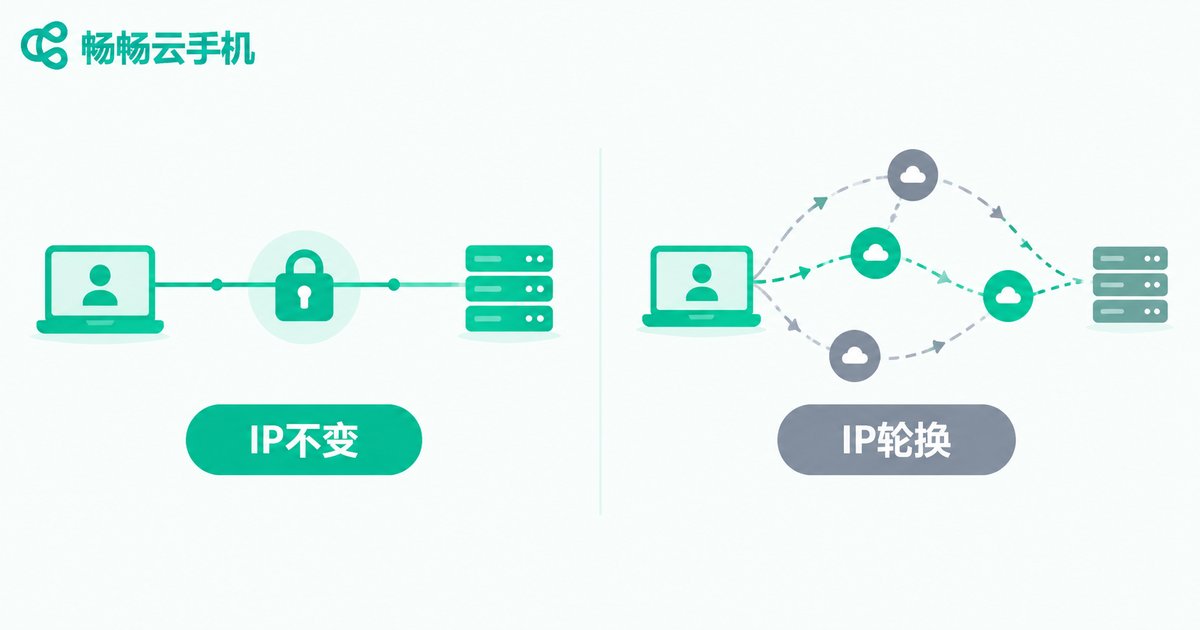
How to Set Up a Sticky Proxy on a Cloud Phone: Keep the Same IP Throughout a Session
This guide walks you through setting up a sticky proxy on a cloud phone so your exit IP stays unchanged for the entire session. It starts with the difference between sticky and rotating proxies and explains why multi-account operations, game AFK farming, and long-running tasks demand session-stable IPs. Using ChangChang Cloud Phone (ccloudphone) as an example, it demonstrates every step: collecting proxy credentials, entering the host and port, configuring the session ID in the username, saving the settings, and verifying IP continuity with a simple test. A troubleshooting table covers failed connections, unexpected IP rotations, and slow speeds, while practical tips such as assigning one session ID per device help you build a stable, risk-resistant network environment for your cloud phone workflow.

Cloud Phone Proxy IP: 4G/5G Mobile Proxy or Datacenter Proxy? Real-Test Risk Control Pass Rate Comparison
Should you use a 4G/5G mobile proxy or a datacenter proxy for your cloud phones? We ran a 7-day controlled test on an identical batch of cloud phones to find out. Mobile proxies achieved a 92% first-attempt registration pass rate and an 89% seven-day account survival rate, clearly outperforming datacenter proxies at 71% and 64%. This article breaks down why the two proxy types behave so differently in risk control systems, presents the full test data, and offers scenario-based recommendations plus practical tips like the one-device-one-IP rule, so you can spend your proxy budget where it matters most and keep more accounts alive.

What Happens Without Dedicated Proxies on Cloud Phones: ASN and TCP Fingerprint Clustering Risks of Shared Datacenter Links
Without dedicated proxies, every cloud phone instance in the same datacenter shares one network path: the same exit IP, the same datacenter ASN, and nearly identical TCP fingerprints. Modern risk-control systems cluster accounts by these signals, so when one account gets flagged, the whole cluster can be suspended together. This article explains in plain language how ASN clustering and TCP fingerprint clustering work, how risks stack across the IP, ASN, fingerprint and behavior layers, and why one-device-one-IP isolation matters, plus a practical checklist for binding dedicated proxies to every cloud phone.
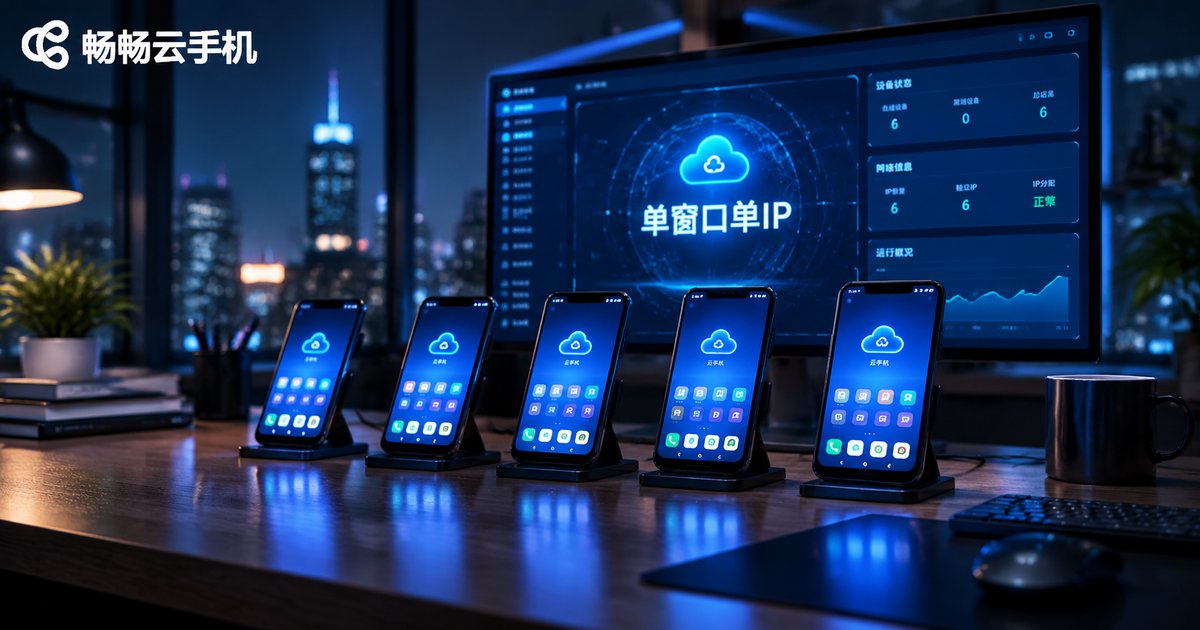
How to Achieve Single Window Single IP on Cloud Phones: Independent Network Exit and Proxy Pool Auto-Assignment
This article explains how to achieve single window single IP on cloud phones through two core mechanisms: independent network exits and proxy pool auto-assignment. Independent exits bind each cloud phone instance to a dedicated network channel for maximum stability, while a proxy pool automatically distributes IPs from a shared resource pool using fixed binding, scheduled rotation and failover strategies, ideal for large-scale operations. You will also find a side-by-side comparison table, a four-step implementation guide, common pitfalls to avoid, and practical advice on choosing a cloud phone service such as ChangChang Cloud Phone (ccloudphone), helping you build a securely isolated environment for multi-account operations.
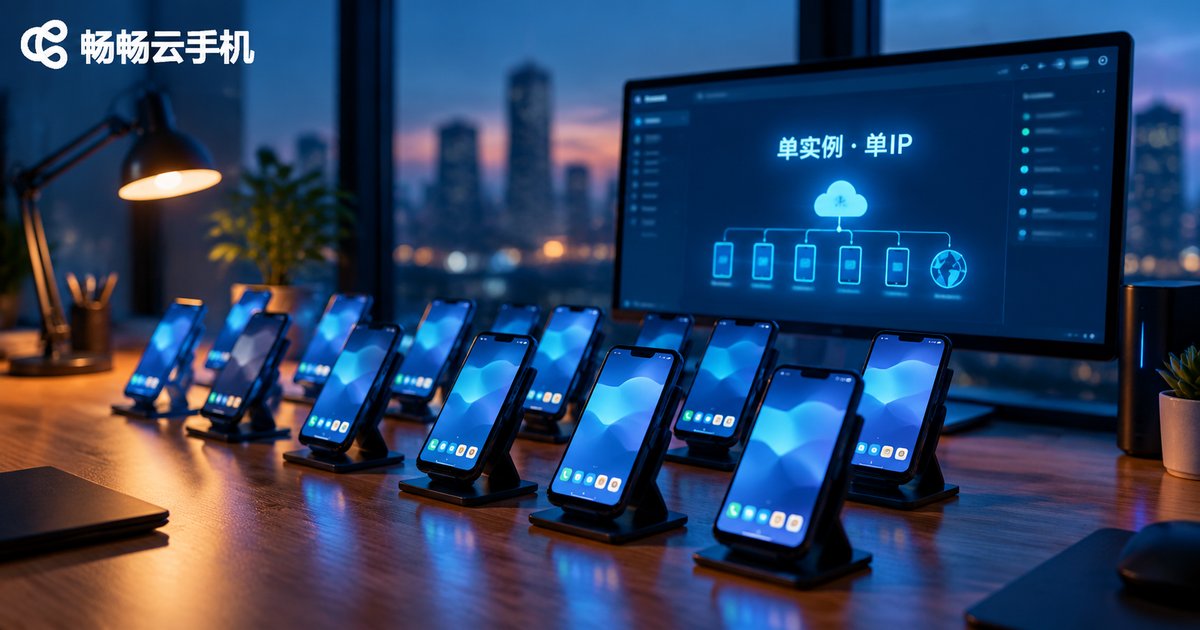
How to Bind a Purchased Static IP to a Specific Cloud Phone Instance: Complete Single-Instance Single-IP Tutorial
Bought a static IP for your cloud phone but not sure how to attach it to the right instance? This step-by-step tutorial walks you through the entire single-instance, single-IP binding process: what to prepare before binding, the four-step console workflow, how to verify the new exit IP is live, and how to troubleshoot the most common binding failures. You will also learn what happens to your IP when you replace or reset an instance, plus practical habits for managing dozens of IPs in batch operations. Both beginners and experienced matrix operators can follow along and give every cloud phone instance its own stable, dedicated exit IP.