
Operations · Engineering · Trends
Hands-on playbooks, product updates and cross-border insights from the CCloudPhone team.
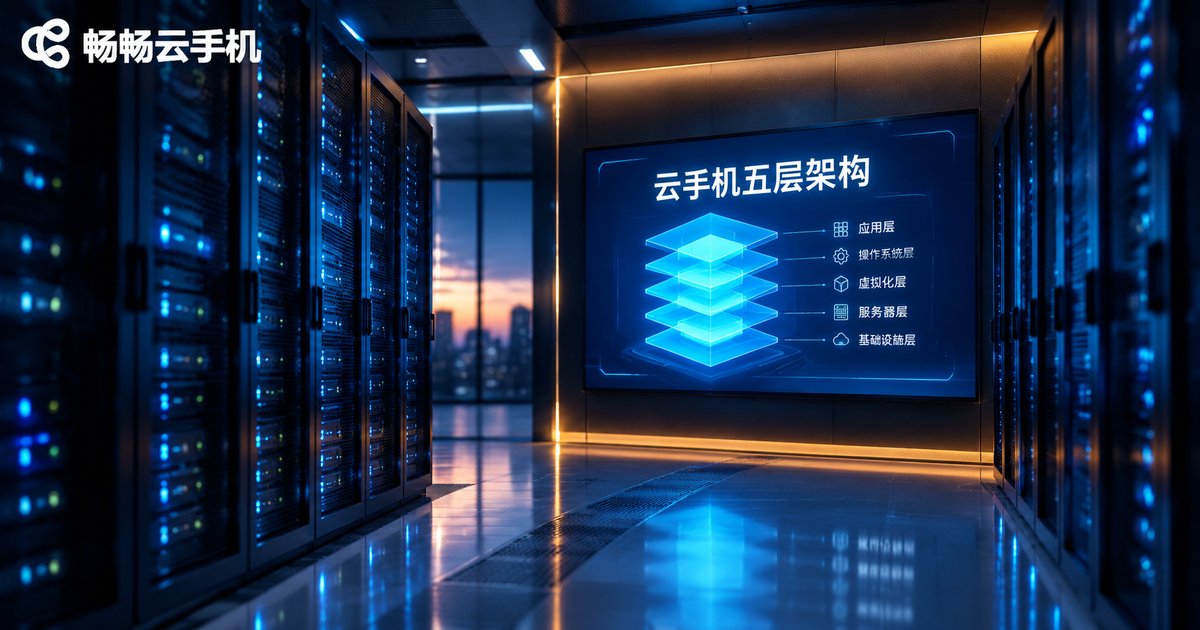
Cloud Phone Five-Layer Architecture Explained: Physical Boards, Android Instances, Parameter Layer, Streaming Layer, and Control Layer
Many people think a cloud phone is just a remote desktop running Android, but behind it lies a carefully layered system. This article dissects the full cloud phone stack from the bottom up—physical boards, Android instances, the parameter layer, the streaming layer, and the control layer—explaining what each layer does, which technologies it relies on, and how the layers cooperate end to end. It closes with a practical framework you can use to judge whether a cloud phone service is stable, smooth, and true to a real device before you commit to it.

ARM Bare-Metal vs Container Cloud Phones: A Selection Guide Based on Target Platform Detection Depth
Choosing between ARM bare-metal cloud phones and container-based cloud phones is less about price and more about how deeply your target platform inspects its running environment. This guide breaks detection depth into three levels—basic parameter checks, fingerprint cross-validation, and deep risk-control analysis—and explains what each level demands from the underlying architecture. You get a practical three-step self-test to measure how aggressively your target app screens devices, a decision table mapping each detection level to the right technical route, and a total-cost framework that counts account survival rather than unit price alone. Whether you run bulk automation or long-term multi-account operations, use this guide to match architecture to real risk and avoid costly batch account failures.

Root Cause of Mass Bans on Containerized Cloud Phones: Kernel-Level Information Penetration and Cluster Fingerprinting
Mass bans on containerized cloud phones are rarely accidental. The root cause lies in two overlapping mechanisms: kernel-level information penetration and cluster fingerprinting. Because containerized instances share the host kernel, low-level data diverges from real devices and exposes the environment to risk-control detection. Meanwhile, similar IP ranges, device fingerprints, and synchronized behavior let risk-control systems cluster the accounts and punish them collectively. This article breaks down the full ban transmission chain and offers four practical selection checks — instance isolation, parameter consistency, network quality, and behavior scheduling — to help you avoid losing an entire batch of accounts overnight. Understanding these mechanisms is the first step toward keeping multi-account operations stable.

Cloud Phone ADB and Root Are Open — Why Does Play Integrity Still Fail?
Many users assume that once a cloud phone grants ADB and root access, passing Google's Play Integrity check should be easy — yet the device integrity verdict still fails. This article explains what Play Integrity actually verifies on Google's server side, why root access alone changes nothing about the verdict, and the four most common roadblocks on cloud phones: uncertified device fingerprints, Play Protect certification, leftover emulator signals, and outdated GMS components. You also get a practical five-step troubleshooting checklist, a set of handy ADB commands, and an honest look at how ChangChang Cloud Phone (ccloudphone) helps you build a cleaner testing environment. If you want to understand why root does not equal pass and how to fix your setup step by step, this guide is for you.
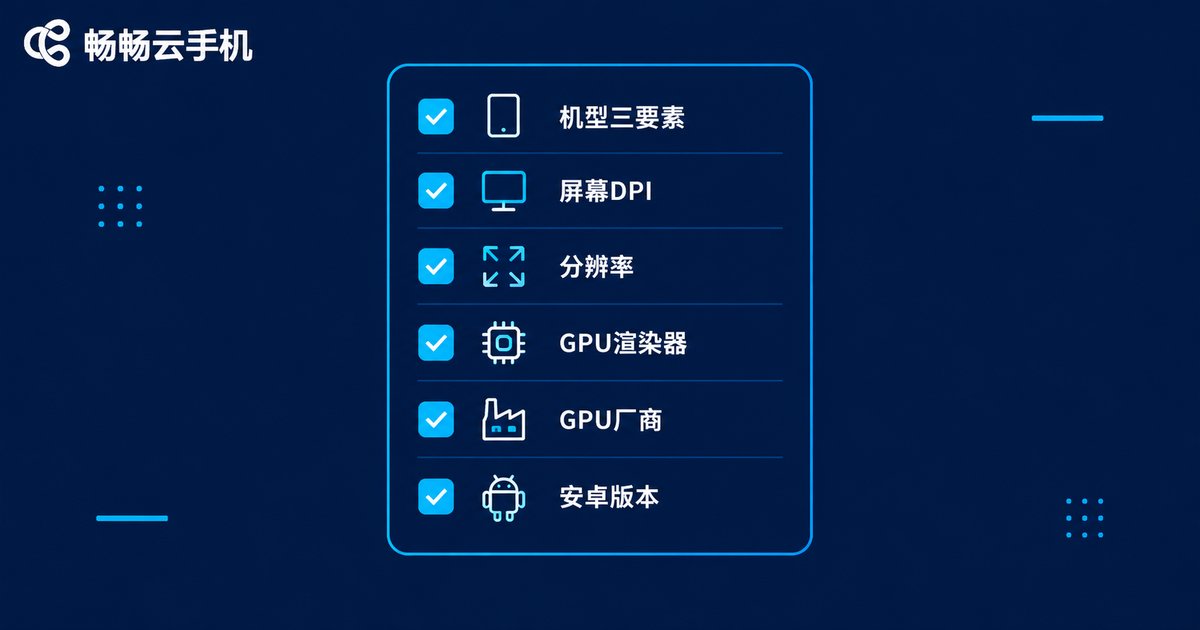
Changed the Model but DPI and GPU String Didn't Follow! Cloud Phone Parameter Consistency Checklist
Changed your cloud phone's device model but forgot to sync the DPI and GPU renderer string? Parameter inconsistency is one of the fastest ways for app risk-control systems to flag a simulated environment. This guide provides a complete consistency checklist covering the device model trio, screen DPI, resolution, and GPU renderer strings. Learn how to verify every parameter in three steps using hardware detection tools and adb commands, review real failure cases with fixes, and see how ChangChang Cloud Phone (ccloudphone) keeps multi-instance setups uniform by syncing all related parameters in one go. Follow it before every model change to keep your accounts safe.

How Deep Can Cloud Phone Device Parameter Virtualization Go? IMEI, MAC and Sensor Consistency Linkage Explained
The realism of a cloud phone depends on how deeply its device parameters are virtualized. This article examines three core parameter families—IMEI, MAC address, and sensors—and explains how modern virtualization moves beyond single-point spoofing toward full-chain consistency: IMEI check digits aligned with the model's TAC block, MAC OUI prefixes matched to the claimed chipset, and sensor streams that obey physical laws. It also introduces a four-level maturity model for virtualization depth, a practical three-step self-check, and what to look for when choosing a cloud phone whose parameters can survive cross-validation by demanding apps and games.

How Many Cloud Phone Instances Can One ARM Board Run? The Engineering Trade-Off Between Board Density and Performance Isolation
How many cloud phone instances can a single ARM board host? There is no fixed number on a spec sheet. CPU cores, memory capacity, GPU rendering power, and storage and network bandwidth set the physical ceiling, but the real density limit is decided by your workload. This article breaks down the engineering trade-off between high-density resource sharing and per-instance performance isolation, explains the cost and experience differences, lists the warning signs of an overpacked board, and gives you a practical framework for evaluating cloud phone providers before you scale up.

Cloud Phone Streaming Latency 30-120ms: Real Test Data From Sensitive Scenarios
How much cloud phone streaming latency is too much? We published real test data across four latency tiers of 30, 60, 90, and 120 milliseconds, measuring performance in the most sensitive scenarios: MOBA combos, FPS aiming, rhythm game timing, and flash-sale tapping. We also break down every stage of the streaming chain and the four key factors that shape your latency. The verdict: under 60ms feels nearly native, 90ms is the divide between smooth and frustrating, and 120ms only suits idle tasks. Practical latency-reduction tips and a full FAQ are included.

What to Do When Your Cloud Phone Fails Play Integrity: Troubleshooting from Image Certification to Hardware Attestation
When a cloud phone fails Play Integrity, the cause usually hides in one of three layers: image certification, device fingerprinting, or hardware attestation. This article follows a locate-the-failing-verdict-first approach, then troubleshoots layer by layer — covering CTS-certified images, fingerprint consistency, and hardware trust chains — and ends with a practical checklist any user can execute to restore device trust quickly and avoid wasted effort.
What Is Cloud Phone Concurrent Session Pricing? Free Plans & Elastic Billing Trends Explained
Concurrent session pricing is the most common billing model in the cloud phone industry: you pay based on how many cloud phone instances run at the same time, not how many you register. This article breaks down how the model works in plain language, compares three mainstream billing approaches — monthly subscriptions, concurrency-based pricing, and elastic pay-as-you-go billing — and explains who each model suits best. It also reveals what free plans really offer, including typical resource limits and feature trade-offs, and analyzes three reasons why elastic billing is becoming the industry trend. Finally, you will get a simple method to calculate your own concurrency-by-hours cost and choose the most cost-effective cloud phone plan with confidence.

How to Choose a Cloud Phone App: 28 Virtual Cloud Phone Apps Compared & Download Tips
We hands-on tested 28 mainstream cloud phone and virtual cloud phone apps, grouped them into four categories — game AFK, multi-instance, all-round, and lightweight — and scored every product with the same checklist. This guide compares stability, smoothness, multi-instance power, billing transparency, and download safety, then matches each user type with the right category. After the full comparison, we recommend ChangChang Cloud Phone (ccloudphone) as the easiest and most reliable starting point, so you can skip the trial-and-error and pick the right cloud phone app the first time.

What Is the New Paradigm of Cloud Phone AI and AI Agent Deployment? Future Trends Analysis
Cloud phone plus AI agent is redefining how mobile tasks get done: the cloud phone acts as an always-online 'body' for AI agents, while large language models serve as the 'brain,' freeing AI from the battery, performance, and scaling limits of local devices and enabling 24/7 batch automation. This article explains the concept, the four-layer architecture, and typical use cases of this new deployment paradigm, compares local versus cloud deployment across key dimensions, and walks through a three-step deployment method using ChangChang Cloud Phone (ccloudphone). It closes with future trends including agent autonomy, one-person cluster management, and hybrid edge-cloud collaboration.