

Root Cause of Mass Bans on Containerized Cloud Phones: Kernel-Level Information Penetration and Cluster Fingerprinting
Mass Bans Are Not Bad Luck, but Precision Strikes by Risk Control
Anyone who runs multiple accounts has probably lived through this: a batch of accounts on cloud phones runs smoothly for days, then one morning the entire batch is restricted or banned at the same time. Some blame luck, others suspect content issues, but the real cause usually hides at a much lower level. The root cause of mass bans on containerized cloud phones is the combination of kernel-level information penetration and cluster fingerprinting.
In short, the risk-control system first identifies the container environment through low-level data, then links these environments into one group through shared traits, and finally handles them all at once. Once you understand this chain, it becomes obvious why changing passwords or logging in from new devices cannot save the accounts.
Root Cause One: Kernel-Level Information Penetration, the Truth Containers Cannot Hide
Traditional virtual machines run their own virtual kernels, while containerized solutions let all instances share the same host kernel in exchange for higher density and lower overhead. It is like every room in a building sharing one door-plate system: anyone who reads the plate can see through the whole building.
Risk-control components inside an app do not need elevated privileges to read plenty of low-level data, such as system version strings, kernel boot parameters, process lists, and mount information. Pieced together, these details diverge from a real phone: the device claims to be a certain model, yet the kernel data does not match; sensor readings are far too tidy for a hand-held phone; system directory structures carry container traces. Each detail alone looks minor, but together they form a clear environment anomaly.
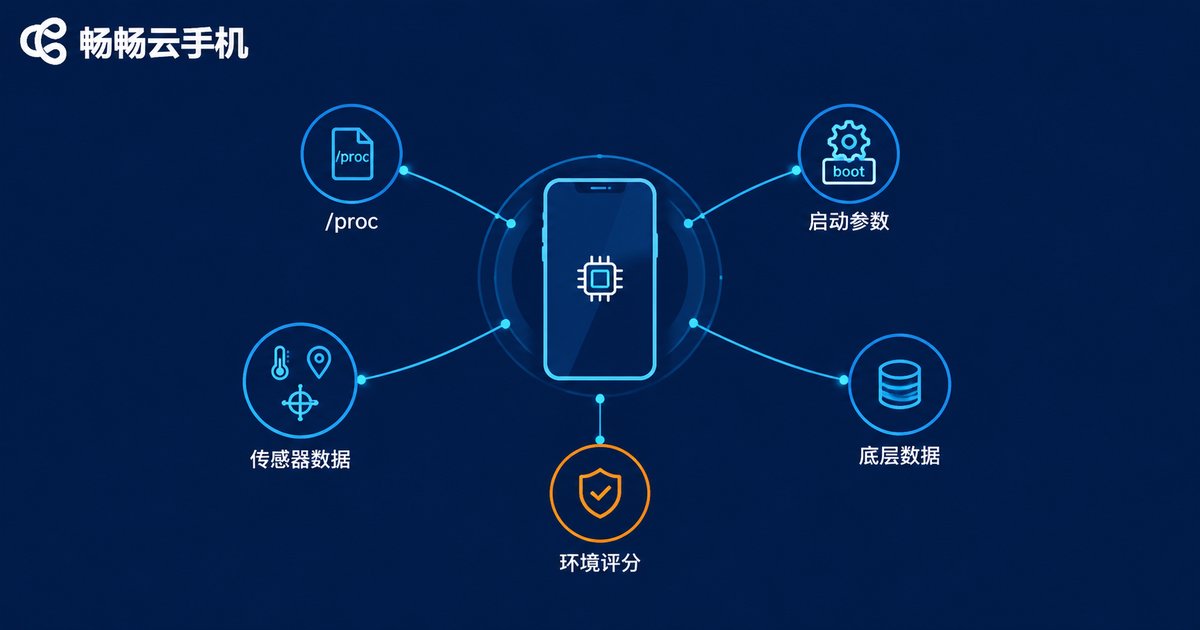
Worse still, this detection runs silently in the background. Everything looks normal on the surface, while the environment score has already been marked down, waiting for the right moment for a coordinated crackdown.
Root Cause Two: Cluster Fingerprinting, How Risk Control Connects the Dots
If information penetration answers whether this is a real phone, cluster fingerprinting answers whether these environments belong together. Risk-control systems run clustering analysis across massive numbers of devices, using correlation dimensions such as:
Network traits: the same IP range or similar network exits, with a batch of accounts active in the same time window;
Fingerprint similarity: device models, resolutions, and parameter combinations so alike they look generated from one template;
Behavior rhythm: concentrated registration times, identical operation intervals, even near-identical tap trajectories;
Overlapping relations: friends, groups, and interaction targets that cross heavily.
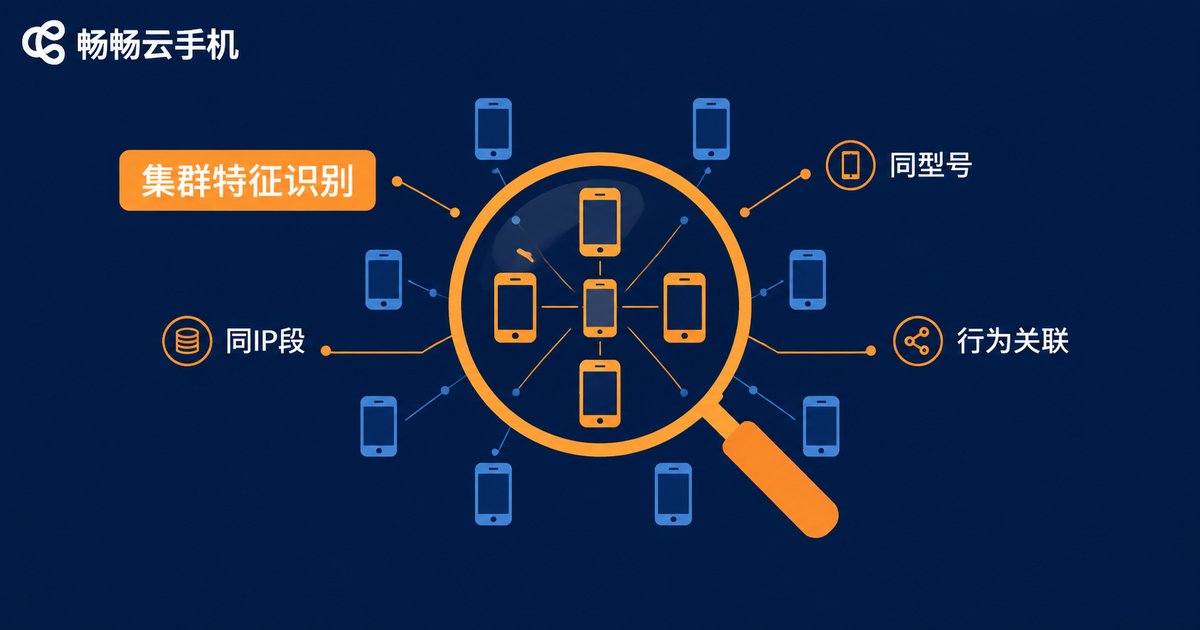
When these dimensions all match, the system labels the batch as one cluster. As soon as a single account is confirmed abnormal through violations or reports, the entire linked group gets punished together — the most common trigger of mass bans.
One Table to Understand the Ban Transmission Chain
| Stage | What You See | What Risk Control Sees |
|---|---|---|
| Environment check | Accounts appear normal | Low-level data mismatches a real device; score drops |
| Clustering | Accounts run independently | IP, fingerprints, and behavior highly correlated; one cluster |
| Trigger | One account gets limited | Anomalous sample confirmed; crackdown expands |
| Mass ban | Whole batch banned at once | Collective punishment by cluster relation |
How to Choose a More Reliable Cloud Phone: Four Key Checks
Once the root cause is clear, vendor selection gets a concrete checklist. Ignore the sales pitch and verify these four points one by one:
1. Instance isolation: does each cloud phone instance run an independent system environment with parameters aligned to real devices, instead of sharing one template;
2. Low-level consistency: are system info, hardware parameters, and sensor data fully adapted to withstand app-side detection;
3. Network quality: are IP resources clean and stable, and can different instances get distinguishable network exits;
4. Behavior scheduling: can you set differentiated operation rhythms per instance so the batch never moves in lockstep.
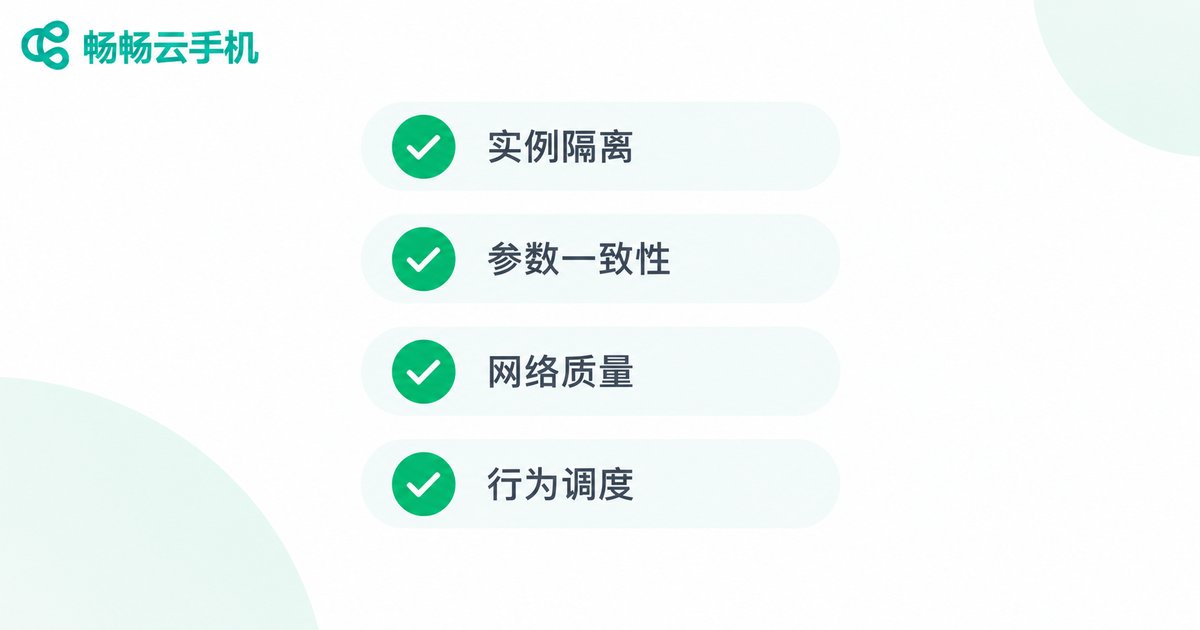
The first two checks decide whether a single account survives; the last two decide how long a whole batch lasts. An obvious weakness in any one of them means mass bans are only a matter of time.
How ChangChang Cloud Phone Fits into These Checks
Among the available options, ChangChang Cloud Phone (ccloudphone) deserves a close look. It runs Android instances in cloud data centers, where accounts and apps stay online around the clock while your local device only handles control and viewing — naturally lifting multi-account workloads off local hardware. For users who need accounts running stably over the long term, validate the four checks above on a small scale first: whether instance environments are independent, whether parameters withstand detection, whether the network stays stable, and whether operation scheduling is flexible. Scale up only after small-scale validation — that is the safer path.
FAQ
Q: Does using a cloud phone always lead to bans?
Not necessarily. Bans depend on how realistic the environment is and how disciplined the behavior is. When environment details withstand detection and behavior mimics real users, accounts can run stably for the long term; no device can rescue crude bulk operations.
Q: Is changing IP enough to avoid mass bans?
IP is only one dimension of cluster traits. Even with a unique IP per account, identical fingerprints and synchronized behavior still get clustered. Differentiate environment, network, and behavior at the same time.
Q: My accounts are already mass-banned. Can they be saved?
Try the platform appeal process account by account, and completely rebuild the running environment: fresh instances, clean parameter profiles, and differentiated behavior rhythms. Accounts rebuilt inside a flagged old environment will most likely be linked again.
Q: What scenarios suit ChangChang Cloud Phone?
Multi-account daily operations, multi-instance gaming, and long-term app hosting where devices must stay online in the cloud. Start with small-scale validation, then expand gradually.


