
What Is Cloud Phone Concurrent Session Pricing? Free Plans & Elastic Billing Trends Explained
What Is Concurrent Session Pricing?
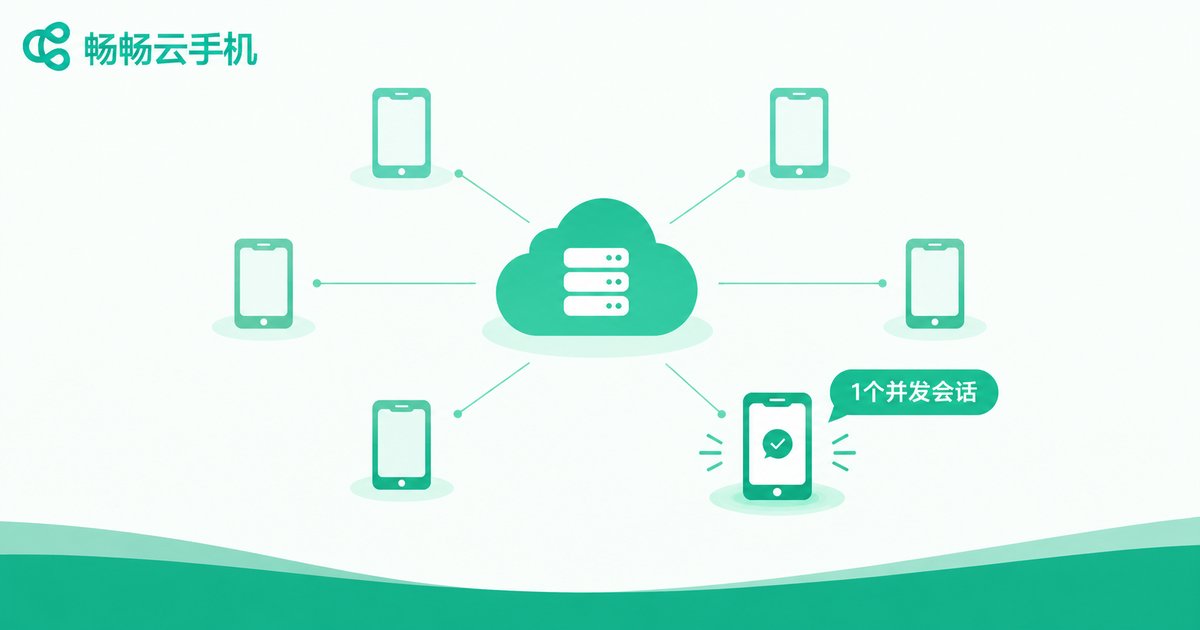
In simple terms, concurrent session pricing means you are charged based on how many cloud phones you run at the same time. Every running cloud phone instance occupies a share of cloud server resources, and that running instance is called a concurrent session.
For example, running 10 cloud phones for game automation at once counts as 10 concurrent sessions, while running a single backup device counts as just one. The billing system only cares about “how many run simultaneously,” not “how many you registered.” The biggest advantage of this model is that you pay only for what you actually use — never for idle resources.
Mainstream Billing Models Compared: Which One Fits You?
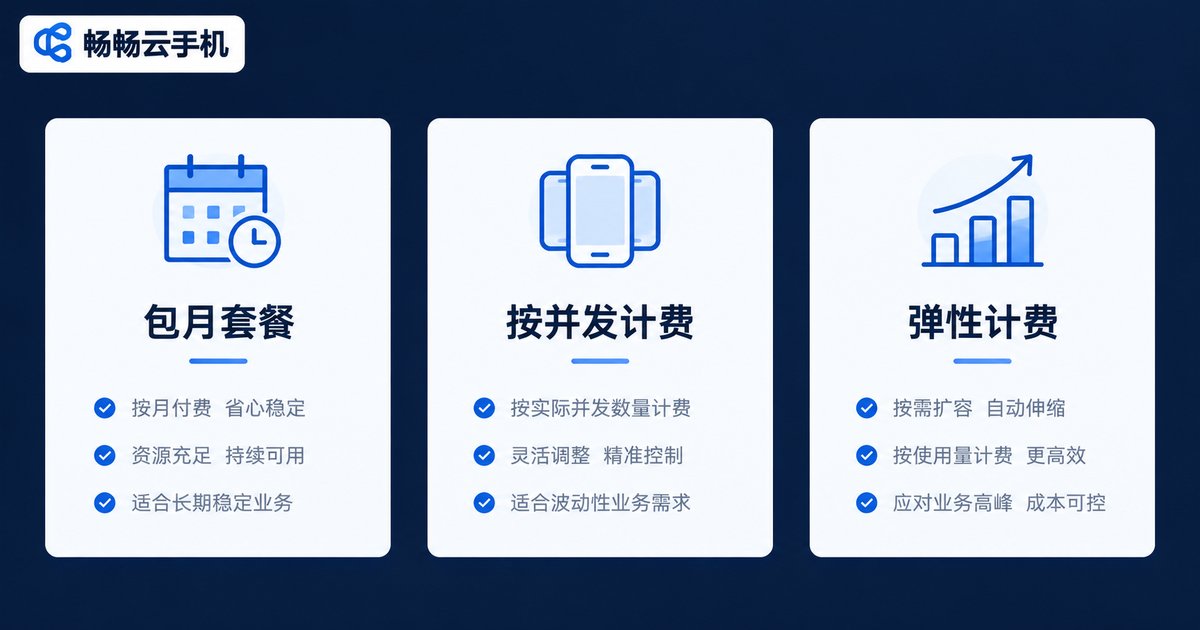
The cloud phone industry currently offers three main billing approaches, each with its own strengths:
| Billing Model | How It Charges | Best For |
|---|---|---|
| Monthly / Yearly Plan | Fixed price for a fixed period | Stable, long-term users |
| Concurrency-Based | Charged by number of simultaneous instances | Users with fluctuating multi-instance needs |
| Elastic Pay-As-You-Go | Charged by actual usage time or resources | Users with irregular usage patterns |
As the table shows, there is no universally cheapest plan — only the plan that matches your usage habits. If your device count is stable every day, a monthly plan is simpler; if you run 5 instances today and 20 tomorrow, elastic billing is often the better deal.
Free Plans: Are They Really Free?
Many platforms offer free plans, but it pays to understand the logic behind “free”:
1. Limited resources. Free tiers usually include just one cloud phone with modest specs — ideal for trying before you buy.
2. Time limits may apply. Some free plans cap daily online hours; exceeding them requires an upgrade.
3. Feature trade-offs. Advanced features such as group control, multi-instance management, and high resolution are generally reserved for paid tiers.
The smart move is to treat the free plan as a test drive: check the smoothness, stability, and latency first, then decide whether to pay for more capacity.
Elastic Billing: Why Is It Becoming the Industry Trend?
Elastic billing has gained momentum in recent years for three main reasons:
First, user demand has become fragmented. Many people do not need heavy concurrency every day — they may scale up for a campaign and run only one or two instances otherwise. Flat monthly fees often go to waste in such scenarios.
Second, mature technology enables metered billing. Cloud resources can now be scheduled at minute-level granularity and released instantly after use, making fine-grained cost accounting possible.
Third, the cost of experimentation is lower. Elastic billing lets users validate a business model at minimal cost and scale up only after it works — a huge advantage for solo entrepreneurs and small teams.

How to Choose the Right Billing Model
Here is a simple decision method:
Do the math. Estimate your monthly “concurrency × hours,” then compare it against monthly-plan pricing. As a rule of thumb, if your utilization exceeds roughly 70% of the month, a subscription is cheaper; if usage fluctuates a lot, go elastic.
Check scaling flexibility. Can you add concurrency with one click as your business grows? What happens to your resources at expiry? These details shape the long-term experience.
Prefer platforms with elastic scaling. For instance, ChangChang Cloud Phone supports adjusting concurrency on demand with a simple, transparent billing approach — whether you need a single backup device or batch multi-instance operation, you can find a suitable setup. For the latest plans and pricing, please visit the official ChangChang Cloud Phone website.

FAQ
Q: Is a concurrent session the same as a cloud phone?
Essentially yes. One running cloud phone equals one concurrent session; once a device is shut down or released, it no longer occupies concurrency.
Q: Is a free plan enough?
For light use — such as one backup device — usually yes. If you need multi-instance operation, group control, or long online hours, a paid plan is recommended.
Q: Could elastic billing end up more expensive than a monthly plan?
It depends on usage intensity. Elastic is cheaper at low utilization; subscriptions offer a lower unit price for sustained heavy use. Calculate your actual “concurrency × hours” before deciding.
Q: How is billing handled when I add concurrency mid-cycle?
Under elastic billing, added concurrency is typically metered from the moment it starts, and billing stops once it is released — flexible and controllable.
Q: What billing options does ChangChang Cloud Phone offer?
ChangChang Cloud Phone provides multiple plan options with on-demand concurrency scaling. For specific plan details and current pricing, please refer to the official website.