
Operations · Engineering · Trends
Hands-on playbooks, product updates and cross-border insights from the CCloudPhone team.
Are Cloud Phones Suitable for Students? A Cost-Effectiveness Analysis
Cloud phones run on remote servers, so your own device stays cool, saves battery, and needs no extra storage — a perfect fit for students. This article breaks down real student use cases, from 24/7 game AFK farming and multi-account management to reviving an old phone, then compares the cost of buying a new flagship phone versus pairing an old device with a cloud phone subscription. You will find a clear cost-effectiveness analysis, practical tips on network, platform and plan selection, plus a recommendation of ChangChang Cloud Phone (ccloudphone), a simple and flexible option that lets students enjoy smooth performance on a small budget.
Does Running Scripts on a Cloud Phone Harm Your Phone? How Script Load Affects Real Devices
Running game scripts and automation tasks on a spare phone often leads to overheating, rapid battery drain, and sluggish performance. This article explains how sustained script workloads—constant CPU usage, screen-on time, charging cycles, and background processes—gradually wear down a real device. It then shows how a cloud phone moves these workloads to remote servers: scripts and apps run in the cloud around the clock, while your physical phone acts only as a lightweight remote viewer and controller. With a practical comparison table, real-world use cases, and a short FAQ, you will learn when to move scripts to the cloud, what to look for in a service such as ccloudphone, and how to keep your daily device cool, fast, and healthy.

What Is a Cloud Phone API? Developer Scenarios for Cloud Devices
A cloud phone API is the 'remote control' that lets developers operate cloud-hosted Android devices with code instead of hands. Through simple HTTP interfaces, a program can power devices on and off, install apps, simulate taps and swipes, and control hundreds of phones in bulk—no physical handsets required. This article explains in plain language how cloud phone APIs work, breaks down their four core capabilities—device lifecycle management, app management, automated operations, and bulk control—and walks through six real-world integration scenarios including automated app testing, multi-account gaming, matrix account operations, RPA workflows, security testing, and cloud gaming, helping you decide whether your business is ready for cloud devices.

How Much Does a Cloud Phone Cost Per Day? Who Is the Daily Rental Model For?
How much does renting a cloud phone for one day actually cost? Daily rates on mainstream platforms typically range from less than one yuan to around three yuan per day, depending on device configuration and billing rules. This article breaks down the common pricing models—daily rental, monthly plans, quarterly packages, and hourly billing—runs the numbers on daily versus monthly value, and explains who benefits most from pay-per-day: short-term project users, first-time trial users, gamers needing temporary multi-account setups, budget-conscious students, and short-cycle AFK task runners. Match the right billing mode to your real usage and stop overpaying.

How Are the Top 10 Cloud Phone Rankings Made? Evaluation Criteria Revealed
Cloud phone rankings scattered across the internet are often driven by advertising budgets or outdated data rather than real testing. This article reveals a complete, professional evaluation framework: performance and smoothness (30%), stability and uptime (25%), feature richness (20%), value for money (15%), and after-sales support (10%). For each dimension, we explain what to measure, how to test it, and what counts as a good result. By the end, you will understand how credible top-10 lists are built, and be able to evaluate any cloud phone yourself, so the product you finally choose truly fits your workflow and budget.

What Are AI Cloud Services? Applications Where Cloud Computing Meets AI
AI cloud services are bringing artificial intelligence out of the lab and into everyday life. This article explains in plain language what AI cloud services are, how their three-layer architecture works, and how they differ from traditional cloud computing. It also reviews typical scenarios such as content creation, intelligent customer service, data analytics and mobile computing, and shows how ChangChang Cloud Phone (ccloudphone) turns the idea of computing power in the cloud into reality, helping individuals and small businesses embrace the AI era with a low barrier to entry.

Cloud Phone Multi-Instance Account Warming: One Device One Account & Independent Fingerprint Isolation
One device, one account is the golden rule of cloud phone multi-instance account warming. This guide explains how to build a true independent fingerprint isolation setup across four dimensions: device parameters, app environments, behavior trails, and profile information. You will also get a five-step configuration walkthrough with ccloudphone, a physical-phone-versus-cloud-phone comparison table, and a practical list of pitfalls to avoid, so you can manage dozens of accounts safely and efficiently from a single computer.
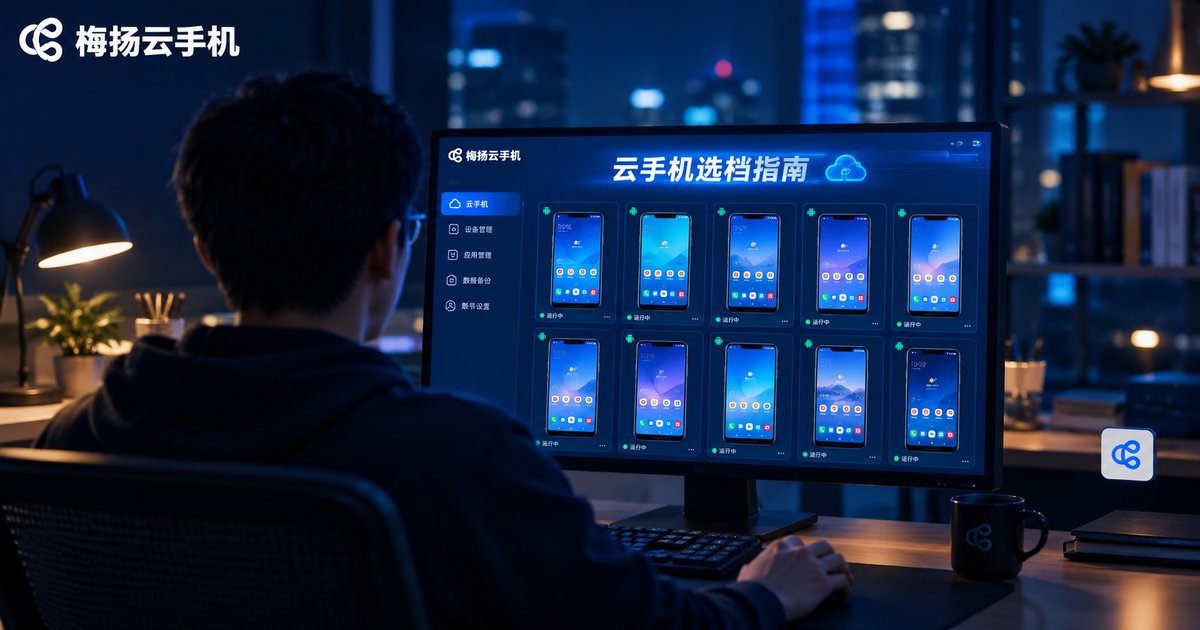
How to Choose Cloud Phone Tiers: Matching Light Idle and Moderate Multi-Instance Use
Is a higher cloud phone tier always better value? Not necessarily—the key is matching the tier to your scenario. This guide breaks down the two most common needs: light idle users running 1–3 instances should prioritize uptime stability and cost efficiency, where an entry tier is enough; moderate multi-instance users running 5–15 instances should estimate with the formula of instances times per-instance resources plus 20% headroom, focusing on CPU cores, total RAM, and group-control capability. You will find a comparison table, a three-step self-check, common pitfalls, and a recommendation of ChangChang Cloud Phone (ccloudphone) with flexible tier upgrades.
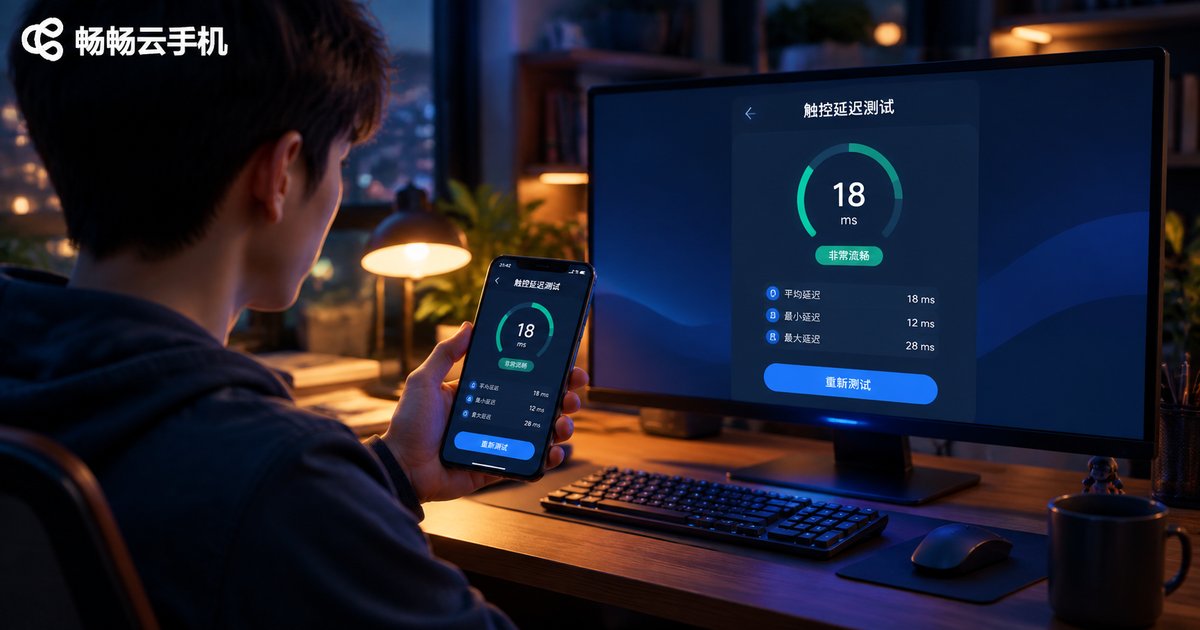
Cloud Phone vs Real Phone: How Big Is the Touch Latency Gap? Multi-Device Switching Test Data
How much slower does a cloud phone feel than a real phone? We spent a week benchmarking a flagship phone, a mid-range phone, and a cloud phone over Wi-Fi 6 and 4G, using 240fps slow-motion recording, then tested real switching across phone, tablet, and PC. The data shows cloud phone touch latency trails a real phone by only 30-50ms on a good network, which is imperceptible in daily use, while device handoff takes about 7-10 seconds with zero interruption to cloud tasks. If you are deciding between a cloud phone and a second real device, this data will help. Latency optimization tips and FAQs included.

Which Cloud Phone Region Has the Lowest Latency? Node and Business Matching Tips
The smoothness of a cloud phone depends largely on which region and node you choose. This guide breaks down the four factors behind latency: distance, route quality, server load, and your local network. It shares the core rule of putting the node where your business is, includes a reference table of typical latency by node distance, and offers matching suggestions for real-time gaming, idle tasks, short-video account matrices, and cross-border e-commerce. A simple three-step testing method helps you quickly find the best low-latency node on ccloudphone for a smooth, responsive experience.

How to Configure Cloud Phone Intranet Interconnection? A Guide to Network Isolation Across Regions
Intranet interconnection allows multiple cloud phones in the same region to communicate directly over the data center's internal network, delivering lower latency and more stable transmission. This article explains how to configure intranet interconnection for cloud phones, walks through a practical four-step deployment process, and clarifies why networks are isolated across different regions for security, stability, and resource scheduling reasons. A comparison table highlights the differences between same-region and cross-region devices in latency, stability, and IP location. You will also find key considerations for regional isolation, purchase and deployment recommendations, and answers to frequently asked questions, helping you choose the right region from the start and avoid costly rework.
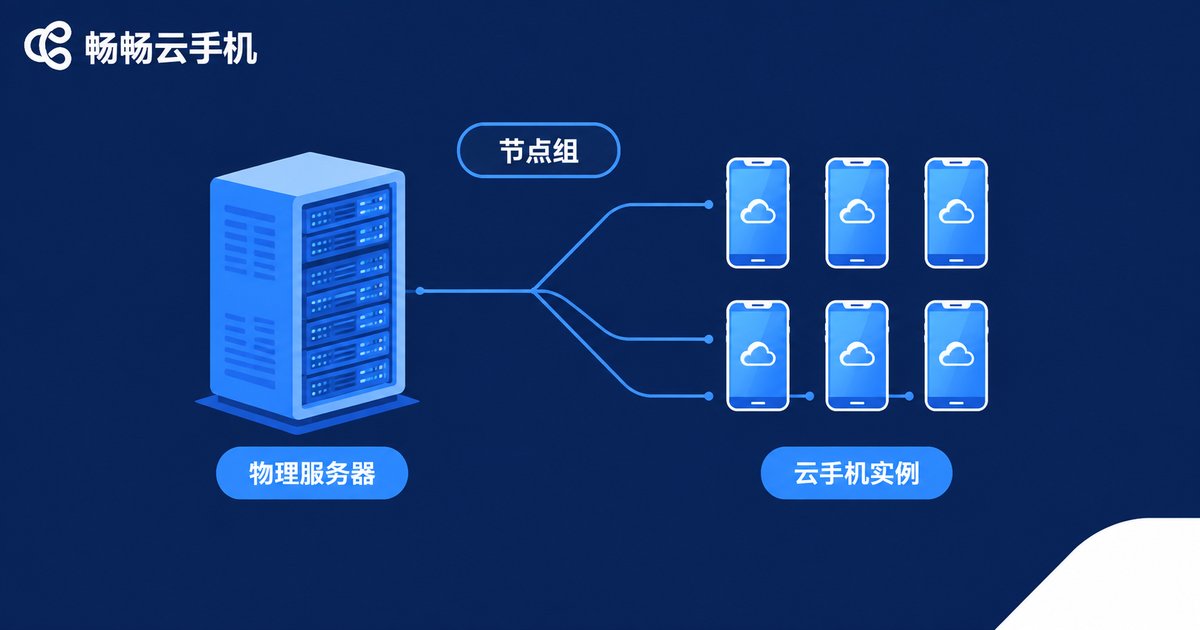
Cloud Phone Node Groups vs Instance Groups: A Resource Management Comparison
Node groups and instance groups are two of the most commonly confused concepts in cloud phone platforms. A node group sits at the infrastructure layer: it bundles physical servers into a resource pool and handles scheduling, capacity expansion, and failure migration. An instance group sits at the business layer: it organizes individual cloud phones into fleets for batch power-on, bulk app installation, and synchronized group control. This article uses a clear comparison table to break down the differences in management layer, target objects, typical operations, and scaling methods, explains how the two layers work together, and shares practical grouping tips to help you manage cloud phone resources with clarity and efficiency.