
Which Cloud Phone Platform Is Best? Score Scale, Network Lines and After-Sales Support — Ads Don't Count
Why Ad Rankings Are Not a Selection Criterion
Type the best cloud phone platform into a search box and most of the first few pages are paid placements. Buying more ad space only proves there is a bigger marketing budget — it says nothing about whether devices stay online, whether the network is fast, or whether anyone answers when something breaks. What actually determines your experience comes down to three plain things: scale, network lines, and after-sales support.
This article skips the fluff and turns those three into concrete, scorable metrics. You can take this table and hold it against any cloud phone platform, including ccloudphone.
Metric One: Scale — Can You Spin Up a Device Whenever You Need One?
Scale is the most overlooked factor and yet the one that affects daily use the most. It shows up in three places:
Total server capacity and device pool. The bigger the pool, the less likely you are to hit a resource shortage at peak hours. Anyone running batches of devices or managing multiple accounts feels this most acutely.
Node coverage. Only a platform with multiple regional nodes lets you place devices closer to yourself or closer to the business you are targeting.
Scaling speed. When you suddenly need ten or fifty more devices, do they arrive in minutes, or do you join a queue and wait for a notification?
How to score it: give high marks if you can open a device on demand, deduct points if you need reservations or have to wait for capacity. Ask support for a straight answer on this — it beats reading ten sponsored posts.

Metric Two: Network Lines — Does the Screen Keep Up With Your Fingers?
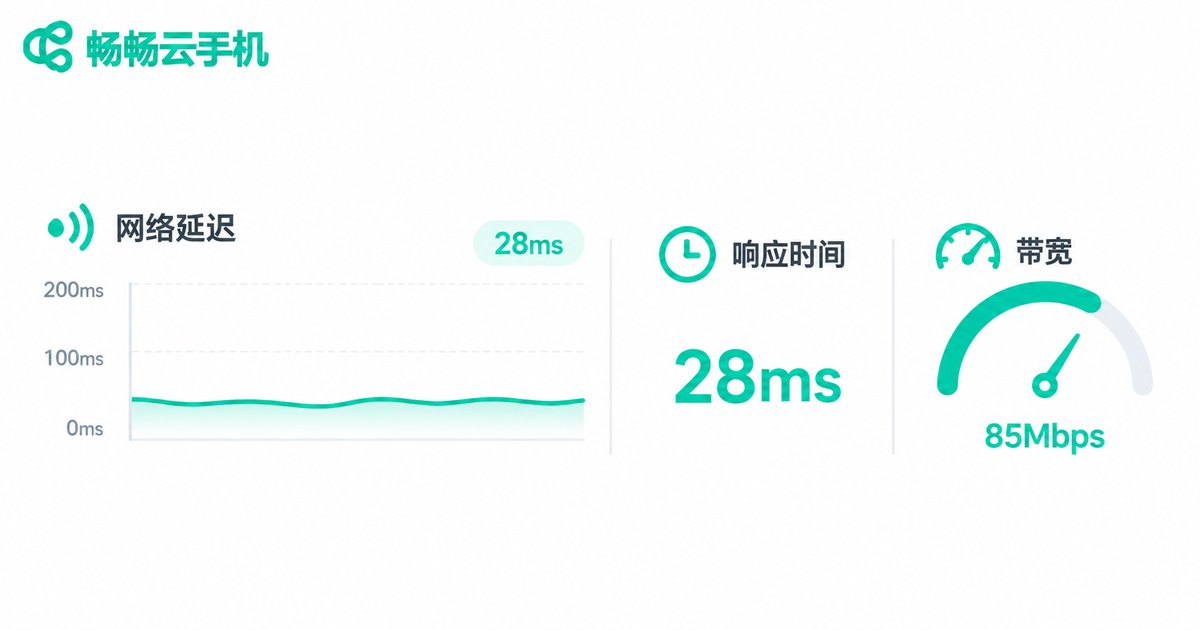
Network quality is the most mysterious part of the cloud phone experience, because you cannot see it — you can only feel it. But feelings can be quantified. Watch three indicators:
Latency. How long after you tap does the screen respond? On a high-latency cloud phone, swiping feels like dragging through water, and action games become unplayable.
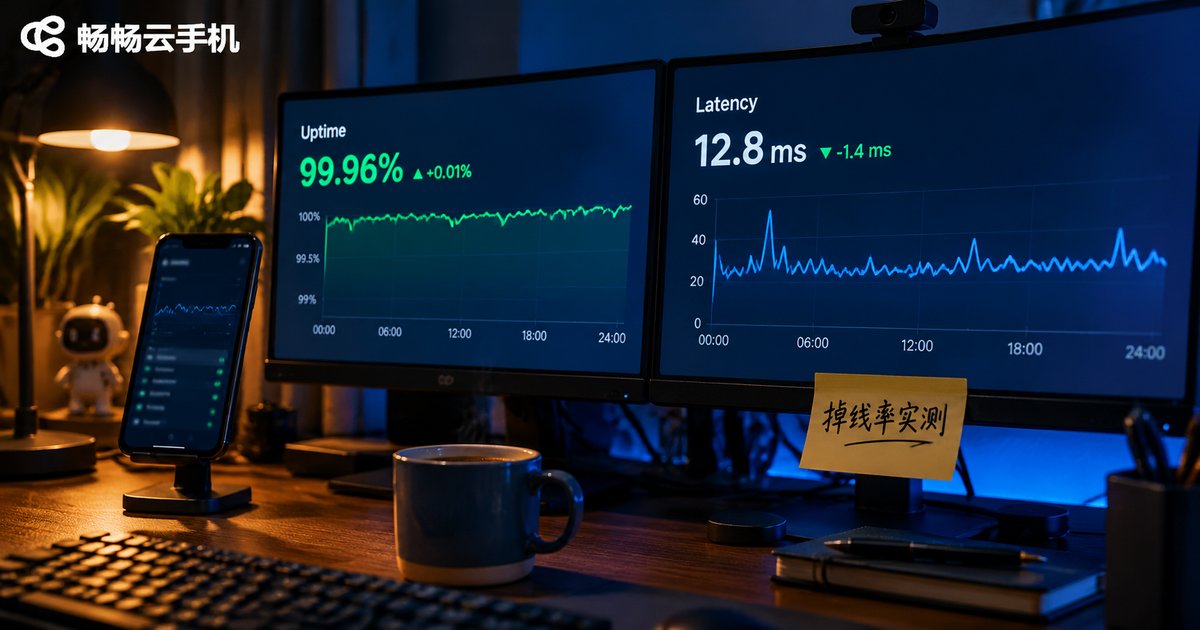
Stability. It is not about being fast for the moment you run a speed test — it is about whether the connection drops or the screen freezes after hours or days of continuous uptime.
Bandwidth. Both clarity and smoothness depend on bandwidth. When it runs short, the platform automatically lowers image quality, and the result is simple: a blurry screen.
How to score it: don't just count the number of lines on the marketing page. Open a device yourself, run it for two hours straight, and watch the latency curve and disconnect count. That is more honest than any spec sheet.
Metric Three: After-Sales Support — Who Has Your Back When Something Breaks?
A cloud phone is a service that runs around the clock, so problems are a matter of probability, not surprise. Whether support is good comes down to three details:
Response speed. After you file a ticket, do you hear back in minutes, or the next day?
Can they actually solve it? Some support agents only paste scripts and send you in circles with try restarting it. Genuinely useful support can pinpoint whether the issue is the device, the network, or the account.
Is there self-service documentation? Can you look up answers to common problems yourself instead of queueing for a human every time?
How to score it: before you buy, ask one slightly tricky technical question. Whether they answer seriously or just throw you a link tells you most of what you need to know.

The Three-Metric Scorecard: See the Gap in One Table
| Dimension | Questions to Ask | Pass Line | Suggested Weight |
|---|---|---|---|
| Scale | Can I open a device at peak hours? How many regional nodes? How long does scaling take? | On-demand availability, multiple nodes, minute-level scaling | 30% |
| Network lines | What is the latency? Will it drop after hours of uptime? Is bandwidth sufficient? | Low latency, long-run stability, no blurry screens | 40% |
| After-sales | How fast are tickets answered? Can they diagnose the issue? Is there documentation? | Fast response and real problem-solving | 30% |
Network lines carry the highest weight because they affect your operations every single day. Scale and support are safety nets — invisible when things go well, but a very big deal the moment something goes wrong.
How ccloudphone Performs on These Three Metrics
Measured against the table above, here is how ccloudphone looks:
On scale, ccloudphone offers multiple regional node options and supports opening multiple cloud phones in batches, which suits users who need to manage several devices at once.
On network lines, ccloudphone has optimized its network for real cloud phone usage scenarios, keeping connections stable during everyday operation, long-running sessions and multi-device use.
On after-sales support, ccloudphone provides online customer service and ticket support, and the official site at ccloudphone.com carries product documentation and usage guides so you can troubleshoot on your own first.
For specific device configurations, node locations and how to get started, check the official site directly and treat what is published there as the source of truth.
Frequently Asked Questions
Q: Which cloud phone platform is best — is there a one-sentence answer?
A: There is no universal answer, only the answer that fits you. Score your own needs on scale, network lines and support first, then see which platform matches your usage scenario on those three.
Q: Does a platform with more ads mean it is more reliable?
A: Not necessarily. Heavy advertising means heavy marketing spend, but device stability and support quality have to be verified through real use and real questions.
Q: How can I quickly test a platform's network lines?
A: Open a device and keep it running for more than two hours, doing several swipe and tap operations along the way, then watch how latency changes and whether it disconnects. A short speed test proves very little.
Q: If I only use it once or twice, do I still need to care about support?
A: Yes. A cloud phone is a time-billed online service, and even over a few days, a mid-way problem still needs someone to fix it promptly.
Q: Who is ccloudphone suitable for?
A: It suits users who need multiple instances, long-running sessions, or applications kept online for extended periods. For the specific features and configurations supported, refer to the documentation at ccloudphone.com.