Which Cloud Phone for Survey Research in 2026? A Risk Assessment of Batch Tasks and Anti-Fraud Evasion
Why "Devices" Are Impossible to Ignore in Survey Research by 2026
By 2026, survey research has become a fully mature industry: brands run satisfaction studies, research firms collect panel samples, app teams test embedded questionnaires, and academic institutions conduct social surveys. Behind all of these businesses lies the need for large numbers of real device environments — which is why cloud phones keep appearing on researchers' shortlists.
At the same time, gray-market 'batch surveys for cash' schemes have abused multi-instance tools, pushing survey platforms to keep upgrading their fraud detection. So this article takes a no-hype, no-bashing approach: first we lay out the real risks of batch tasks, then explain what cloud phones can genuinely do in compliant scenarios, and finally hand you a risk-assessment checklist you can put to work immediately.
First, Understand How Survey Platforms Detect Fraud
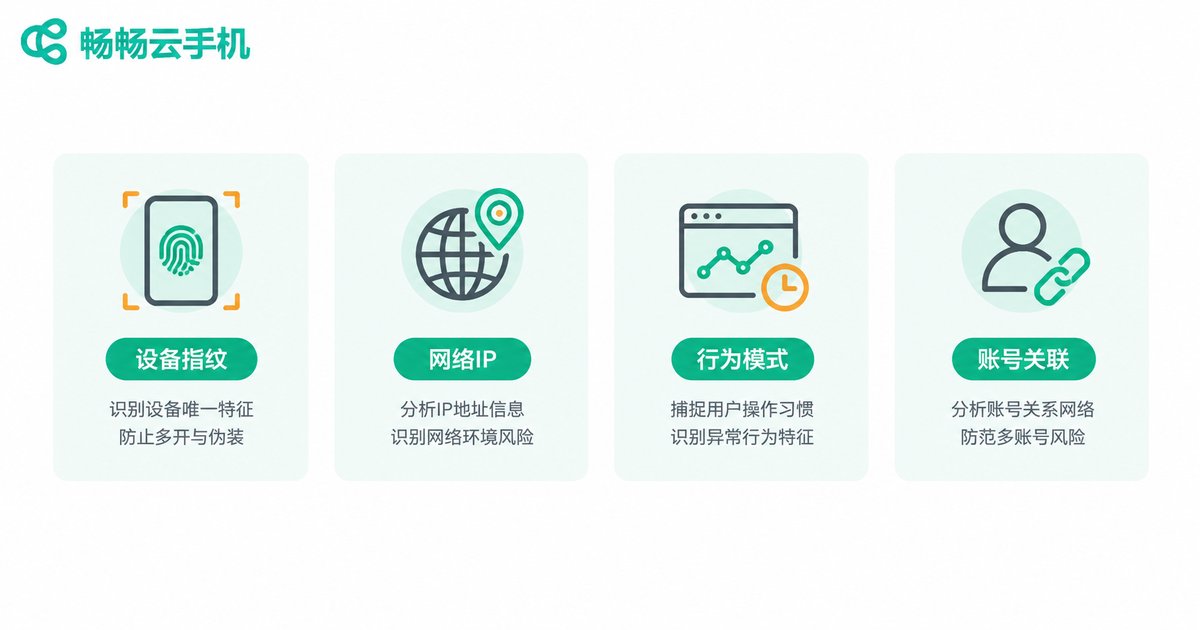
Many newcomers assume 'just switch phones and you're invisible.' That is the biggest misunderstanding of how risk control works. In 2026, mainstream survey platforms typically cross-check four dimensions:
1. Device fingerprint: device model, OS version, screen resolution, sensor combinations and more are computed into a unique identifier. Registering new accounts repeatedly on the same device makes clustering detection easy.
2. Network environment: large numbers of accounts appearing from one IP in a short window, or many accounts coming from the same datacenter IP range, get flagged as high risk.
3. Behavioral patterns: answering abnormally fast, option distributions that don't match human habits, never re-reading questions, bulk submissions late at night — these patterns all feed the risk model.
4. Account linkage: repeated registration numbers, payout accounts, or device details link accounts together. When one fails, a whole chain goes down with it.
In other words, risk control doesn't look at 'what device you use' — it looks at whether your overall behavior resembles a real human. That's why 'anti-fraud evasion' is essentially an arms race that is very hard to win.
Risk Assessment for Batch Tasks: The Hard Truth First
If you are considering running survey tasks in bulk on cloud phones, read this risk table first:
| Risk Type | Trigger | Possible Consequence |
|---|---|---|
| Account bans | Device fingerprint or IP linkage detected | Accounts banned in batches; prior investment wiped out |
| Commission clawbacks | Samples judged as fraudulent | Completed tasks unpaid; income zeroed out |
| Frozen funds | Payout accounts locked by risk control | Balance cannot be withdrawn |
| Legal and compliance risk | Faking identities to collect research incentives | Potential fraud liability; platforms may pursue claims |
| Sample-quality liability | Delivered data identified as invalid samples | Contract termination, compensation, reputational damage |
One point deserves special emphasis: no tool can guarantee you 'won't be detected.' By 2026, risk-control systems widely use device-fingerprint clustering, behavioral models, and cross-platform blacklists. The cost of failed bulk survey farming only keeps rising. Building a business on 'evading detection' is itself the biggest risk.
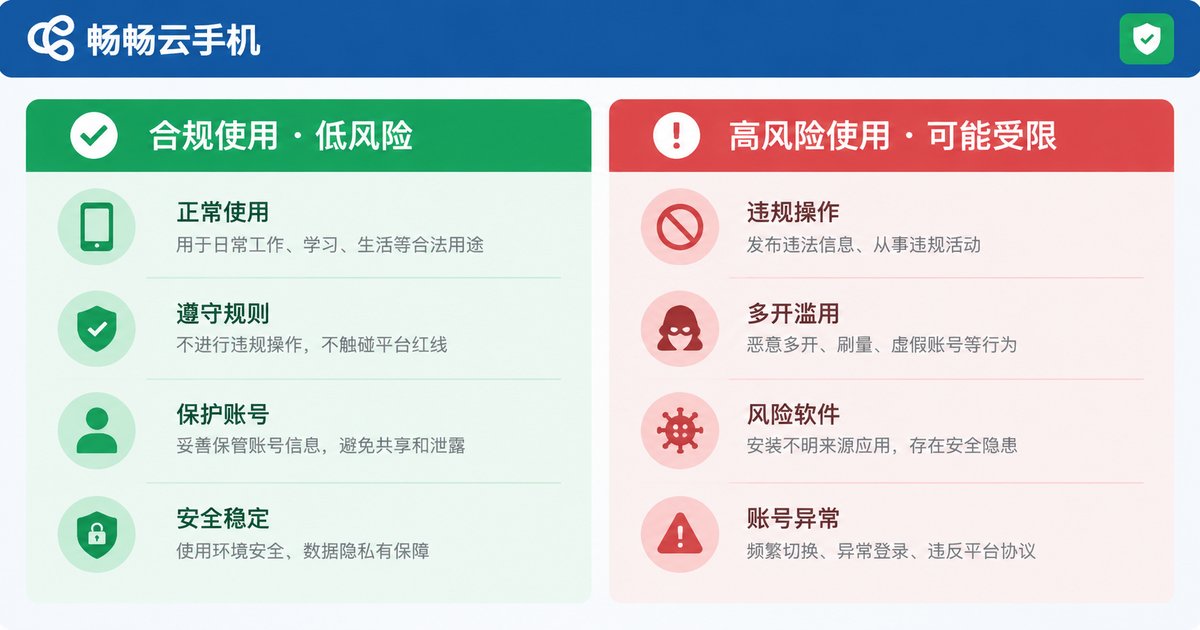
Compliant vs. High-Risk Usage: One Table Says It All
A cloud phone is a neutral tool; the risk depends on how you use it. Save this comparison table:
| Usage | Risk Level | Notes |
|---|---|---|
| Testing your own questionnaire's display and submission flow across device models on cloud phones | Low | Compatibility-testing your own survey is fully compliant |
| Research firms building cloud device pools for real-device testing of in-app surveys | Low | A normal development and testing scenario |
| Managing your own or client-authorized real accounts for task scheduling | Low to medium | Confirm platform terms allow it, and keep behavior genuine |
| Bulk-registering fake identities to farm survey incentives | Very high | Violates platform terms; may constitute fraud |
| Scripted auto-answering and fabricated response behavior | Very high | Voided samples are the light outcome; liability is the heavy one |
One-line summary: using cloud phones to improve quality and efficiency is a plus; using them for mass fabrication is a ticking time bomb.
Four Concrete Benefits of Cloud Phones in Compliant Scenarios
For teams running legitimate research operations, the value of cloud phones is very concrete:
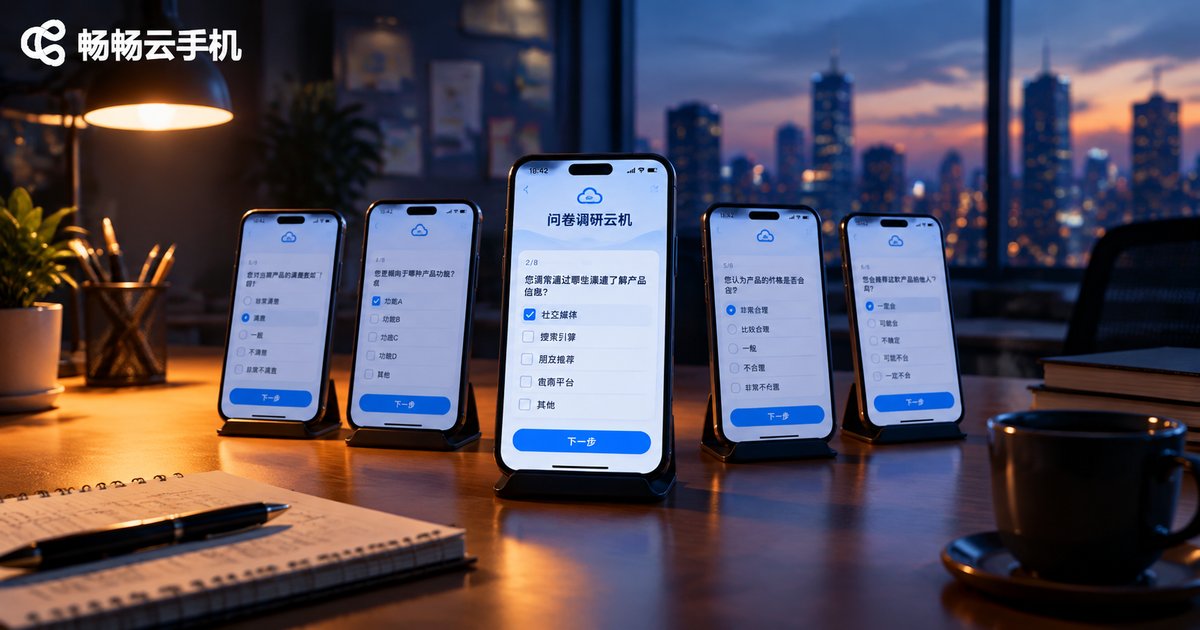
1. Multi-device compatibility testing: a single pool of cloud Android devices covers mainstream models and OS versions, so you can verify how your questionnaire renders, navigates, and submits at every resolution — no desk full of physical phones required.
2. Environment isolation: each cloud phone is an independent Android environment, so test tasks never interfere with one another and test data never contaminates daily devices.
3. Batch operations: group-control features let you boot devices, install survey test apps, and distribute tasks in unison, noticeably improving team efficiency.
4. Controllable costs: cloud devices are used on demand, eliminating hardware purchase, depreciation, repair, and facility costs.
Our Recommendation: Why ChangChang Cloud Phone
Assuming compliant use, we recommend research teams start with ChangChang Cloud Phone (ccloudphone), for very practical reasons: it provides a stable cloud Android environment where every cloud phone runs independently without interference; it supports unified management and batch operations across many cloud phones, ideal for teams maintaining multiple test environments; its datacenter network is stable, so long-running test sessions are less likely to drop; and it can be managed from both web and app, keeping the learning curve gentle. For current plans and pricing, always refer to the official ccloudphone website, and start small before scaling up.
For survey research teams, the highest-value way to use ChangChang Cloud Phone is in questionnaire compatibility testing, in-app survey testing, and task management for authorized accounts — all compliant scenarios.
A Risk Self-Check Checklist for Research Professionals
Before launching any batch operation, have your team answer these four questions:
1. Am I operating accounts that my own team or the client has clearly authorized?
2. Does my behavior violate the target platform's terms of service?
3. Does my revenue model depend on 'multiple accounts claiming the same task repeatedly'?
4. If this batch of accounts were all banned tomorrow, could I absorb the loss?
If you cannot answer even one of these with confidence, the task's risk has exceeded controllable bounds — stop and reassess first.
FAQ
Q: Will survey platforms detect cloud phone usage?
Detection depends on whether your behavior is compliant. Testing your own surveys and managing authorized accounts is normal use; attempting to fabricate responses in bulk on any device carries detection and enforcement risk. A cloud phone is not a 'detection-free pass.'
Q: How do cloud phones differ from emulators?
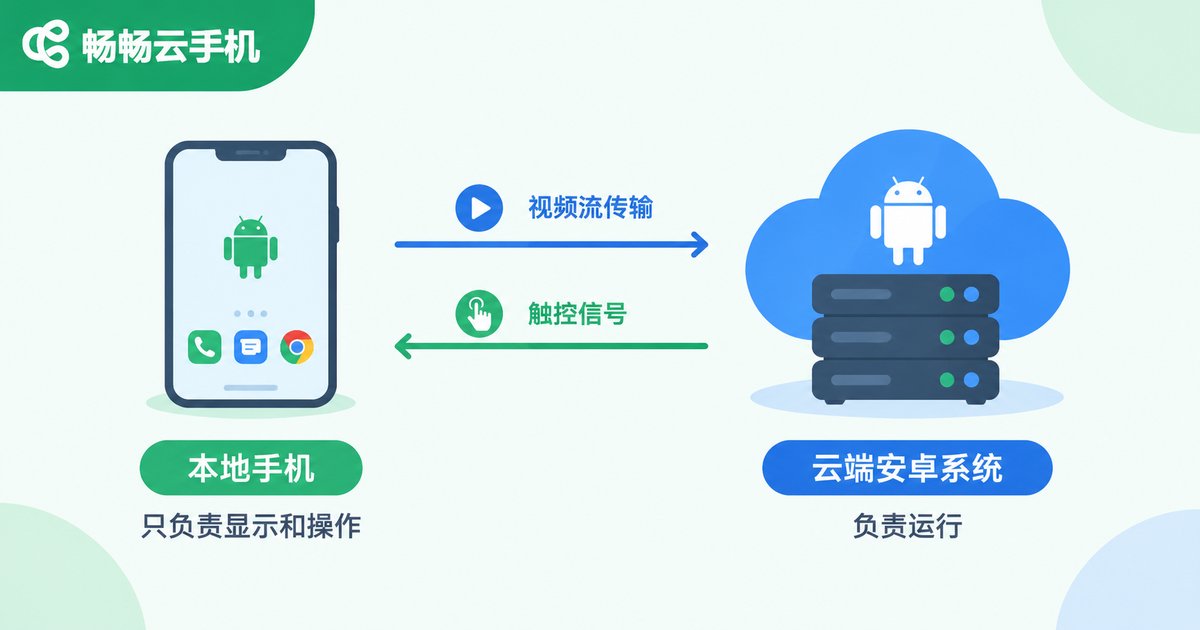
Cloud phones are independent Android systems running on real servers, closer to physical devices and more stable; emulators run on local computers with obvious environment signatures and tend to crash during long tasks. For stable long-running research testing, cloud phones are the more reliable choice.
Q: Is managing multiple accounts always a violation?
Not necessarily — it depends on account origin and purpose. Managing your own or client-authorized accounts is normal operations; bulk-registering fake identities to farm tasks clearly violates platform terms, and the risk is yours to bear.
Q: Which research teams is ChangChang Cloud Phone suitable for?
Teams that need multi-device test environments and parallel task management. Visit the official ccloudphone website to review current plans before choosing based on team size.