
How to Prevent Cheating in Bulk Survey Filling? Cloud Phone, IP Isolation & Fingerprint Spoofing Techniques
Why Bulk Filling Became the Survey Industry's Biggest Risk
The value of survey research rests on authentic, independent, valid samples. Once fraudsters mass-fill questionnaires with bulk-registered accounts, near-identical device environments and concentrated IP addresses to farm points, red packets and rewards, the data goes bad, brand conclusions get skewed, and platforms face lost client trust, billing disputes and even legal exposure.
Fraud rings have long moved past the era of one person typing on one phone. They use cloud phones to mass-produce device environments, isolate a unique IP per device, and spoof device fingerprints, turning a single machine into hundreds of supposedly unrelated devices. To defend against them, you first need to understand the playbook.
The Fraudster's Toolkit: Cloud Phones, IP Isolation, Fingerprint Spoofing
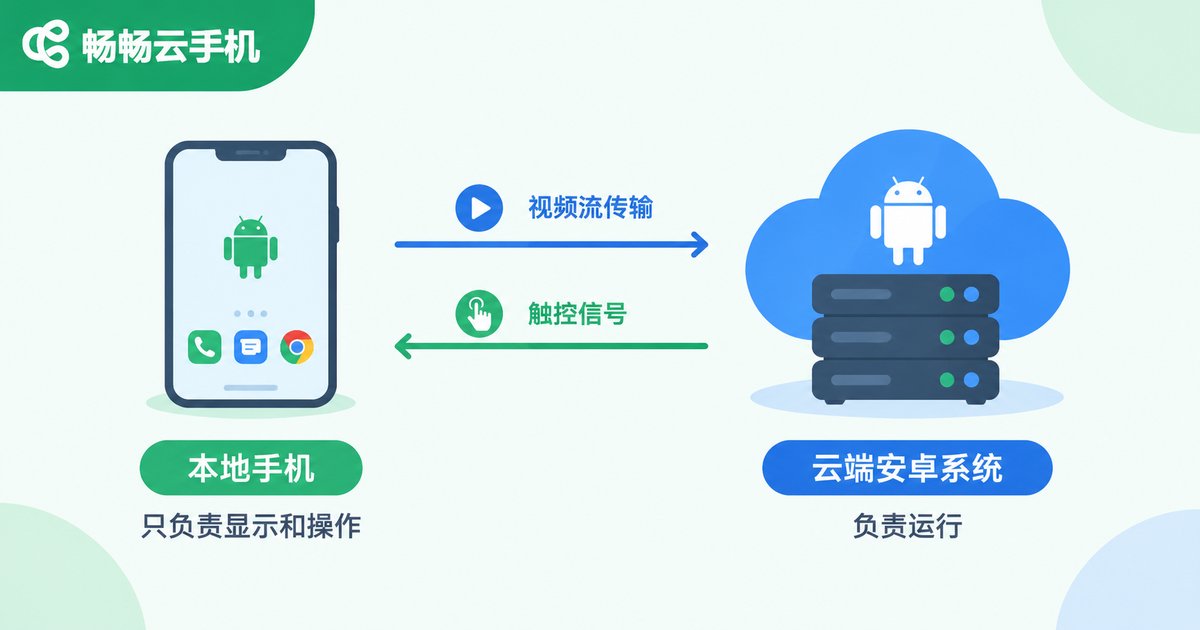
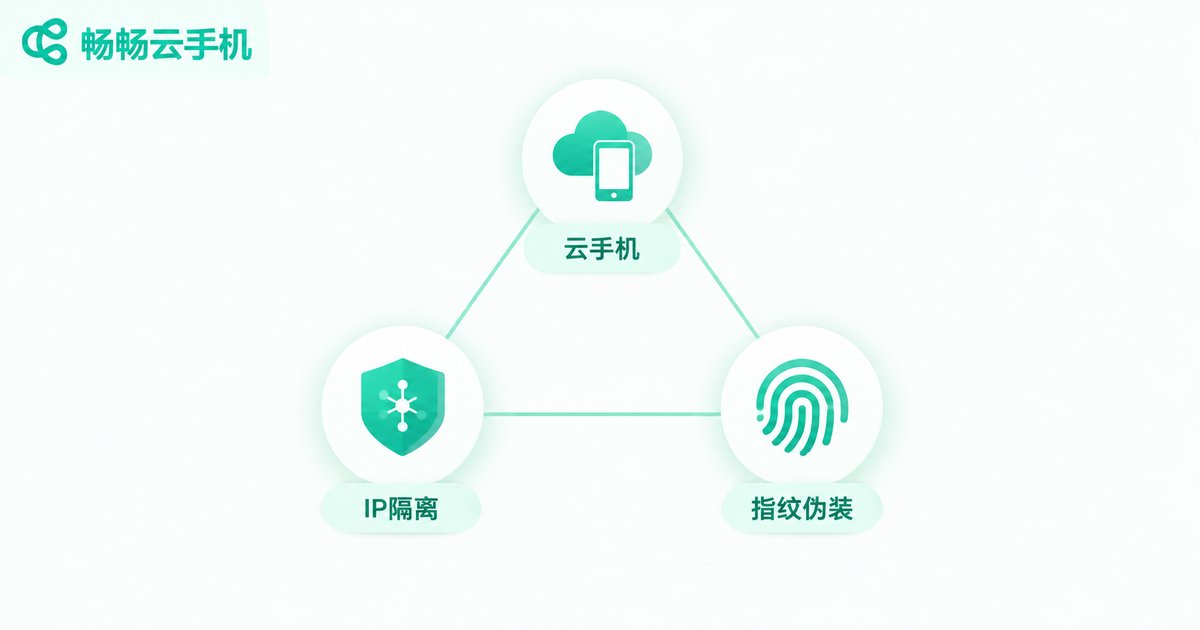
Cloud phones mass-produce devices: Android instances are created in the cloud so one server can run a large number of independent phone environments. IP isolation gives each clone its own network exit so responses do not all come from one address. Fingerprint spoofing alters device model, OS version, screen parameters and other traits so risk engines struggle to cluster the devices together.
Stacked together, these can fool weak, single-signal risk controls. But make no mistake: bulk filling for rewards violates platform terms, and serious cases can constitute unfair competition or even fraud with real legal consequences. This article takes the platform and research team's perspective—how to detect and defend against this playbook, not how to bypass risk control.
Five Detection Dimensions of Survey Risk Control
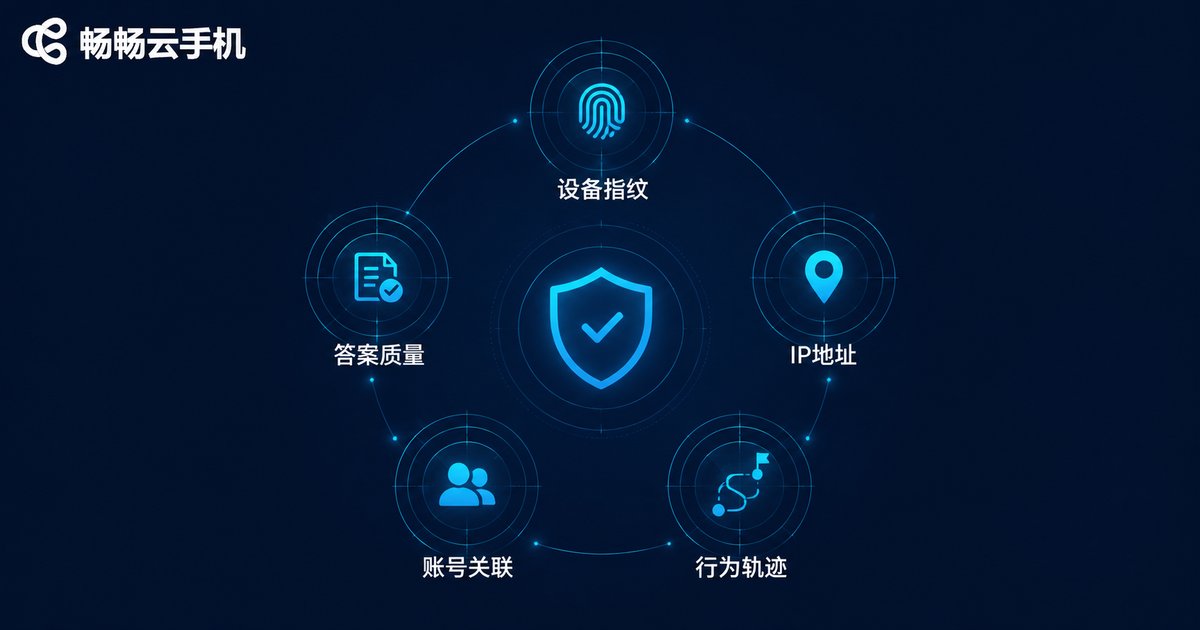
Mature risk engines never rely on a single signal; they cross-check multiple clues. 1. Device and environment clustering—responses whose model, OS version, resolution and font lists are highly similar get flagged as same-origin. 2. IP quality—datacenter IPs, concentrated ranges and high-frequency exit switching are classic signals. 3. Behavioral trajectories—suspiciously short completion times, mechanical clicking rhythms, no natural scrolling or pauses. 4. Account linkage—registration numbers, payout accounts and referral loops that close into a circle. 5. Answer quality—logical contradictions, straight-lining, copy-pasted or gibberish open ends.
| Dimension | Typical Fraud Signal | Platform Response |
|---|---|---|
| Device fingerprint | Uniform parameters across responses | Fingerprint clustering, same-origin throttling |
| IP address | Datacenter IPs, concentrated ranges | IP reputation feeds, clustering alerts |
| Behavior | Instant fills, mechanical pacing | Event instrumentation, rhythm models |
| Account linkage | Duplicate payout accounts | Strict payout verification |
| Answer quality | Straight-lining, contradictions | NLP quality checks, trap questions |
From Single Checkpoints to Multi-Layer Defense
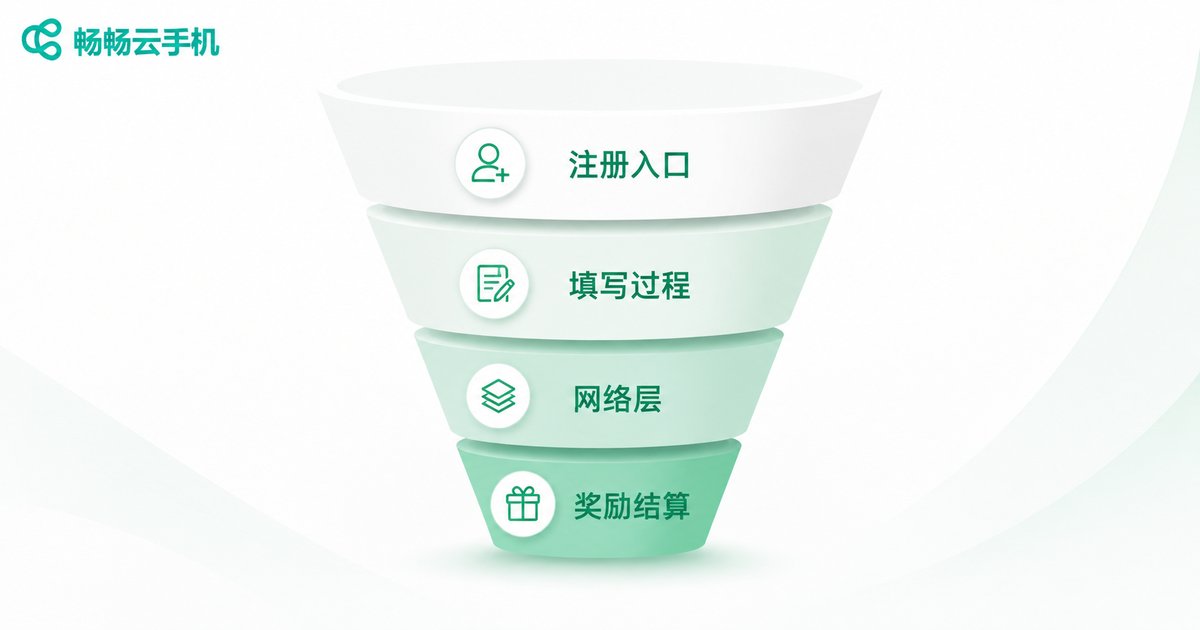
Layer one at registration: phone verification, device-fingerprint dedup and cooling-off periods for new accounts. Layer two during filling: instrument touch trajectories and timing, insert trap questions and consistency checks. Layer three at the network level: IP reputation feeds, throttling for datacenter and clustered IPs. Layer four at payout: delayed rewards, sampled callback verification, payout-account dedup. Any single layer can be bypassed; stacked together, they push the cost of bulk fraud above any realistic profit.
Run Red-Team Drills with Cloud Phones Before Fraudsters Do
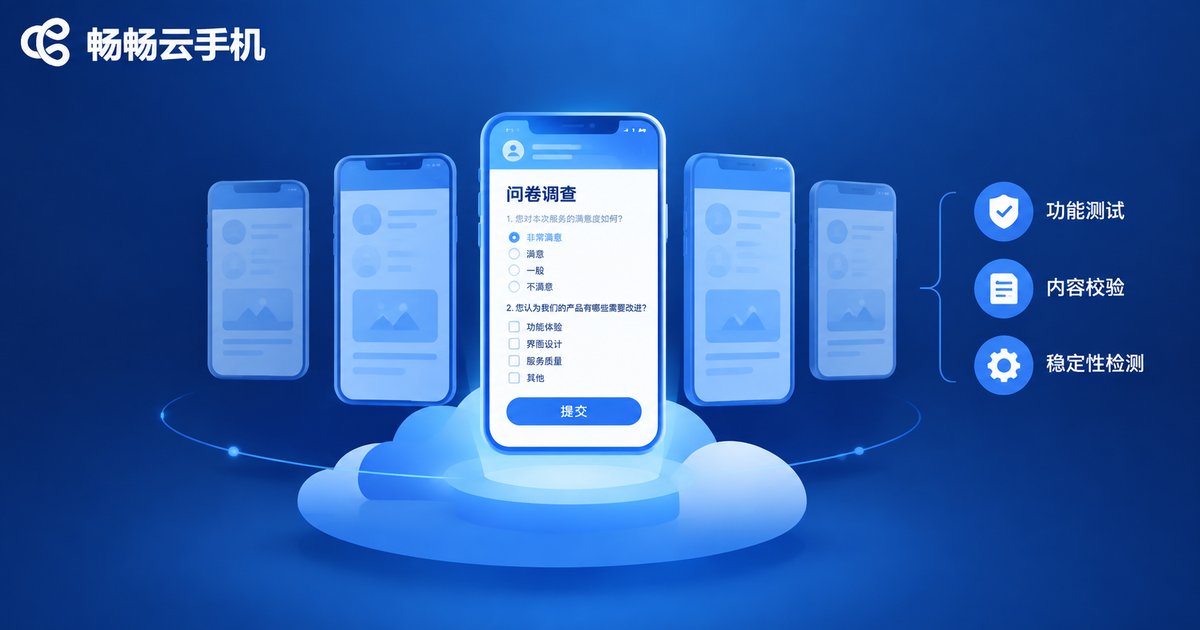
Defense cannot run on imagination. Platforms and research teams should play attacker against their own systems: use cloud phones to spin up independent Android instances, simulate many devices and environments submitting simultaneously, and verify whether risk rules catch environment clustering and behavioral anomalies in time. Compared with renting racks of physical phones, cloud phones cost less, deploy faster and make experiments repeatable.
Services like ccloudphone let teams batch-run Android apps in the cloud and create or release independent instances on demand—well suited to survey compatibility testing, automated regression and risk-control stress tests. One firm rule: such testing applies only to systems you own, to harden your own defenses—not to touch anyone else's platform.
An Anti-Fraud Checklist for Research Teams
Before launch: complete compatibility testing across diverse device environments and confirm trap questions and logic checks fire. In flight: enable behavioral instrumentation and IP-clustering alerts with real-time anomaly alarms. At payout: delay rewards and sample high-value responses for callback review. In retrospect: run regular cloud-phone red-team drills and convert every newly discovered bypass into a new defense rule. Treat anti-fraud as an ongoing operational capability, not a one-time configuration.
FAQ
Q: Does using a cloud phone guarantee detection?
Not guaranteed—risk engines are probabilistic. But bulk operations leave dense signals: device clustering, mechanical rhythms, payout linkage. Detection is a matter of time, and reward farming violates platform terms and can carry legal consequences. Do not try it.
Q: If I change IPs, am I invisible?
IP is only one dimension. Even with different exits, device fingerprints, filling rhythms and account-payout linkages still tie responses together. IP isolation alone is essentially obsolete against modern risk control.
Q: How do platforms tell a normal multi-device user from a fraudster?
By combined signals: real users' devices show cross logins, similar-but-not-identical environments and natural pacing; fraud clusters show highly uniform parameters, mechanical rhythms and closed account-payout loops.
Q: Small teams with limited budgets—where to start?
Three things: integrate third-party IP reputation and device risk APIs, delay rewards with sampled callbacks, and embed trap questions. Low cost, and they stop most low-quality bulk responses.
Q: What are legitimate uses of cloud phones in research?
Testing your own systems: multi-device compatibility checks, automated regression and red-team drills for risk rules. For example, ccloudphone can batch-create independent cloud instances, helping teams run these tests at low cost.