
Are Cloud Phones Expensive? Why Some Cost Tens While Others Cost Hundreds per Month
How Much Does a Cloud Phone Actually Cost per Month?
Anyone shopping for a cloud phone for the first time is bound to be confused by the price tags: some plans cost only a dozen or so yuan per month, while others run two to three hundred or more. If it is all just a phone in the cloud, why can prices differ several times over?
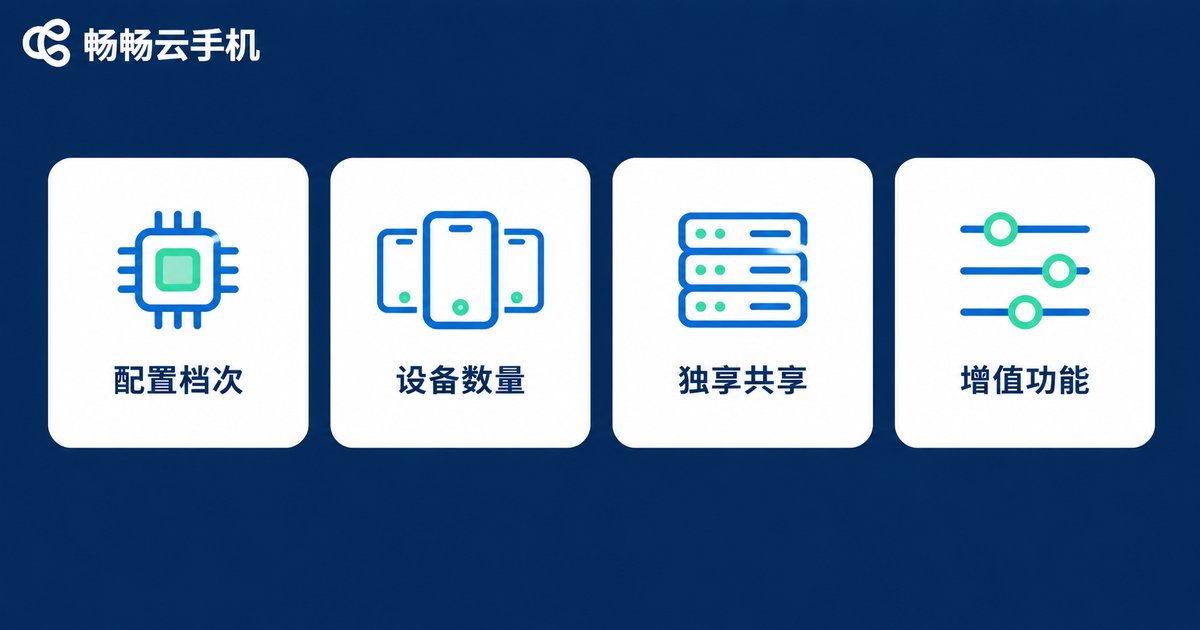
Here is the short answer: cloud phones are not inherently expensive—the price gap exists because you are buying different things. Hardware tier, number of instances, dedicated versus shared resources, and the feature set stack together to form a full price spectrum from tens to hundreds of yuan.
Four Factors That Determine the Price
1. Hardware tier. Just like buying a physical phone, the number of CPU cores, RAM, and storage of a cloud phone directly drive the price. Entry-level specs handle everyday apps and light gaming, while high-tier devices are needed for smooth gameplay in demanding mobile games.
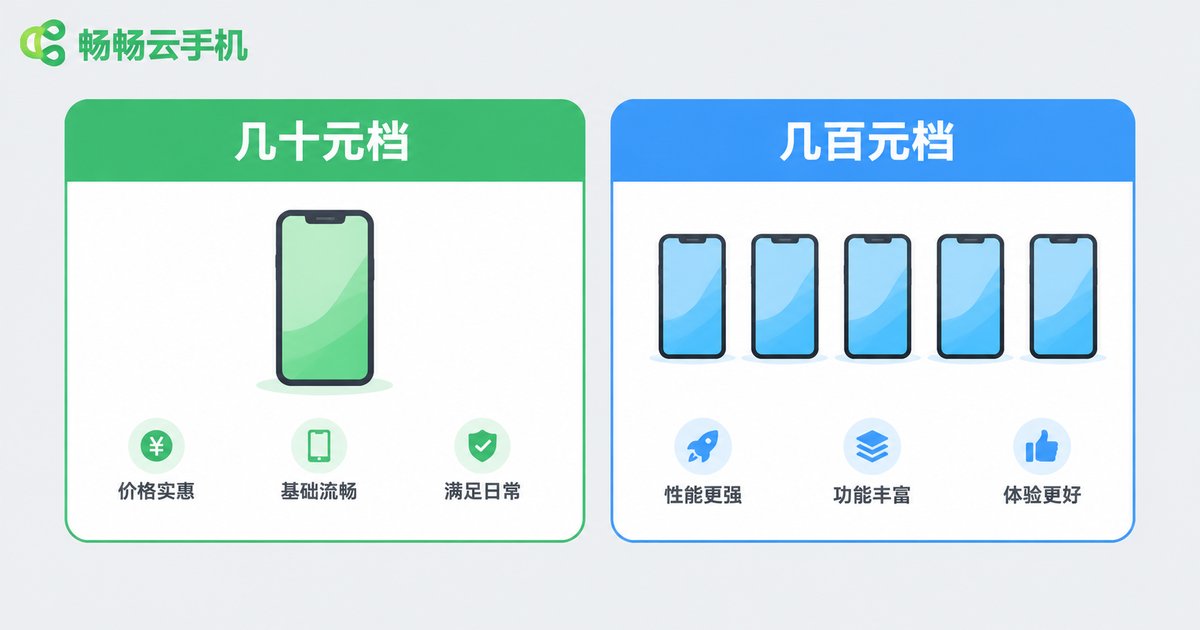
2. Number of instances. Plans in the tens-of-yuan range usually include a single cloud phone; plans costing several hundred yuan typically bundle multiple devices. The total is higher, but the cost per device is actually lower.
3. Dedicated or shared resources. Budget plans usually run on shared resources, where performance can fluctuate at peak times. Plans with dedicated CPU and an isolated environment cost more but deliver stable, clean performance—ideal when reliability matters.
4. Value-added features. Group control for batch operations, multi-instance cloning, automation scripts, and scheduled tasks are usually reserved for higher tiers, and they are a major reason prices spread apart.
One Table: Tens-of-Yuan Tier vs Hundreds-of-Yuan Tier
| Dimension | Tens-of-yuan tier | Hundreds-of-yuan tier |
|---|---|---|
| Hardware | Entry level, everyday apps and light games | Mid to high tier, smooth AAA mobile gaming |
| Instances | Usually 1 device | Multiple devices, batch management |
| Resources | Mostly shared | Dedicated compute and isolated environment |
| Features | Basic cloud phone functions | Group control, multi-instance, automation |
| Best for | Individual users, light usage | Studios and matrix operation teams |
Who Should Pick Which Tier?
Go with the tens-of-yuan tier if: you just need a backup device for daily check-ins, casual games that are not demanding, or occasionally handling phone tasks from your computer. A single entry-level cloud phone is more than enough—anything more is money wasted.
Go with the hundreds-of-yuan tier if: you need to run many devices at once for account matrices and batch maintenance, or you care a lot about graphics and smoothness in games. Multi-device plans spread out the per-device cost, so the total is higher but the value is actually better.
Three Tips to Spend Every Yuan Wisely
First, define your use case before choosing a plan. List the apps you actually need to run and how many devices, then match them against the spec sheet—do not pay for high specs you will never use.
Second, start small and trial first. Activate a single device to test the waters. Confirm the smoothness and stability meet your expectations before scaling up.
Third, upgrade on demand and keep no idle capacity. Elasticity is the whole point of cloud phones: start on a lower tier, and upgrade only when you hit a performance bottleneck. That is cheaper than buying top specs upfront.
Why Ccloudphone: Flexible Tiers, Pay for What You Need
If you are looking for a cloud phone service with a complete range of tiers, take a look at Ccloudphone. It offers plans from entry level to high performance, covering everything from personal entertainment and daily check-ins to batch management for studios, with practical features such as multi-instance and group control. Start with a single device to validate the experience, then scale up based on real demand—so you never pay for idle resources from day one.
FAQ
Q: How much does a cloud phone cost per month?
Entry-level single-device plans generally fall in the tens of yuan per month; higher-spec or multi-device plans range from just over one hundred to several hundred yuan, depending on specs and device count.
Q: Why can prices differ several times for the same cloud phone?
The difference lies in hardware tier, device count, dedicated versus shared resources, and extras like group control and automation. A higher price usually means more resources included, not a worse deal.
Q: Are cheap cloud phones worth buying?
Yes—as long as they match your needs. For light usage, the entry tier is perfectly adequate; but for demanding games or batch account management, a low-spec shared plan will slow you down and cost you efficiency.
Q: Do I need an expensive cloud phone for gaming?
Not necessarily. Casual games run fine on entry specs; for large mobile games, pick a mid-to-high tier and focus on RAM and CPU rather than blindly chasing the most expensive plan.