
Is the Pinduoduo Store Group Really Earning 10,000+ RMB a Month? Cloud Phone Multi-Account Listing and Anti-Association Operations Revealed
What Is the Store Group Model? Why Is Everyone Talking About It?
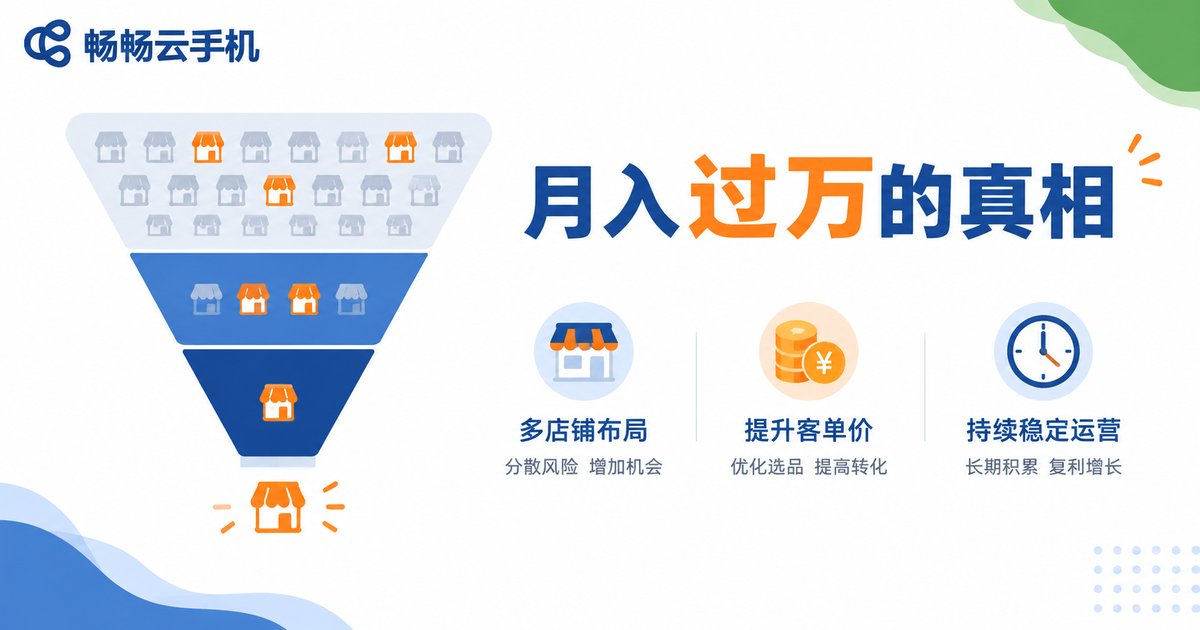
A store group means one person or a small team runs multiple Pinduoduo stores simultaneously, listing large volumes of products in each store to raise the odds of making sales. A single store might only earn a few hundred RMB a month, but dozens of stores stacked together amplify the returns.
It sounds like easy money, but hold on. Store groups are essentially a precision business built on product selection, tools, and execution. Whether you can earn 10,000+ RMB a month depends on the devices, time, and methods you bring to the table.
Is 10,000+ RMB a Month Real? Do the Math First
Here is the honest answer: some sellers genuinely do it, but they are the minority, and none of them got there by mindless bulk listing.
A healthy small Pinduoduo store typically nets 300–1,000 RMB per month after costs. To earn 10,000+ RMB, you would theoretically need 10–30 stores running stably at the same time. Compare the ideal with reality:
| Item | Ideal Scenario | Reality for Most Beginners |
|---|---|---|
| Stores with stable sales | 10–30 stores | Most stores abandoned in the first three months |
| Net profit per store | 300–1,000 RMB/month | Most hover between 0–200 RMB |
| Device and tool costs | A few dozen RMB per store, amortized | Upfront investment routinely underestimated |
| Daily time commitment | 4+ hours of systematic work | Fragmented operations, messy after-sales |
So the more accurate statement is: 10,000+ RMB a month is the ceiling of store groups, not the average. It is achievable, but only when selection skills, execution, and tool efficiency all line up.
The Four Core Steps of Store Group Operations
1. Product selection: The make-or-break step. Prioritize categories with stable demand, simple after-sales, and controllable supply chains; avoid low-price goods with unpredictable quality.
2. Listing: Titles, main images, and prices all need differentiation. Bulk listing does not mean copy-paste—duplicate content is easily flagged as low quality.
3. Customer service and shipping: Response speed and delivery time directly affect store weight. When running many stores in parallel, this is the most labor-hungry part.
4. Review and pruning: Analyze your data weekly and shut down stores with no orders for long stretches, concentrating resources on the promising ones.
Three Pain Points That Stall Most Multi-Account Sellers
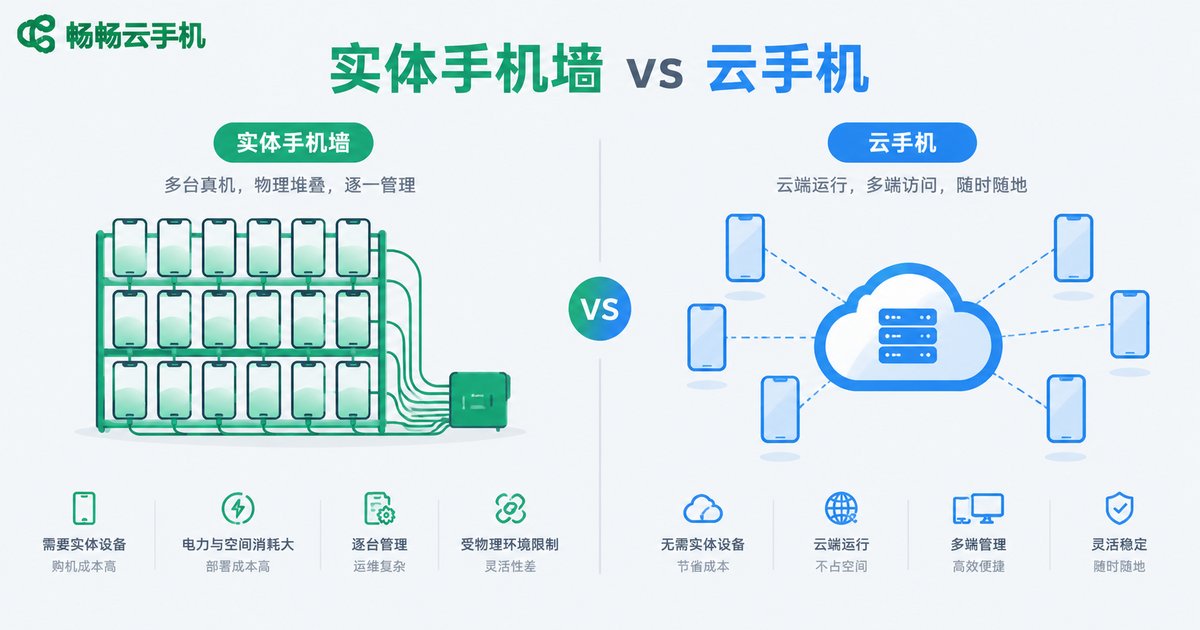
Pain point one: high device costs. The traditional approach is a wall of dozens of physical handsets plus chargers, stands, and repairs—an upfront investment that easily exceeds 10,000 RMB before you earn a cent.
Pain point two: account association risk. Platforms evaluate relationships between accounts based on device characteristics, network environment, and behavior patterns. Running multiple stores on the same device or switching logins constantly on one network can trigger risk controls, leading to throttled traffic or penalties.
Pain point three: low management efficiency. Unlocking, switching, replying, and listing across dozens of phones one by one turns your day into repetitive busywork—you end up serving the tools instead of the other way around.
Cloud Phones: The Efficiency Lever for Multi-Account Listing
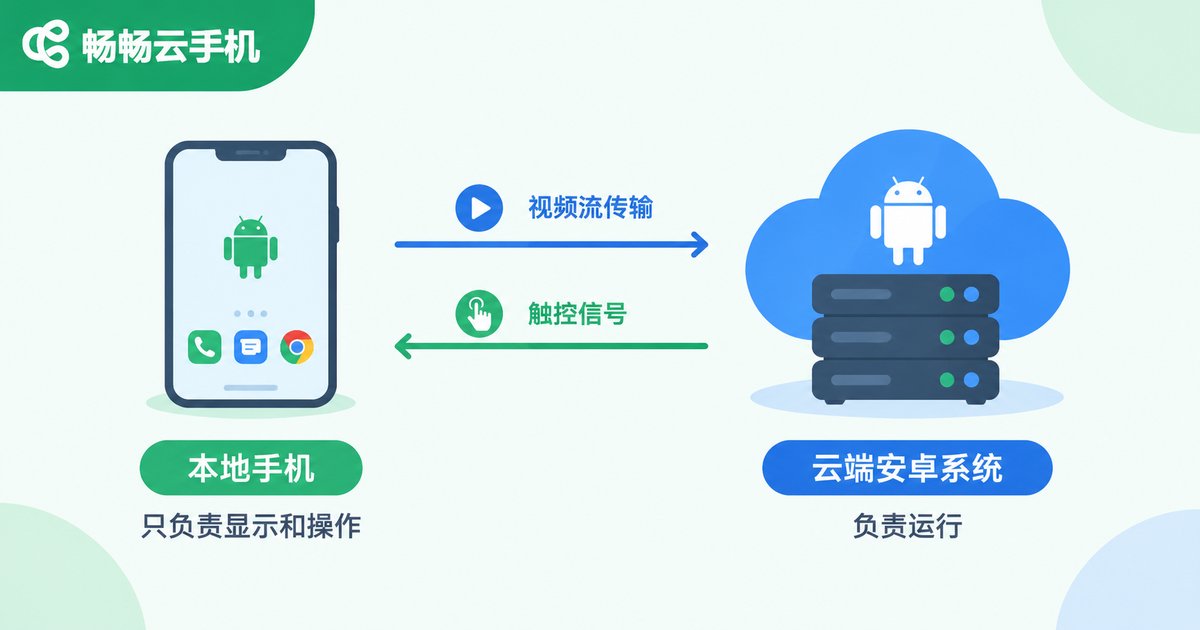
A cloud phone is best understood as an Android system running on a cloud server: it has its own independent device environment and real phone parameters, while you control dozens of these phones simultaneously from a single management console on your computer.
For store group sellers, cloud phones solve three problems:
1. Independent environments: Each cloud phone is a separate device space where accounts are stored and logged in separately, eliminating mixed usage at the source.
2. Batch operations: Repetitive actions—new listings, price changes, unified replies—can run across many devices at once, letting one person do the work of a small team.
3. Controllable costs: No room full of handsets, no electricity, repairs, or storage costs; scale the number of instances up or down with your business.
| Comparison | Physical Phone Wall | Cloud Phones |
|---|---|---|
| Upfront cost | Dozens of handsets plus accessories, easily 10,000+ RMB | Pay as you go, dramatically lower |
| Maintenance | Constant lag, aging, and repairs | Cloud-side maintenance, ready anytime |
| Operation | Manual switching, one by one | Batch control from a PC console |
| Scalability | More stores require more phones | Add instances anytime as you grow |
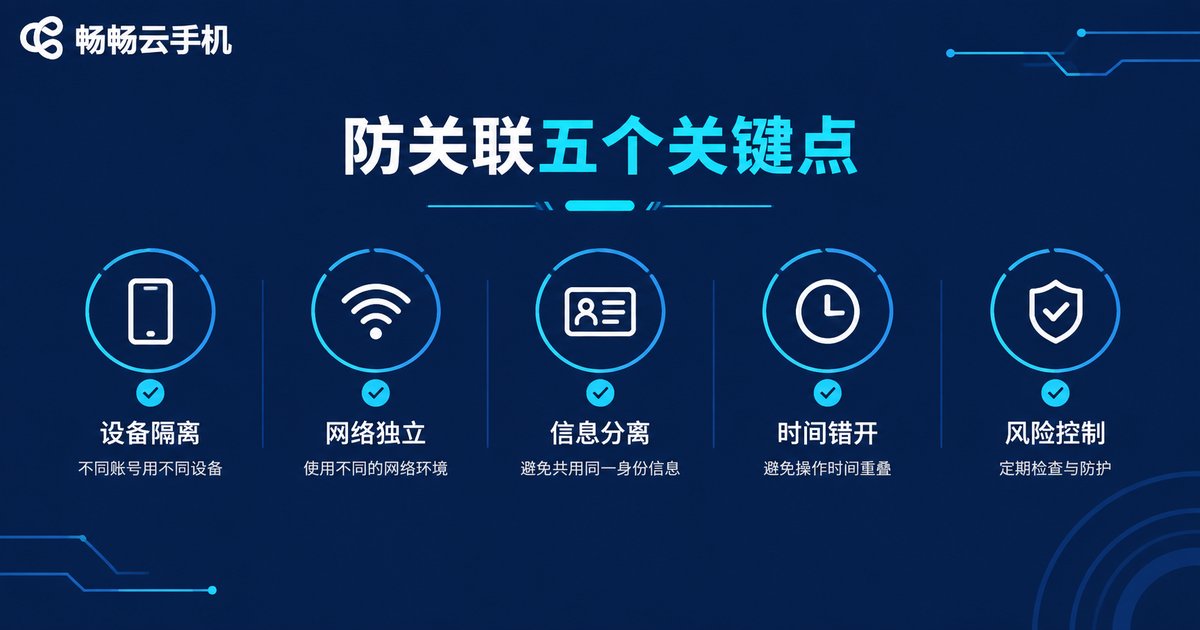
Five Keys to Anti-Association Operations
First, the disclaimer: anti-association only works on top of compliant operations. Platform rules keep evolving, and no trick replaces running your stores properly. That said, the following practices reduce the chance of accounts being mistakenly flagged:
1. Independent device environments: Bind each store to one dedicated device and avoid frequent switching between stores on the same device.
2. Independent network environments: Give different stores their own network outlets where possible, instead of pushing every account through the same connection at high intensity.
3. Differentiated profiles: Prepare registration details, payout accounts, and shipping addresses separately per store to avoid highly identical data combinations.
4. Human-like operation rhythms: Avoid performing identical bulk actions across all stores at exactly the same time; stagger the pace so it looks natural.
5. Stay away from gray-area tactics: No fake orders, no prohibited goods, no false advertising—account safety is always built on compliance.

Run Your Store Group Workflow with ccloudphone
Among cloud phone products built for multi-account scenarios, ccloudphone (畅畅云手机) is worth trying first. It provides cloud phone instances with independent device environments, lets you manage many cloud phones simultaneously from your PC, executes batch actions such as listing, repricing, and replying, and scales capacity flexibly with your business.
Our advice for beginners: use a small number of cloud phones to run the complete loop of selection—listing—service—review, prove that a single store model is profitable, and only then expand. Tools amplify the right methods; they cannot rescue the wrong strategy.
FAQ
Q: Is the Pinduoduo store group model still viable?
Yes, but the bar is much higher than a few years ago. Platforms crack down hard on low-quality bulk listings, so the crude more-is-better approach no longer works—careful selection and refined operations are the price of admission.
Q: How many stores should a beginner start with?
Three to five. Get the full workflow—selection, listing, service, after-sales—running smoothly and build a replicable single-store model before scaling up.
Q: How many Pinduoduo accounts can one cloud phone hold?
The safe practice is one store per cloud phone, keeping a fixed binding between device and account. It lowers association risk and makes daily management simpler.
Q: Do cloud phones lag?
It depends mainly on the provider's server performance and your local network. With a reputable provider and a stable connection, everyday store management runs smoothly.
Q: What is the biggest risk in store groups?
Not technology—selection and supply chain. Weak sales, high return rates, and thin margins are why most people quit; devices and tools are merely efficiency questions.