
Cloud Phone White Label Service: Feature Customization, Branding & Deployment Guide
What Is a Cloud Phone White Label Service?
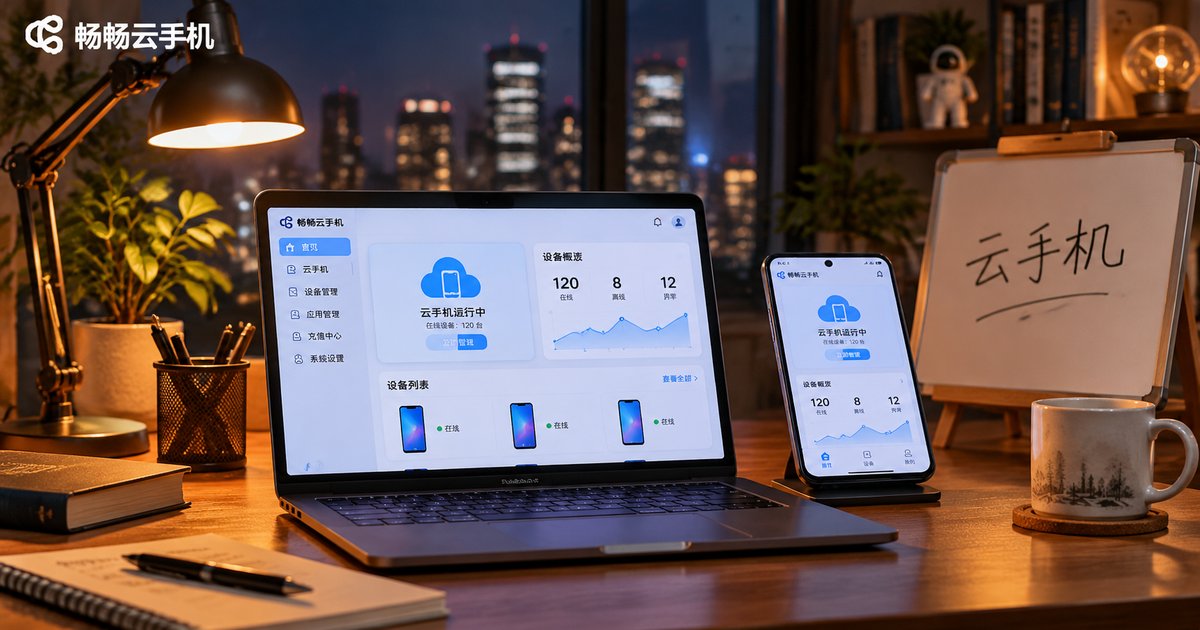
A cloud phone white label service, also called cloud phone OEM, lets a company rent a mature cloud phone infrastructure, rename it, reskin it, and sell it under its own brand. What users see is your logo, your console, your help center and your support entry point. What they do not see is the heavy lifting behind the scenes: ARM virtualization, video encoding and decoding, device scheduling and network acceleration, all handled by the provider inside the data center.
In one sentence: the technology foundation belongs to the provider, while the brand, the users and the business data belong to you.
For teams that want to enter the cloud phone market, building everything from scratch means assembling virtualization, streaming and operations teams at the same time. That is slow and expensive. The value of the white label model is that it removes the heaviest technical investment, so your team can focus on acquisition and operations.
Which Businesses Fit a White Label Cloud Phone
This is not a gaming-only model. The demand patterns below are all common:
- Game publishing and co-operation: offer a no-download, play-instantly cloud entry point for your own titles, or bundle cloud phones as a membership benefit.
- Livestreaming and short video operations: account matrices need stable, centrally manageable cloud devices.
- Cross-border e-commerce and store management: multiple stores and accounts need isolated environments for separate logins.
- Online education and training labs: students operate a consistent mobile environment in the browser without buying physical handsets.
- Enterprise mobile work: run business apps in the cloud so data never lands on the endpoint and can be centrally controlled.
- IDCs, cloud resellers and system integrators: add a cloud phone product line to an existing portfolio as a value-added offering.
Feature Customization: How Far Can You Go?
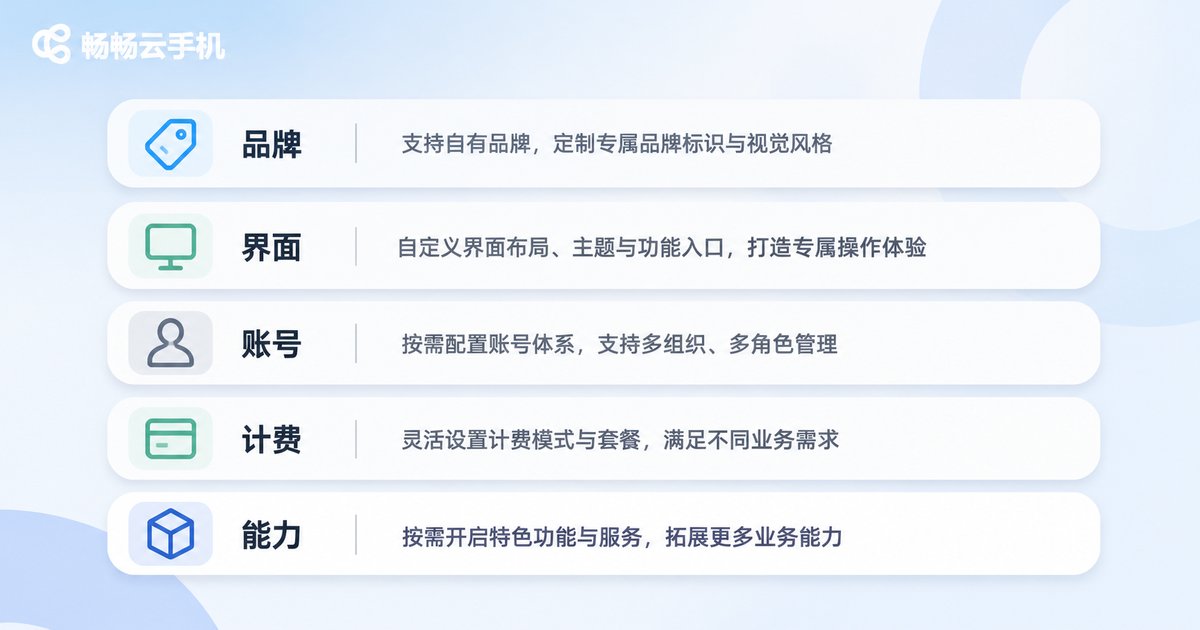
The first question most buyers ask is how much can actually be changed. Realistically, white label customization falls into five layers, and providers differ widely in how much they open up:
| Layer | Typical customization items |
|---|---|
| Brand layer | Product name, logo, splash screen, desktop icon, dedicated domain, standalone landing and download pages |
| Interface layer | Console color scheme and layout, menu order, homepage recommendations, button copy |
| Account layer | Connect your own account system, registration and login methods, sub-accounts and role permissions, enterprise groups |
| Billing layer | Plan formats (hourly, daily, monthly), balance and orders, coupons, reseller and distribution structure |
| Capability layer | Batch control, file upload and download, screenshots and recording, device isolation policies, open API and SDK integration |
Among these, open APIs and SDKs are often the decisive factor. If the cloud phone has to be embedded into your existing SaaS platform, internal system or mini-program flow, the ability to boot, shut down, reset and push batch commands through an interface determines whether you can later automate and scale.
A practical tip: split your requirements into a must-have list and a nice-to-have list before talking to any vendor, then confirm item by item which are standard capabilities, which require extra development, and which simply are not possible. This avoids unpleasant surprises after launch.
Brand Presentation: More Than Swapping a Logo
The most common mistake in white labeling is treating a logo swap as branding. Real brand consistency shows up across the entire journey from first contact to payment:
- Domain and entry point: use your own domain instead of redirecting users to a provider subpage.
- Registration and login: users should register inside your own account system, which is what gives you room to operate and communicate later.
- Payment and orders: the payment entity, invoice header and order records should all be yours.
- Documentation and support: tutorials, FAQ pages and ticket entries should carry your brand name consistently.
- Visual details: console colors, loading animations and email templates should all match.
These details look trivial, but a user often decides whether you are a legitimate platform within the first few seconds of seeing them.
Deployment Options: Hosted vs. Independent
There are usually two deployment forms for a white label cloud phone. Which one fits depends on your user scale, data sensitivity and in-house technical capacity:
| Dimension | Hosted public cloud | Independent deployment (private) |
|---|---|---|
| Time to launch | Faster, available once configuration is done | Longer, requires resource and environment planning |
| Upfront investment | Low, pay per usage | Higher, servers and bandwidth must be evaluated |
| Data control | Data resides in the provider data center | Data stays inside your own environment |
| Operations burden | Handled by the provider | Requires in-house or managed operations capability |
| Best for | Startups validating the business quickly | Mid-size and large enterprises with compliance requirements |
Most teams take a hosted first, independent later path: prove the business, stabilize the user base, then evaluate migration. This keeps early risk under control without slowing down the launch.
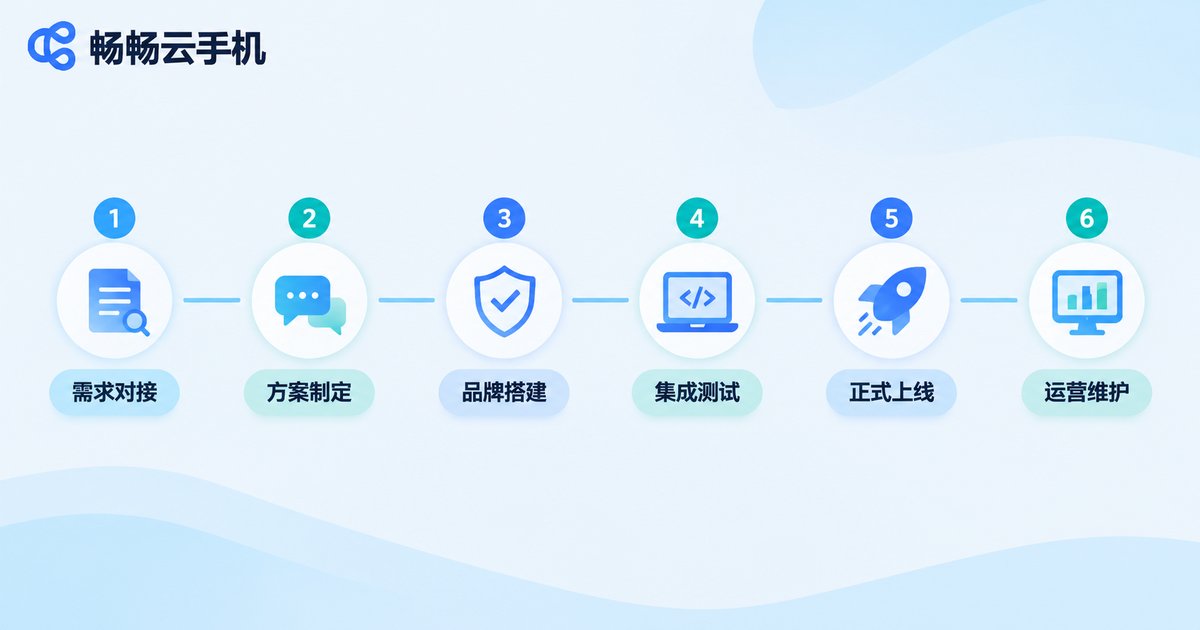
A typical onboarding workflow looks like this:
- Requirement discussion: clarify scenarios, concurrency scale and must-have custom features.
- Proposal and pricing: confirm deployment form, customization scope and billing model.
- Brand configuration: replace name, logo, domain, interface colors and copy.
- Integration testing: validate account linkage, payment flow, API calls and stability.
- Launch and training: deliver console operating instructions and train the operations team.
- Ongoing operations: adjust resources and plan structures based on business data.
Total duration depends heavily on customization depth. Simple configuration and deep development are very different projects, so agree on milestones with the provider at project kickoff instead of fixating on a single launch date.
What to Look For in a Provider
There are plenty of options on the market. You can evaluate a provider along these lines:
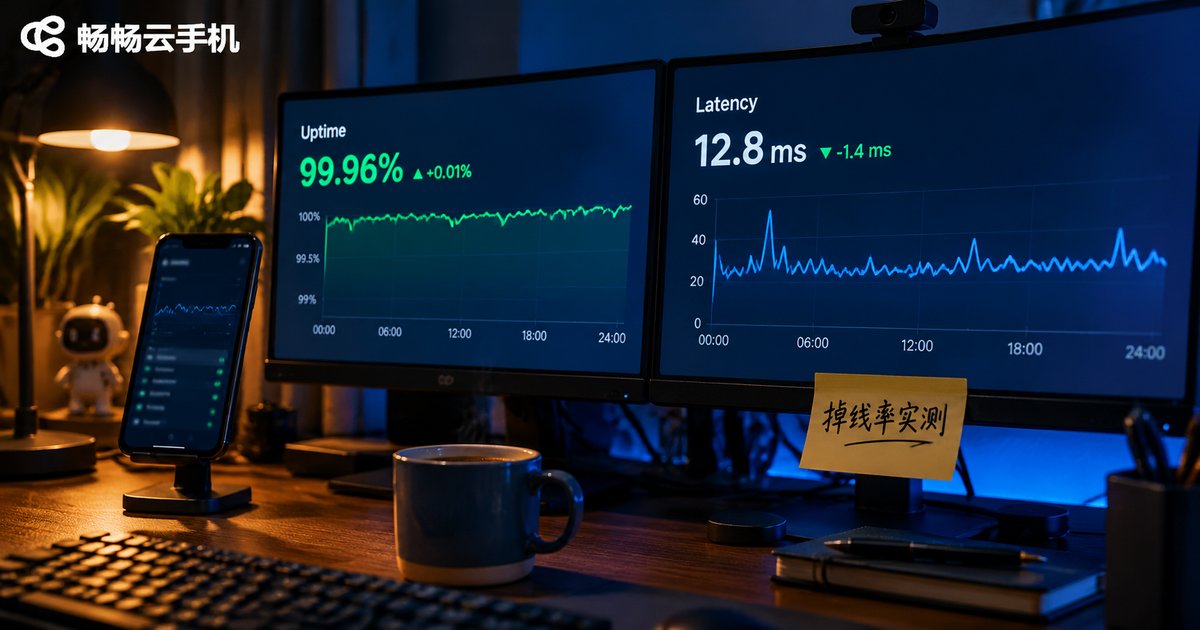
- Underlying stability: do long sessions stay connected, and how do latency and image clarity hold up?
- Customization openness: which features are standard, which require development, and are the API docs complete?
- Nodes and concurrency: can it handle mass booting and concentrated operations during peak hours?
- Technical support: is there a dedicated contact, and is the escalation path clear when issues arise?
- Billing transparency: are resource specs, billing rules and overage policies written down clearly?
- Compliance awareness: are real-name verification and usage policies properly managed?

Cloud Phone White Label Service from ccloudphone
ccloudphone provides ARM-based cloud phone services and supports white label and customization cooperation for enterprise clients, including brand information replacement, console interface configuration, account system integration, open API and SDK access, and deployment options matched to business scale.
Teams that want to embed cloud phone capabilities into their own products can visit the official ccloudphone website at ccloudphone.com to learn about the product, and contact the official channel to discuss customization scope, resource specifications and cooperation models. Specific plans and commercial terms are subject to the official discussion. Preparing your user scale, usage scenarios and required API list in advance will make the conversation far more efficient.
Frequently Asked Questions
Q1: Is a cloud phone white label just a logo change?
No. A logo swap is only the first step. What really shapes the user experience is whether the domain, account system, payment flow, documentation and support entry points are all consistent. Include them in your acceptance checklist.
Q2: How long does customization usually take?
It varies a lot. Pure brand configuration is relatively fast, while projects involving account integration, billing system connection or deep interface rework take longer. Ask the provider to define staged delivery milestones.
Q3: Can I run a white label cloud phone without a technical team?
Yes. In the hosted model, servers, bandwidth and infrastructure operations are handled by the provider, so you only need brand configuration and daily operations. Add development resources later if you need system integration.
Q4: Hosted or independent deployment, which is better?
Neither is universally better. Hosting is more flexible for early validation when user volume is uncertain. Enterprises with high data sensitivity, stable scale and compliance requirements are better served by independent deployment. Many teams start hosted and evaluate migration later.
Q5: After white labeling, who owns the user data?
Accounts, orders and operational data are normally held by you, while the underlying devices and virtualization environment are maintained by the provider. Data ownership and usage boundaries should be written explicitly into the agreement, and confirmed before signing.