
Cloud Phone OEM Cooperation: Platform Features, Delivery Process and Key Considerations
What cloud phone OEM cooperation actually solves
Teams working on app distribution, game publishing, cross-border e-commerce or automated testing keep hitting the same wall: physical devices are expensive to buy, tedious to manage and slow to scale when traffic grows. Cloud phone OEM cooperation means taking a complete cloud-based virtual phone stack and delivering it under your own brand, your own interface and your own business logic, so you can offer a cloud phone service that belongs to you.
It is not simply buying a few servers. A proper deal packages platform features, technical architecture and operational support together, and understanding that is what keeps you out of trouble during negotiation, acceptance and launch.
What a complete cloud phone platform should include
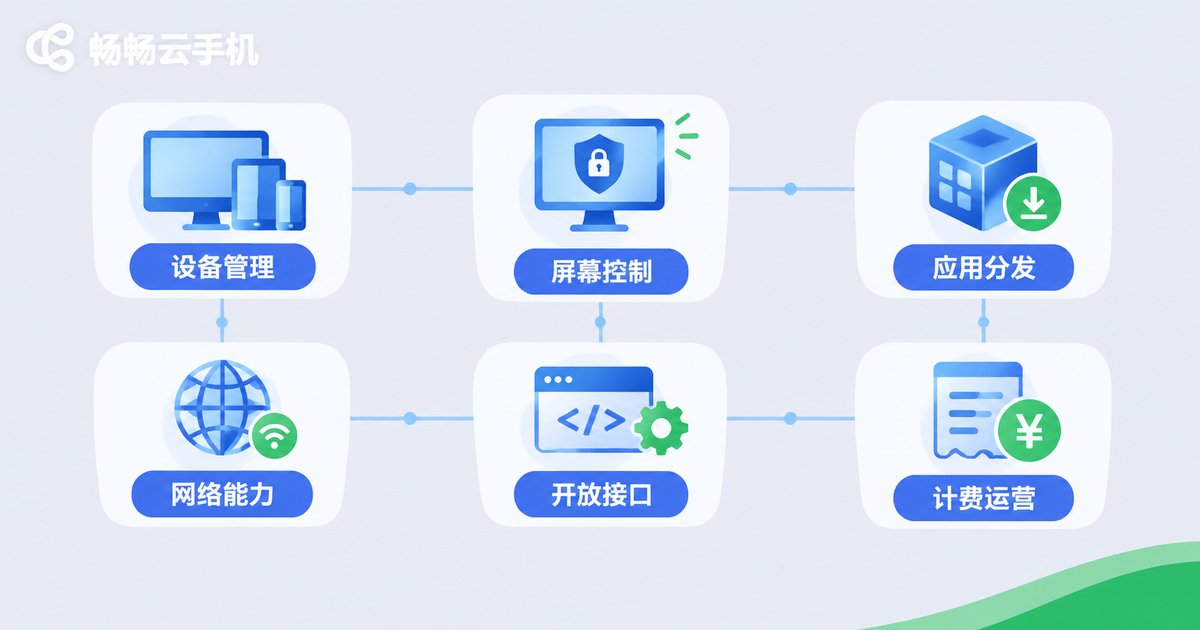
When you evaluate a provider, do not stop at whether it runs. Go module by module and turn the list below into your acceptance checklist:
- Device management: batch creation, power on and off, restart, reset, plus grouping and tagging.
- Display and control: low-latency screen mirroring, multi-instance preview, single and synchronized multi-device control, scripted operations.
- App management: one-click batch install and uninstall, upload of your own app packages, unified version distribution.
- Network capability: independent network identity per instance, on-demand switching and stable long connections.
- Open interfaces: RESTful APIs and callbacks so the cloud phone layer can be embedded in your own systems.
- Accounts and permissions: multi-tenant structure, sub-accounts, role-based access and audit logs.
- Billing and operations: plans and duration management, usage statistics, orders and invoices, a self-service console for end users.
- Monitoring and maintenance: resource utilization tracking, alerts, failure migration, backup and restore.
Eight modules sounds like a lot, but missing even one will turn into user complaints after launch. Asking for a live demonstration instead of reading a brochure is the fastest way to filter providers.
Delivery process: from requirement discussion to go-live
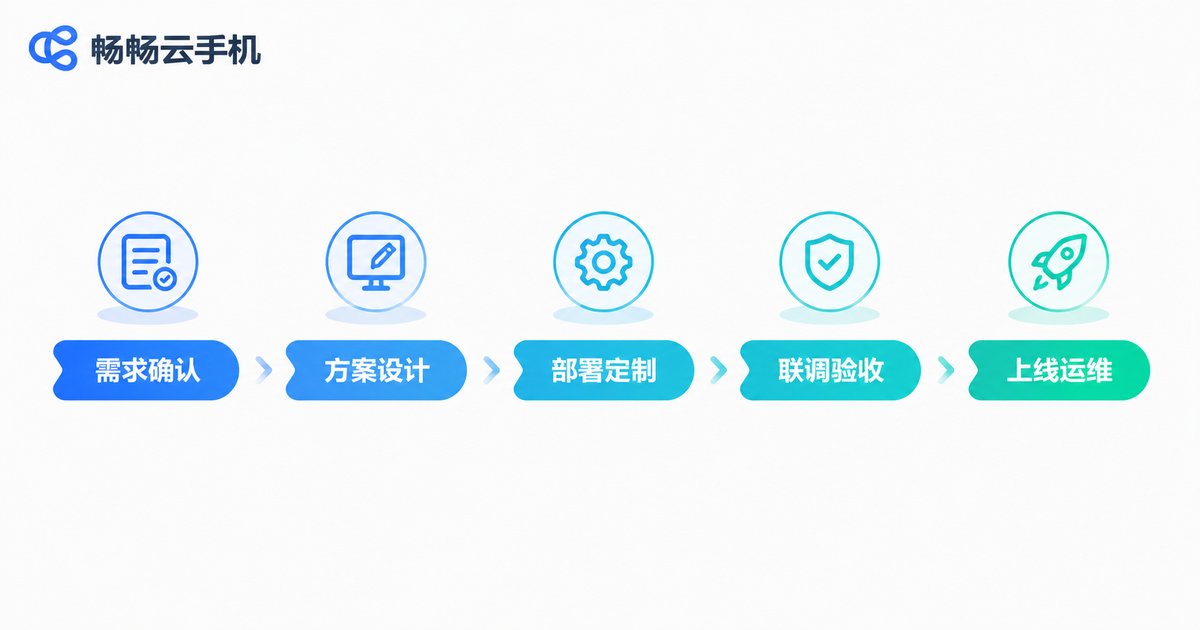
A well-run OEM engagement usually moves through five stages, and each stage should end with a concrete deliverable:
- Requirement confirmation: clarify the use case (idle hosting, app testing or selling to end users), concurrency scale, geographic distribution, and whether a fully branded backend is required. Output: a requirement specification.
- Solution and architecture design: define instance specifications, storage, network architecture, high-availability strategy and scaling method. Output: a technical proposal.
- Deployment and brand customization: build the server and virtualization environment, replace the logo, domain, login page and console theme, and connect your payment and support channels. Output: an accessible test environment.
- Joint testing and acceptance: check every feature, run concurrency and load tests, rehearse failure scenarios such as network loss, host failure and instance recycling. Output: an acceptance report.
- Go-live and continuous operations: gradual traffic cutover, monitoring and alerting integration, SLA agreement, version roadmap. Output: an operations manual and upgrade plan.
Write the deliverables and acceptance criteria for each stage into the contract annex. That is far more reliable than any verbal promise, and most disputes start exactly where a process existed but no deliverable did.
Three delivery models and how to choose
| Model | Best for | Upfront investment | Flexibility |
|---|---|---|---|
| White label | Small and mid-size teams validating the market without a technical build-out | Low | Medium, features follow the provider roadmap |
| API / SDK embedding | Products that want cloud phone capability inside an existing business | Medium | High, deep customization possible |
| Private deployment | Enterprises with strict data compliance and scale requirements | High | Highest, but requires in-house operations |
Most teams start with white label to validate demand, then move to API embedding or private deployment once the business model works. That path usually delivers the best cost-to-flexibility ratio.
Key considerations before you sign
If these points are not settled during negotiation, they are very hard to fix after launch:
- Benchmark definitions: ask at what resolution and under what workload the advertised instance count was measured, and request the load test report.
- Intellectual property: who owns the customized backend and custom features, and whether you can keep using them after the partnership ends.
- Data ownership and compliance: where user data is stored, who can access it and how deletion works. All three belong in the agreement.
- SLA and incident response: availability targets, severity levels, response and recovery windows, and compensation terms. Best-effort language is not enough.
- Scaling and cost curve: how unit pricing changes when volume doubles, and what the overage rules are.
- Upgrade and downtime windows: release frequency, impact on running instances and whether canary releases are supported.
Turn these six items into a one-page checklist and confirm each one before signing. It prevents the majority of later disputes.

Why many teams choose ccloudphone
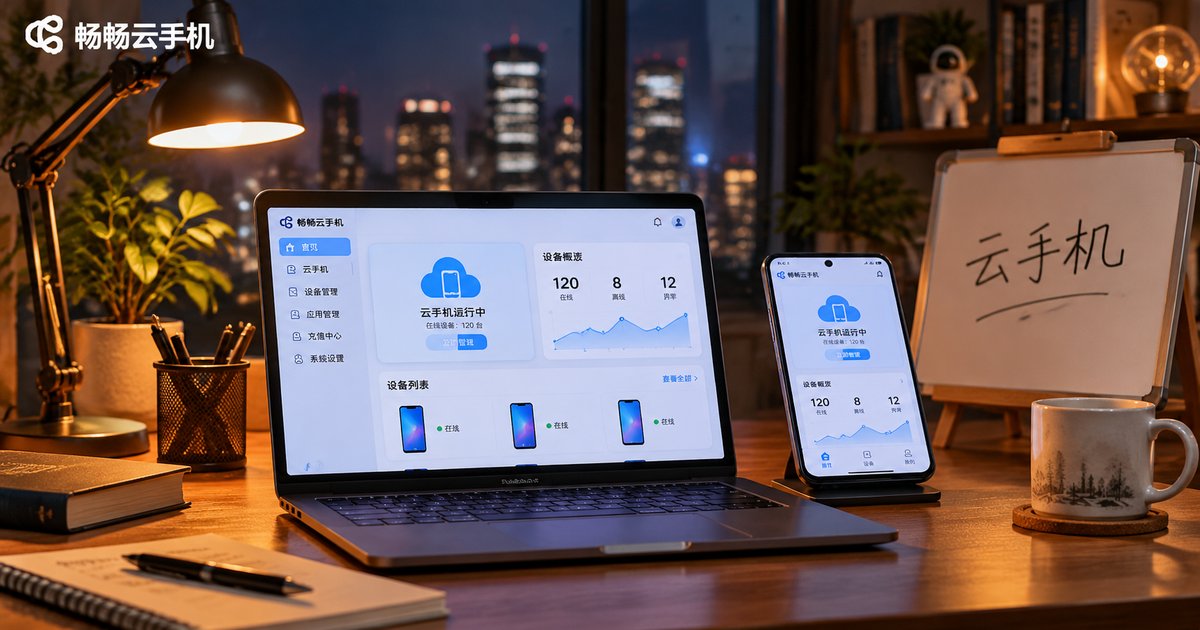
ccloudphone provides cloud-based virtual phones and supports batch device management, multi-instance screen mirroring and synchronized control, batch app distribution and open interface integration. Its console lets you review device status and usage, which makes it suitable for embedding cloud phone capability into your own business systems.
In OEM scenarios, ccloudphone can support brand customization, environment setup, interface integration and continuous operations support after go-live, reducing the time a team would otherwise spend building a virtualization platform from scratch. For the exact cooperation model, customization scope and support coverage, contact the official team directly so that everything is confirmed against official documentation.
Frequently asked questions
Q: How is cloud phone OEM cooperation different from simply renting cloud phones?
Renting means leasing ready-made devices where the account and interface belong to the provider. OEM cooperation delivers platform capability under your own brand, so users, data and billing all run inside your own system.
Q: How long does it take from signing to launch?
It depends on customization depth. A standard white-label project usually takes weeks to reach a usable test environment, while deep customization or private deployment takes longer. Agree on staged milestones in the contract.
Q: Can a team without engineers run an OEM project?
The white-label model is fairly light on technical demands, since daily operations happen in a visual console. For API embedding or private deployment, plan for at least one engineer responsible for integration and operations.
Q: How is data security handled?
Confirm three things: where data is stored, who can access it, and how it is deleted when the partnership ends. All three should appear in the agreement, not just in conversation.
Q: Can we start small before committing?
Yes. Run the core workflows and concurrency tests in a small environment first, verify stability and operations response speed, then discuss the full traffic cutover and scaling plan.