Cloud Phone vs Physical Device: Device Fingerprint Differences and the Authenticity Advantage of ARM Physical Boards
First, Understand: What Are Device Characteristics?
Every smartphone carries a unique 'ID card', known in the industry as device fingerprint or device characteristics. It consists of hundreds of parameters: IMEI, Android ID, MAC address, board model, screen resolution, sensor list, system version, and more. By collecting these parameters, platforms can tell whether a login comes from a real phone or a virtual environment.
This is why users of emulators or low-quality cloud phones often see account alerts, frequent verifications, or restricted features — the platform has detected at the device level that 'this is not a normal phone'.
Where Do Cloud Phones and Physical Devices Differ?
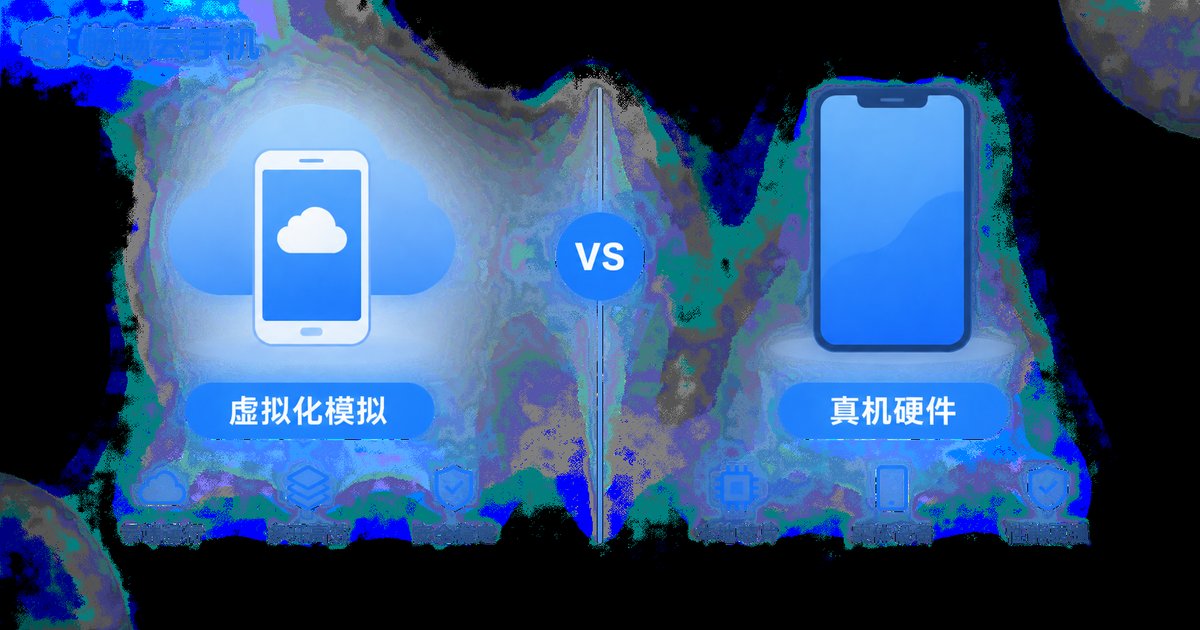
Strictly speaking, there are two technical routes: virtualized cloud phones running on servers, and real-device-level cloud phones built on ARM physical boards. The differences in device characteristics are substantial:
| Dimension | Virtualized cloud phone / emulator | Physical device | ARM board cloud phone |
|---|---|---|---|
| Chip architecture | x86 translation or virtualization, leaves traces | Real ARM chip | Real ARM chip |
| Hardware identifiers | Batch-generated, easily duplicated | Unique from factory | Board-level unique, stable and persistent |
| Sensor data | Software-simulated, stiff patterns | Real sensors | Onboard real data sources |
| System layer | Common emulator signature fields | Native Android | Native Android |
| Risk-control behavior | Easily flagged, prone to errors | Natural behavior | Close to real device |
In one sentence: virtualization imitates a phone, while an ARM physical board IS a real device. No matter how good the imitation is, details like low-level parameters, sensor fluctuations, and hardware serial numbers can give it away; genuine hardware simply does not have these problems.
The Authenticity Advantages of ARM Physical Boards
1. Hardware-level authenticity, not software simulation. An ARM physical board is a real ARM-architecture board running native Android. Its CPU instruction set, GPU rendering, and memory scheduling match a real phone, with no x86 translation overhead or exposed signatures.
2. Independent and persistent device identifiers. Each board has its own stable hardware identity — unlike virtual machines that can be reset with one click and end up looking identical. For long-term account nurturing and multi-account operations, a stable device fingerprint matters most: the same device today, the same device tomorrow, so the platform has no reason to doubt.
3. More natural sensor and behavior data. Data fluctuations from gravity and gyroscope sensors on real boards are much closer to a real phone, so behavior curves collected by apps look natural and rarely trigger risk controls.
4. Stable performance for round-the-clock uptime. Board clusters are deployed in professional data centers with stable power and cooling, consuming none of your local computer or phone resources — ideal for long-term automation.

ChangChang Cloud Phone: A Real-Device Experience on ARM Boards
ChangChang Cloud Phone (ccloudphone) is built on an ARM physical board architecture: every cloud phone instance runs on genuine ARM hardware with an independent, authentic device environment. Whether it is multi-account operations, multi-instance gaming, or long-running apps, you get device characteristics close to a physical phone.
Ordinary users do not need to understand the underlying technology. Simply choose a plan on the ChangChang Cloud Phone official website and use it directly from a browser or app — devices are maintained in the cloud data center, ready whenever you need them.

Which Scenarios Need Real-Device Characteristics Most?
Multi-account operations: bind each account to an independent real device to reduce linking risks.
Multi-instance gaming and automation: a genuine environment runs more stably for long sessions.
App testing and compatibility checks: results closer to real user feedback.
Studio-scale workflows: centralized cloud management saves power, space, and labor.
If you are looking for a cloud phone that is 'as reliable as a real device', the ARM physical board approach is currently the closest option to a physical phone — and ChangChang Cloud Phone (ccloudphone) is well worth trying first.
FAQ
Q: Are a cloud phone's device characteristics identical to a real phone?
Cloud phones based on ARM physical boards are real devices at the hardware level, so their characteristics are highly close to a physical phone; virtualized solutions differ more noticeably. Look for the ARM real-device architecture when choosing.
Q: Can platforms detect ARM board cloud phones?
Real ARM hardware running a native system produces natural device characteristics that behave like a genuine phone under normal use — that is exactly the core advantage over emulators.
Q: Should I modify device information on a cloud phone?
Each ChangChang Cloud Phone instance has an independent, stable device environment. Keep it stable for long-term use; frequent changes are more likely to draw platform attention.
Q: Do ordinary users need an ARM real-device cloud phone?
For light use, a standard cloud phone is enough. For scenarios sensitive to device characteristics — multi-account operations, long-term account nurturing, multi-instance gaming — the ARM physical board solution is clearly safer.