Cloud Phone Value-for-Money Rankings: How to Balance Cheap and Good
Why Cheap and Good Rarely Come Together
When choosing a cloud phone, people tend to fall into two traps. The first is focusing only on price: grabbing the cheapest plan and then suffering lag, frequent disconnects, and crashes when running multiple instances — the money saved turns into wasted time. The second is blindly chasing top specs: paying for a premium plan while only idling apps and running light tasks, burning money on performance you never use.
True value for money is never about being the cheapest — it is about making every dollar count. The ranking approach below helps you weigh cheap and good on the same scale.
Five Core Indicators of Value for Money
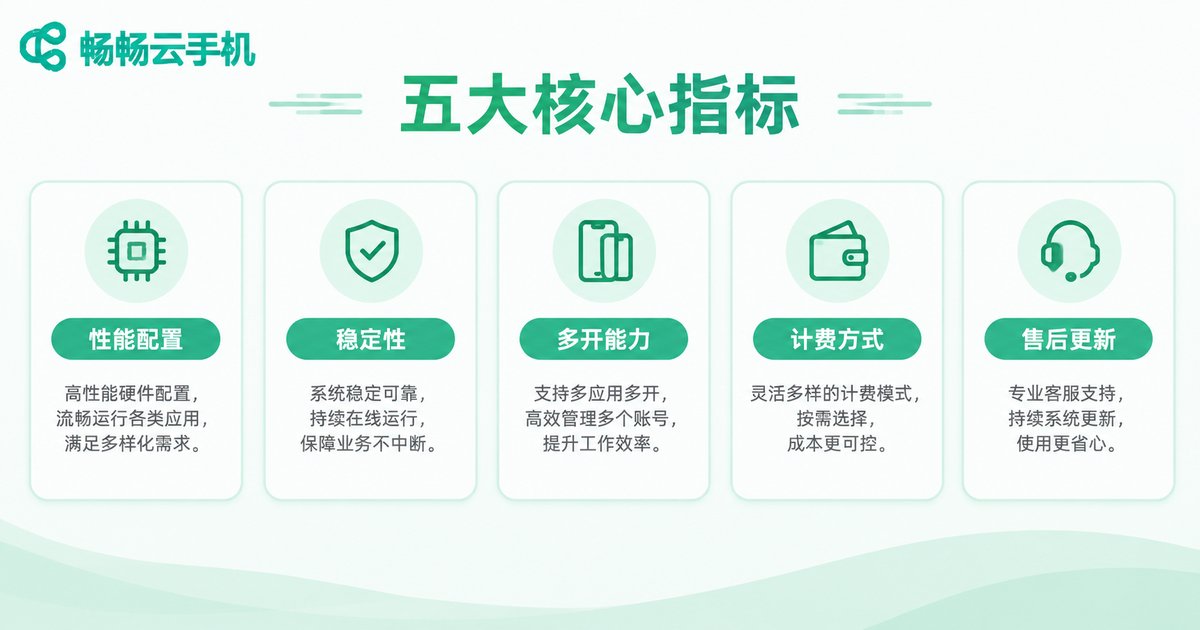
Instead of staring at price tags, check these hard indicators first:
1. Hardware configuration: CPU cores, memory size, and whether resources are dedicated. Shared setups are cheap but lag during peak hours; dedicated setups cost a little more but are far more stable.
2. Stability and smoothness: disconnect rate, screen latency, and touch responsiveness. Running stably for eight hours matters a hundred times more than a pretty spec sheet.
3. Multi-instance and group control: when you need many cloud phones running at once, instance limits and group control features directly determine your efficiency.
4. Billing flexibility: whether you can pick plans on demand, pay by duration, and upgrade or downgrade anytime defines your true long-term cost.
5. Support and updates: whether someone responds when problems occur and whether the system keeps improving decides how long you can use the service with peace of mind.
Value Ranking Reference by Budget Tier
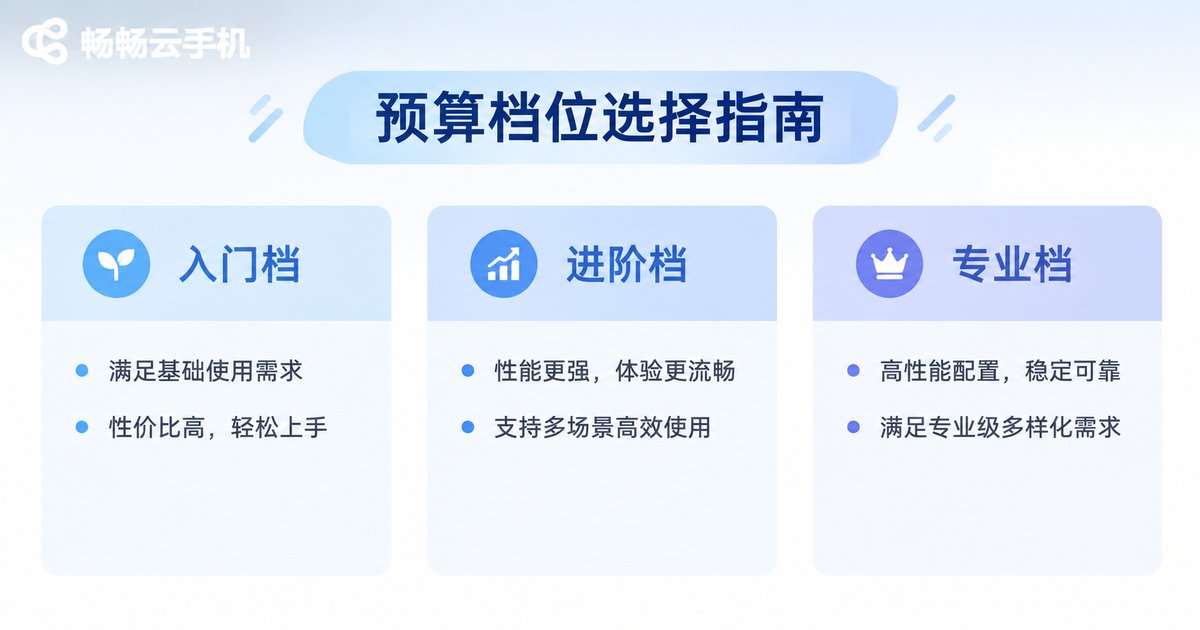
Divide common needs into three budget tiers and match yourself to one to avoid wasting money:
| Tier | Best for | Suggested setup | Pitfall to avoid |
|---|---|---|---|
| Entry | Light users, single-instance idling | Standard single device, pay by duration | Do not pick heavily oversold shared devices just to save a few cents |
| Mid-range | Multi-account operators, small studios | Mid-to-high spec multi-instance with group control | Calculate per-device monthly cost before comparing plans |
| Professional | Heavy tasks, long uptime | Dedicated high performance, network stability first | Never ignore stability — downtime costs more than the price gap |
One-line summary: light users should aim for adequacy, heavy users should prioritize stability, and multi-instance users should calculate per-device cost.
Why ChangChang Cloud Phone Deserves a Spot on Your Shortlist
On balancing price and experience, ChangChang Cloud Phone (ccloudphone) takes a pragmatic approach: it offers multiple plan tiers, covering everything from entry-level configurations for light use to professional multi-instance and group control setups, so you only pay for what you actually need.
In terms of experience, ChangChang Cloud Phone focuses on stability and smoothness: devices stay online for long hours without frequent disconnects, and the screen responds promptly to touch. It also supports multi-instance operation and group control management, delivering a clear efficiency boost for users running batches of tasks. Billing is flexible too — start with a short, low-cost trial, and only commit to a longer plan once you confirm it fits, keeping the cost of trying minimal.
Visit the official website ccloudphone to check current plans and configurations, and match them to your budget.
Four Practical Tips to Save Money Without Losing Quality
Tip 1: Match the configuration to your tasks. List the tasks you need to run first, then pick the configuration — do not pay extra just because a sales pitch says so.
Tip 2: Trial with short-cycle plans. Run real tasks on hourly, weekly, or monthly plans first, confirm smoothness and stability, then consider a long-term plan.
Tip 3: Calculate the true per-device cost. In multi-instance scenarios, divide the total cost by the number of devices and compare per-device prices instead of plan totals.
Tip 4: Convert stability into money. One long disconnection can wipe out task progress worth more than the price gap — stability itself is part of value for money.
FAQ
Q: Is a cheaper cloud phone always a better deal?
A: No. Rock-bottom prices usually mean oversold shared resources, peak-hour lag, and frequent disconnects. The savings are easily eaten up by wasted time and failed tasks. Judge value by configuration, stability, and billing together.
Q: How should I choose a plan for multi-instance needs?
A: First determine how many devices must run simultaneously, then compare per-device cost and group control features. Prioritize plans with high instance limits and stable group control, such as the multi-instance plans of ChangChang Cloud Phone.
Q: How can a beginner avoid wasting money on a cloud phone?
A: Start with a short-cycle, low-spec plan, run real tasks for a week, note any lag or disconnects, then decide whether to upgrade the configuration or extend the period.
Q: Who is ChangChang Cloud Phone suitable for?
A: It covers everyone from light users running a single instance to studios running many instances with group control. Check the plan tiers on the official site ccloudphone and choose by need.