

2026 Cloud Phone Usage Policy Template Ideas: A Reference for Enterprise Team Management
Why enterprise teams need a cloud phone usage policy in 2026
For years, cloud phones were treated as little more than a way to run multiple app instances. Few accounts, few operators, and management was mostly verbal agreement. By 2026 that picture has changed: a mid-sized operations team may manage dozens or even hundreds of cloud devices at once, covering e-commerce stores, social media matrices, content distribution and app testing, with contributors spread across departments.
Once scale increases, problems follow. Nobody can say clearly who operated which device and when. Former employees' accounts linger on devices. One device is shared by two projects and the data bleeds together. When something goes wrong, there is no one to trace it to. None of these are technology problems. They are management problems.
A clear cloud phone usage policy really answers three questions: who may use it, what they may do with it, and what record is left behind. Get those three right and most day-to-day friction disappears before it starts.
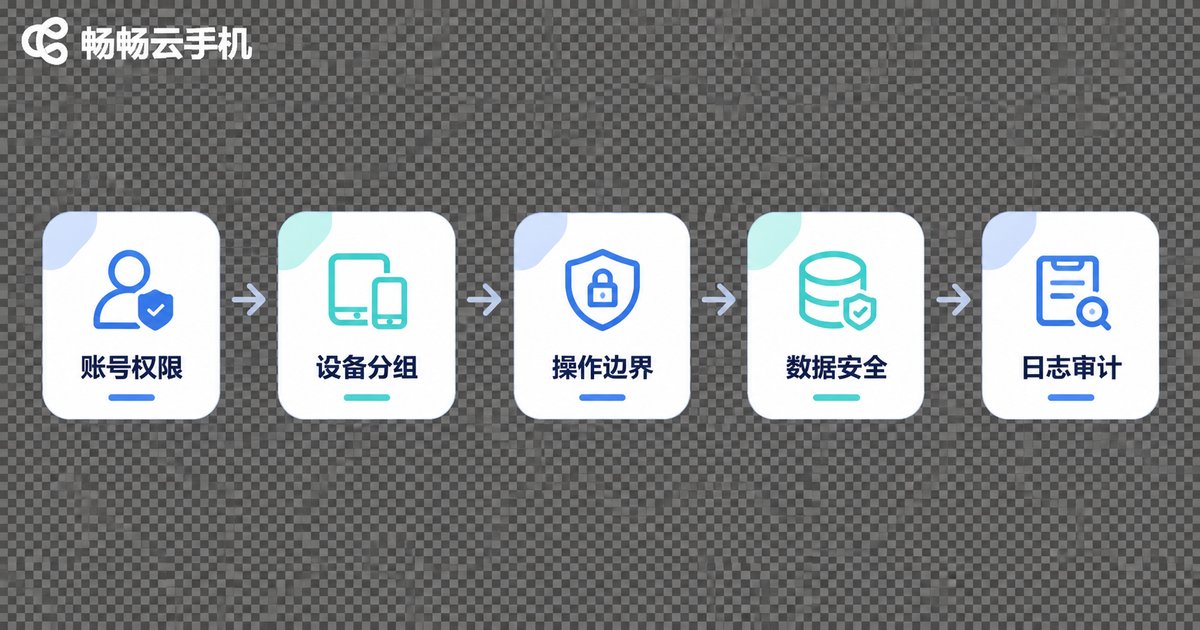
A reusable template: five core modules
The framework below summarizes what we have seen work across multiple teams. Companies can trim it to fit their size, but keep all five modules rather than deleting one for convenience.
| Module | Problem it solves | Suggested owner |
|---|---|---|
| Account and permission tiers | Who can log in, see and change what | IT / Operations |
| Device grouping and project isolation | Shared devices, mixed data | Project manager |
| Operation boundaries and automation limits | Misoperation, risky bulk actions | Business owner |
| Data security and content compliance | Leaked credentials and customer data | Security / Legal |
| Logs, audits and offboarding handover | No evidence, missed handovers | HR plus IT |
Write each module as two parts: the requirement, and how it will be checked. A policy with requirements but no checks usually stays in a folder forever.
Module 1: how to write account and permission tiers
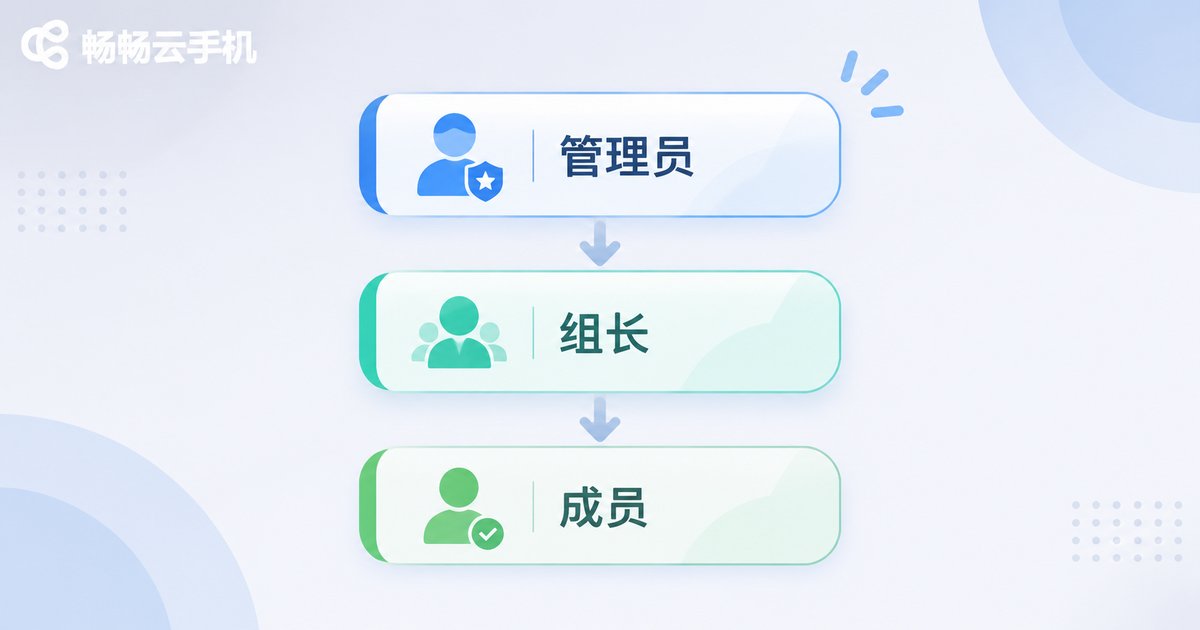
A three-level structure is simple and easy to follow:
Administrator: can create and delete devices, assign permissions and view all logs. Usually only one or two people.
Team lead / project owner: operates only within authorized workgroups, views that group's logs, cannot cross groups.
Member: operates only assigned devices, cannot change configurations or export sensitive data.
One sentence covers most of it: never let several people share a single admin account; every login must map to a named person. It sounds trivial, but it is the precondition for every audit that follows. Also require two-factor authentication for admins and freeze member accounts on the day of departure.
Module 2: device grouping and project isolation
Grouping is the section most often skipped and the one with the clearest payoff. Use a two-level naming scheme built from project plus purpose, for example ecommerce-A / store operations and ecommerce-A / customer service, so anyone reading a device name knows who owns it.
Three hard rules work well in the template:
1. One device serves one project. Cross-project use requires a request and a note in the log.
2. Data from different clients or brands must not sit on the same device.
3. Borrowed devices must be restored to their initial state and the return time recorded.
They look strict, but execution cost is low and they block most data-mixing incidents.
Module 3: operation boundaries and automation limits
One advantage of cloud phones is bulk operations and automation scripts, which is also where risk concentrates. Split operations into two tiers:
Routine: installing apps, logging in and publishing content on a single device. Members can do this on their own.
Sensitive: bulk installs, bulk logins, changing device parameters and exporting data. These require team lead approval and a written description.
Also list explicit prohibitions: no plaintext passwords stored on devices, no scripts from unknown sources, no screenshots of device screens sent outside the company. Keep the rules short enough to read on a single screen, or they will not be followed.
Module 4: data security and content compliance
Cloud phones usually hold the most sensitive material: store backends, customer chat histories, original media files. Define data tiers in the policy:
Tier 1 (public): generic assets and public copy.
Tier 2 (internal): operations data and schedules.
Tier 3 (restricted): credentials, customer information and payment-related records.
Tier 3 data should live in a team password manager, with only minimal necessary access inside the cloud phone. State clearly that tier 3 data must never be sent in plaintext through chat tools. Require all published content to follow platform rules and local regulations, and assign compliance responsibility to a specific role instead of a vague team-wide statement.
Module 5: logs, audits and offboarding
Whether a policy survives depends on record keeping. Specify that the platform records all device operations automatically, that administrators spot-check once a month, and that a short report is produced focusing on sensitive actions and logins at unusual hours.
Turn offboarding into a checklist: device returned, permissions revoked, account frozen, passwords rotated, pending tasks handed over, each item signed off. Attach it to the policy so HR can use it directly during exit procedures and close the common gap of people leaving while access remains.
Which platform capabilities support the policy
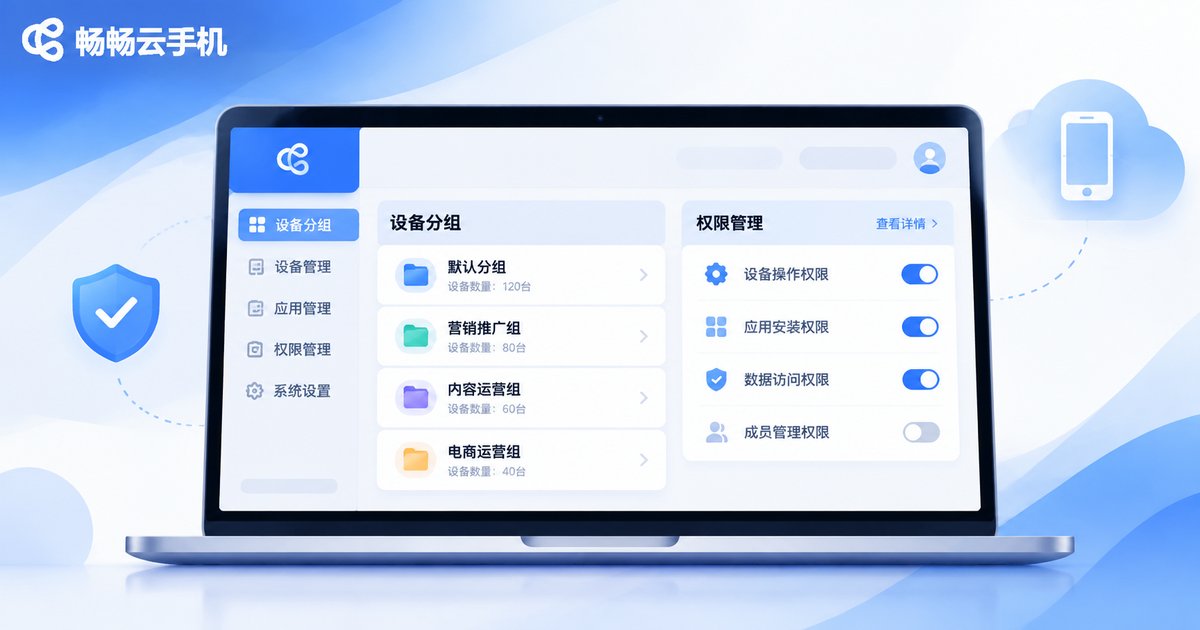
A good policy still needs a tool to carry it. When evaluating, look at four capabilities: can devices be assigned per member, can devices be grouped, does the provider keep server-side operation records, and is there unified web access.
Taking ccloudphone as an example, its Android virtual devices run in the cloud with multi-instance and group management, and team members can connect through a web browser or client while devices stay online continuously without relying on local hardware. That shape suits teams that need long running hours and multi-person collaboration. During evaluation, confirm with the vendor whether the current version's role permissions, log retention period and API capabilities meet your policy requirements, then run a small pilot before rolling out broadly.
Rollout: three steps that hold up
Step 1 (weeks 1-2): inventory and finalize. Map existing devices, users and business owners, then trim the policy to clauses the team will actually use and keep it under three pages.
Step 2 (weeks 3-4): pilot. Run one project group under the policy for a month, note friction points such as slow approvals or overly long naming rules, and revise.
Step 3 (from month 2): full rollout and quarterly review. After the official release, review each quarter and check whether anomalies in audit reports decline and whether new gaps have appeared.
The point is not a polished document but one that a new hire can read on day one and follow. Any clause that needs a verbal explanation should be rewritten.
FAQ
Q: Our team is only three to five people. Do we need a formal policy?
Not the full version, but keep three things: named accounts, devices named by project, and permission revocation at offboarding. The cost is minimal and it prevents most disputes.
Q: Will a policy slow the business down?
There is some approval overhead, but it is usually cheaper than rework and losses from mixed accounts or data leaks. Keep approvals limited to genuinely sensitive actions rather than everything.
Q: Device count is growing fast. Do we need to rewrite the policy?
No, extend the group membership rules and approval levels. Leave a scale-up clause stating how the policy changes once device count passes a threshold.
Q: How long are cloud phone operation records retained?
It varies by provider. Confirm the retention period during evaluation and state your own backup and spot-check frequency in the policy.
Q: Can employees log in with personal accounts?
Not recommended. Use company-assigned accounts so every device action maps to a person, which is the foundation of any audit.


