
How to Use Cloud Phones in Store Group Operations: Practical Experience on Multi-Account Listing and Anti-Association
What Is the Store Group Model, and Why Multiple Accounts Matter
The store group model is simple: open many stores on one or more e-commerce platforms and use multi-account listing to multiply your traffic and sales opportunities. A single store has limited exposure, but dozens of stores running together can give the same products many times more display entrances. That is why so many e-commerce sellers eventually move toward store groups.
Multi-account operations, however, come with one unavoidable obstacle: platform risk control. Almost every major e-commerce platform dislikes one operator running stores in bulk. Once the system decides that multiple accounts “belong to the same person,” association penalties may follow, and dozens of stores can be restricted overnight. So the core homework for a store group player is not how many stores to open, but how to make every account look like an independent person operating on an independent device.
How Account Association Happens: Understand the Detection Logic First
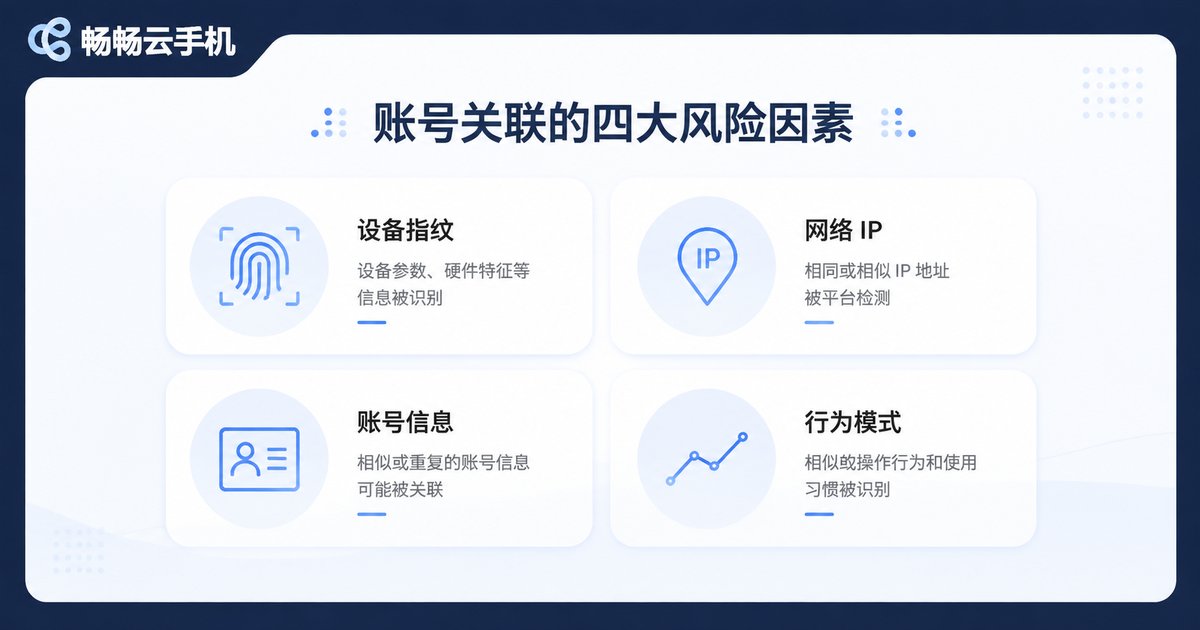
To prevent association, you first need to know which dimensions platforms use to decide “these accounts are the same person.” There are four common factors:
| Association Dimension | Typical Signal | Risk Level |
|---|---|---|
| Device fingerprint | Repeated device model, system parameters, hardware info | High |
| Network environment | Multiple accounts repeatedly logging in from the same IP | High |
| Account information | Overlapping payment, identity, or contact details | Critical |
| Behavior patterns | Identical listing rhythm, operation times, near-duplicate products | Medium |
Among them, device fingerprints and network environments are the two easiest dimensions to get caught on. The traditional approach is to buy dozens of physical phones—one device per account—but that is expensive and hard to manage, and storage and power become real problems. This is exactly where cloud phones shine.
How Cloud Phones Solve the Anti-Association Problem
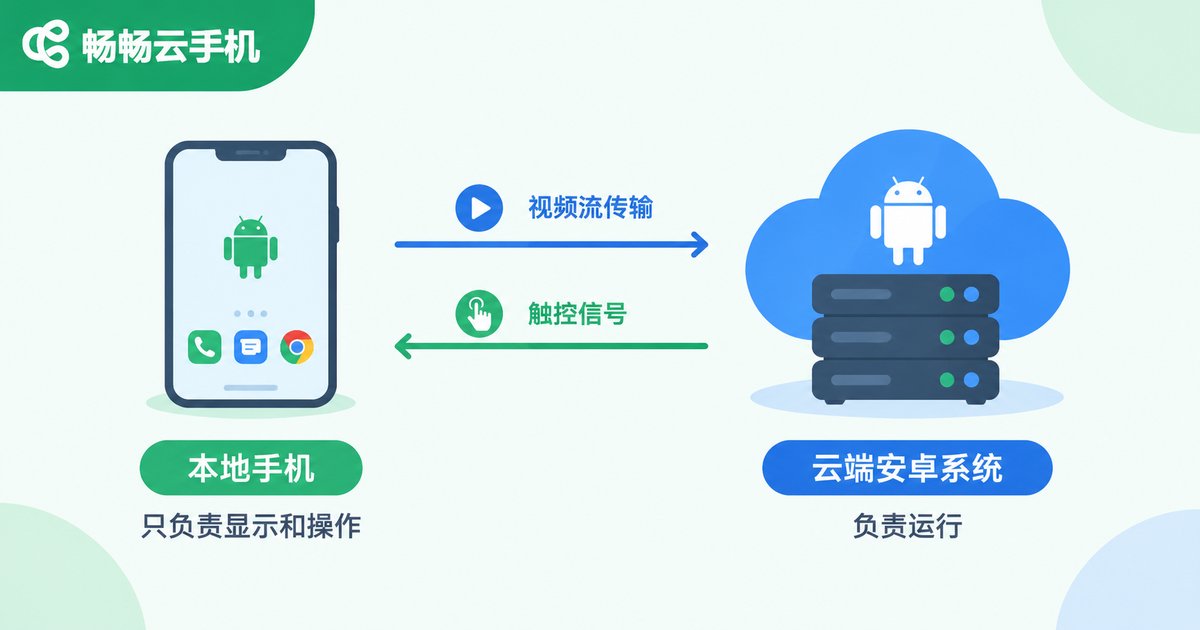
A cloud phone is essentially a real Android phone instance running on cloud servers. Each cloud phone has its own device parameters and its own system environment. In the eyes of a platform, it is a real, distinct phone. Using cloud phones for store groups brings three natural advantages:
1. Device fingerprints are isolated by design. Each cloud phone instance carries independent device information. Multiple accounts each log into their own cloud phone, leaving no association traces at the device level.
2. The environment stays stable long-term. Cloud phones run around the clock in the cloud. Your login environment never suddenly changes because you moved locations or switched networks—long-term stability that actually resembles a real seller's habits.
3. Cost and management efficiency win. No need to buy, store, or maintain dozens of physical phones. You can manage all instances from a single computer or phone and add more as you scale.
Step 1: One Store, One Phone—Build Independent Environments
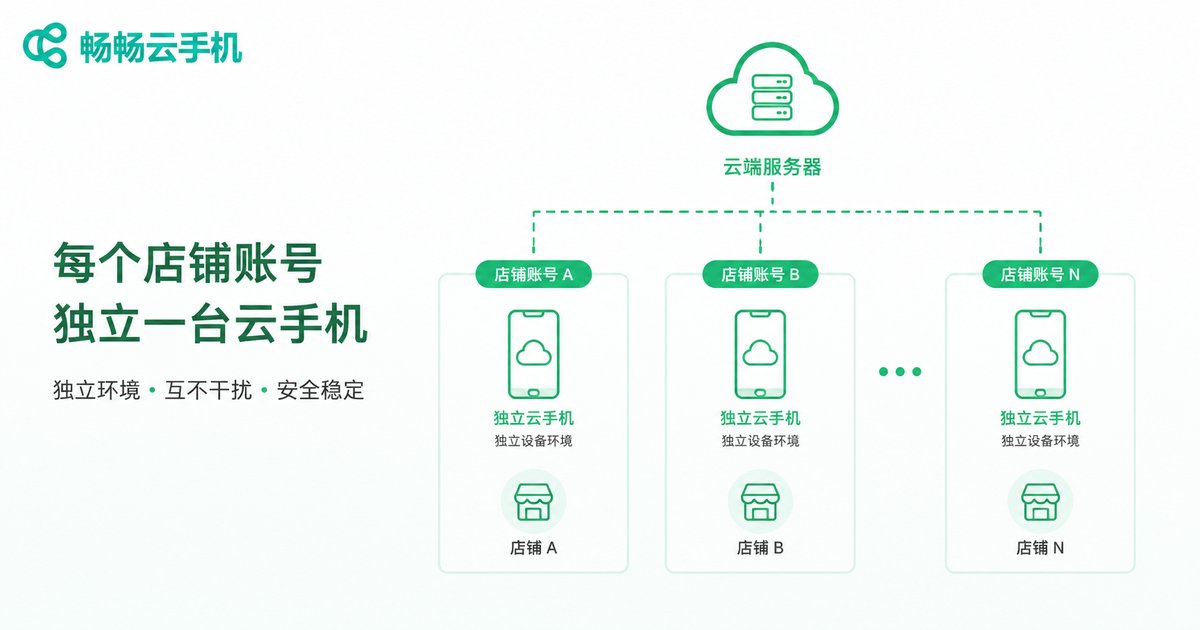
In practice, follow the “one store, one phone, one account” principle: each store account corresponds to one dedicated cloud phone. Complete registration on that cloud phone from the very beginning, then do all logins and operations inside the same instance—never cross-log.
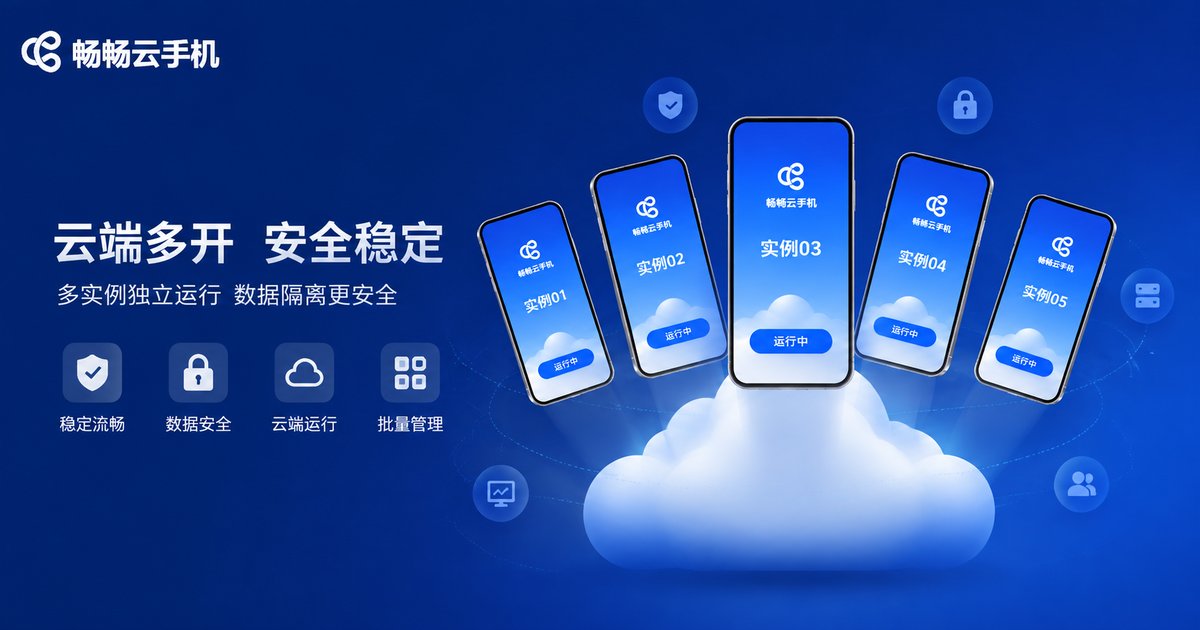
For tooling, we recommend CCloudPhone. It provides a real cloud-based Android environment where every instance has independent device parameters, and it supports creating and managing multiple cloud phones in bulk—perfectly matching the “many accounts, independent environments” needs of store groups. Cloud phones consume no local resources; you can open and operate them from a phone or computer anytime, and your stores stay online even when you are away from your desk.
Step 2: IP and Network Environment Management
With device isolation in place, do not neglect the network. The basic rule is different stores use different network exits, and each stays fixed long-term. Using network A today and switching to network B tomorrow—this kind of environment drift is itself a risk-control signal.
When pairing with cloud phones, configure a fixed network exit for each store's cloud phone so that every store's “device + network” combination stays stable. Never let multiple stores log in repeatedly through the same IP—that is manually chaining your accounts together.
Step 3: Daily Listing Discipline
Anti-association is not only a technical matter; it is a matter of operating habits. Here are a few field-tested practices:
1. Stagger your operations. Do not have dozens of accounts listing products or changing prices at the same minute. Spread operations across time to mimic the natural rhythm of different sellers.
2. Differentiate your products. Titles, main images, and detail pages should vary across stores. Fully copied listings are easy for systems to flag as bulk behavior.
3. Completely separate account information. Registration details, payment accounts, and contact information must never overlap across stores. This is hard association—no technical tool can save you from it.
4. Keep devices fixed—no crossing. An account should only ever log in on its corresponding cloud phone. Even for a quick data check, do not take shortcuts on another device.
Efficiency Boost: Batch Management with Cloud Phones
Daily store group operations are repetition-heavy: bulk listing, price changes, replying to messages, daily check-ins for account warming. CCloudPhone supports multiple instances online at the same time, and its batch management capabilities can dramatically cut the time spent on repetitive tasks. Compared with one person tapping through dozens of physical phones one by one, cloud phone management is far friendlier for store group players—and scaling up or down is much more flexible.
FAQ
Q: Can platforms detect cloud phones?
A: A cloud phone is a real Android environment in the cloud with independent device parameters—indistinguishable from an ordinary Android phone to a platform. What truly determines safety is whether all four dimensions—device, network, information, and behavior—are isolated. Cloud phones solve the device dimension.
Q: Can one cloud phone host multiple store accounts?
A: Not recommended. The core anti-association principle is “one store, one phone, one account.” Squeezing multiple accounts onto one cloud phone means identical device fingerprints and high association risk.
Q: Are cloud phones cheaper than physical phones for store groups?
A: Yes. There is no need to buy dozens of physical phones upfront, and no hidden costs for storage, power, or damage. Open cloud phone instances on demand, scale flexibly as you add stores, and the total investment is far lower than a physical device setup.
Q: Should beginners jump straight into store groups?
A: Start with a small number of accounts to run through the whole process—product selection, listing, customer service, and anti-association discipline—then scale up gradually. The on-demand nature of cloud phones fits this progressive expansion perfectly.