What Is Cloud Phone Rental? A Complete Guide to Daily, Monthly & Long-Term Plans
What Is Cloud Phone Rental?
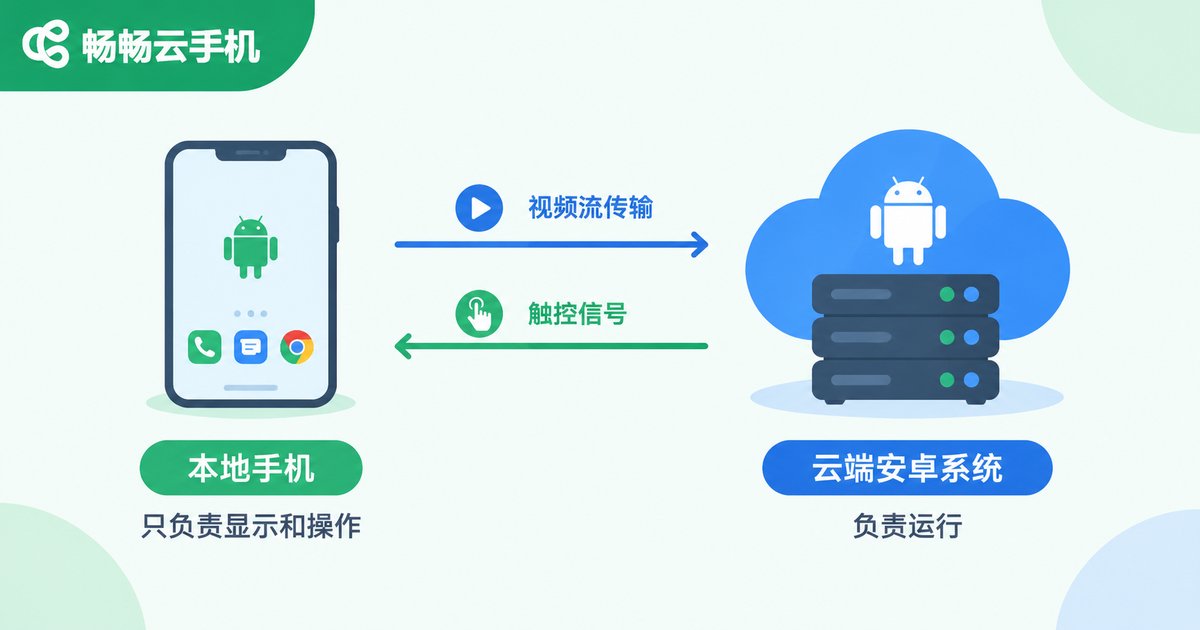
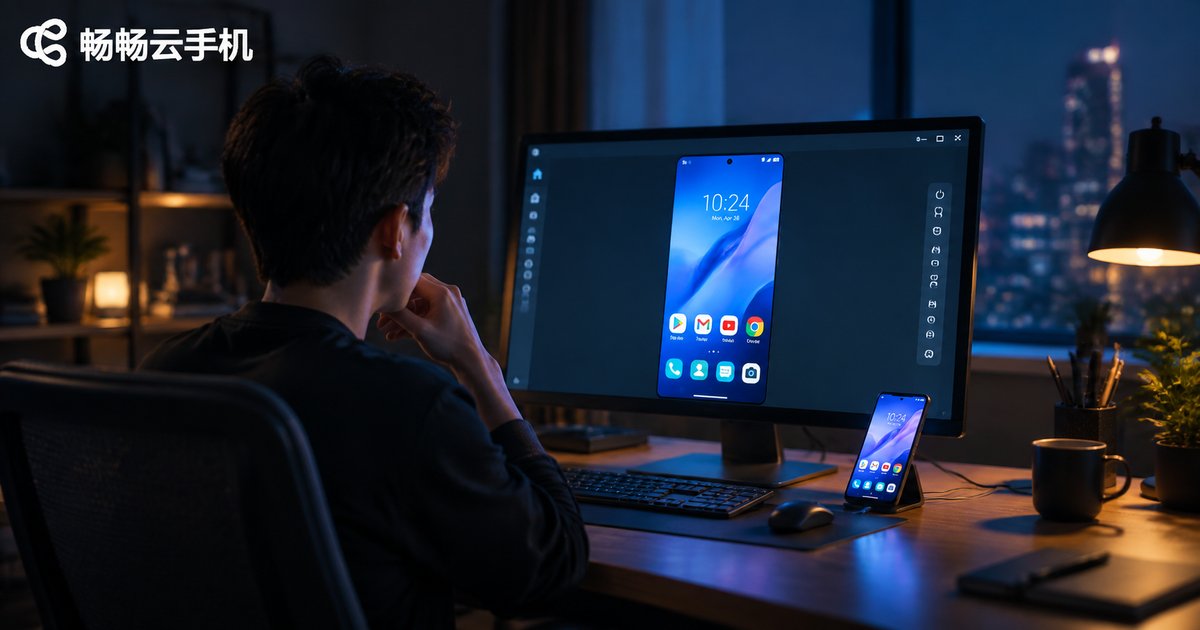
In simple terms, cloud phone rental means moving a 'phone' to a cloud server for you to run. You don't need to buy any physical device—just connect from your computer, tablet, or another phone, and you can remotely operate a full Android phone environment: install apps, play games, run automation scripts, all just like using a real device.
The core logic is straightforward: the provider deploys large-scale servers in data centers, slices computing power into individual virtual phone instances, and rents them out on demand. You pay for compute resources, not hardware, which dramatically lowers the entry barrier.
Daily Plan: The Go-To for Flexible Trials
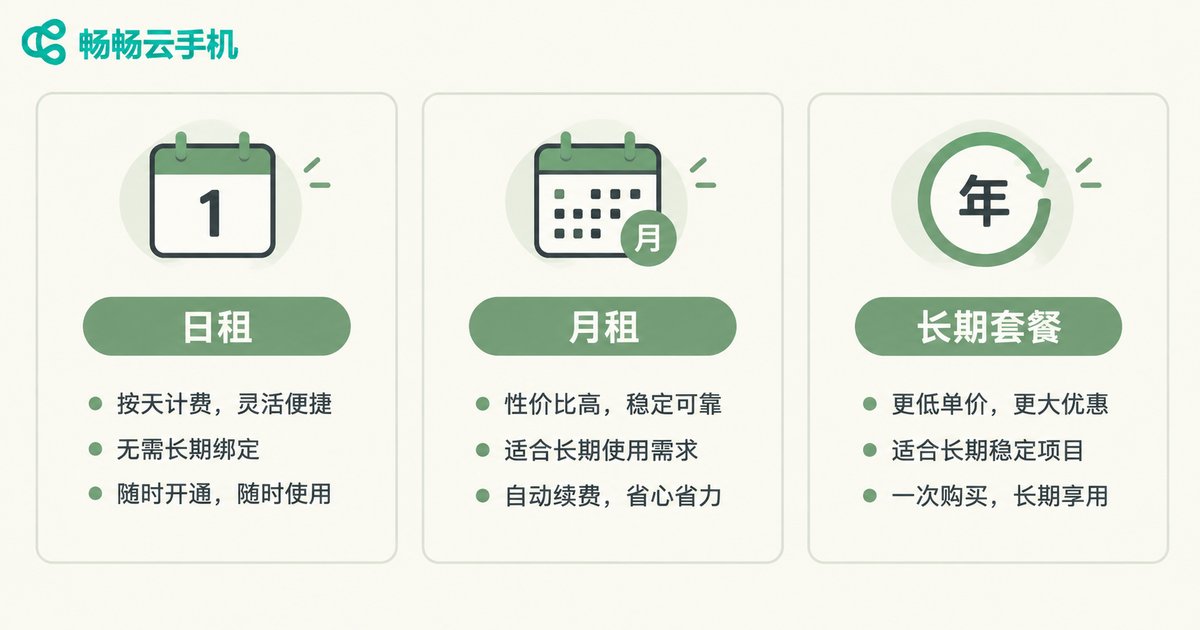
The daily plan is the lightest rental option, billed per calendar day (24 hours) with automatic release upon expiry. It's ideal for:
Short-term testing: Want to try out cloud phone performance before committing? The daily plan lets you experiment with zero pressure.
One-off tasks: Need to batch-register accounts or run a batch of automation scripts for a day? Rent, run, release.
Cross-platform switching: Temporarily need a phone on a different network environment? A single day is usually enough.
The daily plan has the highest per-unit price of the three options, but its superb flexibility—no long-term contract, activate and release anytime—makes it perfect for budget-conscious users or those with uncertain needs.
Monthly Plan: The Best Value Pick
The monthly plan is billed per calendar month (30 days) and is the mainstay choice for most individual users and small teams. Compared to the daily plan, the effective daily cost is typically 30%–50% lower.
The monthly plan suits:
Daily work: Need a phone that's always online for messages, approvals, and remote work.
Multi-account gaming: Run multiple game accounts simultaneously with controlled costs.
App testing: Developers need a stable testing environment; the monthly plan provides a consistently available instance.
Content operations: Matrix account management, live-streaming, and other scenarios requiring extended uptime.
The biggest advantage of the monthly plan is the balance between price and stability—you get a cloud phone that's continuously available for a month at a fraction of the cumulative daily cost. For users who access their cloud phone 3+ days a week, monthly is almost always the smarter choice.
Long-Term Plans: The Best Deal for Power Users
Long-term plans are typically offered in quarterly (3-month), semi-annual (6-month), or annual (12-month) cycles and carry the lowest effective daily rate of all three options.
Long-term plans are ideal for:
Enterprise deployments: Batch cloud phones for automated marketing, data collection, or app compatibility testing.
Heavy gamers: 7×24 idle gaming, multi-device sync—long-term plans drive the per-hour cost to the minimum.
Stable operations teams: Matrix accounts, cross-border e-commerce multi-store management, and other businesses requiring sustained uptime.
When choosing a long-term plan, pay close attention to details like dedicated bandwidth, elastic scaling support, and data backup policies—these will significantly impact your experience and total cost over time.
Core Comparison of the Three Plans
| Dimension | Daily | Monthly | Long-Term |
|---|---|---|---|
| Billing Cycle | 24 hours | 30 days | 3 / 6 / 12 months |
| Effective Daily Cost | Highest | Moderate (save 30%–50%) | Lowest |
| Flexibility | ★★★★★ | ★★★★ | ★★★ |
| Best For | Trials, one-off tasks | Personal daily use, small teams | Enterprises, power users |
| Contract Lock-in | None | 1 month | 3–12 months |
| Typical Use Cases | Testing, temporary multi-launch | Multi-account gaming, remote work | Automation, matrix operations |
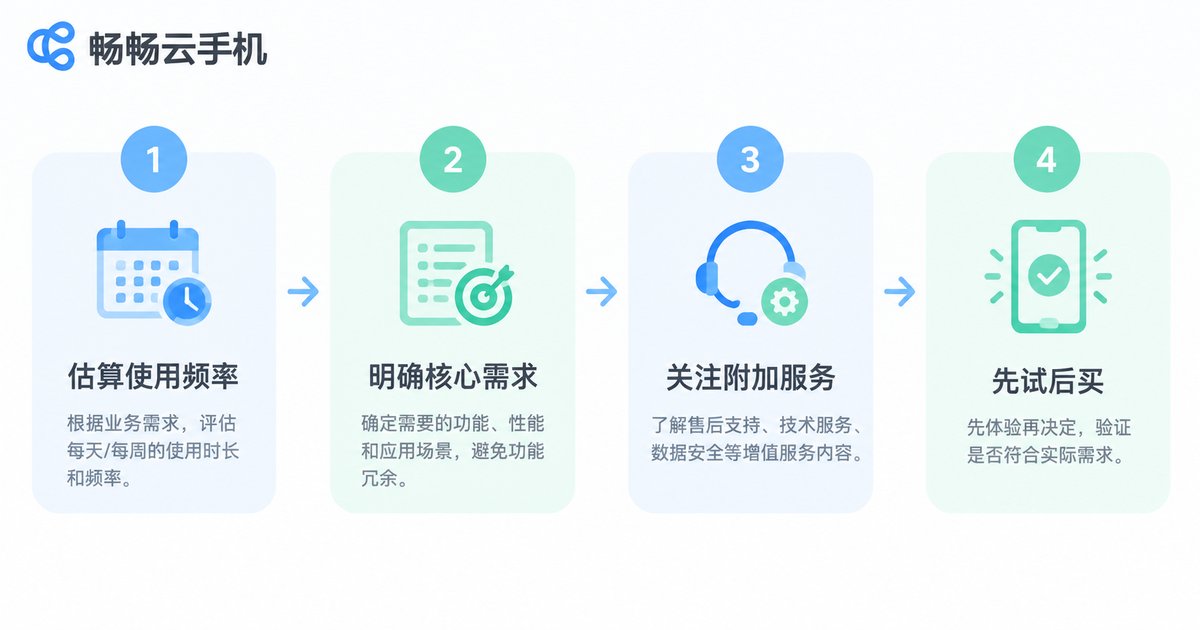
How to Choose the Right Plan for You?
Choosing the wrong plan means either wasting money or running out of resources. Here's a simple decision path:
Step 1: Estimate your usage frequency. If you use it 2 days or fewer per month, the daily plan is cheapest. 3+ days a week? Go monthly. Using it almost every day? Consider a long-term plan.
Step 2: Define your core need. Gaming, automation, or remote work? Different scenarios have very different requirements for CPU performance, storage, and network latency. Getting the right spec matters more than getting the right billing cycle.
Step 3: Look at add-on services. A good cloud phone platform offers data backup, snapshot restore, and elastic up/down-scaling. Over a long period, these features often outweigh the price difference between plans.
Step 4: Try before you commit. Most platforms support daily-plan trials. We recommend testing for 1–2 days first to verify performance and network quality, then upgrading to monthly or long-term once you're satisfied.
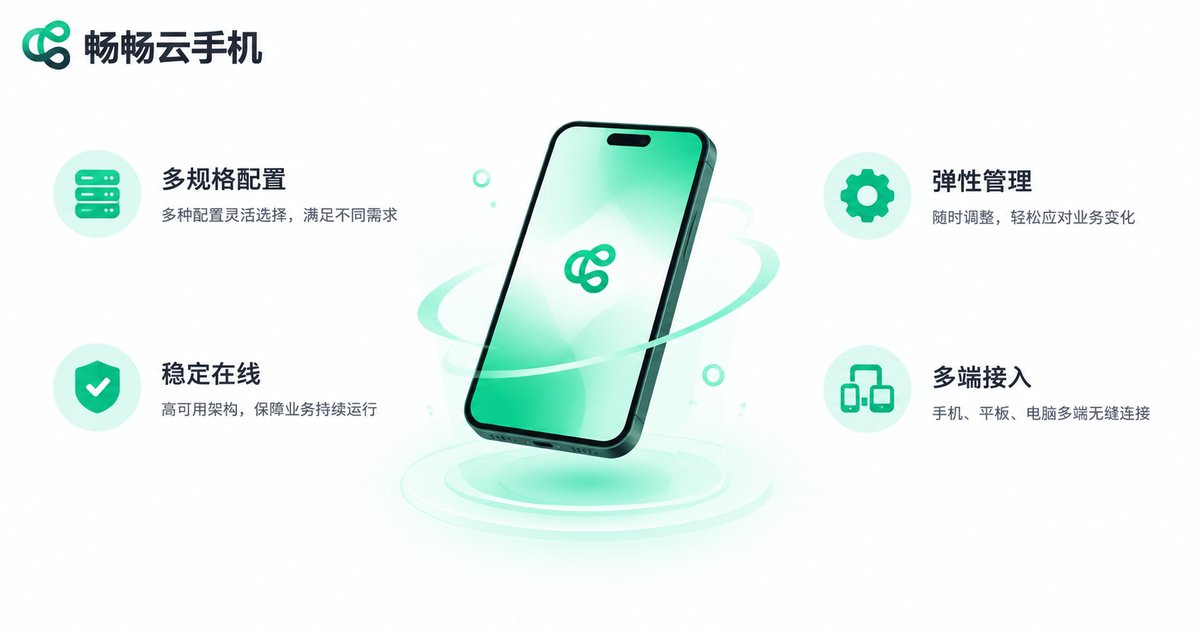
CCloudPhone: One-Stop Cloud Phone Rental Service
If you're looking for a stable, user-friendly, and cost-effective cloud phone platform, CCloudPhone (ccloudphone) is worth a close look. CCloudPhone offers a complete billing system from daily rentals to long-term plans, covering a wide range of usage depths and budgets.
Key features of CCloudPhone include:
Multiple configurations: From lightweight to high-performance models, matching different apps' compute needs.
Elastic management: Online up/down-scaling and batch instance management for unified enterprise scheduling.
Stable uptime: 7×24 uninterrupted cloud operation with automatic recovery after disconnections—no task interruptions.
Multi-device access: Operate from computer, tablet, or phone—take over your cloud phone anywhere, anytime.
For the latest plan pricing and configuration details, we recommend visiting the CCloudPhone official website to find the plan that best fits your current needs.
Frequently Asked Questions
Q: How is cloud phone rental different from buying a real phone?
Cloud phone rental is pay-as-you-go access to cloud compute—no hardware purchase, no device maintenance, and you can release it when done. A real phone is a one-time investment but requires you to manage battery, network, and OS updates yourself. For multi-launch, automation, and remote work scenarios, cloud phones offer clear advantages in flexibility and cost.
Q: Will my data be lost when a daily rental expires?
It depends on the platform's policy. CCloudPhone supports data backup and snapshot features, so you can export important data or create a snapshot before expiry and restore it when you re-activate. We recommend making regular backups a habit.
Q: Can I cancel or upgrade a monthly/long-term plan mid-cycle?
Most platforms allow mid-cycle upgrades (pay the difference), but downgrades or cancellations typically take effect at the end of the current cycle. Read the platform's change and cancellation policies carefully before subscribing.
Q: Can cloud phones run demanding games?
Yes, but you'll need a high-performance configuration (high core count, large RAM, dedicated GPU acceleration). CCloudPhone offers multiple performance tiers; heavy gamers should choose a high-spec model paired with a low-latency network environment.
Q: Can I rent multiple cloud phones at once?
Absolutely. CCloudPhone supports multi-instance management—run multiple cloud phones under a single account, ideal for matrix account operations or multi-game-account management. Bulk activation also unlocks better pricing.