Cloud Phone: Per-Minute Billing vs. Monthly Plan — Which Is Cheaper? The Cost Break-Even Line Between Short Tasks and Long-Term Idling
Two Billing Models: What Is the Real Difference?
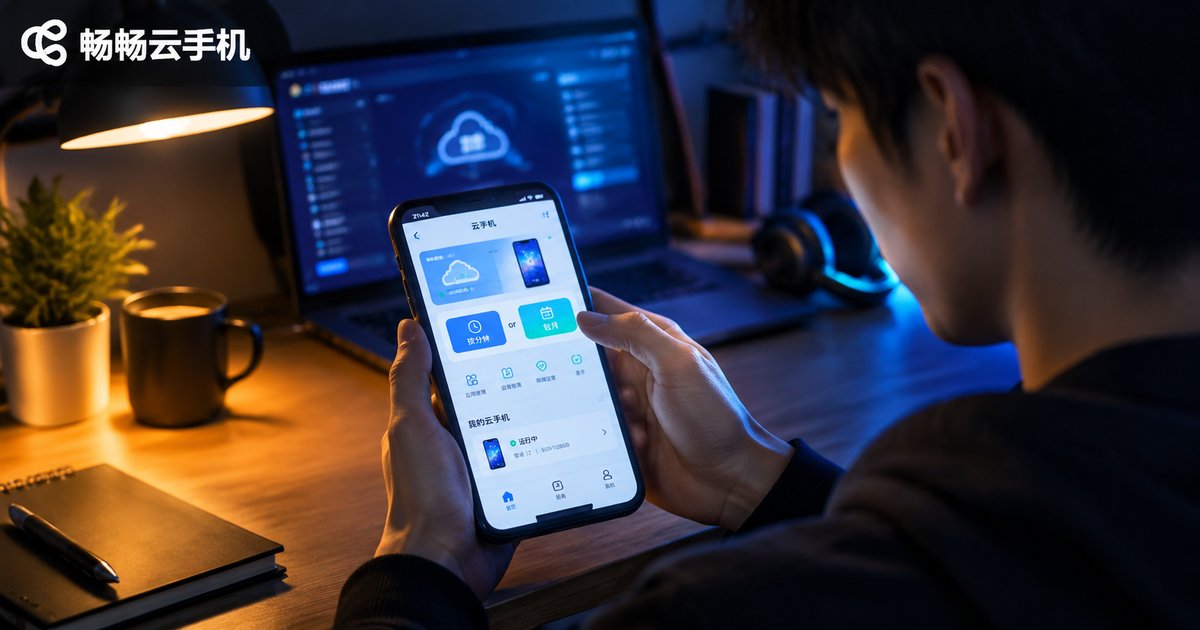
Open almost any cloud phone platform and you will see two pricing models: per-minute billing and monthly plans. Per-minute billing works like taking a taxi — you pay only for the minutes you use. It is flexible, but the unit price is higher. A monthly plan is like a pass: one fixed payment gives you access all month, spreading the cost razor-thin — but only if you actually use it enough.
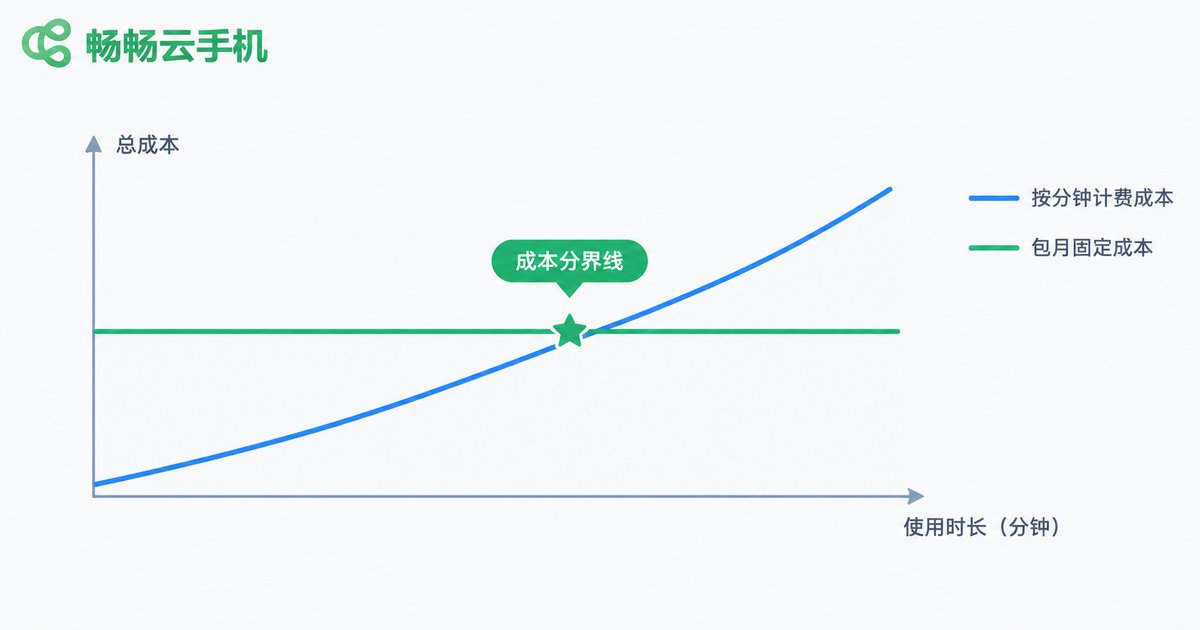
In short: light, scattered usage favors per-minute; heavy, continuous usage favors monthly. Sounds obvious? The real question is where exactly the line between light and heavy falls. Many people choose by gut feeling and end up paying twice as much as they need to.

The Math: Where Is the Break-Even Point?
Let us walk through the calculation with a hypothetical example (these numbers are for demonstration only; always check current pricing on the official ChangChang Cloud Phone website):
Suppose a cloud phone charges 0.03 yuan per minute — about 1.8 yuan per hour — while a comparable monthly plan costs 40 yuan. The break-even point is 40 ÷ 1.8 ≈ 22 hours per month.
In other words: if your total monthly usage exceeds roughly 22 hours, the monthly plan becomes cheaper; below that, per-minute wins. The general formula:
Break-even (hours/month) = Monthly price ÷ (per-minute rate × 60)Here is a more intuitive breakdown:
| Monthly Usage | Typical Scenario | Better Option |
|---|---|---|
| Under 5 hours | Occasional verification codes, quick logins | Per-minute |
| 5–20 hours | Short trials, one-off tasks | Per-minute |
| 20–30 hours | Gray zone — depends on exact rates | Run the formula |
| Over 30 hours | 1+ hour of idle running per day | Monthly |
| Always-on (500+ hours) | Game idling, account nurturing, multi-instance farms | Monthly, no contest |
One easily missed detail: per-minute billing usually only charges while the device is running, but people often forget to shut it down. A device left idling all day can produce a bill far higher than a monthly plan. If your per-minute charges approach the monthly price, switch immediately.
Choose Per-Minute for These Scenarios
Per-minute billing shines when the barrier to entry needs to be low:
1. Short tasks: Registering an account, receiving a verification code, or handling a quick login — ten minutes of work should not cost a full month of fees.
2. Temporary extra instances: Need to spin up one more device to test a game or app? Start it, use it, shut it down — the cost is negligible.
3. Proof of concept: Not sure a cloud phone fits your needs? Run it per-minute for a few hours first, then commit to a monthly plan once it works.
4. Unpredictable months: Busy one month, quiet the next? Per-minute billing tracks actual usage, so you never pay for idle days.
Choose Monthly for These Scenarios
The moment always-on availability enters the picture, monthly almost always wins:
1. Game idling: Idle-style games need the device online around the clock. Even at a low per-minute rate, hundreds of hours a month quickly exceed the monthly price.
2. Account nurturing and keep-alive: Accounts that must stay active daily and apps that must keep running care about continuity, not flexible hours.
3. Multi-instance setups: Running 5, 10, or more devices simultaneously multiplies the per-minute cost — and multiplies the monthly plan advantage just the same.
4. Studio-scale operations: Devices running 24/7 make per-minute costs climb in a straight line; monthly is the only rational choice.
The 3-Question Self-Test: Decide in 10 Seconds
Still unsure? Ask yourself three questions:
1. How long per day? More than an hour a day on average — look at monthly plans. A few minutes to half an hour — per-minute.
2. Do you need always-on availability? If your workflow demands a device ready around the clock, the certainty of a monthly plan beats a ticking per-minute meter.
3. Is your usage stable? Stable and high — go monthly. Volatile and low — go per-minute. Feed two months of real usage data into the formula above and the answer becomes obvious.

Pick the Right Billing — and the Right Platform
Once the math is clear, stability and features matter just as much. ChangChang Cloud Phone (ccloudphone) runs Android apps in the cloud and supports common use cases such as idling and multi-instance operation. Whether you lean per-minute or monthly, check the official ChangChang Cloud Phone website for the latest billing details, plug the official rates into the formula above, and calculate your own break-even point before deciding.
The core takeaway: per-minute buys flexibility; monthly buys certainty. Short tasks go per-minute, long-term idling goes monthly — this one line can save you a surprising amount on cloud phone costs.
FAQ
Q: With per-minute billing, am I charged after shutting down the device?
Normally, per-minute billing only applies while the device is running; shutting it down or releasing it stops the charges. However, policies on data retention and minimum billing units vary by platform, so read the billing terms on the official ChangChang Cloud Phone website before you start.
Q: If I do not use up my monthly plan, can I get a refund or roll it over?
Generally, a monthly plan purchases the right to use the device at any time during the month; unused time is usually neither refunded nor carried over. Estimate your usage with the formula before purchasing.
Q: I idle games about 10 hours a day — which should I choose?
10 hours a day is roughly 300 hours a month, far beyond the break-even point of almost any pricing scheme. Go monthly — the difference will be dramatic.
Q: Can I mix both billing models?
Yes, and it is the smartest approach: keep your main devices on monthly plans and spin up extra devices per-minute for occasional needs, shutting them down when done. You capture the best of both worlds.
Q: What are ChangChang Cloud Phone exact prices?
Pricing and plans may be updated from time to time, so this article does not list specific figures. Check the current prices on the official ChangChang Cloud Phone website (ccloudphone) and plug them into the formula above.