
Cloud Phone Node Groups vs Instance Groups: How Vendors Organize Resources
First, Two Basic Concepts: Instances and Nodes
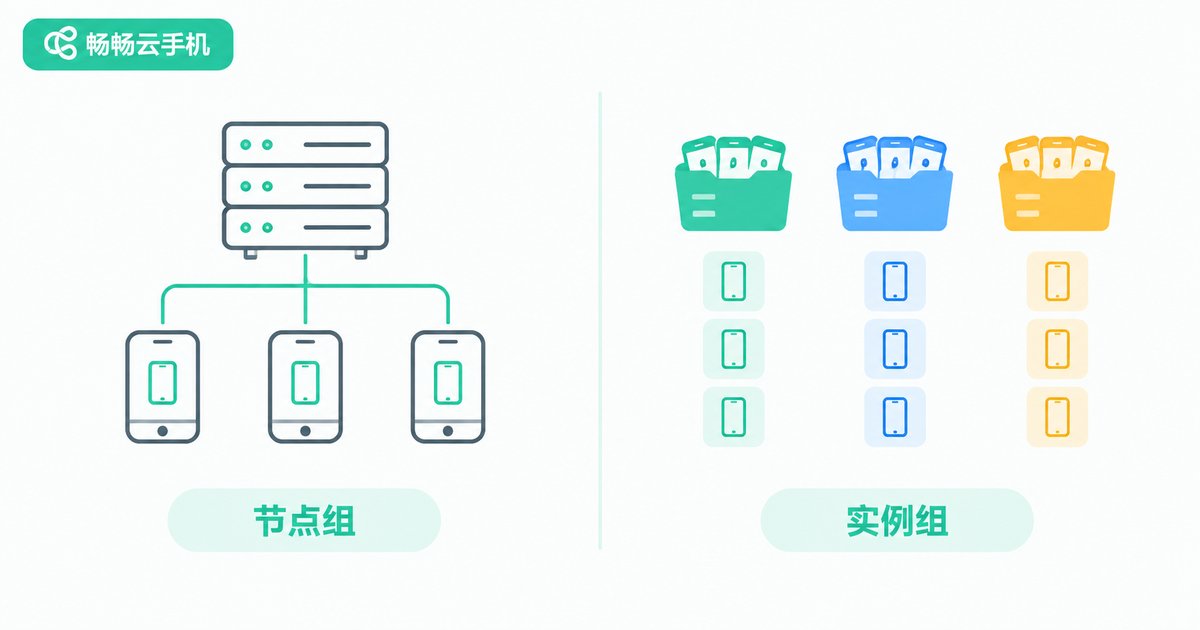
Before talking about grouping, let's define two terms. An instance is a single, independent cloud phone with its own system and app environment—think of it as a smartphone running in the cloud. A node is the underlying server resource that hosts these cloud phones; one node typically runs many instances at the same time.
Here's an analogy: the node is a building, and instances are the rooms inside it. You rent and operate the rooms (instances), but which building they sit in (the node) determines their network identity and latency.
Node Groups: Organized by Resource Location
A node group follows a resource-first logic: servers located in the same place or sharing the same attributes are grouped together. Cloud phone instances inside the same node group usually share similar network properties, such as a similar regional identity.
This grouping suits workloads that care about network origin. When you need a batch of cloud phones with similar network environments, provisioning them through a node group is far easier than picking devices one by one.
Instance Groups: Organized by Business Purpose
Instance groups follow the opposite logic—business-first. Cloud phones serving the same project, client, or task type are placed in one group, so you can power them on, install apps, or change settings in batch.
For studios and multi-account teams, instance groups are the most frequently used feature. Once your device count grows, clear instance grouping directly determines how efficient your daily operations are.
Key Differences at a Glance
| Dimension | Node Group | Instance Group |
|---|---|---|
| Grouping basis | Distribution of underlying servers | Business purpose and project ownership |
| Main focus | Network attributes, regional identity | Efficiency, batch management |
| Typical scenario | Projects with network requirements | Studio operations, multi-account matrices |
| Change frequency | Relatively fixed, follows resources | Flexible, grows and shrinks with projects |
How Do Different Vendors Manage Resources?
Although they all sell cloud phones, platforms take noticeably different approaches to resource management. Most fall into three camps.
Camp one: infrastructure-first. These platforms make the node group the primary management entry point—you pick a node first, then create instances. Resource ownership is transparent and network attributes are controllable, but the management granularity sits low, and finding a specific device gets tedious as you scale.
Camp two: business-first. These platforms lead with instance groups and hide most node-level details. You simply group phones by project while the platform handles resource scheduling in the background. Easy to start with, but less controllable if you have strict network requirements.
Camp three: two-layer structure. Node groups and instance groups coexist—nodes handle resource scheduling while instance groups handle business management. It is the most flexible model and the best test of a platform's scheduling capability.
How to Choose: Three Practical Tips
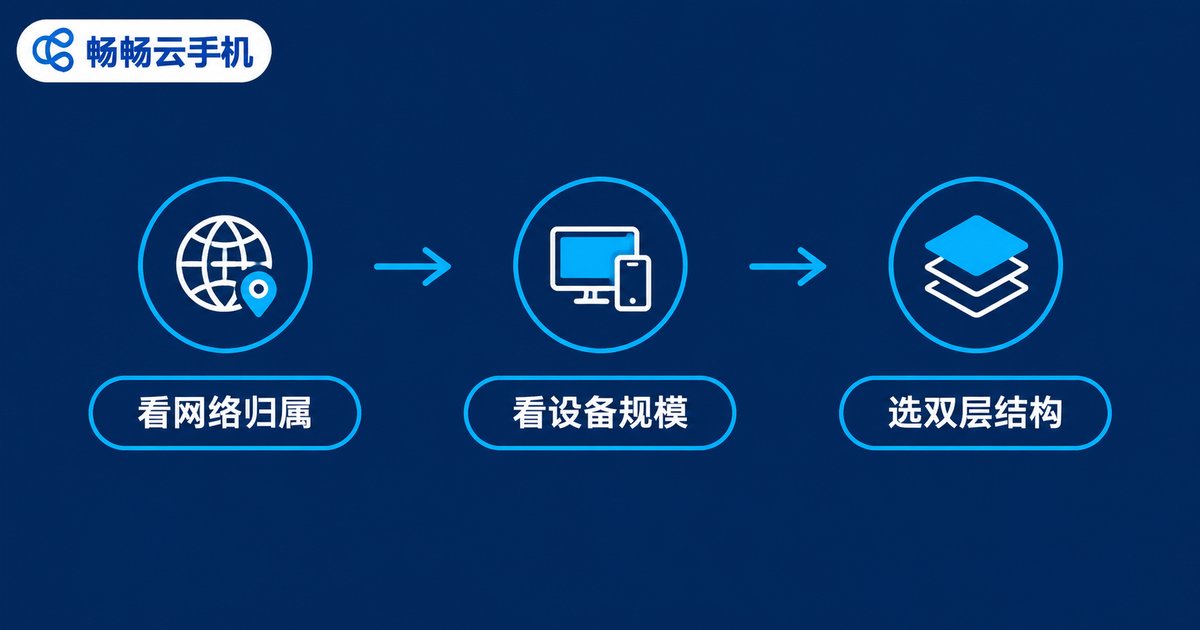
First, check whether your business cares about network origin. If your projects have clear regional requirements, prioritize node-level management; for everyday multi-account use and batch operations, instance groups are enough.
Second, consider your scale. With a few dozen devices, any grouping works; at several hundred, operating without a clear grouping system becomes a nightmare.
Third, prefer a two-layer platform. Managing on two levels means you never trade resource control for operational convenience—a better bet for long-term growth.
Manage Your Cloud Phone Resources with ChangChang Cloud Phone
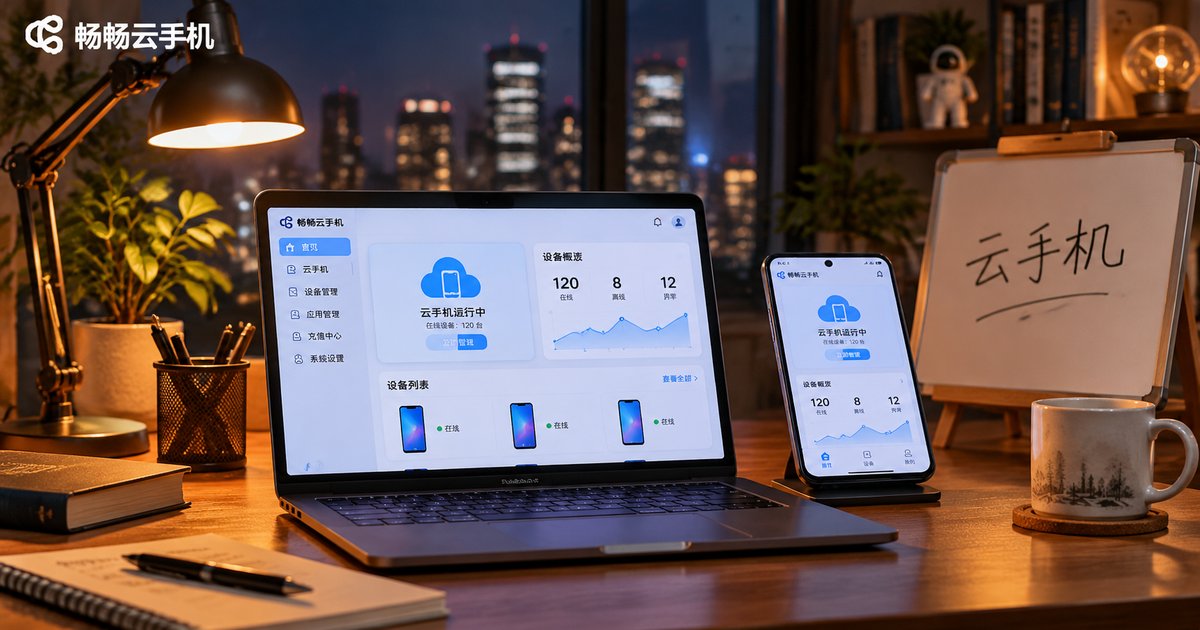
As a real-world example, ChangChang Cloud Phone (ccloudphone) supports grouping and batch operations for cloud phones: organize devices by project, then run batch tasks across each group—a practical setup for individuals and teams managing many devices at once. For the latest feature list and plan details, visit the official ccloudphone website and refer to what is shown there.

FAQ
Q: Can node groups and instance groups be used together?
It depends on the platform architecture. Two-layer platforms offer both—nodes manage resources while instance groups manage business; single-layer platforms make you choose one as your primary management method.
Q: Will my data be lost if a cloud phone moves to another node?
Normally, no. Your data lives on the cloud phone instance itself; the node is only the underlying resource hosting it, and the platform handles data along with any migration.
Q: Does a small team need to care about node groups?
If you run few devices and have no special network requirements, mastering instance groups is enough—don't spend extra energy on the node layer.
Q: Does ChangChang Cloud Phone support group management?
Yes, it supports grouping and batch management of cloud phones; see the official website for exact feature details.