
Cloud Phone Multi-Account Nurturing: Why Dedicated Phone Numbers and Emails Matter as Much as Dedicated IPs
Switched to Dedicated IPs, So Why Are Accounts Still Banned in Batches?
Anyone running cross-border e-commerce, social media matrices, or multi-instance gaming has likely lived this scenario: accounts nurtured carefully for months suddenly get restricted one day — and rarely just one, but an entire batch at once. The first instinct is to blame the IP, so people upgrade to dedicated IPs and switch networks, yet the ban waves keep coming. What is really going on? The truth is that a dedicated IP is only the first step of account isolation. Two frequently overlooked factors — dedicated phone numbers and dedicated email addresses — often decide the fate of your accounts.
How Platforms Detect Links Between Accounts
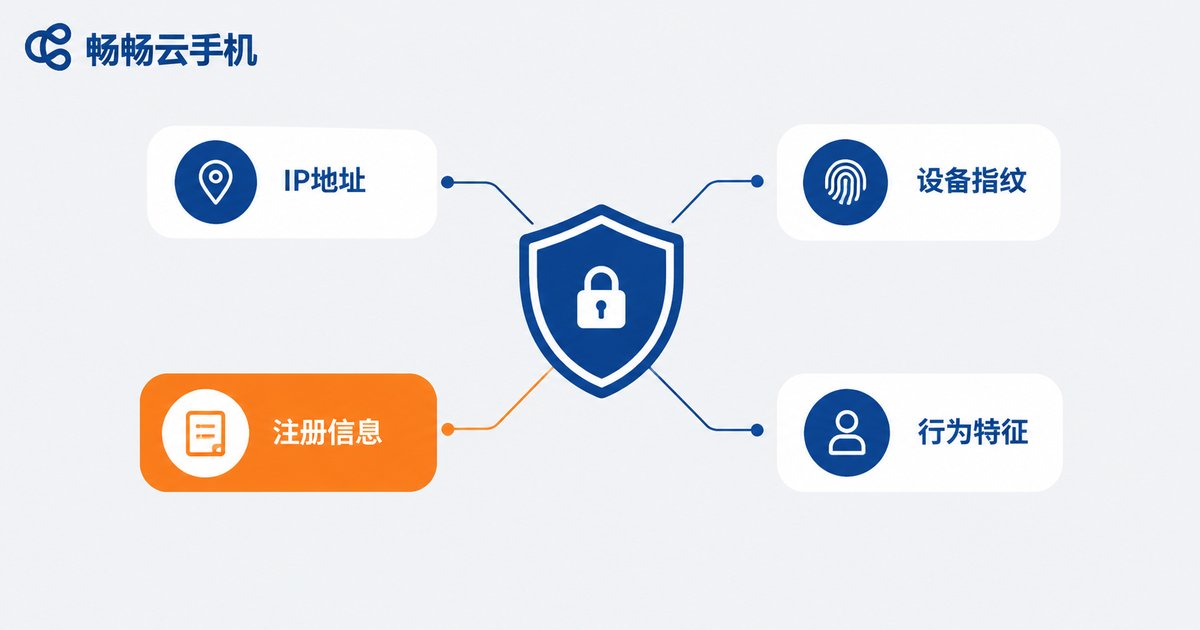
To understand why phone numbers and emails carry so much weight, you first need to see how platforms conclude that certain accounts belong to the same person. Modern risk-control systems compare hundreds of signals, and the highest-weighted ones fall into four groups:
| Risk Signal | What It Covers | Linking Weight |
|---|---|---|
| Network environment | IP address, geolocation, carrier | High |
| Device fingerprint | Model, OS version, sensor data | High |
| Registration info | Phone number, email, recovery methods | Very high |
| Behavior patterns | Active hours, habits, typing rhythm | Medium |
Notice the very high weight on registration info: it is the most direct evidence platforms use to attribute accounts. IPs can be rotated and device parameters tuned, but one phone number can only register a limited number of accounts, and the same goes for an email address. When several accounts share one phone number or one recovery email, the platform can be virtually certain they belong to the same operator.
Dedicated Phone Numbers: The Identity Card of an Account
On most platforms, a phone number is not just a registration credential — it is the core channel for password recovery, verification codes, and two-step authentication. Its linking risks show up at three stages:
Registration. Many platforms log which accounts a phone number has historically created. If one number registers five accounts, even across five IPs and five devices, the platform knows all five come from the same hand. When one account breaks the rules, the others are likely to be reviewed as well.
Verification. During nurturing, accounts inevitably need verification codes. If several accounts share one number, verification records leave traces on both the platform and carrier sides — effectively telling the system these accounts travel together.
Enforcement. Once a phone number is blacklisted, every account bound to it gets dragged into the case. That is the root cause of the familiar pattern where one account falls and all accounts fall.
Dedicated Emails: Easier to Expose Than You Think
Compared with phone numbers, email mistakes are subtler. Many people register multiple accounts with one mailbox, or let mailboxes serve as each other's recovery addresses, leaving a clean association chain in the platform database. Three more common mistakes:
First, predictable prefixes — sequential names like zhang01, zhang02, zhang03 scream bulk registration at a glance. Second, cross-binding mailboxes — setting mailbox A as the recovery address of account B and mailbox B for account C strings the accounts into a chain by hand. Third, overlapping timelines — the mailbox is created at the same moment as the account, sometimes within the same minute, a pattern too neat to look natural.
Each detail looks harmless alone, but risk-control systems excel at finding patterns in massive datasets.
IP, Phone Number, Email: Isolation Only Works as a Trio
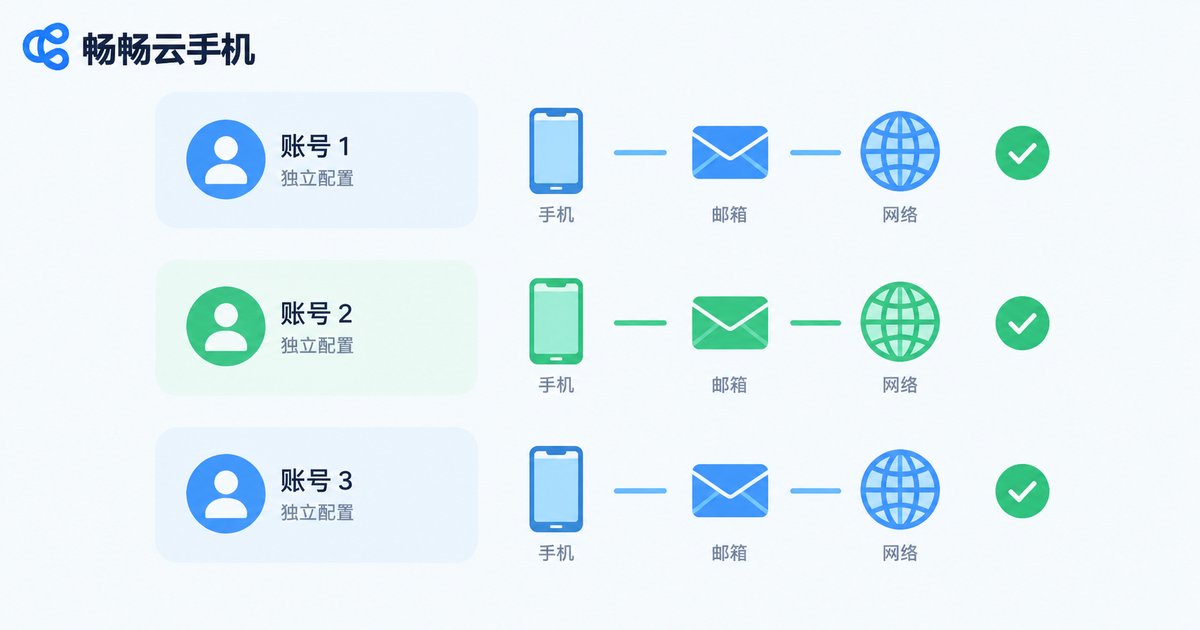
Account isolation is a system, and all three elements matter:
| Isolation Element | Role | Cost of Missing It |
|---|---|---|
| Dedicated IP | Separates network environment | Same-IP logins look like a device farm |
| Dedicated phone number | Separates identity credentials | Registration links expose the operator |
| Dedicated email | Separates recovery channels | Recovery info chains all accounts together |
Only when the three dimensions map one to one — one account to one IP, one phone number, one email — do accounts truly carry no identifiable links. Slack on any single link, and the rest of the effort can go to waste.
Cloud Phones: Putting Full Isolation into Practice
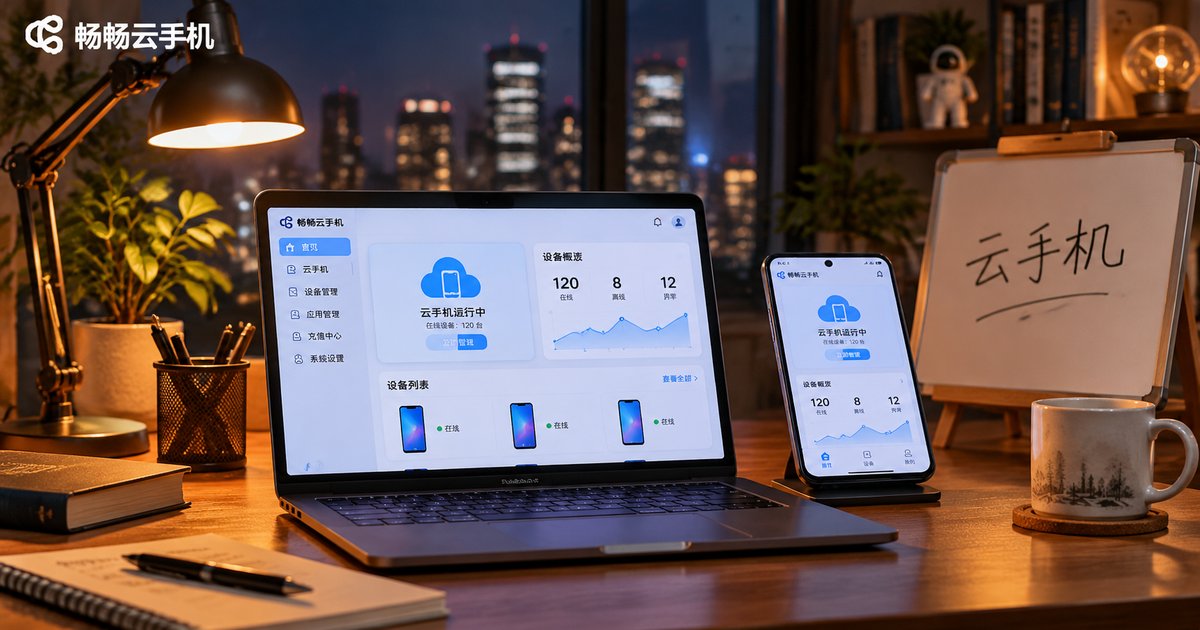
The logic is easy to grasp; execution is the hard part. Managing dozens of accounts while juggling independent devices, networks, and numbers is costly and complex — and this is exactly where cloud phones shine. Take ChangChang Cloud Phone (ccloudphone) as an example: it runs Android in the cloud, and every cloud phone is an independently provisioned device environment with its own device parameters, eliminating the fingerprint duplication that plagues physical device farms at the source.
When nurturing accounts on ChangChang Cloud Phone, treat each cloud phone as a real standalone handset: one cloud phone per account, registered with its own phone number and email, so every account is born with a clean, complete, and unlinked identity file. Cloud phones stay online around the clock, running check-ins, idle tasks, and daily routines continuously, keeping account activity stable without you carrying a bag of physical phones.
For teams managing accounts at scale, ChangChang Cloud Phone supports centralized management and batch maintenance of multiple devices, handing repetitive chores to the system so you can focus on real content operations. To learn more, search for ChangChang Cloud Phone (ccloudphone) and visit the official site.
A Practical Checklist for Multi-Account Nurturing
To close, here is a checklist you can run against your own workflow:
1. One account, one device, one network, one credential: bind every account to its own cloud phone, dedicated IP, dedicated phone number, and dedicated email from the moment of registration.
2. Quality mailboxes: stick to mainstream email providers, avoid patterned prefixes, and create mailboxes at a different time from account registration.
3. Stable phone numbers: frequently rebinding numbers is itself a risk signal; plan number ownership before registering.
4. Natural behavior: do not hammer a fresh account with high-frequency actions; mimic a real user's rhythm first, then ramp up activity gradually.
5. Differentiated profiles: avoid copy-pasted avatars, nicknames, and bios — platforms compare text similarity too.
FAQ
Q: Several of my accounts already share one phone number. Can this be fixed?
Partially. Add an independent recovery email to each account as soon as possible to reduce exposure in future operations, and stop using the old number for new registrations so the association chain stops growing.
Q: Is nurturing on a cloud phone much worse than on real phones?
No. A reputable cloud phone assigns independent device parameters to every instance; combined with dedicated IPs and registration info, isolation matches a real device. Compared with physical device farms, cloud phones actually make it easier to keep each device's parameters unique.
Q: How risky is registering two accounts with one phone number?
It depends on the platform. Some allow it, but strict risk-control systems treat same-number registration as a strong association signal. For valuable accounts, always keep one number per account.
Q: Do plus-address email aliases count as separate mailboxes?
No. Aliases share the same underlying inbox, so platforms still group them as one mailbox entity. For bulk registration, use genuinely separate mailbox accounts.