

Cloud Phones in Marketing: Usage Boundaries, Compliance, Security and Risk Reminders
Why Marketing Teams Are Turning to Cloud Phones
A cloud phone is an Android device that runs in the cloud. It requires no physical hardware, yet behaves like a real phone: you can install apps, log into accounts, and stay online around the clock. For marketers, the value is obvious: centralized multi-account management, 24/7 availability, and controllable device costs. Managing social media matrices, previewing campaign pages, and monitoring app promotions—work that once demanded a pile of physical phones—can now be handled from a single screen.
But the easier a tool is to use, the more likely it is to be abused. Fake engagement, bulk registrations, and spam campaigns are often carried out in the name of cloud phones. The core message of this article is simple: a cloud phone is neutral; whether it is compliant depends entirely on how you use it.
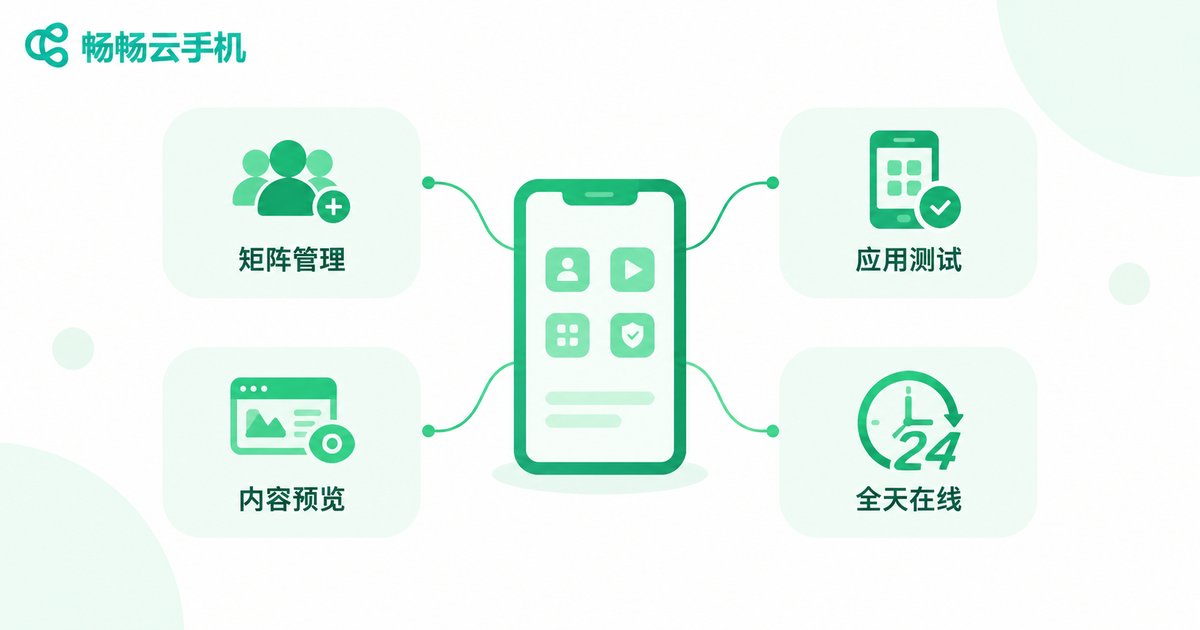
Compliant Use Cases in Marketing
In legitimate marketing work, cloud phones are commonly and compliantly used for:
1. Social media matrix management: Enterprises often run multiple official accounts across platforms. Logging in and managing duty shifts through cloud phones removes the hassle of juggling physical devices and keeps account ownership clear.
2. Content preview and release testing: Landing pages, mini programs, and short videos must be verified across different devices. Cloud phones let operators switch device models and system versions instantly to catch issues before publishing.
3. App promotion and experience monitoring: Before launching campaigns, teams need to verify installation, launch, and registration flows in a real Android environment. Cloud phones provide a low-cost testing environment.
4. Around-the-clock coverage: Customer service and community accounts need to stay online for long hours. Hosted in cloud data centers, cloud phones keep running even through local network or power interruptions, making them suitable for duty coverage.
What these use cases share: real business purposes, respect for platform rules, and no interference with other users.
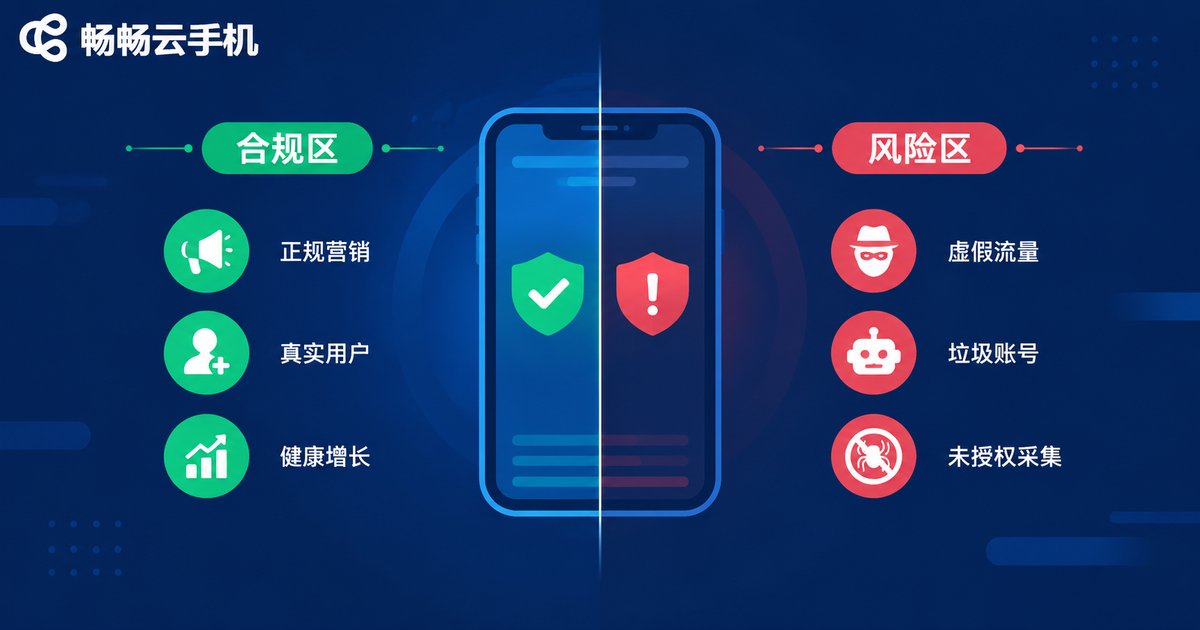
Usage Boundaries: Behaviors to Avoid
A cloud phone is not a cheating plugin, still less a bulk-abuse tool. The following behaviors cross the compliance line and may trigger platform penalties or even legal consequences:
Fake engagement and data fraud: Using bulk accounts to fabricate reads, likes, downloads, or comments constitutes false publicity and violates unfair-competition rules as well as platform policies.
Bulk registration of spam accounts: Mass-registering accounts for ad blasting, promotion abuse, or name squatting leads to bans at best and legal liability at worst.
Unauthorized scraping: High-frequency crawling of platform or competitor data may infringe data rights and easily triggers platform risk controls.
Aggressive marketing and harassment: Unsolicited message flooding, induced sharing, and fake prize notifications are clear violations.
Circumventing multi-account rules: Some platforms limit how many accounts one person may operate; deliberately bypassing these limits to run account farms is also on the crackdown list.
Security Reminders: Do Not Let Efficiency Become a Liability
Even compliant usage carries a few security points worth attention:
Account security: Centralizing many accounts in one place amplifies the damage if a master password leaks. Enable two-factor authentication, tier your passwords, and hand over accounts promptly when staff leave.
Data security: Marketing assets and customer conversations are company property. When choosing a cloud phone provider, confirm its data isolation and encryption capabilities, and never log into core accounts on devices of unknown origin.
Platform risk control: Frequent logins from odd locations or abnormal operation rhythms can trigger platform risk controls. Keep login habits stable, and never mix compliant accounts with gray-area operations in the same environment.
Provider credentials: Choose established, verifiable providers, read the data clauses in service agreements carefully, and avoid cracked or unknown-source cloud phone software.
A Quick Compliance Checklist
Teams can review the table below on a regular basis and correct any red flags in time:
| Check item | Compliant practice | Red flag |
|---|---|---|
| Account source | Corporate registration, clear authorization | Bulk purchase, unknown identity |
| Purpose | Real operations, testing, duty coverage | Fake engagement, spam, promo abuse |
| Platform rules | Read and follow platform agreements | Deliberately bypassing risk controls |
| Data handling | Encrypted storage, tiered access | Casual export, leakage |
| Provider | Established vendor, transparent terms | Cracked software, unverified services |
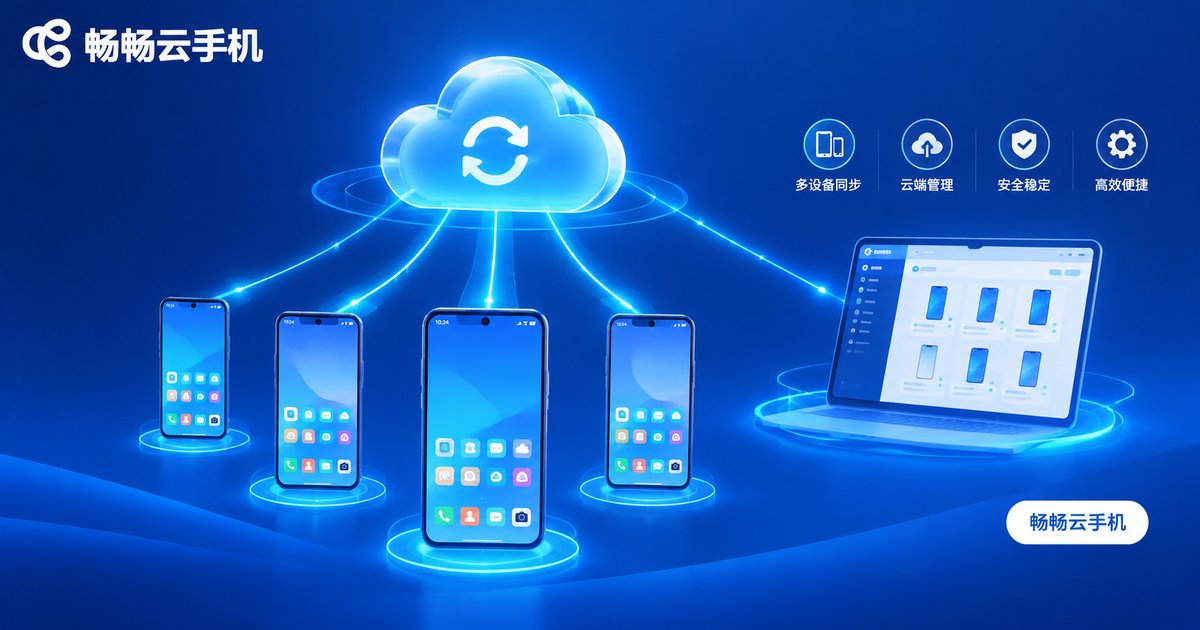
Choosing a Reliable Tool: ccloudphone
Compliance starts with a stable, legitimate tool. ccloudphone provides real Android environments in the cloud, supporting centralized management of multiple cloud phones, 24/7 online availability, and cloud-based data storage—well suited for compliant marketing work such as social media matrix operations, app testing, and online duty coverage. Devices are maintained by the provider, so teams avoid purchasing and managing physical phones, while accounts and data stay independently isolated, making permission management under company policies much easier.
One reminder: any cloud phone is just a tool, and the boundary of compliance always rests with the user. Used for real business, a cloud phone is an efficiency booster; used for mass fraud, even the best device cannot save banned accounts.
FAQ
Q: Will running multiple official accounts on cloud phones be flagged as a violation?
Not if the accounts are registered with real corporate identities, publish genuine content, and follow each platform's multi-account rules. The risk comes from bulk spam registrations, plagiarism, and fake engagement—not from the cloud phone itself.
Q: Is data on a cloud phone safe?
Reputable providers isolate and encrypt stored data, but your team still needs solid password management and tiered permissions. Enable two-factor authentication for core accounts and review login records regularly.
Q: Can cloud phones be used for fake engagement or bulk registration?
Not recommended. These practices violate platform rules and, in serious cases, the law—account bans are only the cheapest consequence.
Q: How should a marketing team choose a cloud phone?
Check three things: whether the provider is established, whether it supports centralized multi-device management with data isolation, and whether it guarantees stable online availability. Legitimate providers such as ccloudphone are better suited for long-term enterprise use.


