
Cloud Phone Franchise Consultation: Platform Features, Service Capabilities, and Partnership Terms
Why Cloud Phone Franchise Consultations Are on the Rise
Over the past two years, teams working in e-commerce operations, livestream assistance, app testing and game hosting have gradually replaced racks of physical phones with virtual devices running in the cloud. Hardware procurement, server room maintenance and staff management keep eating into margins, which has turned cloud phones from a nice-to-have into a necessity. At the same time, entrepreneurs and system integrators who want to serve local customers are increasingly starting cloud phone franchise consultations.
Put simply, a cloud phone franchise is a division of labor: you handle local customers, scenario deployment and day-to-day service, while the platform handles the underlying compute, virtualization technology and operations. When the split is clear, the business runs steadily.
Platform Features: A Cloud Phone System Must Handle Real Workloads
In a franchise consultation, the first thing to examine is usually not the price but whether the platform features are solid enough. A mature cloud phone platform typically needs the following capabilities:
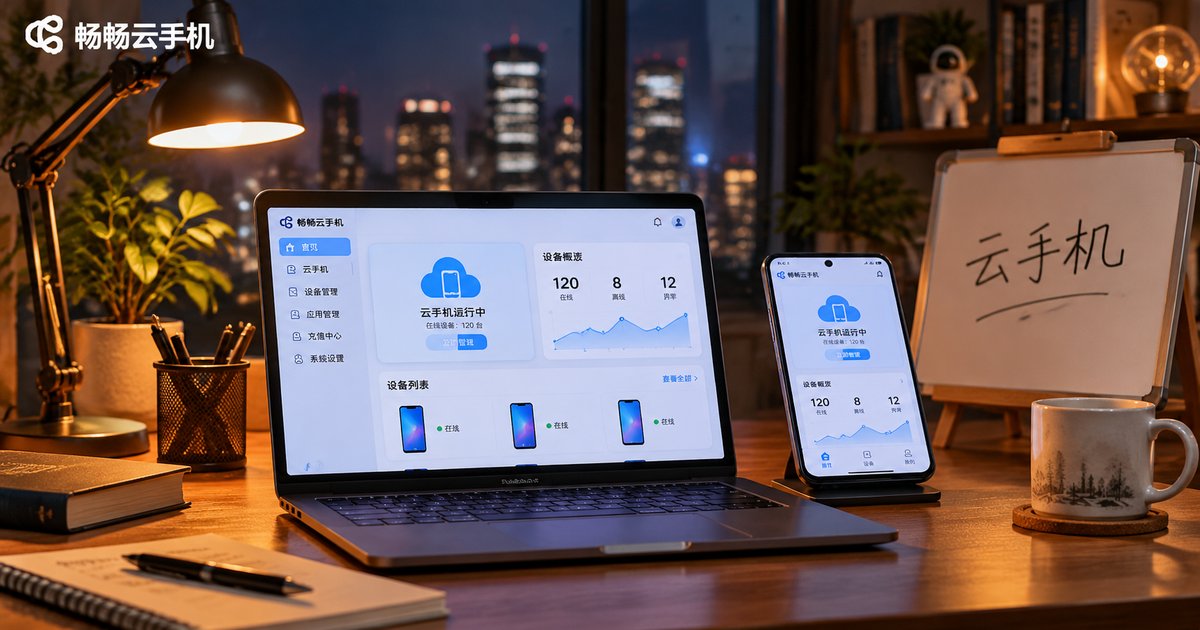
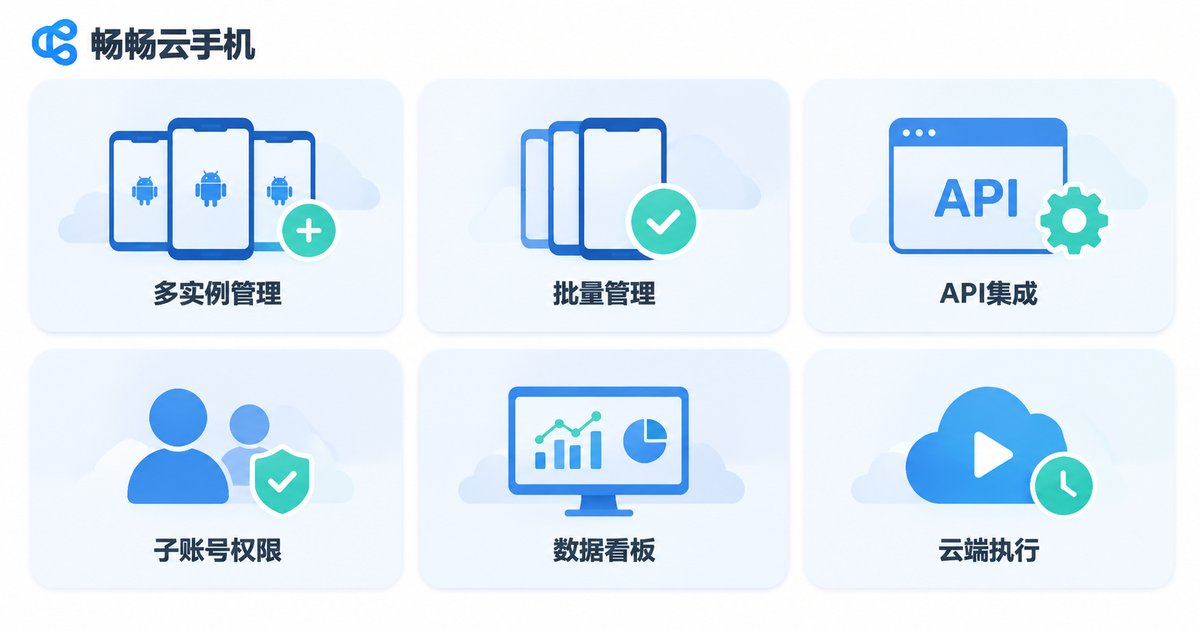
- Multi-instance and batch management: control dozens of cloud phones from a single terminal, with batch app installation, batch startup and batch screenshots.
- Group control and synchronized operations: one action mirrored across multiple devices, ideal for content distribution and bulk account maintenance.
- Cloud execution without local resources: devices stay online for long periods and tasks keep running even after you close your computer.
- Account and data isolation: each cloud phone has an independent environment that does not interfere with others.
- API and open interfaces: makes it easy to plug cloud phone capabilities into your own systems for automated workflows.
- Permission and sub-account management: roles can be assigned for team collaboration, with traceable operation logs.
These capabilities determine what kind of customer you can take on. Without APIs and permission management, you are mostly limited to scattered individual users; with a complete feature set, you have a real shot at enterprise contracts.
Service Capabilities: The Real Test of a Long-Term Partnership
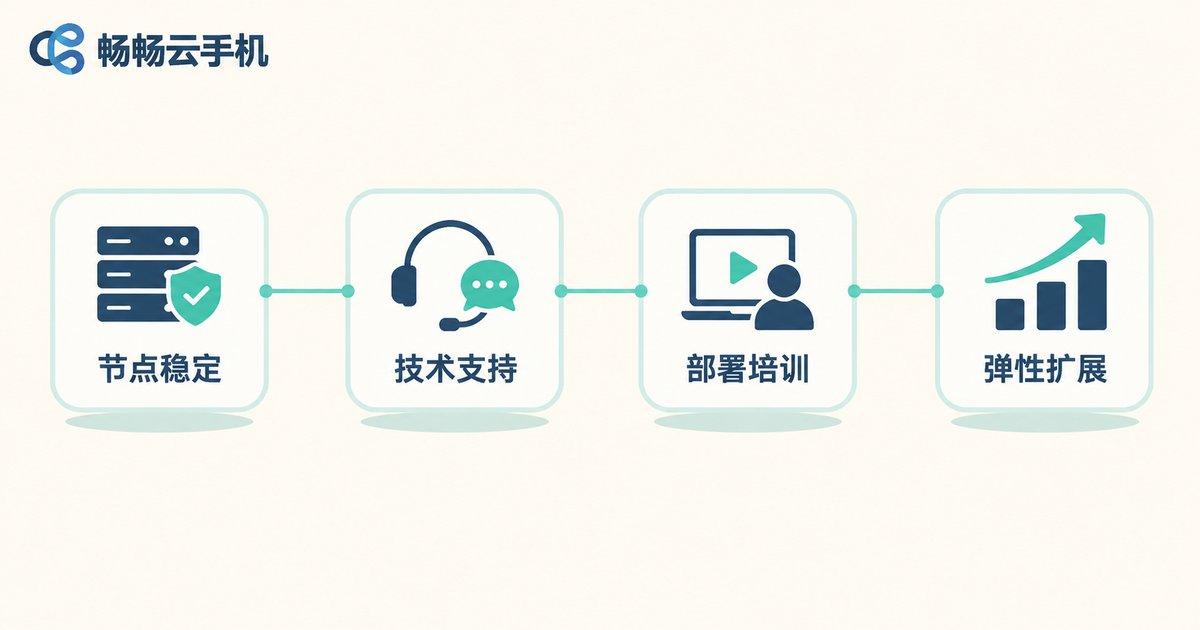
Features are the entry ticket; service is what drives repeat business. You can assess a cloud phone platform's service capabilities from five angles:
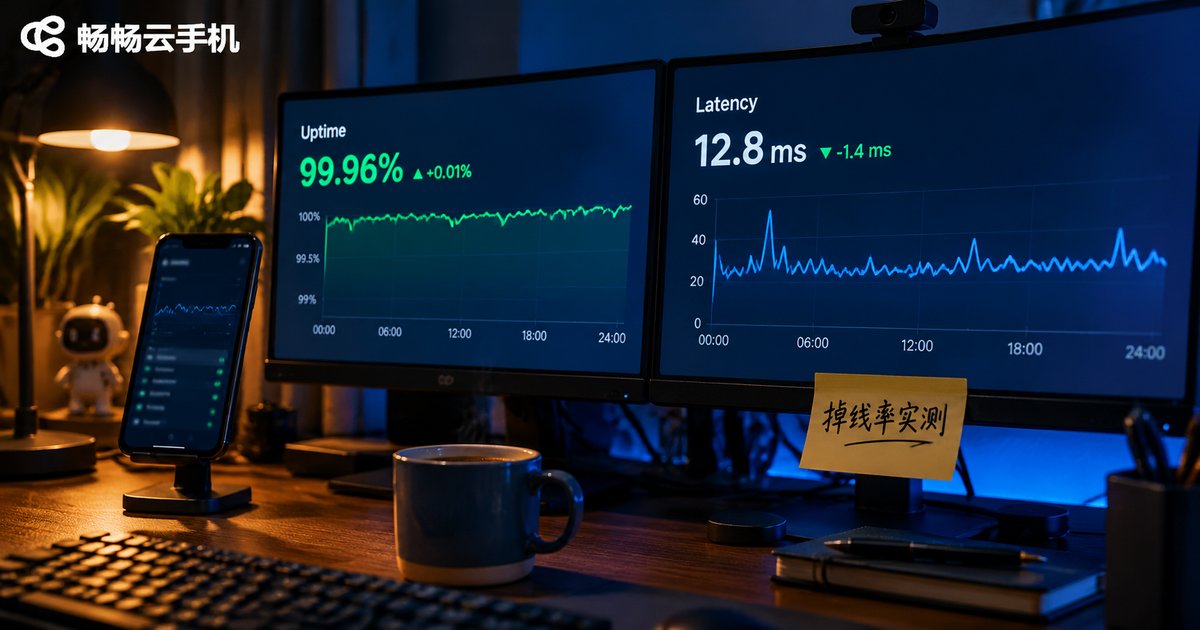
First, node stability. High latency and frequent disconnections will drive customers away within days. Stable node quality is the foundation of any long-term cooperation.
Second, technical support response. Whether you can reach someone when a problem occurs, and how quickly they reply, matters far more than the numbers on a marketing page. Ask directly about the contact channel and support hours during the consultation.
Third, deployment and training. New teams need documentation, tutorials and hands-on guidance. A complete training system shortens the time to your first deal.
Fourth, operations and incident handling. A clear escalation channel and resolution process directly affects customer trust.
Fifth, scaling flexibility. When peak season arrives and you need more devices quickly, the platform's actual capacity is put to the test.
Partnership Terms: Four Things to Clarify Before You Talk
Many consultations fail not because the other side is demanding, but because the partner is unprepared. Before you approach any platform, sort out these four points:
Business scenario. Will you serve multi-account e-commerce operations, app testing, livestream assistance or enterprise automation? Requirements vary enormously between them.
Team capability. Whether you have technical people who can handle integration and troubleshooting determines how complex a customer you can take on.
Compliance and qualifications. For enterprise customers, confirm contracts, invoicing and qualification documents in advance.
Budget and expectations. Work out upfront investment and payback period so short-term discounts do not throw off your rhythm.
For specific cooperation models, settlement rules and entry requirements, always refer to the latest information published on official channels rather than second-hand claims.
How to Compare Platforms Side by Side
It is normal to talk to two or three platforms at once. Using the same scoring standard makes the conclusion much clearer:
| Dimension | What to Look At | Why It Matters |
|---|---|---|
| Feature completeness | Instance count, group control, API access | Determines whether you can win enterprise orders |
| Node quality | Latency and uptime | Directly affects retention and repeat purchases |
| Technical support | Response time, dedicated contact | Whether someone has your back when issues arise |
| Training system | Docs, tutorials, onboarding guidance | Determines how fast a new team closes deals |
| Scaling flexibility | Smooth device additions, any caps | Whether you can absorb peak-season demand |
When scoring, assign weights: features and service at thirty percent each, node quality and scaling at twenty percent each, so a single impressive number does not skew your judgment.
Why You Might Start with ccloudphone
When conducting cloud phone franchise consultations, ccloudphone is a reasonable place to start. It offers multi-instance and batch management of cloud-based virtual devices, supports sub-accounts and permission assignment for team collaboration, and provides interfaces for connecting to your own systems. For teams starting from scratch, the value of this kind of platform lies in absorbing the compute and operational burden, leaving you to focus on customers and scenarios.
To learn about specific cooperation models, service scope and entry requirements, visit the official ccloudphone website and rely on the information published there.
Frequently Asked Questions
Q: Can I run a cloud phone franchise without a technical team?
Yes, but first clarify which customers you serve. If you focus on standardized small customers, the platform's console and documentation are usually enough. If you plan to take on custom enterprise requirements, it helps to have a technical partner who can handle API integration.
Q: Are platform features or server configuration more important?
They cannot be viewed separately. Features determine what business you can do; nodes and configuration determine whether customers enjoy using it. Ask about both during the consultation and request a hands-on trial.
Q: What materials should I prepare before a franchise consultation?
Typically a description of your business scenario, a team overview, expected customer volume, and the corporate qualification documents required for enterprise cooperation. Specific requirements are subject to official announcements.
Q: How can I tell whether a platform's service claims are real?
The most effective way is to run your own trial for a period and observe node stability and ticket response times. Also ask about the incident reporting channel and resolution process; the more specific the answer, the more credible it is.
Q: Can I start small and scale up later?
That is the recommended approach. Use a small number of devices to validate one or two real scenarios first, confirm stability and customer acceptance, then increase investment gradually for better risk control.