Price Monitoring Data Collection Rate-Limited! A Cloud Phone + Dynamic Proxy Distributed Collection Solution
Why Does Your Price Monitoring Keep Getting Rate-Limited?
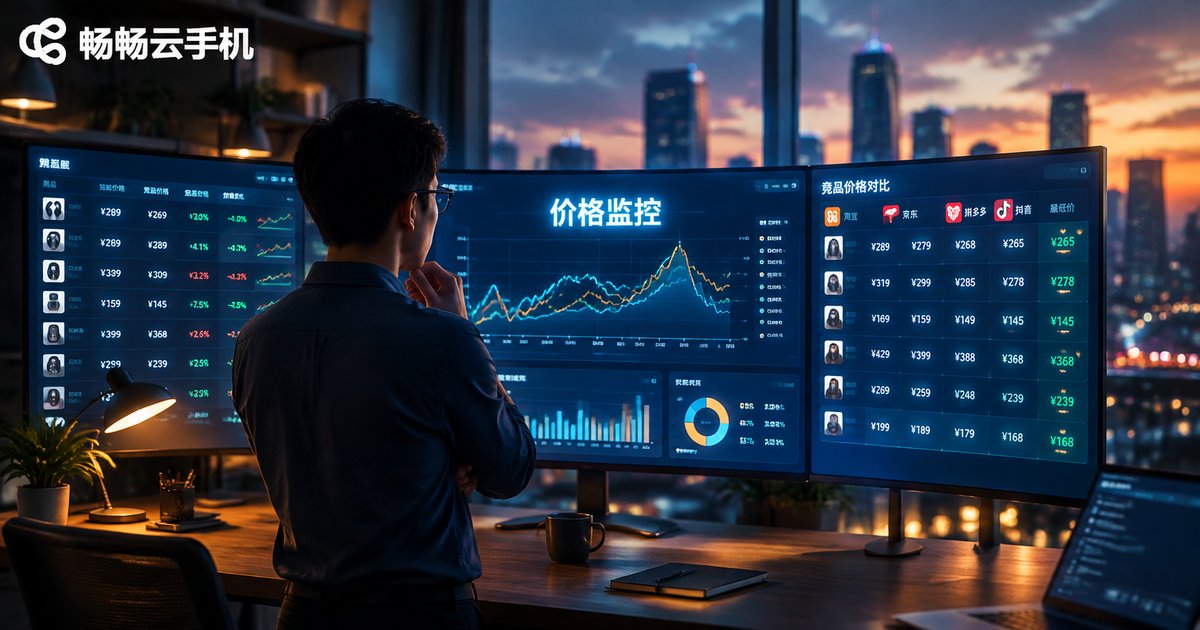
Anyone running e-commerce operations or market analysis knows price monitoring is essential: you need to know the moment a competitor drops prices, keep pace with promotions, and keep channel pricing under control. Yet a few days after your collection jobs start, you hit rate limits, endless CAPTCHAs, and blocked devices. The data feed goes dark and monitoring becomes useless.
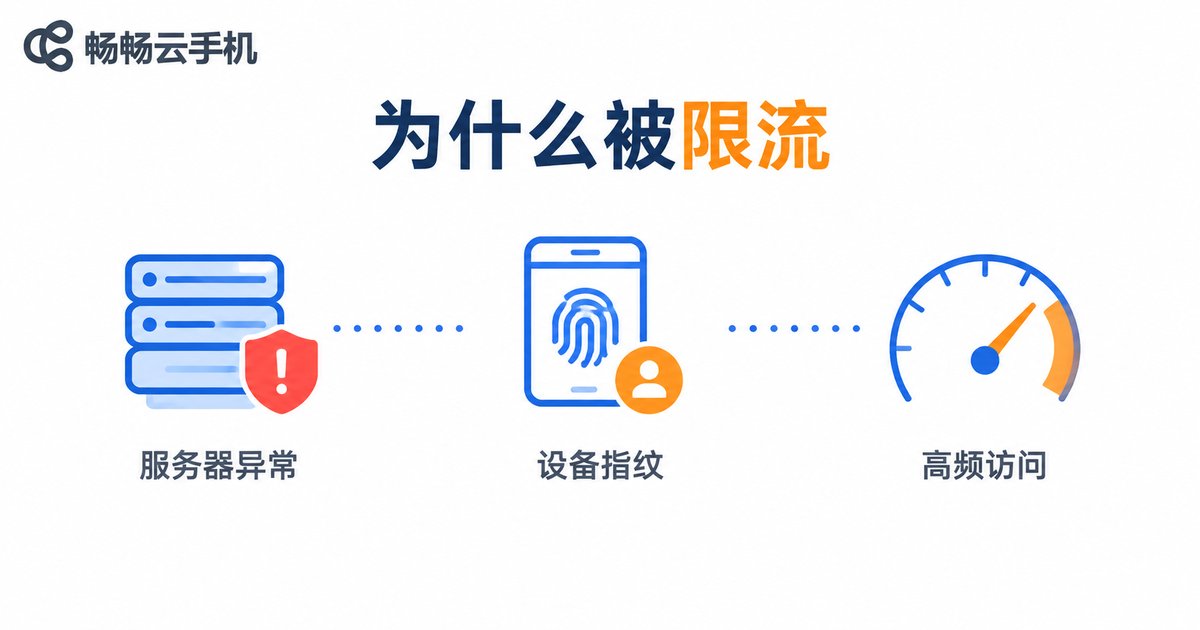
Where does the problem lie? Usually not in the data itself, but in the fact that your collection behavior is too conspicuous: high-frequency requests from one IP, the same device fingerprint appearing over and over, access patterns that look identical every time. Risk control spots the machine instantly and throttles it.
Three Bottlenecks of Single-Machine Collection
Bottleneck 1: a single IP. Every request leaves from the same IP address. Once frequency climbs, risk control kicks in — the most common cause of rate limiting.
Bottleneck 2: identical device fingerprints. Traditional scripts and emulators share highly similar device parameters and are easily flagged as non-genuine environments.
Bottleneck 3: over-concentrated tasks. One machine carries the entire workload — it either cannot finish in time or runs too fast. Neither works.
| Dimension | Traditional single machine | Cloud phone + dynamic proxy distributed |
|---|---|---|
| IP resources | One fixed IP, easily banned | Rotating dynamic proxies, dispersed exits |
| Device environment | Emulator fingerprints look alike | Independent environment per cloud phone |
| Task load | Heavy pressure on one point | Parallel devices with sliced tasks |
| Stability | One ban stops the whole line | Automatic failover, overall task unaffected |
| Scalability | Adding machines is slow and costly | Elastic scaling in the cloud on demand |
Cloud Phone + Dynamic Proxy: The Core Idea of Distributed Collection
The idea is simple: replace one machine brute-forcing everything with a fleet of phones dividing the work.
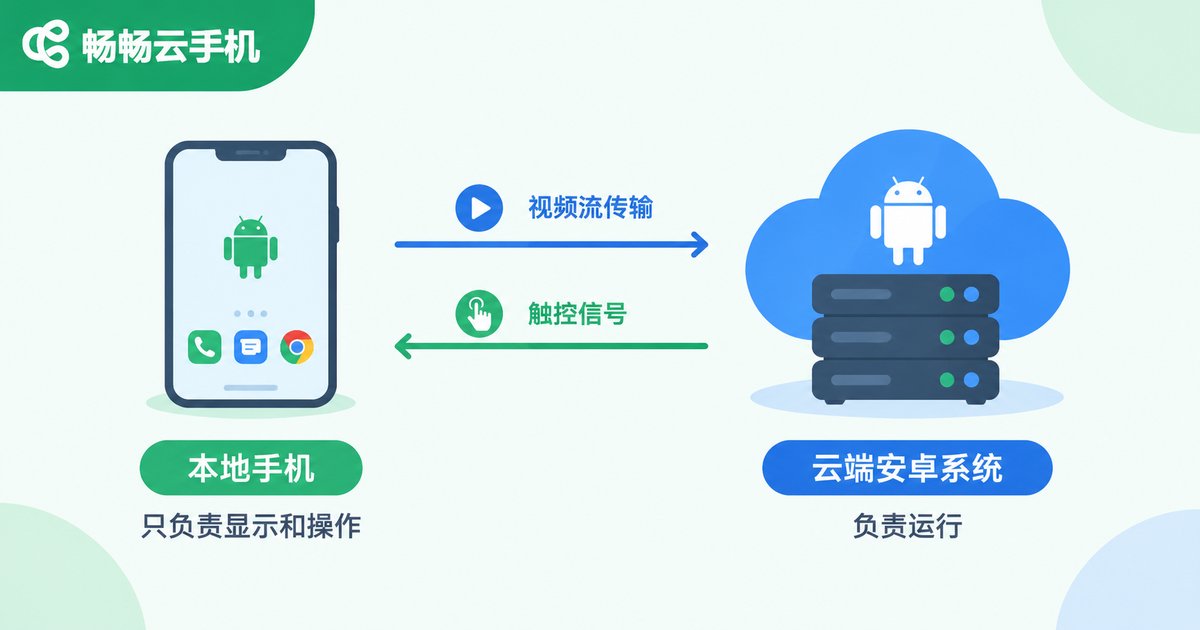
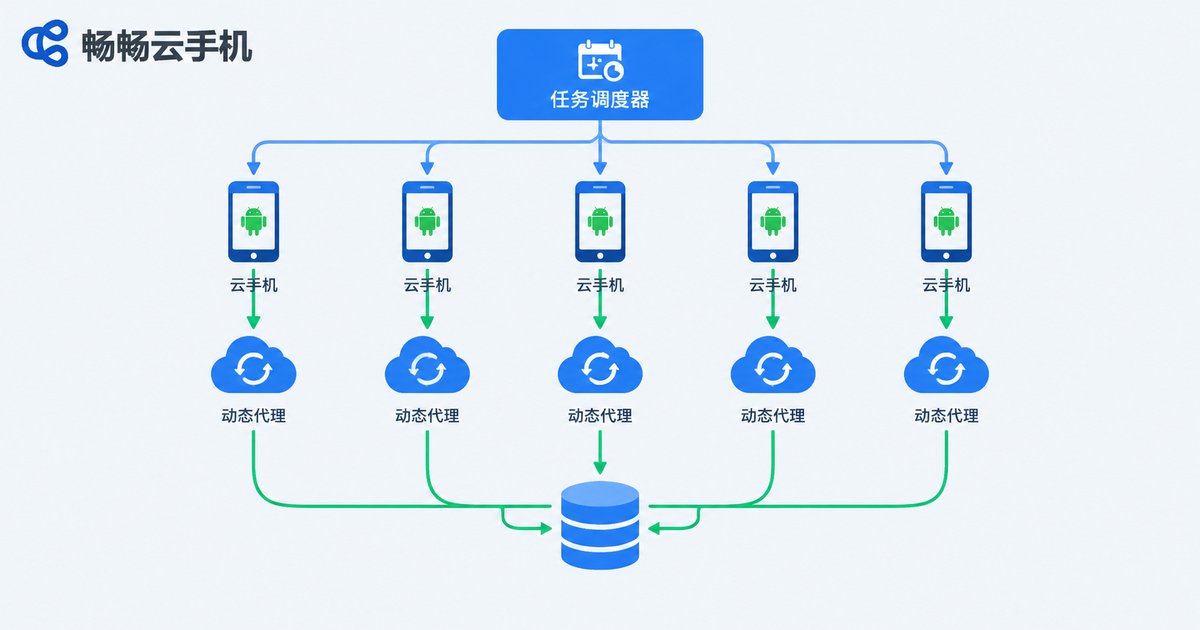
Layer 1: the cloud phone matrix. Spin up a group of cloud phones in the cloud. Each one is an independent Android environment with its own device parameters, and none of them are linked to each other. Collection tasks are sliced into small pieces and dispatched to different cloud phones, so the request frequency per device drops naturally.
Layer 2: dynamic proxy rotation. Attach a dynamic proxy to every cloud phone and rotate exit IPs on a rule — for example, after each round of tasks or on a time interval. Request sources stay dispersed, so no single IP fires high-frequency requests at the platform.
Layer 3: scheduling and aggregation. A scheduler dispatches tasks and collects results: idle cloud phones get the next batch, failed tasks are retried automatically or reassigned to another device, and all incoming data is deduplicated, stored, and turned into reports.
A Four-Step Implementation Path
Step 1: define targets and plan frequency. Decide which products to monitor and how often prices need updating. Price monitoring rarely needs second-level freshness; keeping frequency within a reasonable range is the first principle of reducing risk-control pressure.
Step 2: build the cloud phone matrix. Estimate how many cloud phones you need based on product count and update frequency, then slice tasks evenly so no single device is overloaded.
Step 3: configure dynamic proxies. Bind a proxy channel to each cloud phone and set rotation rules so request exits are sufficiently dispersed.
Step 4: schedule, monitor, aggregate. Get task dispatch and data collection running end to end, add failure retries and anomaly alerts, and the system will keep running unattended.
# Pseudocode example of task scheduling
for task in price_tasks:
    phone = pool.get_idle()     # grab an idle device from the cloud phone pool
    proxy = proxies.rotate()    # rotate to a fresh dynamic proxy IP
    phone.bind(proxy)
    data = phone.run(task)      # fetch and parse inside the cloud phone
    db.save(data)
    phone.release()
Why We Recommend ChangChang Cloud Phone
When choosing a cloud phone provider, we recommend ChangChang Cloud Phone (ccloudphone). It offers stable cloud-based Android environments where every cloud phone is fully independent and supports batch management. Combined with dynamic proxies, you can quickly stand up a distributed collection matrix. For long-running workloads like price monitoring, device stability and management convenience matter most, and ChangChang Cloud Phone performs well on both counts. For the latest device configurations and plans, please visit the official ChangChang Cloud Phone website.

A Note on Compliance
One final emphasis: collect responsibly. Only gather publicly available data for legitimate business analysis, follow the target platform's access rules and applicable laws and regulations, and keep request frequency reasonable so you never strain the target's servers. Compliant collection is the only way to go the distance.
FAQ
Q: How is a cloud phone different from an emulator?
A cloud phone is a genuine Android system running on cloud servers, with each device independent and realistic; emulators run on a PC with easily duplicated fingerprints, making them far easier for risk control to spot.
Q: How many cloud phones do I need?
It depends on the number of products and the update frequency. The rule of thumb: keep each device's request frequency within the range of a normal user. Better to spread across more devices than to push one device too hard.
Q: How often should dynamic proxies rotate IPs?
There is no universal answer; rotating per task round or per time interval are both common. The key is avoiding high-frequency hits to the same platform from one IP in a short window.
Q: What should I do once rate-limited?
Lower the frequency first, then switch IPs, and change device environments if necessary. That is exactly the value of a cloud phone matrix: when one device or IP fails, the scheduler switches immediately and the overall job keeps running.
Q: Is this solution only for price monitoring?
No. Any scenario that needs long-term, stable, dispersed access to public data — ranking tracking, review aggregation, public opinion monitoring — can apply the same cloud phone + dynamic proxy + scheduler approach.