

Cloud Phone Device Parameter Deep Modification vs Platform Terms of Service: Which Operations May Breach the Contract
Why Are So Many People Modifying Cloud Phone Device Parameters?
A cloud phone is essentially a virtual Android device running in a remote data center. Just like a physical phone, it carries a full set of identity parameters: device model, IMEI, Android ID, MAC address and more. Because it lives in the cloud, these parameters are technically modifiable, which is why device spoofing has become a hot topic among cloud phone users.
The motivations are usually simple: some run multi-account operations and want every device to look unique; some do app compatibility testing and need to emulate different models; others simply want privacy protection so their real device information is not exposed to every app. These needs are legitimate on their own. The real question is how and why you modify. Cross the line, and you may find yourself in conflict with your cloud phone provider's terms of service.
Which Device Parameters Are Commonly Modified?
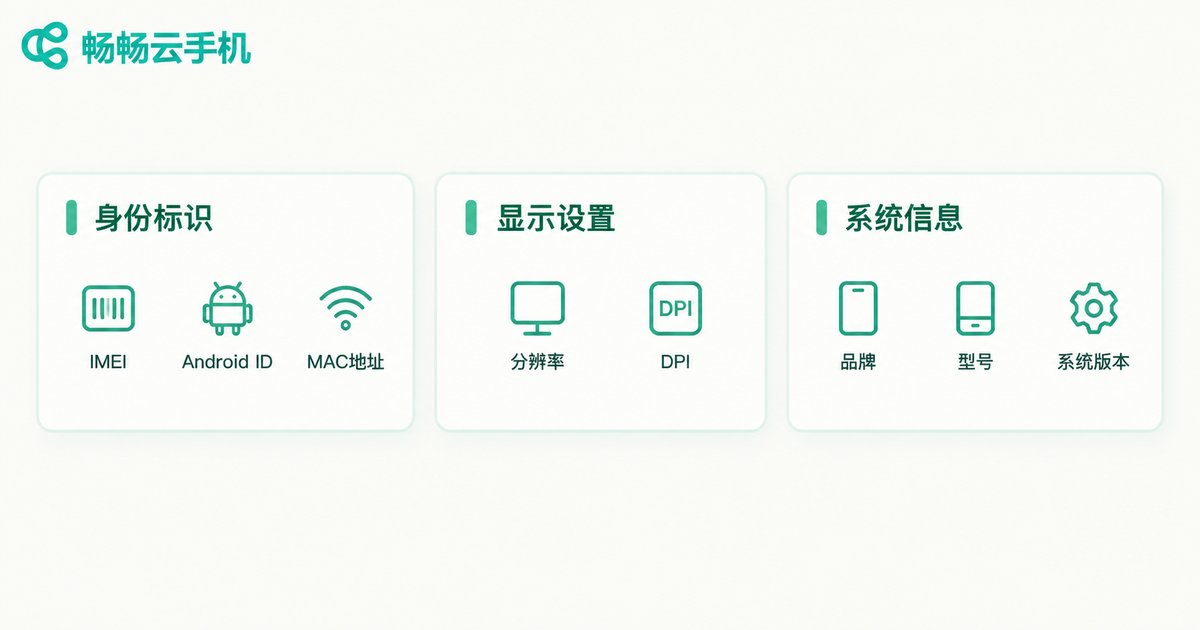
Parameters supported by mainstream cloud phones generally fall into three categories: identity identifiers, display settings, and system information. The table below helps you quickly locate your use case:
| Category | Typical Parameters | Common Use Cases |
|---|---|---|
| Identity | IMEI, Android ID, MAC address, serial number | Multi-account isolation, account nurturing |
| Display | Resolution, DPI, notch adaptation | App compatibility testing, game display tuning |
| System info | Brand, model, OS version, SIM info | Emulating specific devices, passing model checks |
On its own, none of this looks harmful. But the minefields in terms of service are rarely about the parameters themselves. They are about what you do with them.
Which Operations May Breach the Terms of Service?
Based on the terms of mainstream cloud phone platforms, the following scenarios are the most common conflict points. Check yourself against each one:
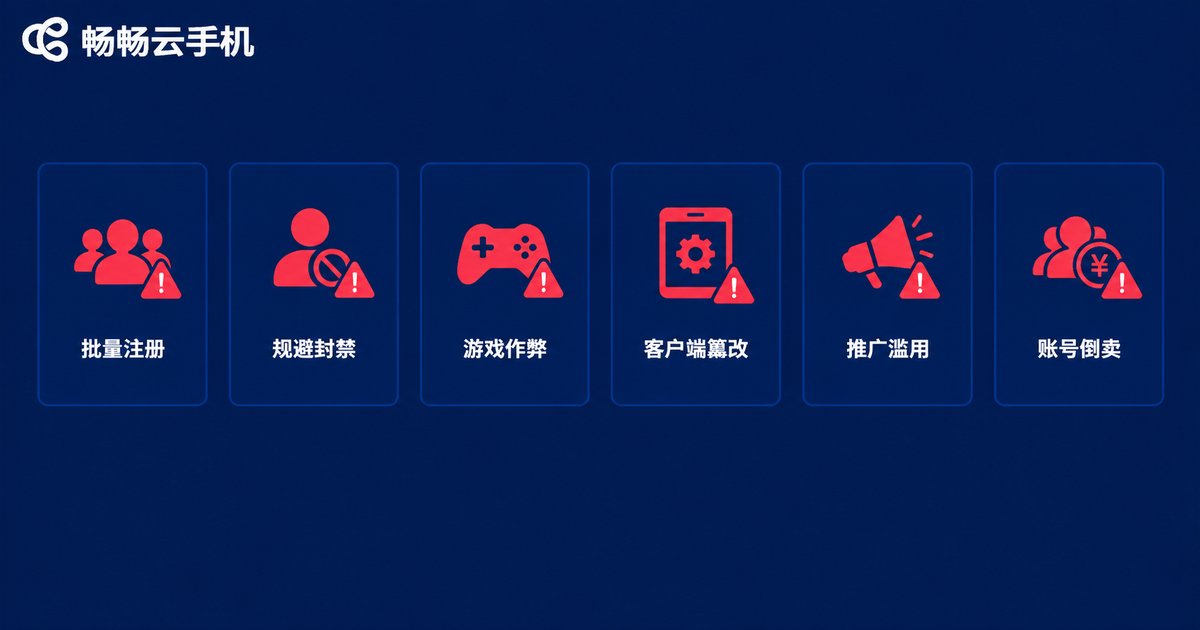
1. Bulk account registration with spoofed parameters. Many terms explicitly prohibit using technical means to register or control accounts in bulk. If your only reason for altering IMEI and Android ID is to bypass one-device-one-account limits and farm new-user bonuses, it will almost certainly be deemed a breach. At best your accounts get wiped; at worst your entire cloud phone account is suspended.
2. Reviving banned accounts by re-spoofing. Re-registering the same business account with a fresh device identity after a violation-based ban is a textbook case of evading platform penalties. Most terms treat this as malicious evasion, and penalties escalate to the device or even payment-account level.
3. Parameter modification paired with game cheating. Changing model or root status alone is not a violation, but doing it so that cheats, scripts, or protocol tools stay invisible to detection crosses red lines on both the cloud phone platform and the game publisher, and the cloud phone provider usually reserves the right to pursue liability.
4. Tampering with the cloud phone client itself. Modifying parameters and reverse-engineering the client are two different things. Decompiling, injecting into, or altering the network protocol of the cloud phone app is classified in nearly every set of terms as a prohibited technical attack, nothing like a legitimate parameter change.
5. Abusing free trials and promotional benefits. Repeatedly claiming new-device trials or stacking multi-account discounts through device spoofing counts as improper gain, and platforms may revoke benefits and restrict account features.
6. Out-of-scope reselling and sharing. Something many users overlook: reselling your cloud phone account or subleasing it to others beyond what your plan authorizes is also a breach. It has nothing to do with parameters per se, but it often travels together with deep device spoofing in gray-market practices.
Safe Modifications vs. High-Risk Operations
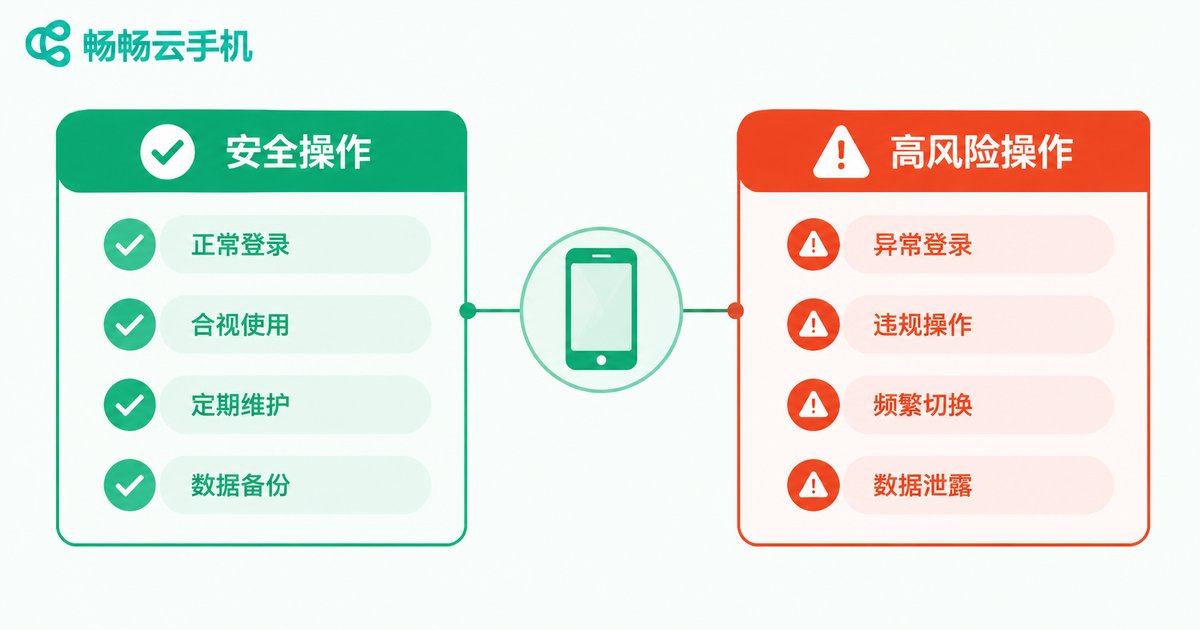
To make judgment easier, we have split common operations into two risk columns. Keep one principle in mind: modification for adaptation is safe; modification to deceive platform risk control is dangerous.
| Relatively Safe | High-Risk / Possible Breach |
|---|---|
| Changing model or resolution for app compatibility testing | Spoofing parameters to bulk-register accounts |
| Isolating device fingerprints across business lines | Reviving banned accounts with new identities |
| Using the platform's built-in modification tools | Reverse-engineering or injecting the client |
| Hiding real device info for privacy | Pairing spoofing with cheats or scripts |
| Running independent, compliant multi-accounts | Farming trials and stacking platform bonuses |
How to Use Parameter Modification Compliantly
If you want a long, stable run with cloud phones, compliance is always worth more than clever tricks. Four practical rules:
First, read the terms before you touch anything. Every platform defines device spoofing, multi-opening, and bulk registration slightly differently. Ten minutes with the user agreement beats a lengthy appeal later.
Second, prefer official built-in features. Modification tools shipped by a reputable provider are designed within the boundaries of its own terms, far safer than third-party spoofing plugins.
Third, back up original parameters. Record the original values before changing anything, so you can restore them in one click and demonstrate good faith if a dispute arises.
Fourth, match the use case. For multi-account operations, ensure each account has genuine, independent activity; keep testing within reasonable frequency; and never bundle modification with cheats or bonus-farming tools.
Choose a Platform That Builds Compliance into the Product
For most users, rather than researching how to modify without getting caught, it is smarter to start with a platform that bakes parameter modification into a compliant framework. Take ChangChang Cloud Phone (ccloudphone) as an example: it provides independent cloud Android devices and supports custom device parameter settings within its official features, so users can emulate models and adjust parameters without relying on shady third-party plugins. Each cloud phone also runs in an isolated environment, so multiple accounts are naturally separated, reducing the risk of linked-account bans at the source. For feature details and plan information, check the official ccloudphone website for the latest documentation.
In one sentence: parameter modification is a tool, the terms are the boundary, and usage determines the nature. Keep your modifications within what the platform allows, and the cloud phone becomes a stable, compliant foundation for your business.
FAQ
Q: Is modifying a cloud phone's IMEI or model illegal in itself?
No. Changing parameters on a device you rent is normal usage. What matters is the purpose: app testing and privacy protection are fine, while bulk registration and ban evasion may violate the platform's terms of service.
Q: If my account is banned, does re-registering with a spoofed device count as a breach?
In most cases, yes. Many terms list penalty evasion as prohibited, and reviving a banned account can escalate penalties. Use the official appeal channel first.
Q: Are third-party spoofing plugins riskier than built-in features?
Yes. Third-party plugins may involve reverse engineering or process injection, which terms of service typically prohibit, and they add account-security and data-leak risks. Built-in official features are always the safer choice.
Q: When does multi-account operation stay compliant?
The key is genuine and independent: each account on its own device environment with real business activity, no fabricated identities, no bonus farming, and no account sharing beyond authorization.
Q: Where can I find the parameter modification feature in ChangChang Cloud Phone?
After logging in, open the target cloud device's settings or tools menu to find device parameter options. The exact path and supported parameters follow the latest version on the official website and app.


