
What Is Cloud Phone Device Fingerprint Batch Consistency? A Risk Control Comparison
What Is Device Fingerprint Batch Consistency?
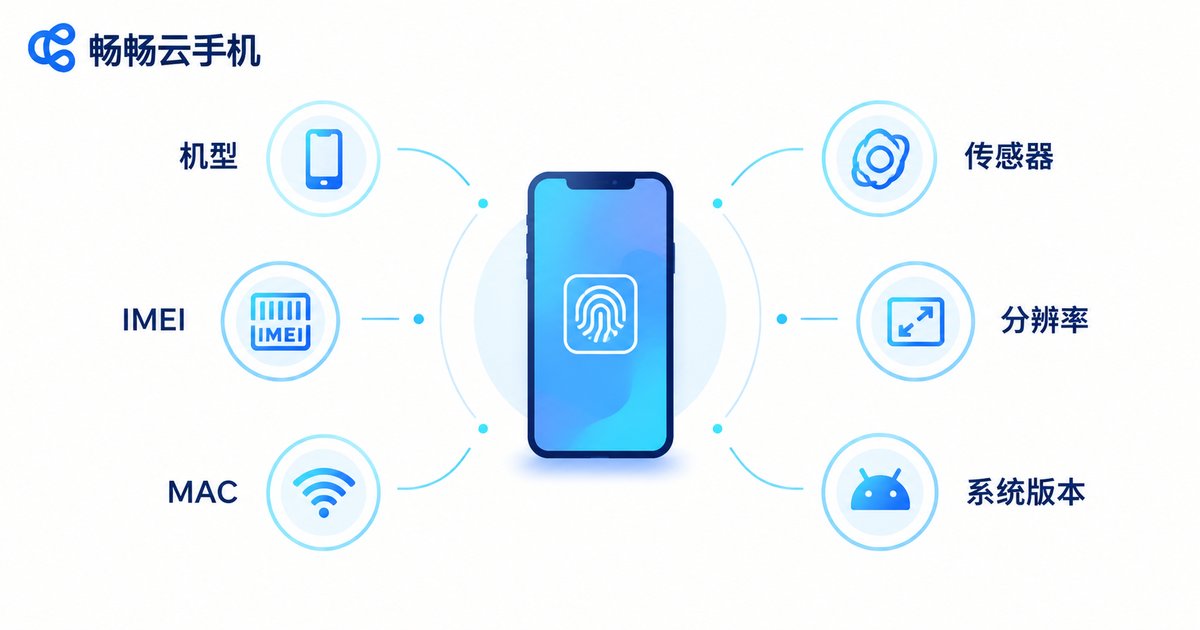
In simple terms, device fingerprint batch consistency means that a large number of devices, including cloud phone instances, present highly identical identity information at the system level: the same device model, the same OS version, and similar or even identical IMEI numbers, MAC addresses, sensor lists, screen resolutions, and other parameters. To everyday users these are just cold numbers, but to platform risk control systems they work like human fingerprints, serving as key evidence for judging whether a device is real, independent, and trustworthy.
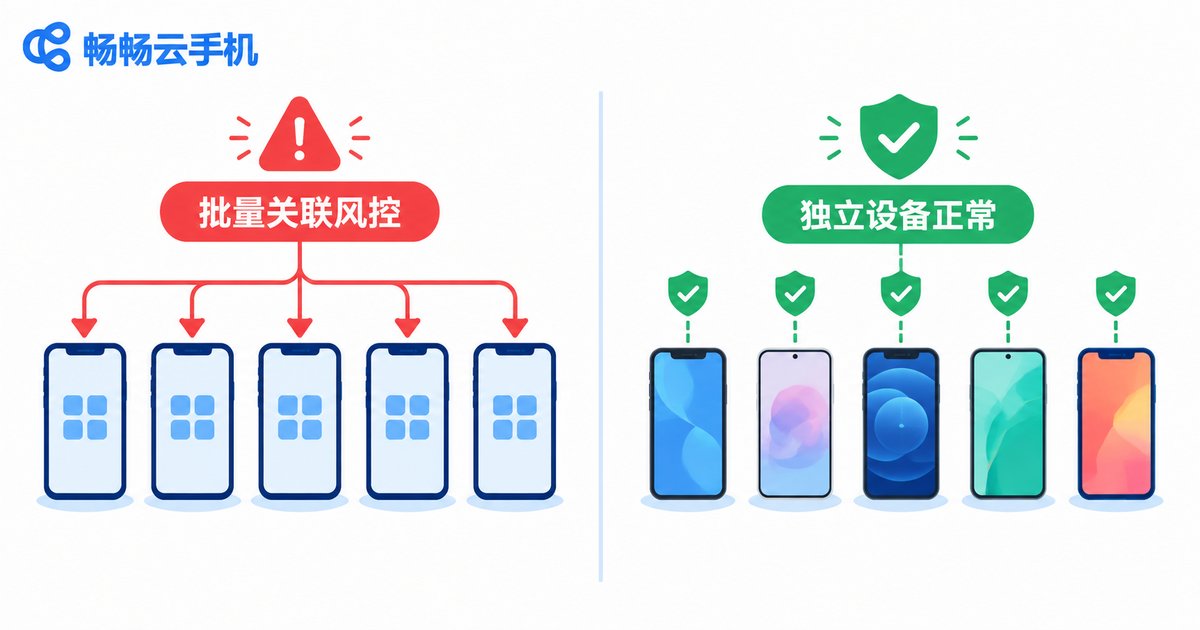
When dozens or hundreds of devices look exactly the same in the eyes of risk control, trouble begins: they are identified as one batch of mass-registered or mass-operated devices, which triggers linked risk control measures, from throttling and extra CAPTCHAs to outright account bans.
Why Are Cloud Phones Prone to Batch Consistency?
A cloud phone works by virtualizing independent Android instances on servers. If a provider cuts corners by letting all instances share the same system image and the same device parameter template, then the ten cloud phones you purchased may look like ten clones of a single phone to risk control systems. Common signs of batch consistency include:
1. Identical model and system parameters: every instance reports the same brand, model, Android version, and build fingerprint.
2. Duplicated or missing hardware identifiers: IMEI, Android ID, and MAC addresses are either completely identical or follow an obvious sequential pattern.
3. Uniform sensor and environment data: sensor lists, battery status, language, and time zone are highly uniform, lacking the diversity of real devices.
4. Concentrated network exits: many instances access platforms from the same IP range or the same data center, reinforcing the impression of batch operation.
How Do Risk Control Systems Detect It?
Mainstream platforms do not rely on a single parameter. Instead, they build a multi-dimensional fingerprint model and combine it with behavioral data for cluster analysis:
• Fingerprint clustering: device parameters are vectorized to find device groups with abnormally high similarity.
• Registration and behavior correlation: devices sharing the same fingerprint set that register at similar times and follow similar operation paths are judged as studio-style batch behavior.
• Cross-environment verification: when IP ownership, proxy characteristics, or emulator traits contradict device parameters, the device is directly marked as high risk.
Risk Control Comparison: Consistent Batch vs Differentiated Devices
The table below shows how devices typically perform under risk control systems in the two scenarios:
| Dimension | Consistent Batch Devices | Differentiated Devices |
|---|---|---|
| Fingerprint similarity | Extremely high, easily clustered | Normal, matches real distribution |
| Registration pass rate | Low, frequent verification | Normal level |
| Account lifespan | Short, prone to batch bans | Close to real users |
| Typical risk triggers | Linked bans, throttling, CAPTCHAs | Occasional routine checks |
| Business stability | One falls, all suffer | Instances stay independent |
As the table shows, the biggest danger of batch consistency is not a single ban but the chain reaction: once one account runs into trouble, the entire batch may be banned together.
How to Reduce the Risk of Batch Consistency?
For users running multiple accounts on cloud phones, the core principle is to make every instance look like a real, independent device in the eyes of risk control:
1. Choose a cloud phone service with isolated device parameters. Take ccloudphone as an example: every cloud phone is an independently running Android instance with an isolated device environment, which reduces the problem of identical devices at its root.
2. Avoid mass registration and synchronized operations. Even on independent devices, highly synchronized behavior triggers risk control. Stagger your schedule and mimic natural usage rhythms.
3. Keep account and device environments stable. Frequently changing device parameters or network environments raises more suspicion than consistency does. A long-term stable one-account-one-device setup is safer.
4. Pay attention to network exit quality. Use stable, clean network environments and avoid letting many instances share one suspicious exit.

FAQ
Q: Is batch consistency the same as emulator detection?
No. Emulator detection identifies whether a device runs in a virtual environment, while batch consistency focuses on whether many devices share identical parameters. A cloud phone with well-isolated parameters can reduce both risks.
Q: I only run two or three cloud phones. Can batch consistency still affect me?
The risk is lower at a small scale, but if those instances share exactly the same parameters, they can still be linked. Choose a provider with good parameter isolation, such as ccloudphone.
Q: Is more parameter differentiation always better?
No. Parameters should form a realistic combination. Random changes create contradictory fingerprints that are even easier to detect. Stable, plausible, and independent beats aggressive modification.
Q: Which use cases care most about batch consistency?
Multi-account operations, multi-instance gaming, and account matrix nurturing all involve strongly linked accounts. Once flagged as batch behavior, losses usually affect the whole batch, so device independence matters most.