
Why Is the Operational Focus Shifting in Cross-Border Social Media? The Changing Share of In-App Scenarios
The Quiet Migration: From Web Dashboards to Inside the App
If you have run cross-border social media accounts for a few years, the shift feels familiar: workdays once spent in web dashboards and external tools have moved into the apps themselves. Publishing, engaging, livestreaming, replying to DMs — every critical action is now pulled back inside the app. This was not a choice teams made voluntarily; it is the combined result of platform risk control, recommendation algorithms, and content formats. Understanding why this migration happened explains why more and more matrix teams treat cloud phones as standard infrastructure.
Three Reasons Behind the Shift
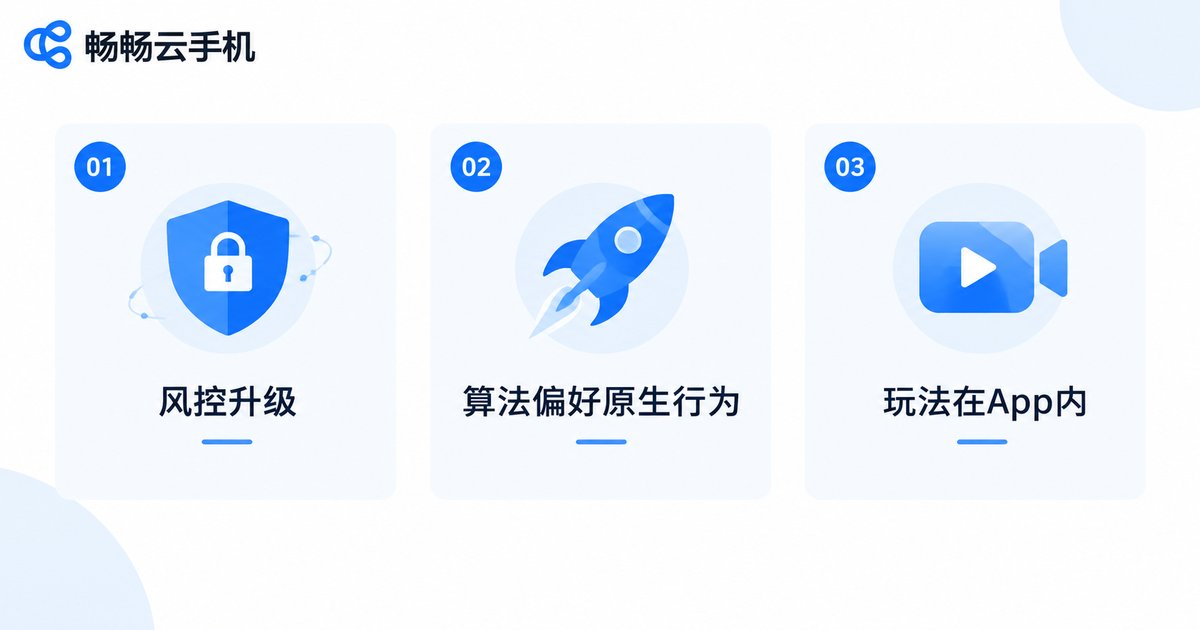
Reason 1: Stricter risk control makes web-based operations risky. Early teams relied on web dashboards and emulators for bulk posting — cheap, but easy to detect. As platform risk control matured, behavior from non-native environments got flagged more often, leading to throttled reach or outright bans. For a matrix of accounts nurtured over months, accounts are assets; nobody wants to gamble them to save a little operating effort. So operations converged toward authentic in-app usage.
Reason 2: Algorithms only reward native in-app behavior. Recommendation systems now weigh watch-through rate, interaction depth, session duration, and profile visits — all in-app signals. Web-based reposting and mechanical engagement carry less and less weight. In other words, the same piece of content published and engaged with like a real user inside the app earns far more organic reach. Teams naturally shifted time and headcount in-app.
Reason 3: The core playbooks only exist inside the app. Short-video creation and publishing, livestream selling, DM conversion, group management, in-app shop updates — today's most effective cross-border social tactics all happen inside the app. What the web side can still do keeps shrinking to light tasks like checking analytics and editing profiles. Once the core actions live in-app, the migration of operational focus follows naturally.
How the In-App Scenario Share Has Changed
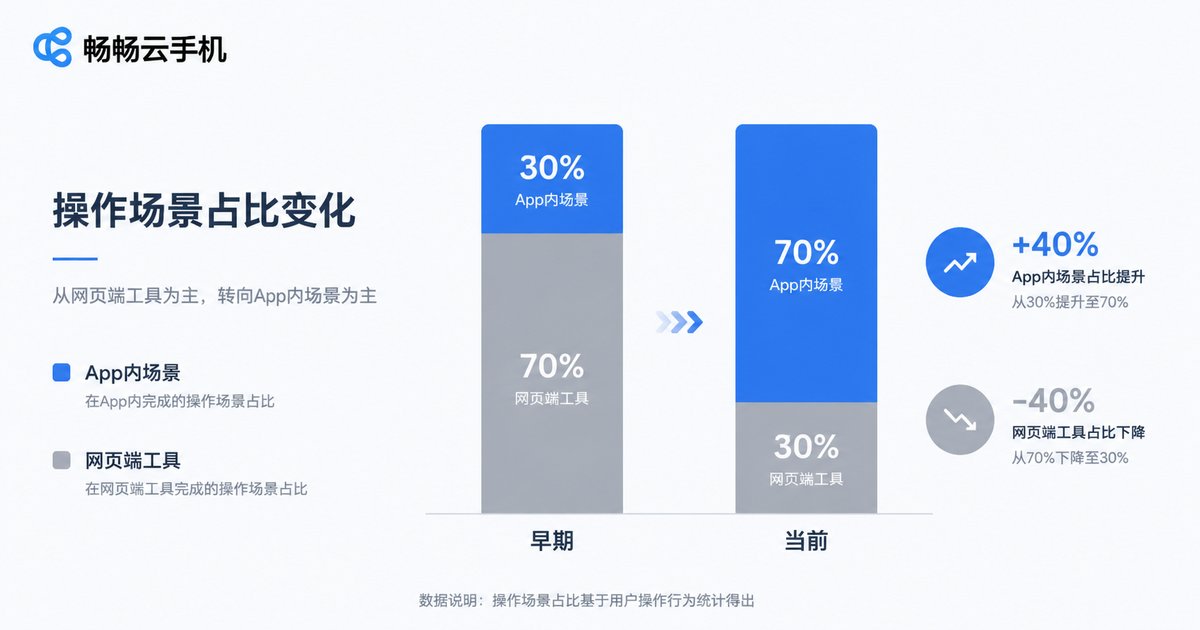
Using the time allocation of a typical cross-border social media team as an example (illustrative data, shown to indicate the direction of travel), the rise of in-app scenarios is clear:
| Operation scenario | Early share | Current share | Trend |
|---|---|---|---|
| Web-based posting and tool-driven actions | ~45% | ~15% | Sharp decline |
| In-app browsing, engaging, account nurturing | ~25% | ~35% | Steady rise |
| In-app short-video shooting and publishing | ~15% | ~25% | Steady rise |
| In-app livestreaming and real-time interaction | ~5% | ~15% | Fastest growth |
| Analytics review and account administration | ~10% | ~10% | Roughly flat |
Two trends stand out: web-based tool work has dropped from the main effort to a supporting role, kept only for light tasks like analytics and profile maintenance; and livestreaming plus real-time interaction is growing fastest, since these high-retention formats depend on stable in-app presence. Behind the percentage shifts is a change in quality standards — from merely publishing content to actually operating accounts.
Why Cloud Phones Became the Infrastructure of In-App Operations
Once the focus moved in-app, a new problem appeared: every post and every interaction now has to happen in a real phone environment. As account counts grow, hardware cost, labor cost, and management complexity all rise sharply. Cloud phones close exactly this gap.
Independent real-device environments: each cloud phone is a separate Android environment where in-app behavior looks close to that of a real user — suitable for long-term account nurturing.
Online 24/7: cloud devices never power off, so messages get instant replies, livestreams keep running, and engagement never pauses — something the web side simply cannot do.
Parallel multi-account management: dozens or even hundreds of accounts can be batch-operated from one console, cutting labor cost dramatically.
Long-term environment stability: accounts stay in the same environment over time, avoiding the risk-control exposure caused by frequently switching devices.
Building Your In-App Matrix with ChangChang Cloud Phone
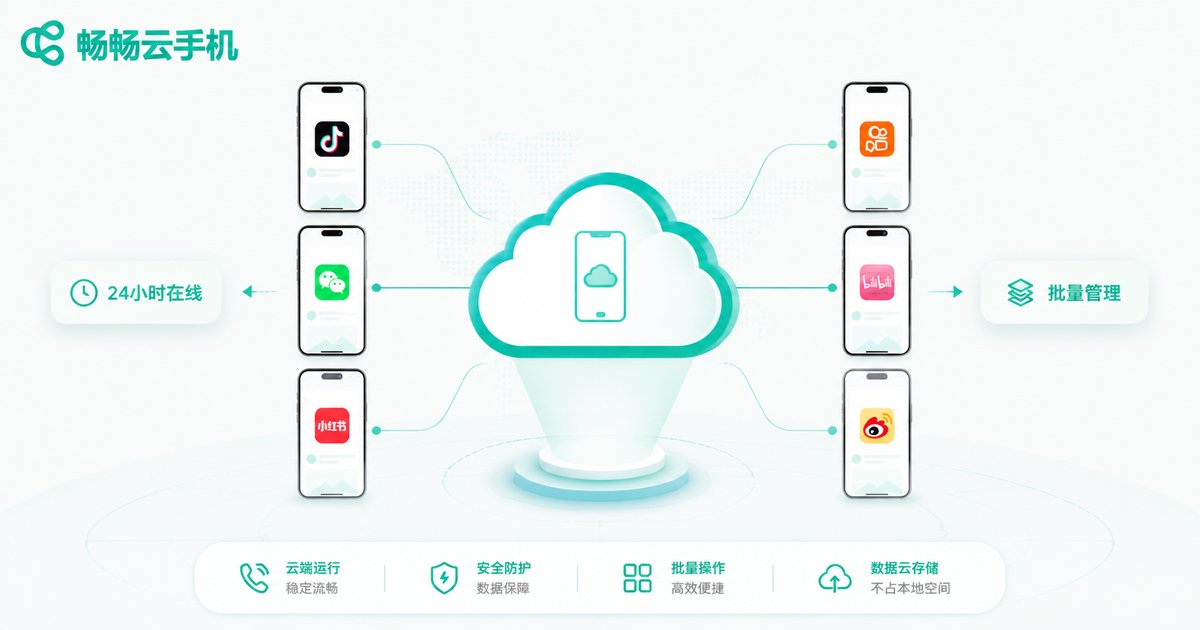
For tooling, ChangChang Cloud Phone (ccloudphone) is built for exactly these scenarios: it provides cloud-based real Android environments where each cloud phone runs independently, letting accounts stay online long-term; it supports running many cloud phones in parallel with batch operations, turning repetitive in-app actions into standardized workflows. For cross-border social media teams, that means lower hardware investment, a more stable account environment, and higher content output efficiency. For plan and feature details, refer to the official ChangChang Cloud Phone website (ccloudphone).

FAQ
Q: Will the in-app share keep rising?
Very likely. Livestreaming, short video, and private-domain conversion are all anchored in-app, and platforms keep pulling features and services back into their apps. The web side will remain, but mostly in a supporting role.
Q: Is it safe to run social media apps on cloud phones?
Cloud phones provide independent, long-term stable real Android environments. Compared with frequently switching devices or using emulated setups, environment consistency is actually better for accounts. The key is keeping a natural usage rhythm and avoiding mechanical high-frequency actions.
Q: How many accounts per cloud phone?
The safer practice is one primary account per cloud phone, keeping a stable device-account binding. To expand the matrix, simply add more cloud phones.
Q: Are cloud phones suitable for small teams?
Yes. Cloud phones are provisioned on demand and scale as needed. Small teams can start with a few cloud phones, validate their in-app workflow, then scale up — far more flexible than buying physical devices upfront.