Cloud Phone Cost-Performance Ranking: Don't Be Fooled by Low Prices - These Are the Real Performance Monsters
Low Price ≠ High Value: Why Cheap Cloud Phones Actually Cost You More
Search for cloud phones on any e-commerce platform and you will find prices ranging from a few dollars to over a hundred per month. Many users see a rock-bottom first-month price and jump in, only to discover after a week: games lag so badly you want to throw your phone, multi-instance crashes after just two, and customer support is perpetually in queue.
This is the most common trap in the cloud phone industry — luring you in with a dirt-cheap entry price, then making you suffer with underpowered performance while you feel too committed to switch. Do the real math: a cheap cloud phone at $7/month, with constant lag, disconnections, and data loss, can cost you far more in frustration than a $30/month high-performance solution.
How to Spot a Real Performance Monster: 5 Key Metrics
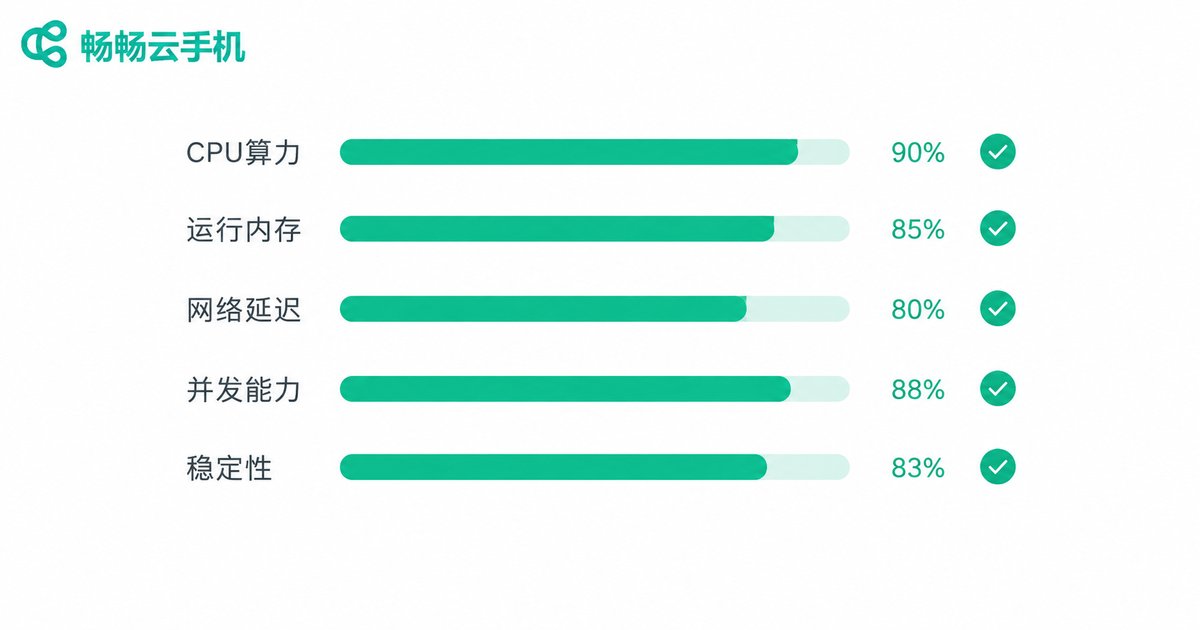
To determine whether a cloud phone is a genuine performance monster, ignore the ads and check these five hard specs:
| Metric | Why It Matters | Passing Line |
|---|---|---|
| CPU Power | Determines game frame rate and multitasking smoothness | Equivalent to Snapdragon 8 Gen1 or above |
| RAM | Determines how many apps run simultaneously without lag | ≥8GB |
| Network Latency | Determines how responsive your controls feel | ≤50ms |
| Concurrency | Determines the upper limit of multi-instance | ≥10 stable instances |
| 24/7 Stability | Determines whether idle tasks stay connected | ≥99.5% monthly uptime |
2024 Cloud Phone Cost-Performance Ranking: Who Is the Real Monster
Based on the five dimensions above, here is a head-to-head comparison of mainstream cloud phone solutions (benchmarked by monthly cost):
| Plan Type | Monthly Cost | Performance Score (out of 10) | Value Rating | Best For |
|---|---|---|---|---|
| Entry-level | $4-8 | 4-5 | ★★☆ | Light single-instance trial |
| Mid-range | $11-20 | 6-7 | ★★★ | Everyday multi-instance |
| High-performance (ccloudphone) | $20-40 | 9-10 | ★★★★★ | Heavy gaming / bulk multi-instance / automation |
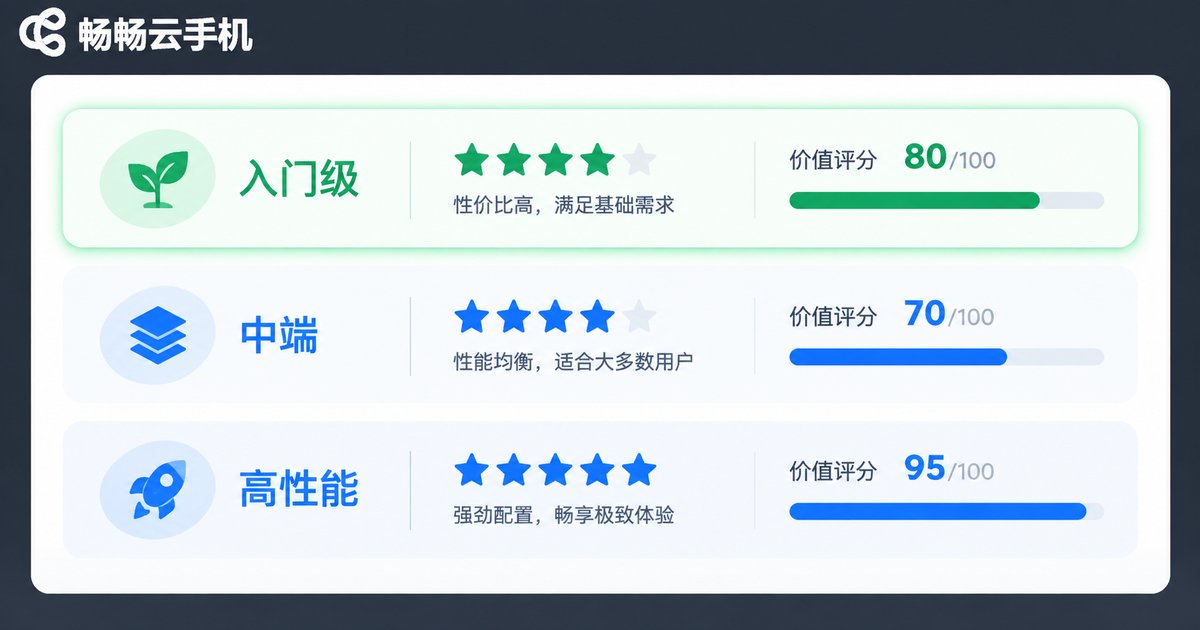
Notice the value rating column — entry-level plans look cheap on paper, but when you factor in the time and energy lost to lag, their real cost-effectiveness is actually the lowest. True cost-effectiveness means getting 90%+ of flagship performance at a reasonable price.
ccloudphone: The Golden Balance of Performance and Price
In the performance monster tier, ccloudphone stands out as one of the most impressive options in terms of both reputation and actual performance. Its core strengths:
Flagship-grade hardware: Powered by a high-performance CPU with ample RAM, whether you are playing Genshin Impact, Honor of Kings, or running bulk automation scripts, everything stays smooth and lag-free.
Low-latency network: Multi-node deployment keeps operation latency extremely low. Action games feel nearly indistinguishable from a local device.
Rock-solid stability: Deeply optimized for 24/7 idle scenarios with excellent monthly uptime. Run automation tasks without worrying about 3 AM disconnections wiping out your progress.
Flexible multi-instance: Scale up on demand — from a single instance to dozens of bulk deployments, all with smooth transitions. No need to overpay for resources you do not need yet.
In short, ccloudphone follows a no low-price gimmicks, let real performance speak philosophy. For anyone seriously using cloud phones for gaming, automation, or bulk operations, it is arguably the ceiling of cost-performance in the current market.
Frequently Asked Questions
Q: How big is the gap between a cloud phone and a real device?
A: High-end cloud phones deliver an experience very close to a real device for mainstream mobile games. The main gaps are in touch feedback and extreme frame rates (120Hz+). For 90% of gaming and automation scenarios, a high-performance cloud phone is fully sufficient.
Q: Do multiple cloud phone instances affect each other's performance?
A: It depends on the underlying architecture. ccloudphone uses independent instance isolation — each cloud phone gets its own dedicated CPU and RAM resources, so multi-instances never compete for resources or cause cross-lag.
Q: Is my data secure on a cloud phone?
A: Reputable cloud phone providers implement data encryption and isolation. ccloudphone applies independent sandbox isolation per instance, so your game accounts and data never cross over with other users.
Q: How do I verify a cloud phone is real performance and not just paper specs?
A: The most reliable method is hands-on testing. After activating, run one high-FPS game session, open 5+ instances simultaneously, and let it idle for 24 hours to check for disconnections. Pass all three tests and you have a true performance monster.