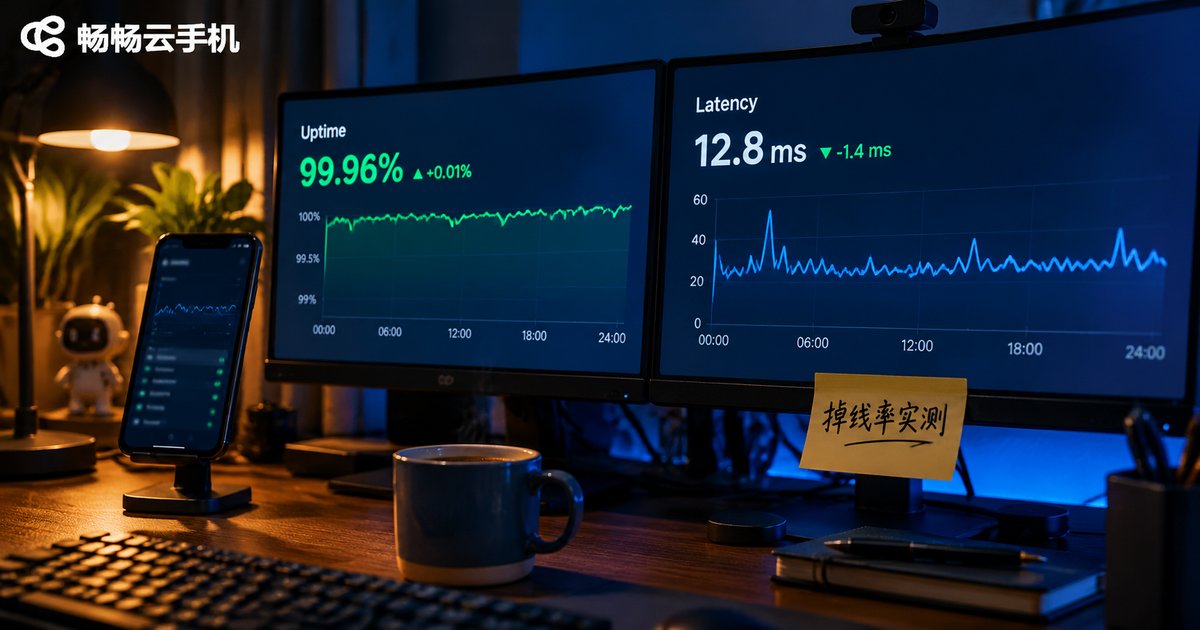

What Is Cloud Phone Concurrent Session Pricing? Free and Elastic Billing
In One Sentence: What Is a 'Concurrent Session'?
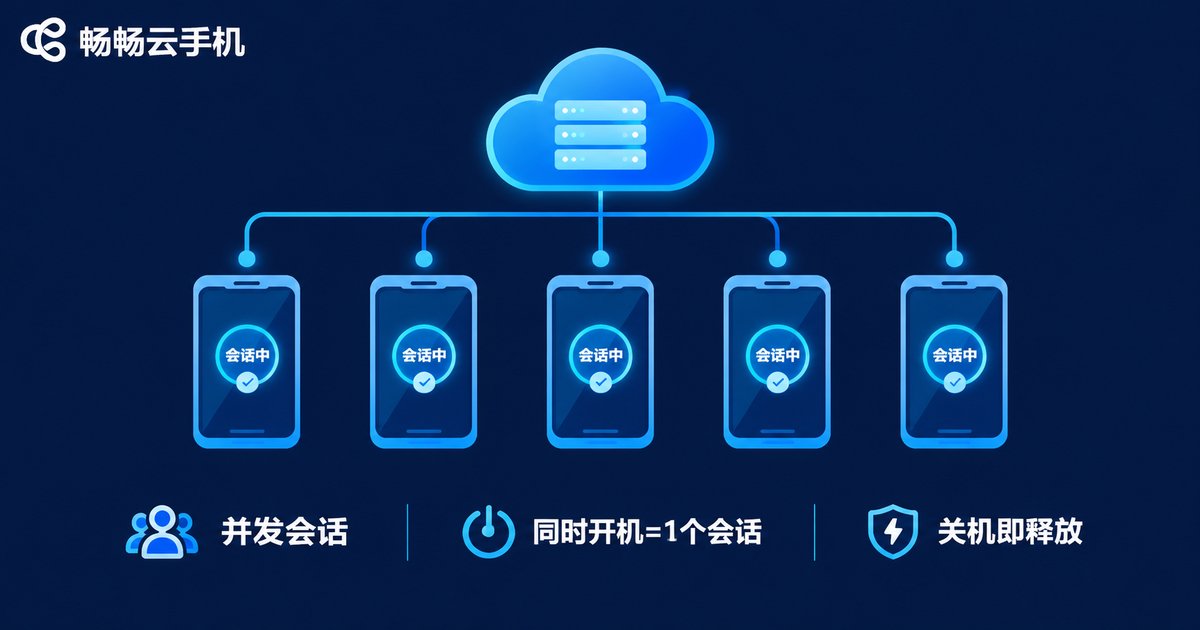
Many first-time cloud phone users get lost in terms like 'concurrency' and 'sessions' on pricing pages. The idea is simple: one cloud phone that is powered on and running equals one concurrent session. If you keep 5 cloud phones running for game grinding, that is 5 concurrent sessions; shut down 2, and only 3 remain — and billing for those two stops immediately.
In other words, concurrent session billing is based not on how many devices you own, but on how many are actually running at the same moment. This direct link between cost and real usage is the core advantage cloud phones hold over buying physical handsets or running emulators.
Four Common Cloud Phone Pricing Models
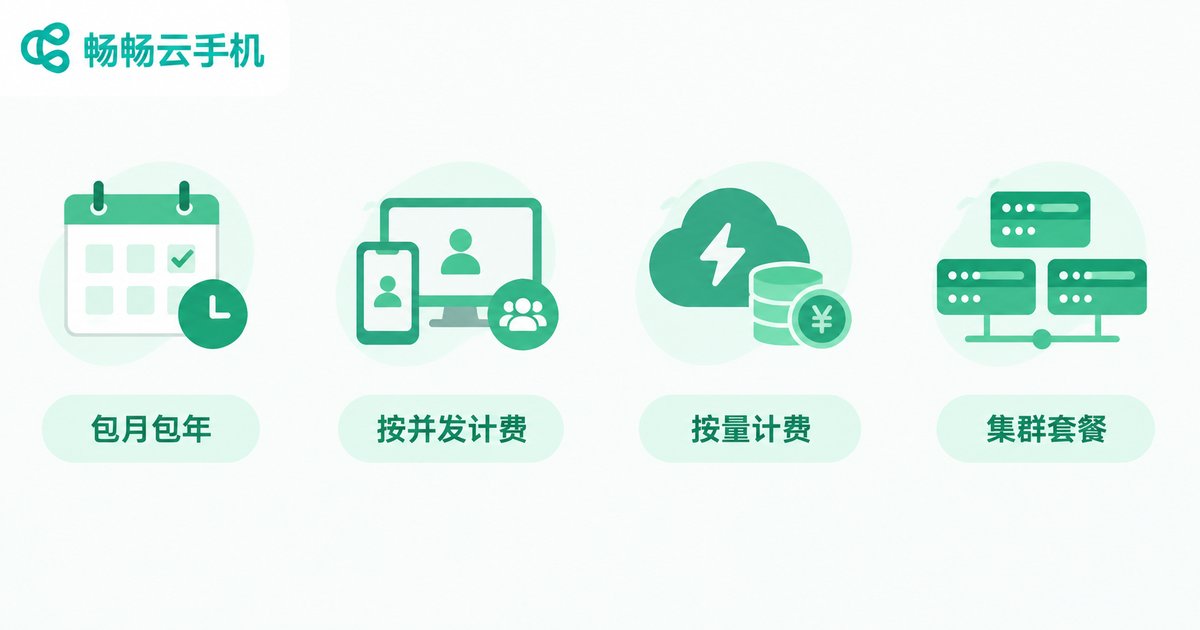
Cloud phone services on the market generally fall into four billing categories:
| Pricing Model | How It Bills | Best For |
|---|---|---|
| Monthly / yearly fixed devices | Fixed fee per device, billed whether on or off | 24/7 non-stop device farming |
| Concurrent session billing | Billed by simultaneously online devices; stops at power-off | Teams with peak-and-valley usage |
| Pay-as-you-go by duration | Billed only while running, down to the hour | Temporary tasks, short projects |
| Cluster / bulk plans | Lock in a batch of concurrency at a lower unit price | Studios running devices at scale |
As the table shows, concurrent billing and pay-as-you-go share the same principle: pay only for what you use — never for idle resources. The difference is that one counts devices while the other counts time, and many platforms combine the two.
Free Tier: Validate Your Workflow Before Paying
Reputable cloud phone platforms offer a free trial quota, and it is more than a marketing gimmick — it is your window to test service quality with real workloads. Take ccloudphone as an example: new users can try the core capabilities for free, such as installing apps, multi-instance management and group control, and confirm the smoothness, stability and feature set before committing to a paid plan.
At the same time, be realistic about the limits: free devices usually come with restrictions on specs, device count and session duration. They are great for validation and light use, but if your business needs dozens of devices online around the clock, the free quota only helps you test the waters — real volume requires a paid concurrency plan.
Elastic Billing: Let Your Cost Curve Match Your Business Curve
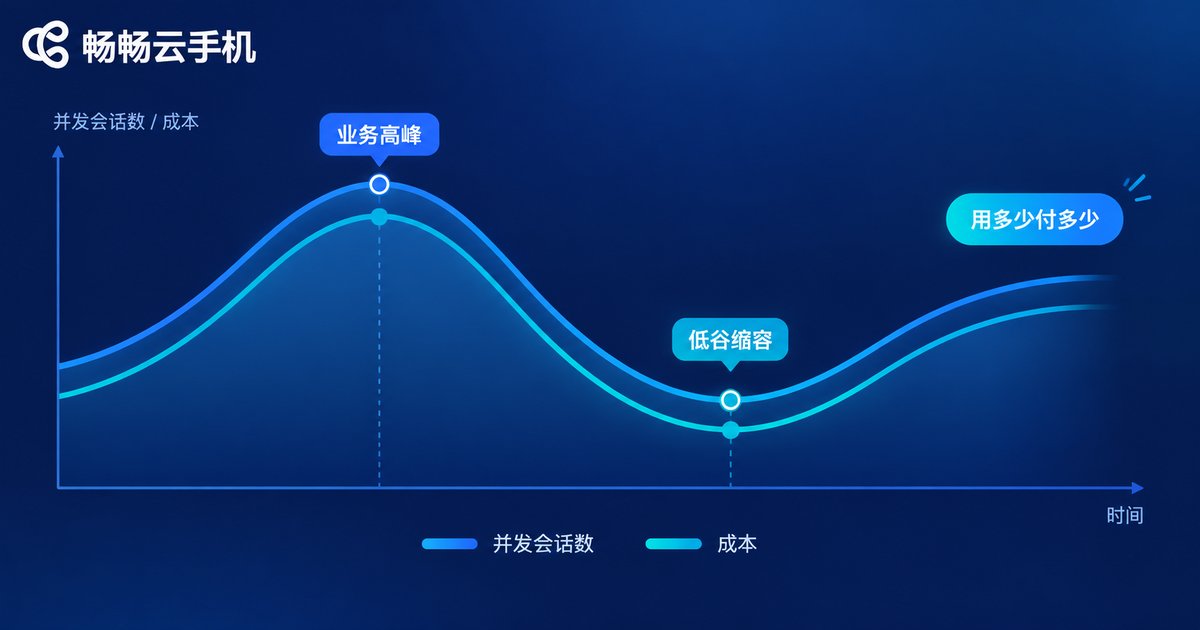
Usage is rarely a flat line: concurrency spikes on campaign days, while only a few devices are needed as a baseline on ordinary days. Buying fixed monthly plans sized to your peak wastes money in the valley, and last-minute top-ups may come too late. Elastic billing is designed exactly for this volatility, with three core traits:
1. Pay only while running: powering off releases the session and stops billing, while data stays in the cloud for your next session.
2. Scale concurrency anytime: expand with one click at peaks, shrink when the campaign ends — no idle devices to maintain.
3. Cost follows usage: your billing curve closely tracks your business curve, so you never pay for capacity you no longer need or watch devices gather dust.
For e-commerce multi-store operations, game studios and social media matrices with obvious fluctuations, elastic concurrency usually costs less than fixed monthly plans; for truly 24/7 workloads with a stable device count, monthly or yearly plans offer better unit prices.

How to Choose? A Quick Decision Table
| Your Situation | Recommended Plan |
|---|---|
| Devices online 24/7 with a fixed count | Monthly / yearly plans for a lower unit price |
| Low usage by day, peaks at night | Elastic concurrent billing |
| Occasional testing, short-term projects | Free trial plus pay-as-you-go |
| Bulk devices, large-scale operations | Contact the official team for a custom cluster plan |
If you are still unsure, here is a simple method: track how many devices you actually run simultaneously each day for the past month and plot the curve. The flatter the curve, the better monthly plans fit; the bigger the swings, the more elastic billing saves.
Why Choose ccloudphone?
On billing, ccloudphone keeps the logic simple: free trials lower the cost of experimentation, and elastic billing lowers the cost of ownership. Start with the free trial on the official website ccloudphone, confirm the performance meets your bar, then choose your concurrency based on real business needs; switch devices on and off as demand fluctuates and never pay for idle sessions. For exact plans and real-time pricing, refer to the official website.
FAQ
Q: Does the concurrent session count equal the total number of devices I own?
No. A concurrent session refers to devices that are powered on and running at the same time. You can own more devices to store apps and data, but only powered-on ones occupy concurrency and generate charges.
Q: How different are free trial phones from paid devices?
Mainly in specs, device count and session duration. Free devices suit workflow validation and light use; for production workloads, paid concurrency delivers better performance and stability.
Q: Will elastic billing get more and more expensive?
No. Elastic billing settles by actual concurrency and duration — pay for what you use. For volatile workloads it is usually cheaper than sizing a monthly plan to your peak, because you do not pay for idle devices in the valley.
Q: Will I lose data after powering off a device?
No. Powering off only releases the session and stops billing; apps and data stay in the cloud and are available at your next power-on.
Q: Where can I check real prices?
Visit the official ccloudphone website directly — plans and prices are subject to the official site, and it is wise to run your real workflow on the free quota before deciding.