
What Is Cloud Phone Chassis Management? A Complete Guide to Enterprise Batch Deployment and Configuration
What Is Cloud Phone Chassis Management?
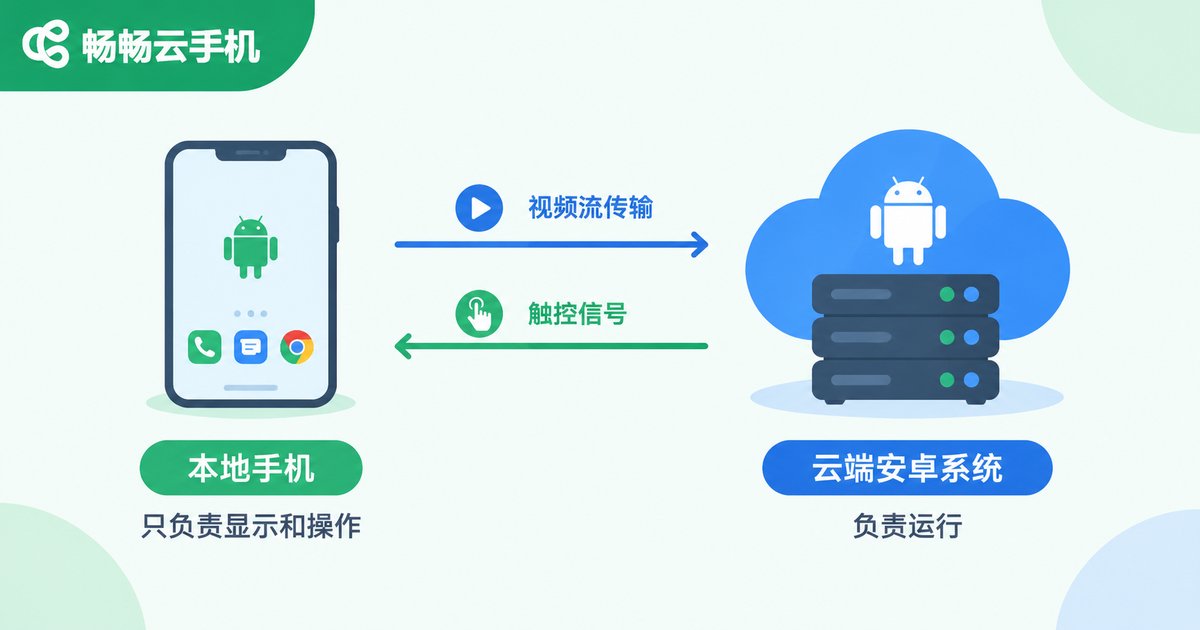
When people first hear “cloud phone chassis management,” they often assume it refers to a piece of hardware. It actually has two layers of meaning. In the early days, cloud phones really did live inside physical server chassis—a single rack packed with dozens or even hundreds of phone boards, each running a virtualized Android instance. Today, however, “chassis management” mostly refers to unified grouping and centralized control of cloud phone instances in bulk: managing hundreds or thousands of cloud phones the way you would manage a single rack—organized by business line, project, or purpose, with unified configuration, unified operations, and unified monitoring.
In short, chassis management is the “master control panel” of cloud phone operations at scale. Without it, running 100 cloud phones means clicking through them one by one; with it, a single action covers every device.

Why Do Enterprises Need Chassis-Style Batch Management?
Enterprises rarely use just one or two cloud phones. Common scenarios include: matrix operations—short-video and social media teams often run dozens or hundreds of accounts simultaneously; app testing—QA teams need to run compatibility tests across many device environments before release; game studios—multi-account idle play and daily tasks require around-the-clock stability; cross-border business—overseas social media and e-commerce accounts need daily nurturing and content publishing.
The common thread: large device counts, highly repetitive operations, and the need for centralized scheduling. Managing devices manually means labor costs grow linearly with device count, while chassis-style batch management keeps those costs nearly flat—that is the biggest difference between enterprise-grade and personal cloud phone usage.
Six Core Configuration Methods for Enterprise Batch Deployment
1. Bulk creation and smart grouping
The first step is provisioning cloud phone instances in bulk. Build a grouping structure by business line—for example “Project A – Douyin group” and “Project A – Kuaishou group”—so every device has a clear home from day one, and all subsequent batch operations are delivered by group.
2. Template configuration and one-click cloning
Fully set up one “golden device”—apps installed, environment configured, parameters tuned—then save it as a template and clone it across the group. This is the most efficient approach in batch deployment and guarantees a highly consistent environment on every device.
3. Bulk app distribution
Upload an APK through the group-control console, select the target groups, and complete installation in one pass; push version upgrades the same way so no device is left behind.
4. Unified parameter and policy delivery
Device parameters such as resolution, carrier info, language, and time zone, plus runtime policies like scheduled power on/off and automated scripts, can all be delivered by group so the whole fleet behaves consistently.
5. Sub-accounts and permission management
For multi-person teams, assign different group permissions to different staff: operators only see the devices they own, while administrators hold full configuration rights. This keeps things secure and accountable.
6. Monitoring and alerting
Use a live status dashboard to track every device, handle offline or abnormal devices promptly, and batch-restart or reset faulty instances when needed.

Manual Operation vs. Chassis-Style Batch Management
| Item | Manual, one by one | Chassis-style batch management |
|---|---|---|
| Installing one app on 100 devices | Hours, easy to miss devices | Minutes, done in one pass |
| Environment consistency | Human-dependent, uneven | Template cloning, fully consistent |
| Daily inspection | Check device by device | Dashboard overview with alerts |
| Labor cost | Grows linearly with devices | Nearly constant |
Hands-On Deployment in Five Steps
Taking ChangChang Cloud Phone (ccloudphone) as an example, enterprise users can complete batch deployment like this:
Step 1: register a business account, complete verification, and enter the management console; Step 2: choose device specs and quantity based on your workload and provision cloud phones in bulk; Step 3: create groups by project and assign the new devices; Step 4: tune one golden device, save it as a template, clone it across the group, then install business apps in bulk; Step 5: assign sub-account permissions, enable status monitoring, and start daily operations.
The key is the order: “group first, template second, deliver last.” Get the sequence right and batch deployment becomes an assembly line. For the latest feature entry points and plan details, visit the official ChangChang Cloud Phone website (ccloudphone).

Three Things to Check Before Deployment
Compliance first: bulk account operations must follow platform rules and applicable laws—no violating marketing behavior; network quality: choose a provider with stable, low-latency nodes, or batch operations will suffer disconnects; start small: validate the full workflow with a handful of devices before scaling up, so a single oversized commitment never puts the project at risk.
FAQ
Q: Is chassis management the same as group control?
Not exactly. Group control focuses on “batch actions” (simultaneous taps and inputs), while chassis management is broader—it also covers grouping, templates, permissions, and monitoring. Think of chassis management as the framework and group control as one of its tools.
Q: Do I need a technical team for batch deployment?
No. On mainstream platforms, bulk creation, template cloning, and app distribution are all visual console operations that a regular operations staffer can handle.
Q: Can I adjust a cloud phone’s specs later?
Most cloud phone services support on-demand configuration changes. Before batch deployment, clarify your performance needs (heavy gaming, multi-instance use, etc.) and pick matching specs—details are available from the ChangChang Cloud Phone team via its official site.
Q: How do I keep things organized as device counts grow?
Three habits: a unified naming convention, a clear grouping structure, and strict sub-account permissions. Building these on day one costs far less than cleaning up later.