Does Cloud Phone Need Charging? The Truth About Power Supply
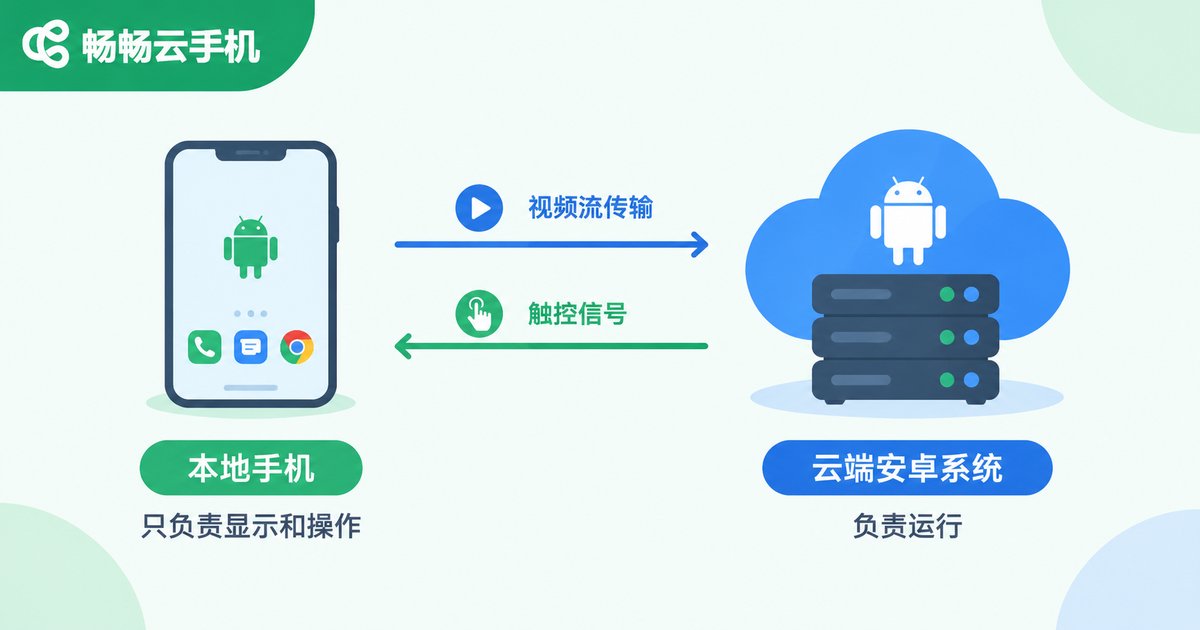
Does a Cloud Phone Need Charging? A Seemingly Absurd but Great Question\n\nWhen you first hear "does a cloud phone need charging," you might laugh — the cloud phone runs in the cloud, it's not a physical device you hold, so what would you charge? But this question actually gets to the heart of what a cloud phone is: where does its energy come from?\n\nThe answer: The cloud phone itself doesn't need you to charge it, but the servers behind it need electricity. Every ChangChang Cloud Phone instance you use runs on physical servers in a data center, operating 24/7 and consuming significant power. Part of your subscription fee is essentially an electricity bill.\n\n## Cloud Phone vs Physical Phone: Energy Model Comparison\n\n| Comparison | Physical Phone | Cloud Phone |\n|:---|:---|:---|\n| Power source | Built-in lithium battery | Data center power supply |\n| Charging method | USB/wireless charging | No user charging needed |\n| Battery life | 4–10 hours (heavy use) | 24/7 uninterrupted |\n| Heat location | Phone body | Data center servers |\n| Energy cost | Included in electricity bill | Included in subscription |\n| Battery degradation | Noticeable after 2–3 years | No battery degradation |\n| Standby power | Continuously drains battery | Zero when instance is off |\n\n## Your Local Device Is the Real "Power Hog"\n\nWhile the cloud phone itself doesn't need charging, your local device's battery drains noticeably faster when using the ChangChang Cloud Phone client. The client continuously decodes video streams and sends touch commands — operations that put real load on the CPU and GPU.\n\n### Local Device Power Consumption Analysis\n\n| Use Case | Local Power | Battery Drain Rate | Notes |\n|:---|:---|:---|:---|\n| Cloud phone gaming (HD) | High | 15–25% per hour | CPU+GPU full-load decoding |\n| Cloud phone video watching | Medium | 8–15% per hour | Mainly video decoding |\n| Cloud phone daily operations | Low | 5–8% per hour | Lightweight decoding |\n| Cloud phone standby (background) | Very low | 1–2% per hour | Maintaining connection only |\n| Local device screen off | Zero | Near 0 | Connection disconnected |\n\n> Power-saving tip: If you use ChangChang Cloud Phone on a mobile device, lowering the client quality significantly reduces local battery drain. Dropping from "Ultra-Clear" to "Balanced" mode can reduce local power consumption by 30–40%.\n\n## The Cloud Phone's "Virtual Battery" Mechanism\n\nChangChang Cloud Phone simulates a virtual battery in the cloud Android system. This virtual battery isn't a real battery — it's a status indicator that tells cloud apps the system's current "power state."\n\n| Virtual Battery State | Meaning | Impact |\n|:---|:---|:---|\n| Charging (100%) | Instance running, stable power | All apps run normally |\n| Not charging (100%) | Instance running, no charging simulated | All apps run normally |\n| Low battery | Instance resources limited | Some background tasks restricted |\n| Power saving mode | Instance in low-power state | Background processes frozen |\n\n### Why Simulate a Battery?\n\nMany Android apps check battery status to adjust their behavior:\n\n- Video apps lower playback quality at low battery\n- Games limit frame rate in power saving mode\n- Sync apps pause auto-sync at low battery\n\nIf the cloud phone doesn't simulate a battery, these apps think the device is in an abnormal state, potentially crashing or malfunctioning. ChangChang Cloud Phone defaults the virtual battery to 100% charging, ensuring all apps run at maximum performance.\n\n## Cloud Phone Instance "Sleep" and "Wake"\n\nWhile the cloud phone doesn't need charging, it has a "sleep"-like mechanism to conserve server resources:\n\n| State | Description | Resource Usage | Wake Time |\n|:---|:---|:---|:---|\n| Running | Instance working normally | 100% allocated resources | Instant |\n| Background suspended | Instance running but no active connection | 30–50% resources | 1–2 seconds |\n| Hibernating | Instance state saved to storage, CPU/memory released | 5–10% resources | 5–15 seconds |\n| Powered off | Instance fully stopped | 0% resources | 30–60 seconds (restart) |\n\n> Recommendation: For brief absences (like meals), use "Background Suspend" — reconnection is nearly instant. For long periods (like overnight), use "Hibernate" to save costs — waking takes just a few seconds.\n\n## Data Center Energy Efficiency\n\nThe data centers running ChangChang Cloud Phone far surpass personal devices in energy efficiency:\n\n| Metric | Personal Phone | Data Center Server | Advantage |\n|:---|:---|:---|:---|\n| Energy efficiency | Low (passive cooling limit) | High (active cooling + optimized design) | Data center 3–5x higher |\n| Resource utilization | Low (mostly idle) | High (virtualization sharing) | Data center 5–10x higher |\n| PUE | N/A | 1.2–1.5 | Closer to 1 is better |\n| Renewable energy | N/A | Some data centers use it | Environmental advantage |\n\n> PUE (Power Usage Effectiveness) is a data center energy efficiency metric, calculated as total energy ÷ IT equipment energy. A PUE of 1.0 means all power goes to computing equipment with no cooling or lighting overhead. Modern data centers typically achieve PUE of 1.2–1.5.\n\n## Q&A\n\nQ1: Will a cloud phone "run out of battery and shut down" like a physical phone?\n\nA: No. The cloud phone's power comes from the data center — as long as the data center has power (they have UPS and backup generators), the cloud phone won't "run out." However, if you don't pay or your subscription expires, the instance will be suspended or shut down — this is like "power cut" but not a physical battery depletion.\n\nQ2: Can my local phone battery last a full day of cloud phone gaming?\n\nA: It depends on your local device's battery capacity and charging conditions. The cloud phone client continuously decodes video streams, consuming significant power — a typical phone battery lasts 4–6 hours of high-quality cloud phone use. Connect a charger for extended sessions. If using on the go, lower quality to "Balanced" mode to extend battery life.\n\nQ3: Can I lower the virtual battery to test apps in power saving mode?\n\nA: Yes. Some ChangChang Cloud Phone plans support custom virtual battery states. In client "Settings → Advanced → Virtual Device," you can set the virtual battery level and charging status. This is very useful for testing app behavior under low battery conditions — developers can simulate various battery scenarios without waiting for a real battery to drain.\n\nQ4: Will a hibernating cloud phone lose data?\n\nA: No. During hibernation, the instance's complete state (including in-memory data) is saved to persistent storage. On wake, all apps and data restore to their pre-hibernation state, just like a computer's hibernate function. However, if you choose "Power Off" instead of "Hibernate," unsaved data may be lost — powering off is equivalent to a forced restart.\n\nQ5: Is a cloud phone more energy-efficient than a physical phone?\n\nA: From an overall energy perspective, a cloud phone isn't necessarily more efficient — it just shifts energy consumption from your phone to the data center. But from a per-use perspective, your local device does use less power because heavy computation happens in the cloud, and locally you only decode and display. However, when you spread the data center's energy across all users, per-capita energy may be lower than everyone having a physical phone, because virtualization technology improves resource utilization.