Understanding Cloud Phone Billing: Chassis vs Instance vs Duration
What Does a Cloud Phone Bill Actually Measure?
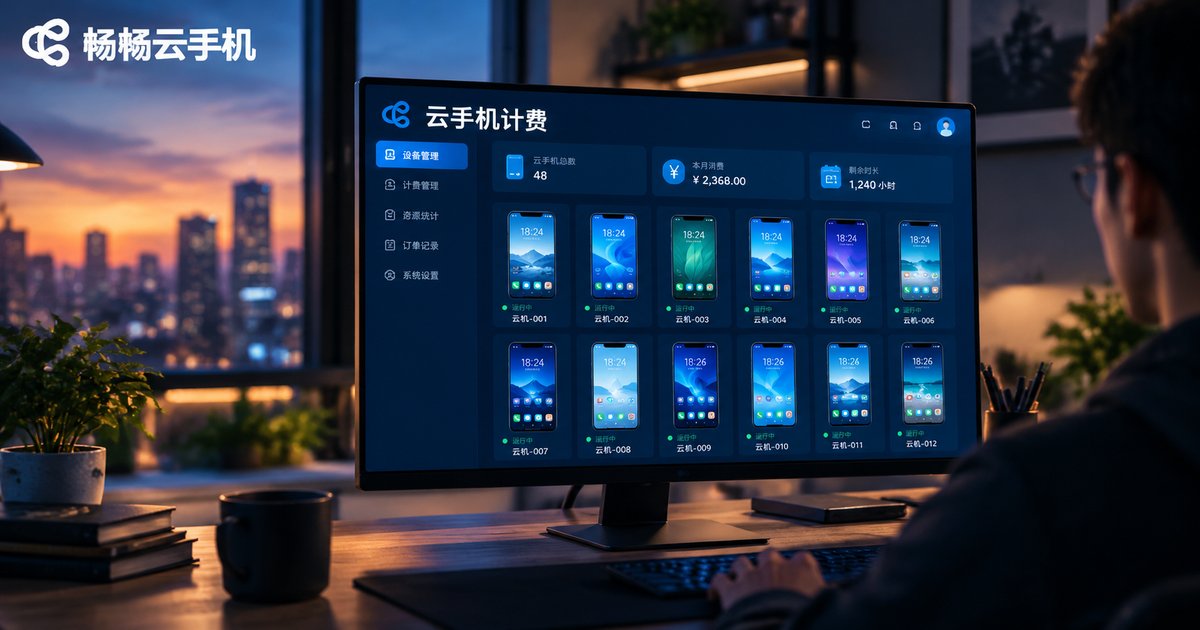
If you are new to cloud phones, terms like chassis, instance, and duration can feel confusing: which one is being charged, and how? The logic is simpler than it looks. Every bill comes down to three dimensions — what you rent (a chassis or an instance), how many you rent, and how long you use them. Break the bill into these three parts and everything becomes clear.
Three Core Concepts Explained
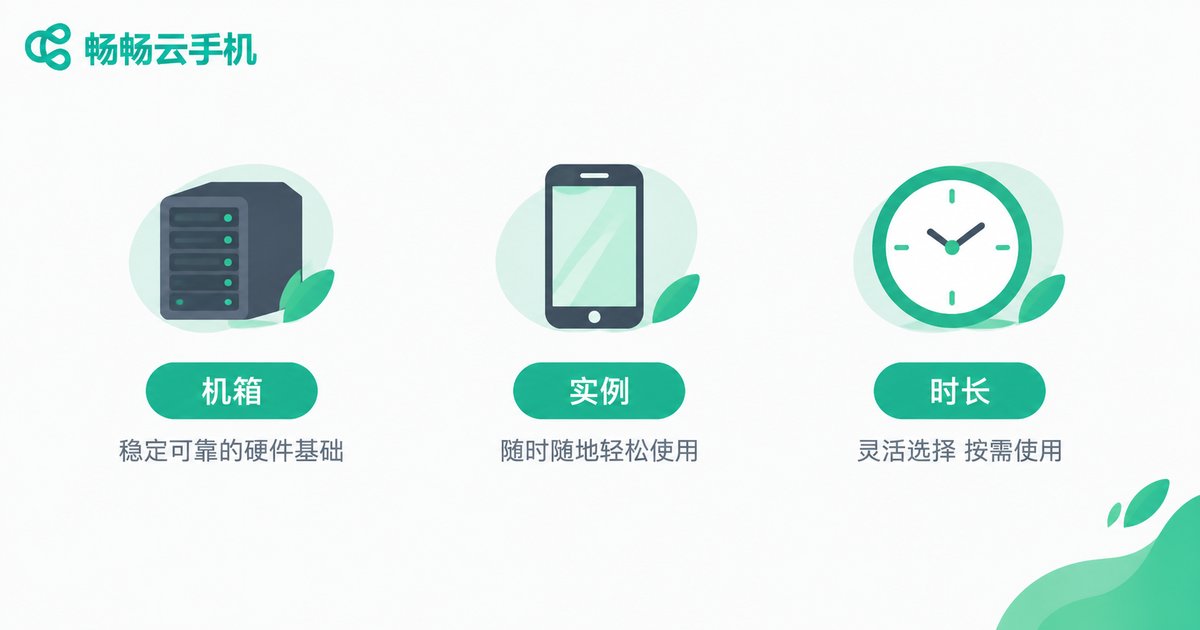
Instance: one cloud phone equals one instance. It runs its own independent Android system with dedicated CPU, memory, and storage — like having an extra real phone, except it lives in the cloud. The instance is the smallest billing unit: rent five, pay for five.
Chassis: a chassis is essentially one whole physical server. A single chassis usually hosts dozens of instances that share the same hardware. Platforms rent out entire chassis as a bundle, and the per-instance cost is usually lower — ideal for studios and teams running accounts at scale.
Duration: duration defines the pay-for-what-you-use dimension. Common granularity includes hourly, daily, and monthly billing, and many services stop the meter when an instance is powered off, so idle time costs nothing.
How the Three Combine Into Your Bill
A simple way to remember it: the chassis is the building, the instance is the room, and the duration is the lease. You can rent a single room (one instance billed by the hour), or lease a whole floor (a monthly chassis); the longer the lease and the larger the quantity, the lower the average cost usually is.
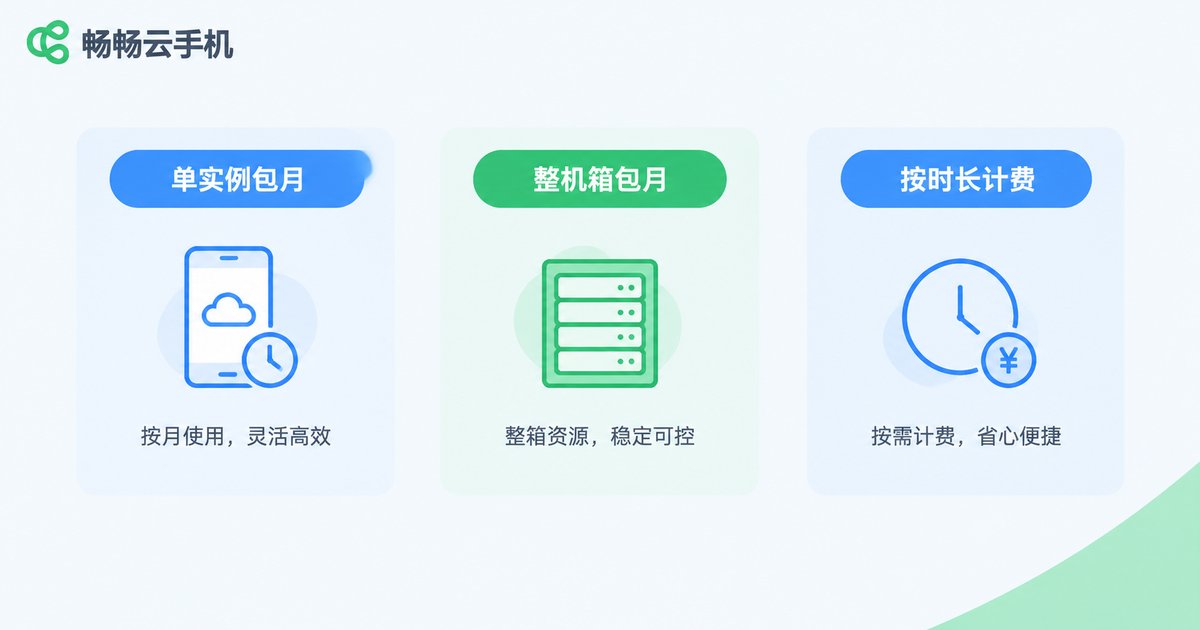
| Billing Mode | Billing Unit | Best For | Flexibility |
|---|---|---|---|
| Monthly per instance | 1 instance × 30 days | Individuals, a few accounts | High, scale anytime |
| Monthly whole chassis | 1 chassis (dozens of instances) | Studios, bulk operations | Medium, lower unit price at volume |
| Pay-as-you-go duration | Actual powered-on hours | Short projects, quick tests | Highest, pay and go |
Which Option Saves the Most Money?
Before comparing prices, get clear on your use case:
Individual users with two or three accounts: monthly per-instance billing is the simplest. One cloud phone, one fixed monthly fee, turn it on whenever you need it.
Studios running accounts in bulk: renting a whole chassis wins. Dozens of instances in one package bring the average per-instance cost well below buying them one by one, and everything is managed from a single dashboard.
Short-term tasks and temporary tests: pay-as-you-go duration is the most flexible. Shut the instance down when the project ends and never pay for idle time.
In one line: few phones, rent instances; many phones, rent a chassis; short usage, pay by duration.

What Else Matters Besides Price?
Transparency often matters more than the price tag itself. A trustworthy platform spells out instance specs, chassis configurations, and duration rates upfront, with no hidden fees buried in the invoice. If you are shopping for a cloud phone service, take a look at ChangChang Cloud Phone (ccloudphone) — the billing rules are clear and straightforward, and exact plans and prices are shown on the official website, so you can choose based on your actual usage.
FAQ
Q: Am I still billed after powering off a cloud phone?
Under duration-based billing, powering off usually stops the meter; monthly plans charge a fixed fee per cycle regardless of power state. Check the platform policy for details.
Q: Which is cheaper per unit, a chassis or an instance?
A whole chassis usually works out cheaper per instance because you take dozens at once. If you only need two or three phones, monthly per-instance plans are the better deal.
Q: Is duration billed by the hour or by the day?
Granularity varies by platform — hourly billing with a monthly cap is common, and some services charge by the day. Always confirm the smallest billing unit before purchasing.
Q: Can I add instances or upgrade specs later?
Most platforms let you add instances or change plans from the dashboard at any time. Start small, validate your workflow, then scale up.
Q: Does lag have anything to do with the billing mode?
No — performance depends on instance specs and network quality, not the billing mode. Higher-tier plans simply come with stronger hardware, so pick based on your needs.