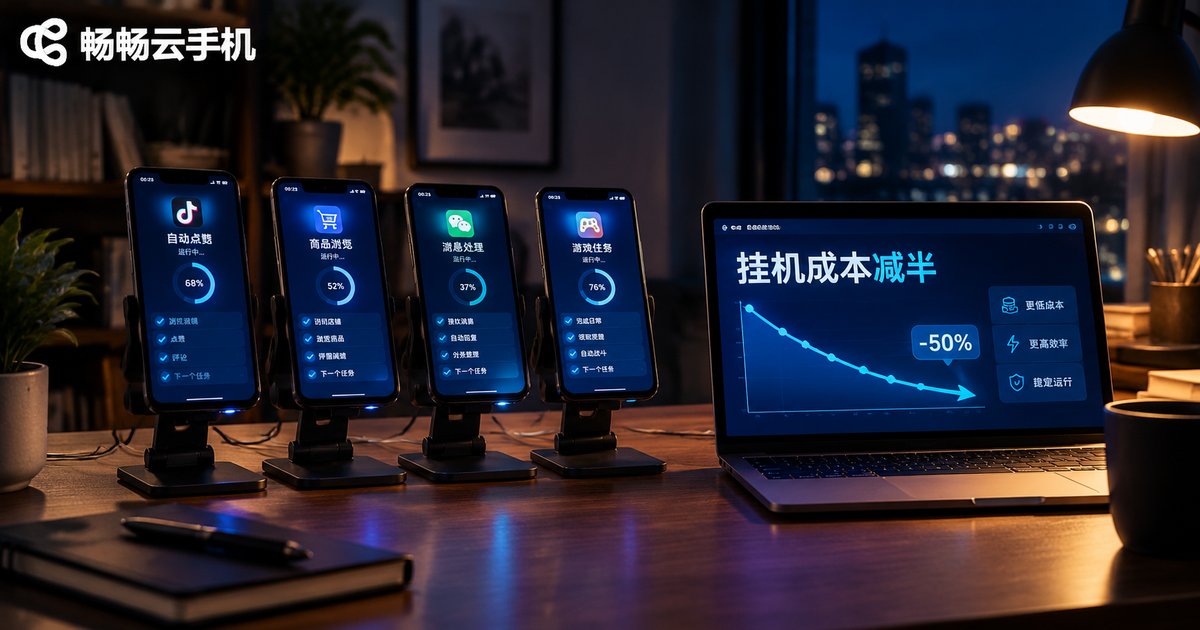
Cloud Phone Annual Discounts + Spot Instances: How Low Can Long-Term AFK Costs Go?
First, Read the Bill: Where Long-Term AFK Money Actually Goes
Game AFK farming, app keep-alive, automation scripts, daily multi-account maintenance — these workloads share one trait: they must stay online around the clock. They rarely need peak performance, but they are extremely sensitive to uptime: the longer they run, the bigger the bill. Cutting long-term AFK cost therefore comes down to two things — lowering the unit price and eliminating waste.
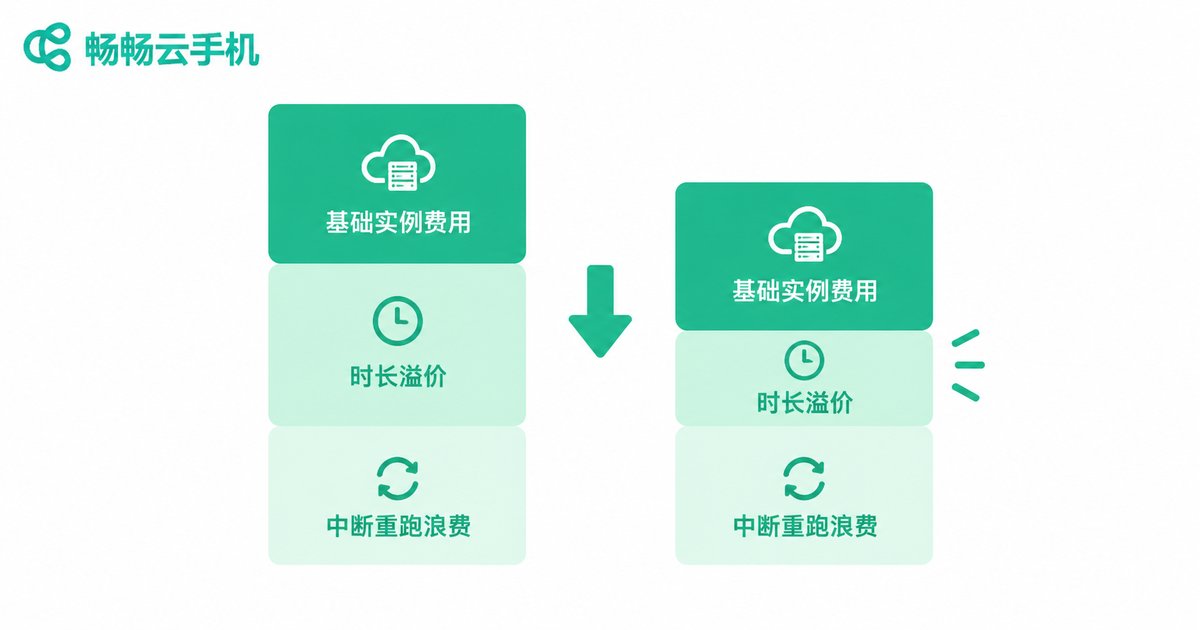
Break a long-running cloud phone bill apart and three components emerge: the base instance fee, the duration premium (monthly billing costs more than annual), and the hidden waste of re-running tasks after interruptions. The first two can be optimized directly through billing strategy; the third takes task architecture.
Step One: Lock In a Lower Unit Price with Annual Billing
Most cloud phone platforms bill monthly or annually, with annual discounts typically around 20-30% off (platforms differ; all figures below are illustrative). That discount matters more than it looks: for an always-on device, paying annually trims a fifth to a third off the yearly bill and locks the price for twelve months.
| Billing mode | Illustrative discount | Best for | Flexibility |
|---|---|---|---|
| Monthly | List price | Short projects, trial runs | High, stop anytime |
| Annual | Roughly 20-30% off | Long-term AFK workloads | Low, for stable demand |
The rule of thumb is simple: if a workload will run longer than four to five months, annual billing almost always wins; for a two-week experiment, stay monthly and do not prepay for uncertainty.
Step Two: Put Interruptible Jobs on Spot Instances
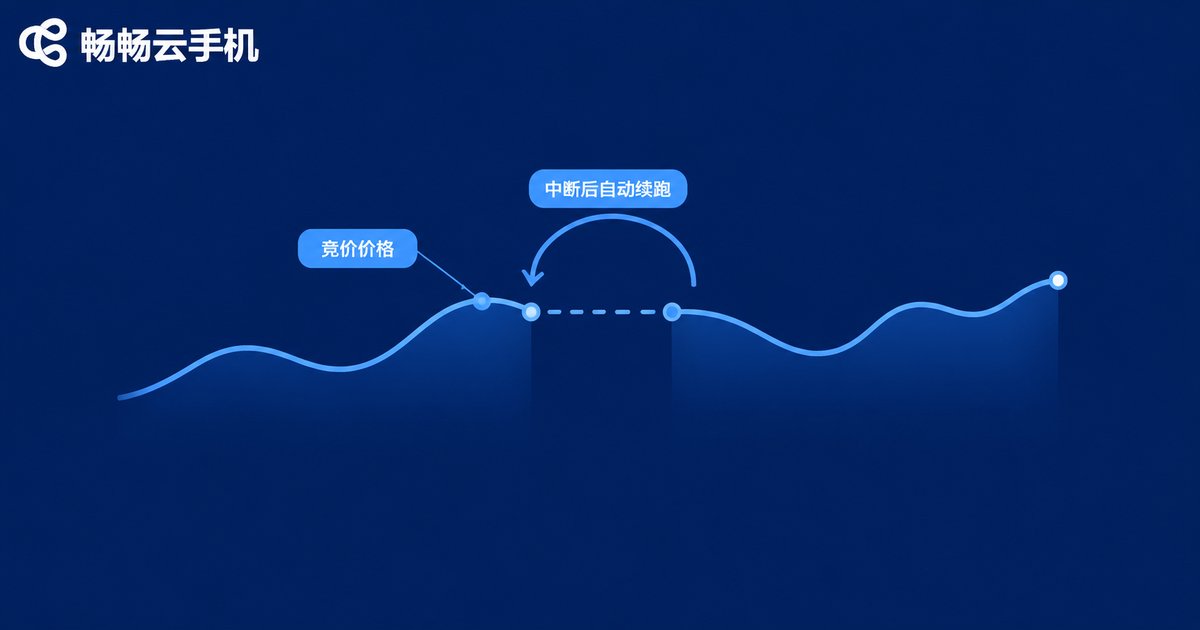
Spot instances are how cloud platforms sell idle capacity at a discount: prices float with supply and demand, usually far below on-demand rates, and the trade-off is that instances can be reclaimed when capacity tightens. That sounds risky, yet AFK workloads absorb the risk better than almost anything else, because most of them are naturally interruptible, reconnectable, and state-recoverable.
Good fits: daily game AFK routines, data collection, batch check-ins, automation that tolerates short delays. Poor fits: real-time sessions with zero tolerance for disconnection, and heavily stateful jobs that cannot resume from a checkpoint.
The Combo: Annual as the Base, Spot for Elasticity
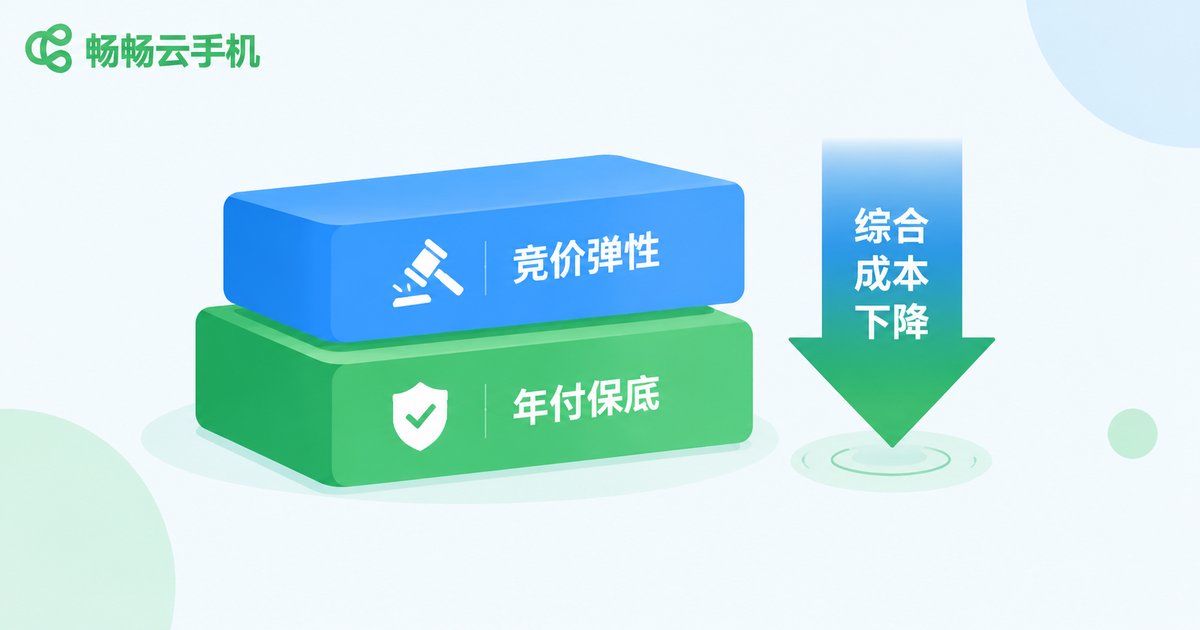
The deepest savings come from combining both: anchor always-on core tasks on annual plans, and hand every interruptible batch job to spot capacity. Continuity is preserved where it matters, while the elastic portion harvests the largest discounts.
| Workload type | Recommended setup | Illustrative saving |
|---|---|---|
| Core account keep-alive, long-running games | Annual cloud phone | About 20-30% |
| Batch alt-account routines, collection jobs | Spot instances | About 50-70% |
| Mixed workloads | Annual base + spot elasticity | About 40-60% overall |
Sample math: suppose a workload would cost 1,000 RMB over a year at monthly rates. Annual billing brings that down to roughly 700-800. If 60% of the workload can shift to spot capacity at about half price, total annual spend can land around 450-550 RMB — roughly half the original. Exact numbers depend on platform discounts and spot market conditions, but the order of magnitude is realistically achievable.
Making It Work: Pick the Right Platform, Avoid Three Pitfalls
A good strategy still needs the platform to cooperate. When choosing a cloud phone for long-term AFK, check three things:
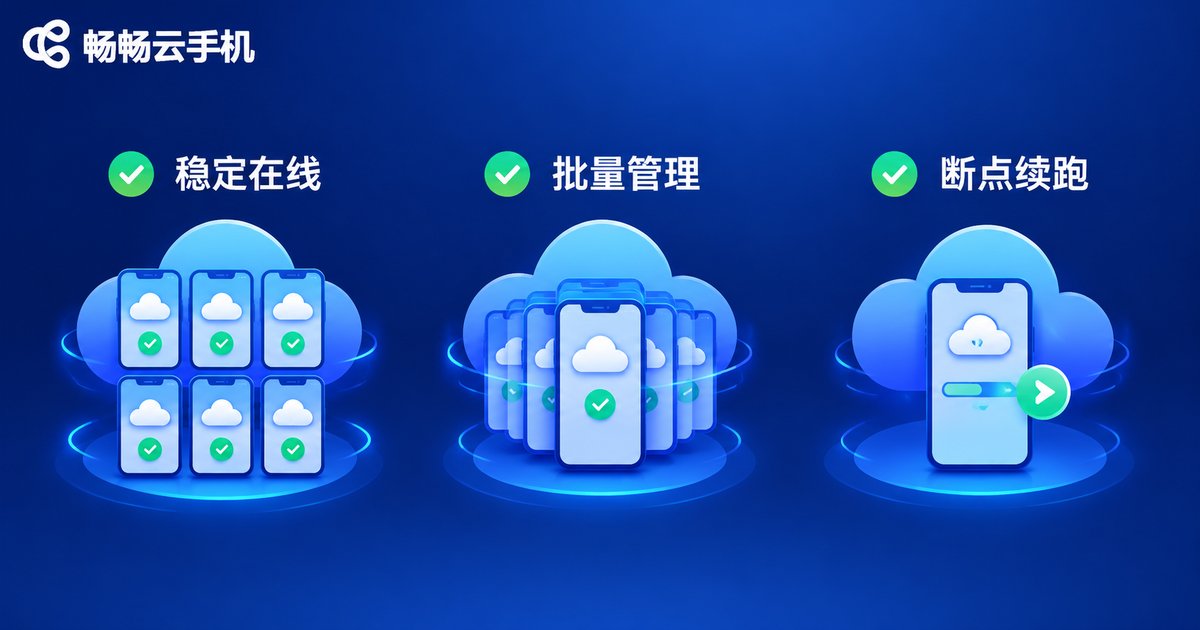
First, reconnection and data persistence. Spot instances can be reclaimed and even annual devices need maintenance; jobs must resume from checkpoints, or the savings will be eaten by re-runs. Second, billing granularity. Platforms that support elastic scaling let the spot portion truly flex. Third, batch management. If dozens of instances can only be operated one by one, labor costs will swallow every discount.
Overall, a service like CCloudPhone (ccloudphone), with stable always-on devices and batch multi-instance management, fits well as the primary platform for long-term AFK; pair it with spot-capacity elastic compute for interruptible jobs, and the combined cost lands in the range estimated above.
FAQ
Q: If a spot instance is reclaimed, will I lose my AFK data?
Not if the job is built to recover — persist progress regularly and keep account state in the cloud. Relaunching the instance resumes the run, typically losing only minutes of progress.
Q: What if a workload stops midway through an annual plan?
Policies vary by platform. The safer play: trial uncertain workloads on monthly billing first, confirm they run stably long-term, then move to annual to minimize prepayment risk.
Q: Will spot prices stay this low?
No — they float with supply and demand, rising when capacity is tight and instances get scarce. Never anchor core tasks on spot; the annual plan is the ballast.
Q: Below how many devices is the combo not worth it?
With one or two lightweight devices, a single annual plan is enough. Past ten devices, with plenty of interruptible jobs, the annual-plus-spot combo pulls clearly ahead.