
How to Evaluate Cloud Phone After-Sales Service: Fault Response, Resolution Time, and Communication
Why After-Sales Service Is the Hidden Key When Choosing a Cloud Phone
When people compare cloud phone providers, they tend to focus on price, device models, and performance specs, while overlooking something far more important: after-sales service. Unlike ordinary apps, a cloud phone is an online service that must run stably over the long term. Issues such as login failures, device disconnections, screen lag, or data sync errors can appear at any time. How quickly the provider responds, how fast the issue is resolved, and how smoothly communication goes will directly define your real experience.
In short: specs decide whether a cloud phone is good to use, while after-sales service decides whether it stays good to use. To evaluate service quality, focus on three things: fault response, resolution time, and communication mechanisms.
Fault Response: How Quickly Does Someone Take Care of You
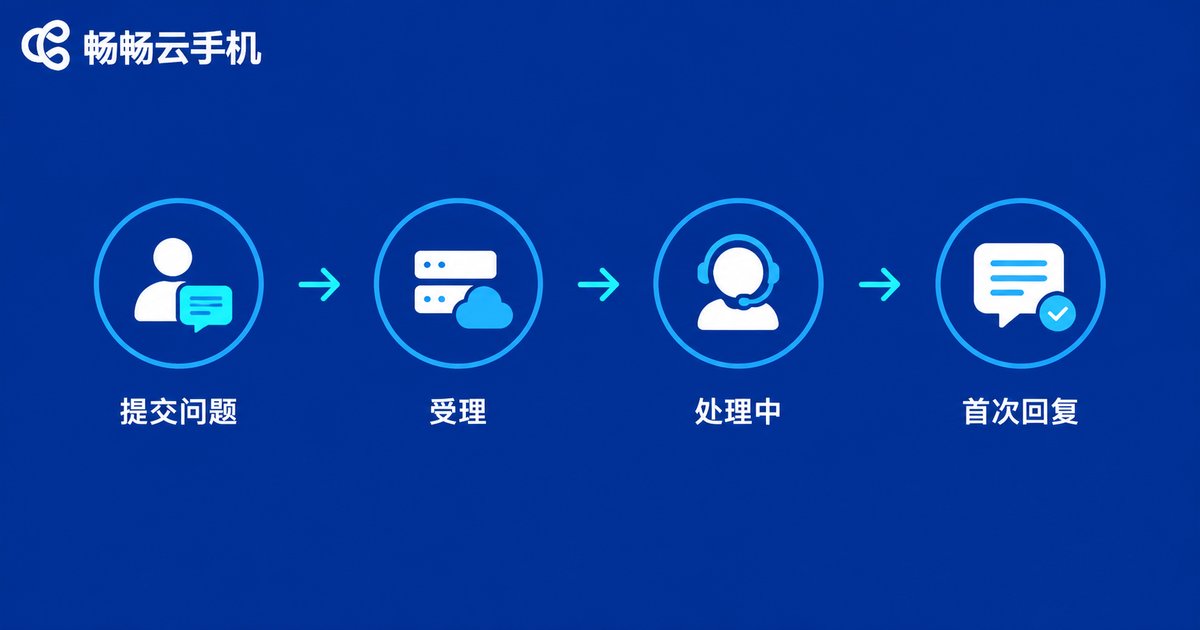
Fault response refers to the time between when you submit an issue and when a support agent first replies. It is the first link in the service chain and the easiest one to perceive. A provider with a solid response mechanism usually shows these traits:
1. Multiple channels: online chat, ticket systems, and a help center, rather than a single neglected email address.
2. Clear support hours: published working hours, ideally covering evenings and weekends when usage peaks.
3. Substantive first replies: not just an automated acknowledgment, but an initial diagnosis or a clear request for the information needed.
A simple test: before purchasing, ask support a genuine small question, such as whether a certain device model supports a feature you need, and record how long it takes to get a useful reply. That waiting experience is a good preview of what you will face during real failures.
Resolution Time: How Long Until the Problem Is Actually Fixed
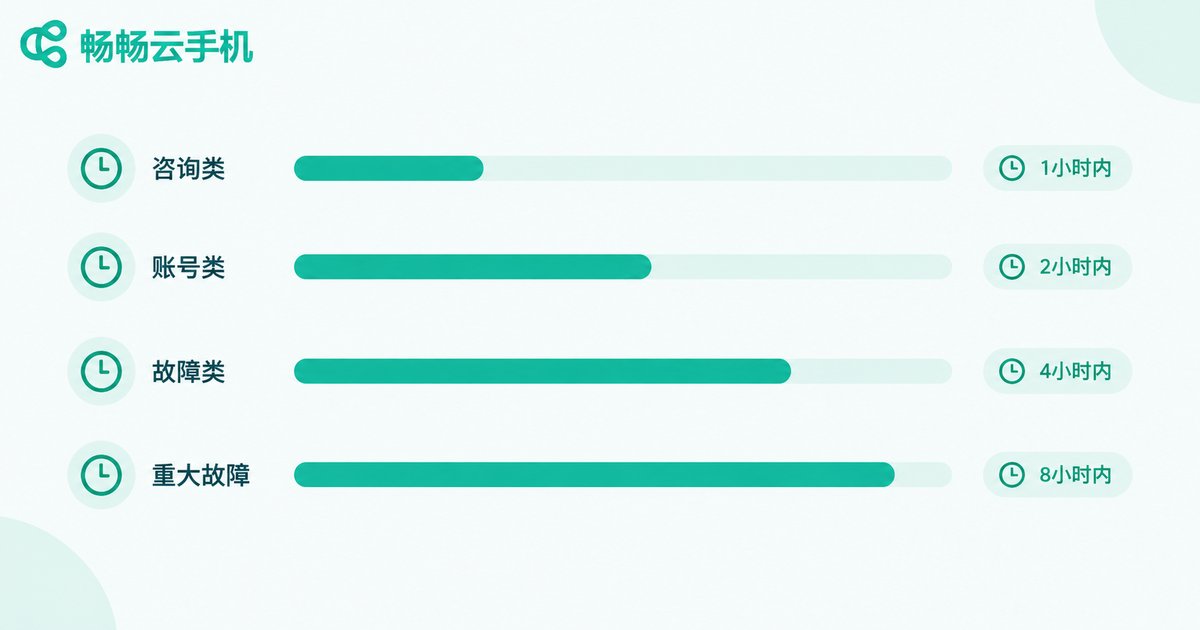
A fast reply does not guarantee a fast fix. What truly measures service quality is resolution time — the duration from acceptance to a complete solution. Different issue types deserve different timeframes. Use the table below to judge whether a provider's pace is normal:
| Issue Type | Reasonable Resolution Time | What to Look For |
|---|---|---|
| Usage questions | Answered within 24 hours | Clear answers that actually solve the problem |
| Account issues | Accepted within a few hours | A defined verification process with progress updates |
| Service-affecting faults | Priority handling with follow-ups | Proactive updates on cause, progress, and recovery time |
| Major or batch incidents | Public announcements | A post-incident summary instead of silence |
If a provider neither follows up nor gives feedback on faults, letting issues drag on for days, be cautious no matter how cheap the service is.
Communication Mechanism: Transparency and Traceability Bring Peace of Mind
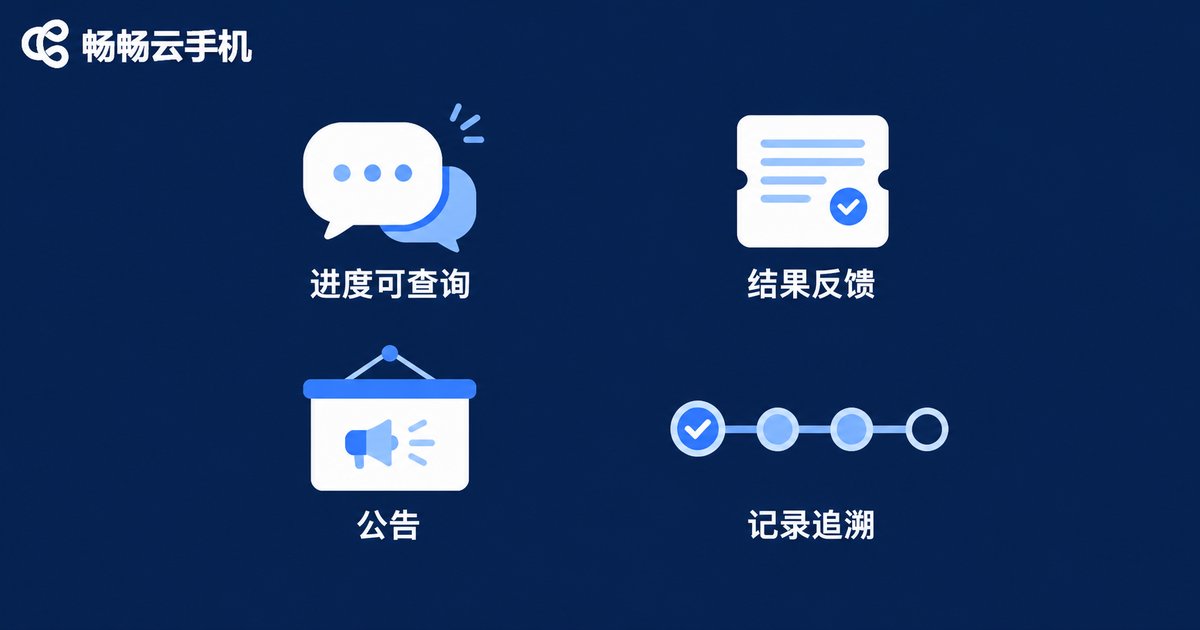
During an outage, the most frustrating part is often not the problem itself but not knowing the progress. A well-designed communication mechanism should include:
Trackable progress: every submitted issue gets an ID or record so you can check its status anytime, instead of re-explaining from scratch.
Result feedback: once fixed, support clearly tells you what happened and how it was resolved, rather than silently restoring service.
Announcements for major incidents: when many users are affected, a unified public notice reduces repeated inquiries.
Retrievable history: past conversations remain viewable, preventing inconsistent answers and repeated explanations.
You cannot verify every detail before buying, but a complete help center and timely announcements are good signals that a team takes communication seriously.
How to Test a Provider's Support Before You Pay
Instead of trusting marketing claims, verify with your own hands. This checklist helps you quickly size up a provider before paying:
Step 1: Ask before you buy. Test response speed and professionalism with one or two real questions.
Step 2: Browse the help center. Coverage of common questions and update frequency reflect the team's operational investment.
Step 3: Check user reviews. Focus on comments about support and fault handling, not just feature praise.
Step 4: Confirm service boundaries. Understand which issues are covered and which are not, to avoid disputes later.
Step 5: Start small. Begin with an entry-level plan, confirm stability over time, then consider longer commitments.
A Practical Example: Evaluating ChangChang Cloud Phone
Take ChangChang Cloud Phone (ccloudphone) as an example. Visit the official website ccloudphone to check its service descriptions and support entry points, then verify them one by one using the methods above: ask a real question through official channels to feel the response speed, browse the help center to see how well common issues are covered, and start with an entry-level plan to observe everyday stability. For exact features and service terms, refer to what is published on the official website.
Keep one principle in mind: a provider willing to explain its service rules clearly is usually also willing to resolve your problems clearly. After-sales service is not a slogan on a landing page — it is the experience you actually get every time something goes wrong.
FAQ
Q: My cloud phone has an issue — what should I do first?
Run basic checks: verify your network, log in again, and restart the cloud device. If the problem persists, contact official support as soon as possible with screenshots and the time it occurred; this significantly speeds up handling.
Q: Does a fast first reply mean good after-sales service?
Not necessarily. A quick first reply only reflects the response stage. You also need to check whether the issue is genuinely resolved and whether progress updates are provided. Fast responses with slow fixes hurt the experience all the same.
Q: How can I judge whether the support team is reliable before buying?
Ask a specific question that requires thought, such as whether a certain device model can run a particular type of app. Tailored answers usually indicate a capable team; copied-and-pasted scripts deserve caution.
Q: What if support never replies to my fault report?
Try other official channels such as tickets or the help center, and keep records of all communication and screenshots. If issues remain unhandled for a long time, reconsider this provider before renewing.
Q: Where can I find ChangChang Cloud Phone's support channels?
Visit the official website ccloudphone and look for the support entry and help center on the site. Consulting them before purchase is the safest way to verify.