How Many SIM Carrier Configurations Does a Cloud Phone Support? 600+ Global Virtual Carrier Profiles Explained
What Exactly Is SIM Carrier Configuration on a Cloud Phone?
If you are new to cloud phones, you may wonder: a cloud phone has no card slot and cannot hold a physical SIM card, so where do carrier names like 'China Mobile', 'Vodafone' or 'AT&T' on the screen come from? The answer is virtual SIM carrier configuration.
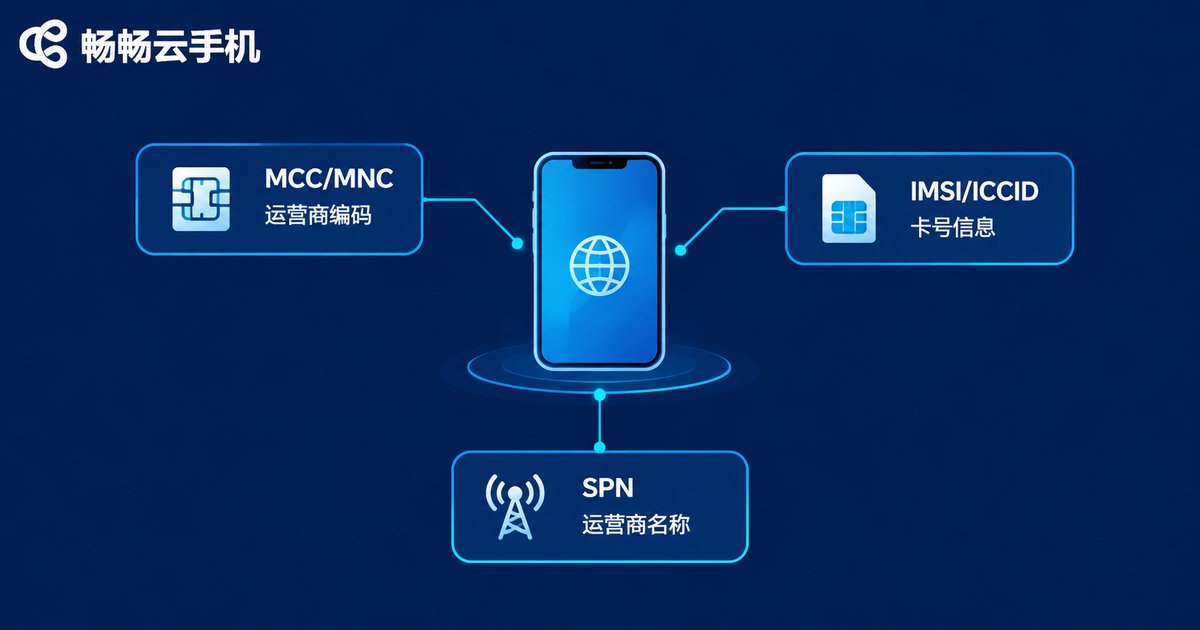
A cloud phone runs on servers in a cloud data center and connects to the internet through the data center's network. At the system level, however, the cloud phone can emulate a complete set of carrier identity information, including MCC (Mobile Country Code), MNC (Mobile Network Code), IMSI, ICCID, the carrier name (SPN) and network type. When an app reads this information, it believes the device is operating on a specific carrier's network in a specific country.
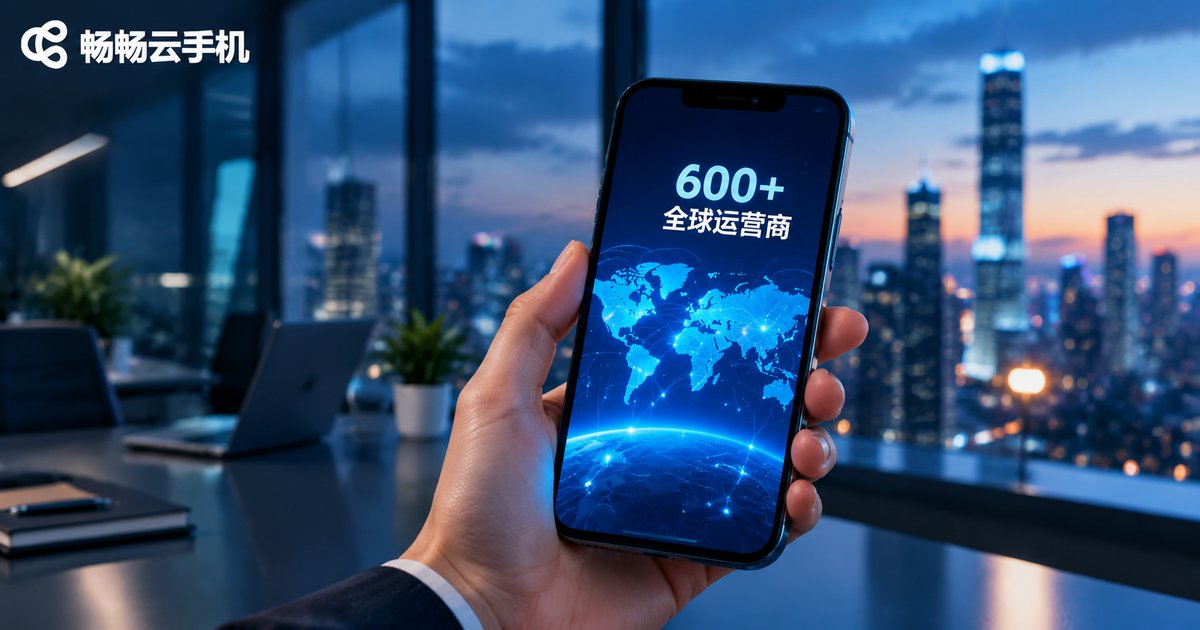
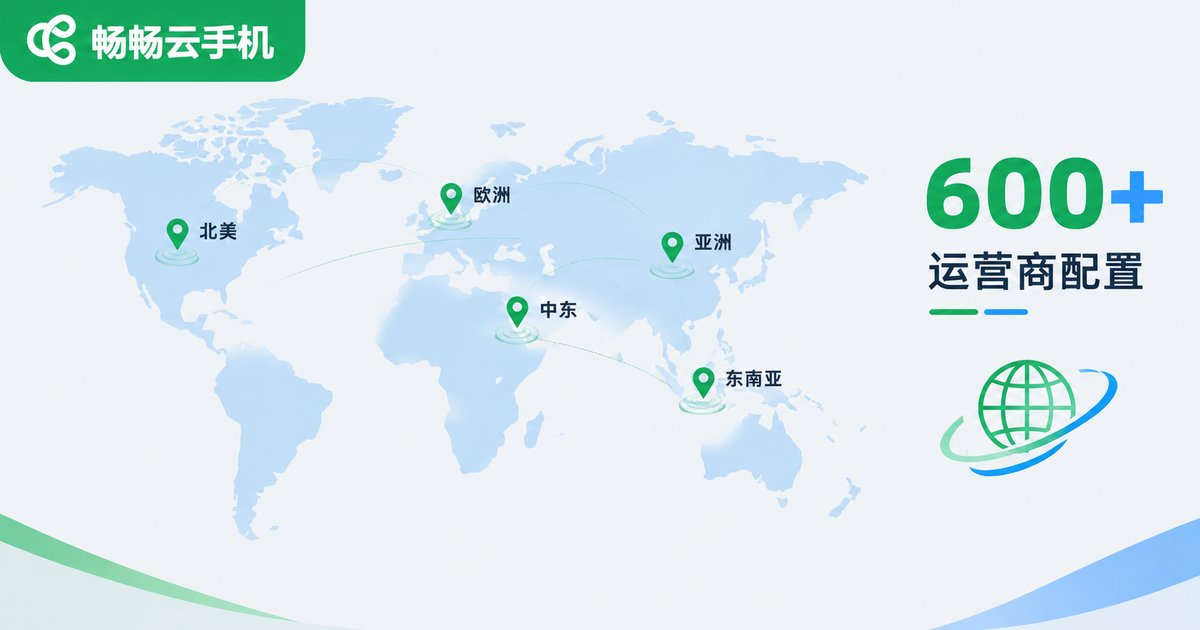
Leading cloud phone services now support 600+ global carrier virtual profiles, covering carriers across major countries and regions, so a single cloud phone can present itself as a local device in virtually any market.
Why Does Carrier Coverage Need to Reach 600+?
There are more than 200 countries and regions in the world, and each market has multiple carriers: China Mobile, China Unicom, China Telecom and China Broadcasting Network in mainland China; CSL and SmarTone in Hong Kong; NTT Docomo and SoftBank in Japan; SKT and KT in South Korea; AT&T, Verizon and T-Mobile in the US; Vodafone and O2 in the UK. Each of them runs on its own unique code system.
Many apps read the MCC/MNC at launch to determine the user's region and carrier, and then decide which language, which regional pricing, which localized services — or even which features — to display. If the carrier information does not match the target market, you may see misplaced content or restricted functionality. That is exactly why 600+ carrier profiles have become a must-have for anyone going global: only broad coverage can handle testing and operations across every market.
How Virtual Carrier Configuration Works — Explained Simply
It sounds technical, but it really comes down to three things:
1. MCC/MNC — the carrier's 'ID number'. MCC stands for the country (460 is mainland China) and MNC stands for the carrier (00 is China Mobile, 01 is China Unicom). Together they form a globally unique carrier code.
2. IMSI/ICCID — the SIM's 'numbering system'. A real SIM card stores an IMSI (subscriber identity) and an ICCID (card number). Through virtual configuration, a cloud phone generates rule-compliant numbers so that apps read a complete and self-consistent set of SIM data.
3. SPN — the carrier name on the status bar. This is the 'China Mobile' or 'Vodafone' text shown in the status bar, delivered by the configuration file and equally readable by apps.
Note that carrier configuration is virtualization at the device identity level. It does not carry real traffic and does not change the cloud phone's network exit — the IP location is determined by the region of the data center. The two work together to form a complete regional environment.
| Comparison | Physical SIM Card | Cloud Phone Virtual Carrier Profile |
|---|---|---|
| Quantity | Usually 1-2 per phone | Configured in the cloud, set per device |
| Cost | Card, plan and roaming fees | No physical card or roaming costs |
| Switching | Requires swapping cards | Changed in the cloud, effective after restart |
| Coverage | Limited by local channels | 600+ global carriers to choose from |
| Best for | Daily calls and mobile data | App testing, multi-region operations, environment simulation |
What Can 600+ Carrier Profiles Actually Be Used For?
1. App overseas testing. Before launch, use cloud phones with different carrier profiles to verify startup flows, payment pages, push notifications and localized content in each market, catching issues early.
2. Cross-border e-commerce and multi-account social media operations. Assign matching carrier environments to accounts in different regions so each device presents a more complete, more authentic local identity.
3. Game testing and regional event verification. Check whether login, event entries and gift pack displays behave as expected across regional servers.
4. Ad campaign and growth verification. Marketing teams can emulate the device environment of target-market users to review landing pages and app store listings for regional fit.
5. Developer compatibility debugging. For SDKs that rely on carrier information (billing, authentication, etc.), batch-simulate different MCC/MNC values for regression testing.
How to Configure Carrier Information on ChangChang Cloud Phone
Take ChangChang Cloud Phone (ccloudphone) as an example — the whole process is simple:
Step one, register and log in to ChangChang Cloud Phone and open the cloud device you want to set up. Step two, find the carrier/SIM information configuration option in the device's system settings. Step three, select the target country and carrier, save and restart the device for the change to take effect. Everything is done in the cloud with no physical card involved; the exact interface may vary, so refer to what is shown in the app.
ChangChang Cloud Phone supports 600+ global carrier virtual profiles, and multiple devices can be configured and managed centrally in the cloud — ideal for teams that need batch setup and parallel multi-region testing. If you are testing apps for overseas markets, running cross-border operations or simulating regional environments, visit the official ChangChang Cloud Phone website to explore the details before getting started.
FAQ
Q: Will changing the carrier configuration affect the cloud phone's network speed?
No. The cloud phone's actual network is provided by the data center; carrier configuration is only system-level identity data and does not carry real traffic, so speed is unaffected.
Q: If I set a carrier profile, will apps definitely treat me as a local user?
Not necessarily. Carrier information is only part of the device environment; IP location, system language and time zone also influence how apps judge your region, so combine several settings.
Q: Which regions do the 600+ carrier profiles cover?
They cover major carriers across mainland China (including the big three and China Broadcasting Network), Hong Kong, Macau and Taiwan, Japan, South Korea, Southeast Asia, North America, Europe, the Middle East, Latin America, Africa and Oceania.
Q: How long does it take to switch carrier profiles?
Changes take effect after you save the configuration and restart the device in the cloud — usually within seconds to a minute, far more convenient than swapping physical SIM cards.
Q: Do individual users need to care about carrier configuration?
If you only use cloud phones for everyday tasks, idle running or gaming, the default settings are enough. But for app testing, cross-border operations or simulating a specific region, carrier configuration is a very practical feature.