
Which Cloud Phone Is the Cheapest? The Hidden Costs Behind Low-Price Plans
Why Is Everyone Searching for “the Cheapest Cloud Phone”?
Cloud phones have taken off in recent years: short-video teams use them to manage account matrices, mobile gamers use them for idle grinding, and everyday users keep aging apps alive on them. With demand booming, a price war has broken out — some plans cost just a couple of dollars for the first month, and some bill themselves as “the lowest price anywhere.” That's why so many people end up typing the same question into the search box: which cloud phone is the cheapest?
But if you simply buy whatever is cheapest, odds are you'll hit problems within a month or two: lag, disconnections, features locked behind extra fees, renewal prices that quietly double. Piled up, these hidden costs usually cost far more than what you saved on the plan. This article walks you through the tricks behind budget plans and shows you how to calculate the real bill.
What Hidden Costs Lurk Behind Cheap Plans?
Running a cloud phone service isn't cheap: servers, bandwidth, computing power, and support staff all cost real money. If a plan is priced well below the market, the savings must come from somewhere. These are the most common tricks:
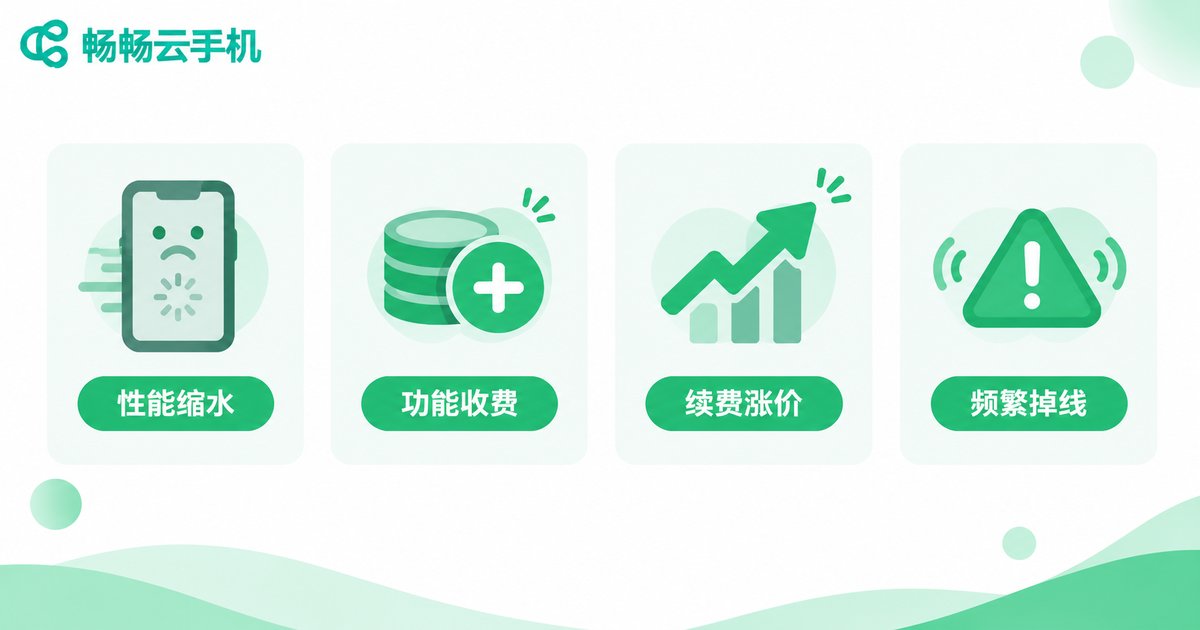
1. Throttled device performance. A “cloud phone” may run on an outdated system image with low-spec CPU and memory. Apps crawl, games stutter. You didn't find a bargain — you rented a digital antique.
2. Extra charges for basic features. Some budget plans bill separately for screenshots, device switching, and batch operations, or cap daily usage. Stack up all those “add-on packs” and the total easily exceeds a standard plan.
3. Quiet renewal hikes. A couple of dollars for the first month looks tempting, but the second month may renew at several times that price. By the time you notice, your data lives on the device and migrating is a hassle — which is exactly the plan.
4. Instability that triggers cascading losses. Oversold servers and poor network quality mean frequent disconnects and abnormal environments. For account operators, one dropped session can cost an entire account — a loss no discount can offset.
| Factor | Ultra-Cheap Plan | Fairly Priced Plan |
|---|---|---|
| Device performance | Outdated specs, obvious lag | Modern specs, smooth running |
| Feature coverage | Basics cost extra | Common features included |
| Renewal price | Cheap first month, then doubles | Transparent and consistent |
| Stability | Frequent drops, high latency | Maintained, reliably online |
| True cost | Grows over time | Clear from day one |
How to Calculate Your True Cost
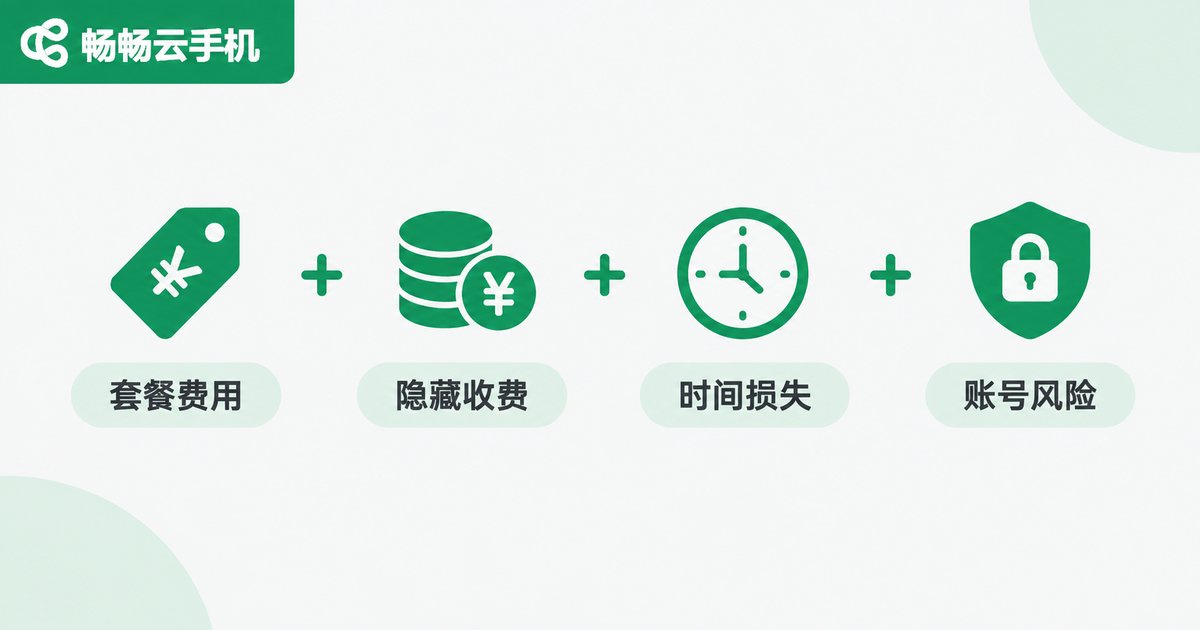
To judge whether a cloud phone plan is worth it, look past the sticker price and apply this formula:
True cost = plan price + hidden fees + wasted time + account-loss riskExample: Plan A costs $3 a month but limits you to 4 hours online per day, charges for screenshots, and lags at peak hours. Plan B costs $6 a month with 24/7 uptime, all features included, and steady performance. On paper A is half the price — but if you need 8 hours of daily uptime, you'd have to buy two A plans or jump to a pricier tier, ending up worse off. Add the time lost to lag and the risk from disconnects, and Plan B's true cost is actually lower.
So next time you compare plans, run through this checklist: How many hours per day can I stay online? What are the device specs? Do screenshots, batch controls, or device switching cost extra? What's the renewal price? Does anyone actually help when things break? Put the answers side by side and the best value becomes obvious.
Why We Recommend ChangChang Cloud Phone

The goal isn't to buy the most expensive plan — it's to buy one with transparent pricing and real value. Among today's cloud phone services, ChangChang Cloud Phone (ccloudphone) is worth a serious look:
Transparent pricing. Every plan is clearly listed on the official website, spelling out exactly what's included and for how long. No “cheap first month, double at renewal” games — the price you see is the price you pay.
Solid performance. Devices run smoothly with instant app launches and responsive controls, whether you're idling, multi-opening, or just using them day to day. No digital antiques here.
Worry-free stability. Cloud devices stay online around the clock with a dedicated team handling maintenance. For anyone relying on long idle sessions and account operations, that reliability is money in the bank.
If you're shopping for a cloud phone, check the plan details on the official ChangChang Cloud Phone website and compare them against the checklist above before committing. Ten minutes of homework can save you months of overpaying.
FAQ
Q: How much does a cloud phone cost per month?
Prices vary by configuration and feature tier, typically from a few dollars to dozens per month. What matters is what each plan includes and your true cost per hour of use — not the sticker price alone.
Q: Are cheap cloud phones usable?
Yes, but read the limits carefully: daily uptime, device specs, feature fees, and renewal pricing. For light trial use, a budget plan may be fine; for long-term idle running or account operations, go with a transparent, stable service like ChangChang Cloud Phone.
Q: What's the most overlooked trap in cheap plans?
Renewal pricing and feature fees. The first month looks sweet, but long-term cost depends on the renewal price and add-on charges — confirm both before you order.
Q: How can I tell if a cloud phone service is stable?
Test it over a short cycle first: watch for peak-hour lag, frequent disconnects, and how smoothly apps run. Services with dedicated maintenance, like ChangChang Cloud Phone, are noticeably more dependable.