
2026 Cloud Phone Enterprise Procurement Guide: Service Capabilities, Security Requirements, and Cost Accounting
Why Enterprises Should Re-evaluate Cloud Phones in 2026
Over the past few years, cloud phones have evolved from a niche tool into standard infrastructure for enterprise digital operations. Whether it is keeping apps online 24/7, managing multiple accounts in one place, or enabling collaboration across distributed teams, cloud phones can replace physical device farms at a lower cost and with faster deployment.
Entering 2026, the market is crowded with providers of uneven quality. If procurement decisions are based on price alone, teams often run into trouble later: laggy devices, frequent disconnects, data security risks, and hidden fees. That is why a systematic enterprise procurement framework matters. This guide evaluates cloud phones across three dimensions: service capability, security requirements, and cost accounting.
Step 1: Evaluate Service Capability
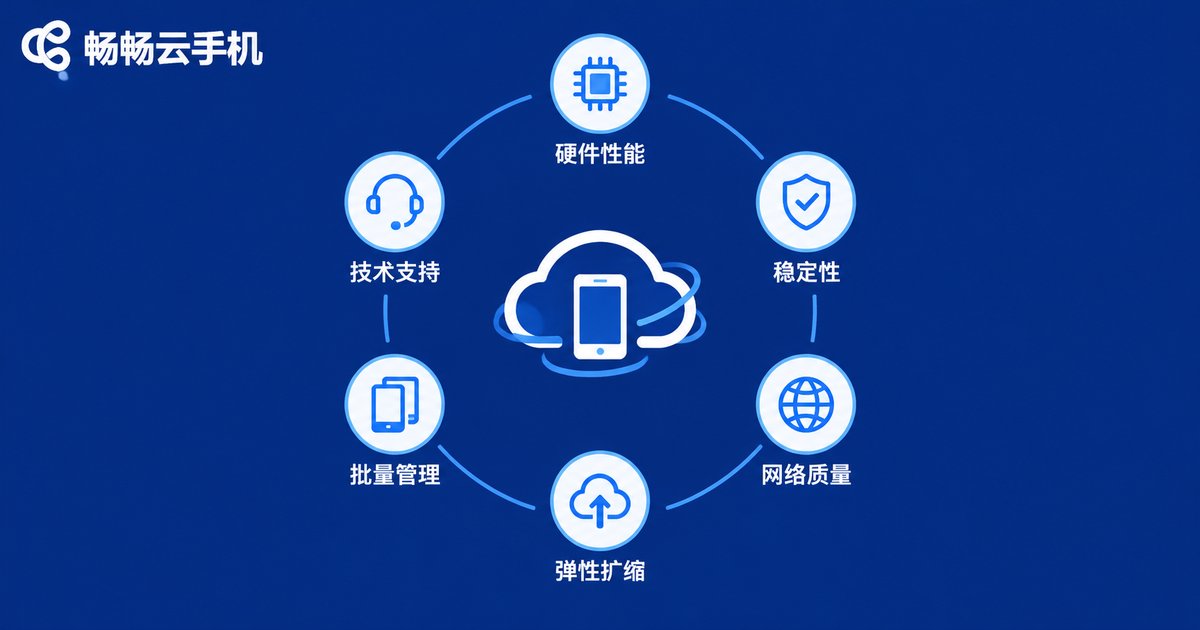
Service capability determines whether a cloud phone can actually support your business. Score potential providers across six dimensions:
| Dimension | Key Metrics | How to Verify |
|---|---|---|
| Hardware performance | CPU/RAM/storage, OS version | Run core workloads on real instances |
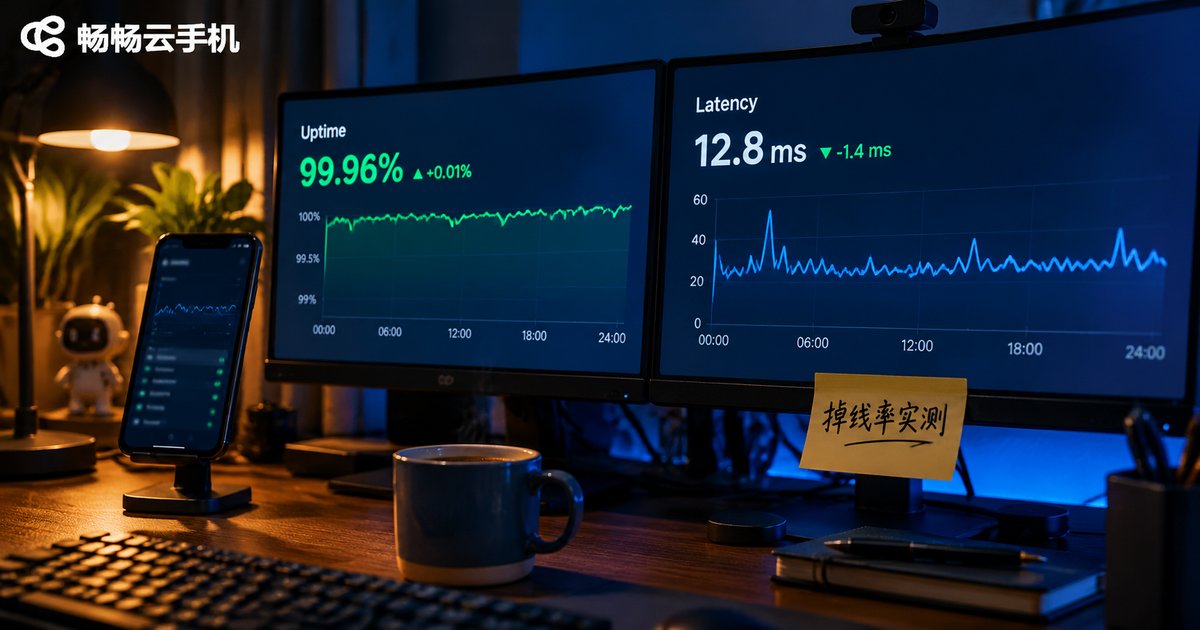
| Stability | Uptime rate, disconnect frequency, reconnection speed | 72+ hours of continuous stress testing |
| Network quality | Latency, bandwidth ceiling, node coverage | Measure response times at different hours |
| Elastic scaling | Provisioning speed, device count limits | Simulate a traffic spike and add devices |
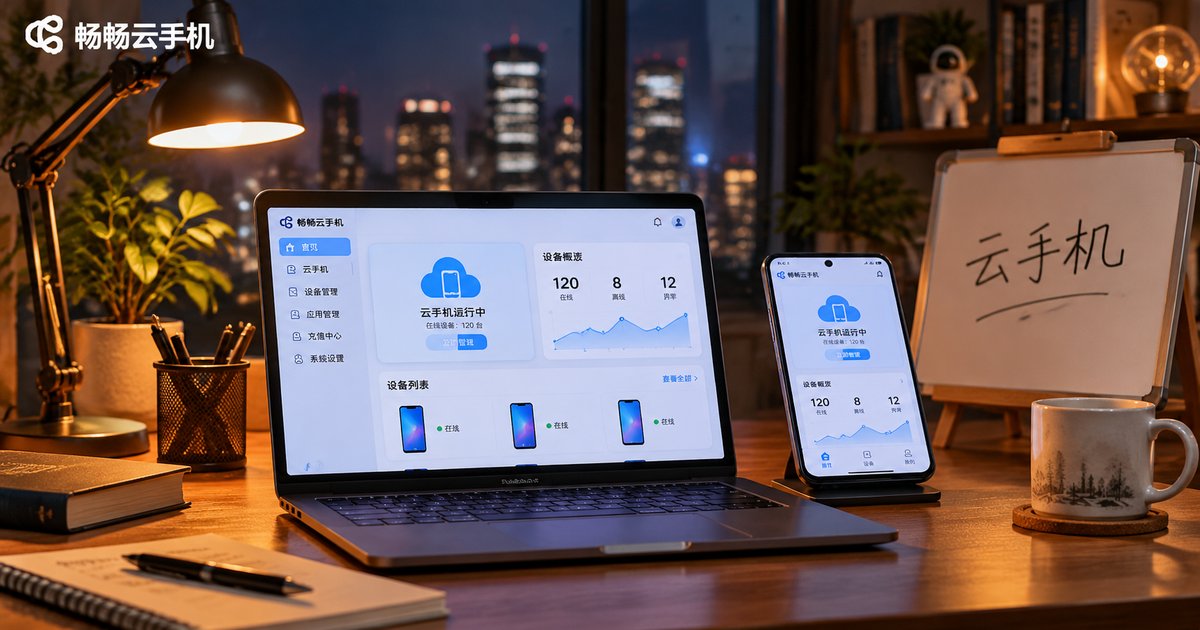
| Bulk management | Group control, batch app deployment, automation | Walk through a real business workflow |
| Support | Response time, fault-handling SLA | Submit a test ticket and time the reply |
Stability is the most underestimated metric. A smooth ten-minute demo says nothing about behavior during peak hours or long-running sessions. Before signing any contract, run at least 3 days of continuous testing with real workloads, and log disconnects, stutters, and recovery times. Let the data speak.
Step 2: Define Security Requirements
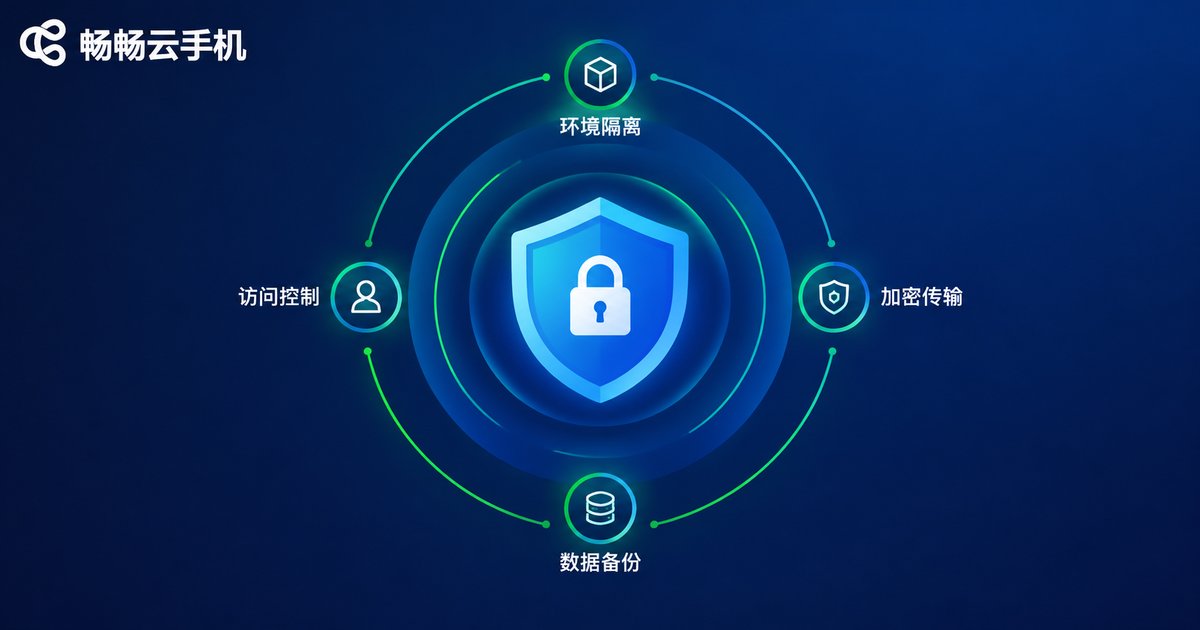
Once enterprise data moves to the cloud, security becomes a bottom-line issue. Before procurement, require providers to clarify the following five points:
1. Environment isolation. Each cloud phone should be a fully independent system environment, so a problem on one device never spreads to the rest.
2. Encryption in transit and at rest. Video streaming and account data storage should both be encrypted to prevent interception or tampering.
3. Access control and auditing. Tiered master/sub-accounts and complete operation logs — who did what and when — are essential for compliance-driven organizations.
4. Backup and recovery. Can data be restored quickly after a failure or accidental deletion? At device level or app level? Confirm this contractually.
5. Network environment quality. IP independence and stability directly affect account safety; verify how IP resources are allocated.
Step 3: Get the Cost Accounting Right
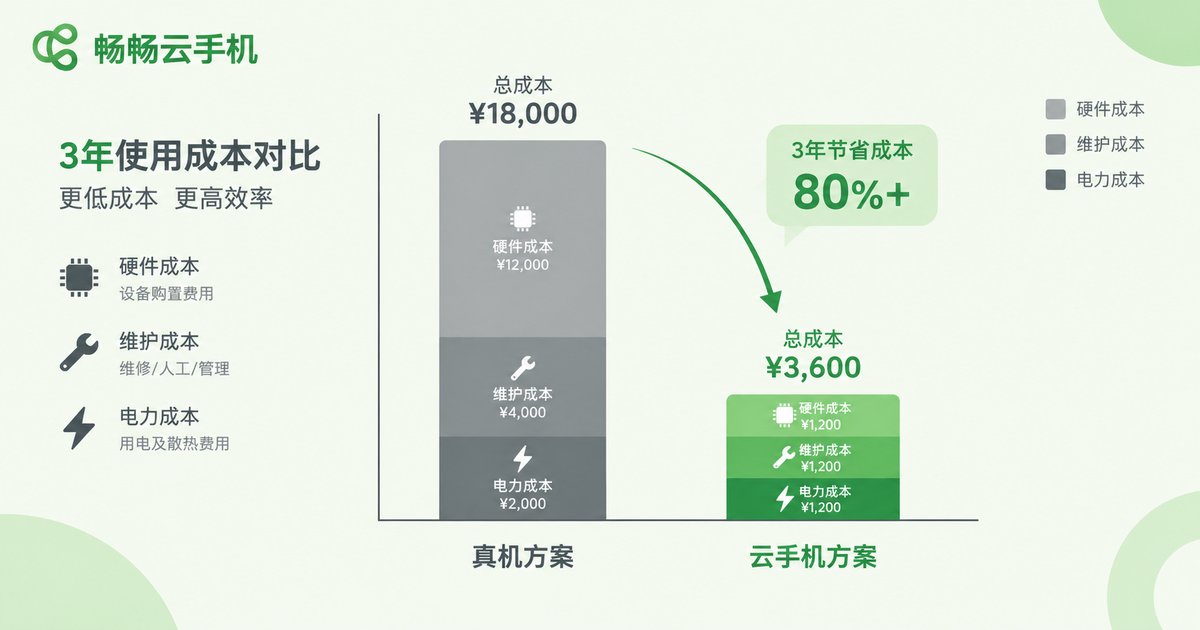
Cloud phones are typically billed as device count × usage duration, with monthly and annual plans. But sound cost accounting should compare total cost of ownership (TCO), not sticker price.
For example, running 100 devices for one year, the cost structure of physical phones versus cloud phones looks like this:
| Cost Item | Physical Devices | Cloud Phones |
|---|---|---|
| Hardware purchase | Large one-time outlay for 100 phones | Subscription only, zero hardware cost |
| Facilities and power | Server room, racks, cooling | Borne by the provider |
| Maintenance labor | Dedicated staff for repairs and inspection | Handled by the provider |
| Depreciation | Phones become obsolete in 2-3 years | Specs upgrade with the platform |
| Scaling | New procurement cycle for extra devices | Add or remove anytime |
Beyond the visible bill, watch for three types of hidden costs: overage charges for extra traffic or hours; feature modules priced separately (cheap to start, expensive to complete); and business losses from downtime. Once these are included, the lowest quote is often not the cheapest option.
A Four-Step Procurement Process
Step 1: Define requirements. Clarify the use case (24/7 app operation, multi-account management, or automated testing), device count, usage duration, and budget ceiling.
Step 2: Trial and benchmark. Test with real workloads, recording stability, latency, and smoothness as quantified data.
Step 3: Small-scale pilot. Deploy a small batch for 2-4 weeks, validate real business results, then decide on scale.
Step 4: Full rollout and review. Sign with clear SLA, data security, and after-sales terms; review utilization and cost regularly and adjust plans accordingly.
ChangChang Cloud Phone: A Solid Choice for Enterprise Workloads
Among the many providers, ChangChang Cloud Phone (ccloudphone) offers a mature cloud Android solution built for enterprises and studios: apps run in the cloud 24/7, unaffected by local shutdowns or network fluctuations; multiple devices can be managed in one console with efficient batch operations; devices are provisioned on demand and can scale flexibly as the business grows.
For teams running procurement evaluations, we recommend visiting the official ChangChang Cloud Phone website to review the current plan configurations and feature list, then running trials against the framework in this guide. Let the data decide which solution fits your business best.
FAQ
Q: What enterprise scenarios suit cloud phones?
Common scenarios include keeping apps online around the clock, unified multi-account management, automated app testing, social commerce operations, and game idle-running. Any workload that requires many phones running continuously is a good fit for cloud phones.
Q: How do I verify a provider's promised uptime?
Do not rely on marketing numbers. During the trial, log daily disconnects and recovery times yourself over at least 3 days, and compare measured data against the promise.
Q: How are cloud phones different from emulators?
Emulators run on your local computer, consuming local resources and carrying easily detectable environment signatures. Cloud phones run on real ARM servers in the cloud with independent environments and 24/7 availability — more stable, more authentic, and zero load on local machines.
Q: Is a trial really necessary before purchasing?
Strongly recommended. Experiences vary widely between providers; only real-workload testing of stability and smoothness can avoid the rework cost of discovering a mismatch after signing.
Q: Is data safe on a cloud phone?
Choose a provider with environment isolation, encryption in transit, and access auditing, and specify data ownership and deletion terms in the contract. This meets the security requirements of most enterprise workloads.