
Will Running Multiple WeChat Accounts on Cloud Phones Get You Banned? The Complete Anti-Association Guide
The Real Demand for Multiple WeChat Accounts — and the Fear of Bans
Private domain operations, customer service, community management, local business promotion... more and more business scenarios require running multiple WeChat accounts at the same time. The traditional approach — carrying several physical phones per person — is expensive, cumbersome, and hard to manage. Cloud phones make “multiple accounts on one device” easy, but many operators keep asking the same question: Will running multiple WeChat accounts on cloud phones get you banned?
The answer: with the right approach, the risk is fully manageable; with the wrong approach, a ban is only a matter of time. WeChat bans accounts not because you “used a cloud phone,” but because the accounts became associated with each other. This article breaks down how WeChat's risk control works and provides a complete anti-association strategy built on independent hardware fingerprints and one account per IP.
What Does WeChat's Risk Control Actually Detect?
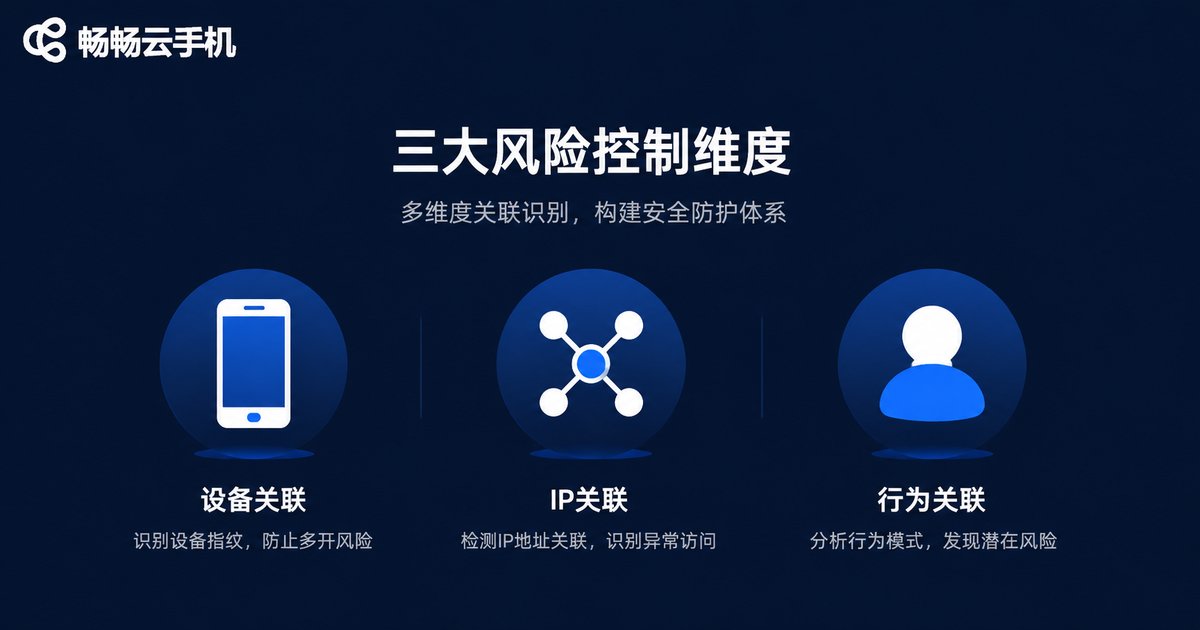
WeChat's risk control system evaluates accounts across three dimensions:
1. Device association: If multiple WeChat accounts have logged in on the same device (or devices with highly similar hardware characteristics), the system concludes these accounts belong to the same person. If one account violates the rules, the others may be punished along with it.
2. IP association: Multiple accounts sharing the same IP address for a long time — especially data center IPs or frequently changing IPs — get flagged as high-risk environments.
3. Behavioral association: Bulk registration, mass friend requests in a short time, spam messaging, and identical content across accounts are the most direct triggers for risk control.
In other words, the root cause of bans is “association,” not “cloud phones.” A cloud phone with an independent hardware fingerprint and a dedicated IP looks like a real, clean, standalone device to WeChat — no different from a physical phone.

What Is a Hardware Fingerprint, and Why Is It the Core of Anti-Association?
A hardware fingerprint is a set of low-level device characteristics, including device model, IMEI, Android ID, MAC address, sensor data, and system version. WeChat collects this information at login to identify “which accounts have logged in on this device.”
The problem: if multiple cloud phone instances share the same set of hardware parameters, WeChat treats them as one single device — this is where device association comes from, and it is the root cause of low-quality cloud phones getting “banned in batches.”
A truly qualified cloud phone gives every instance a completely independent hardware fingerprint:
- Independent device identifiers: unique IMEI, Android ID, and serial number for each instance
- Independent system environment: sensor parameters, timezone, language, and other low-level details generated separately
- Realistic randomization: parameters cannot be batch-identified as virtual devices by risk control systems
This way, even if you manage 10 cloud phone instances on one computer, WeChat sees 10 unrelated “real phones” — device-level association is completely severed.
One Account Per IP: Anti-Association at the Network Layer
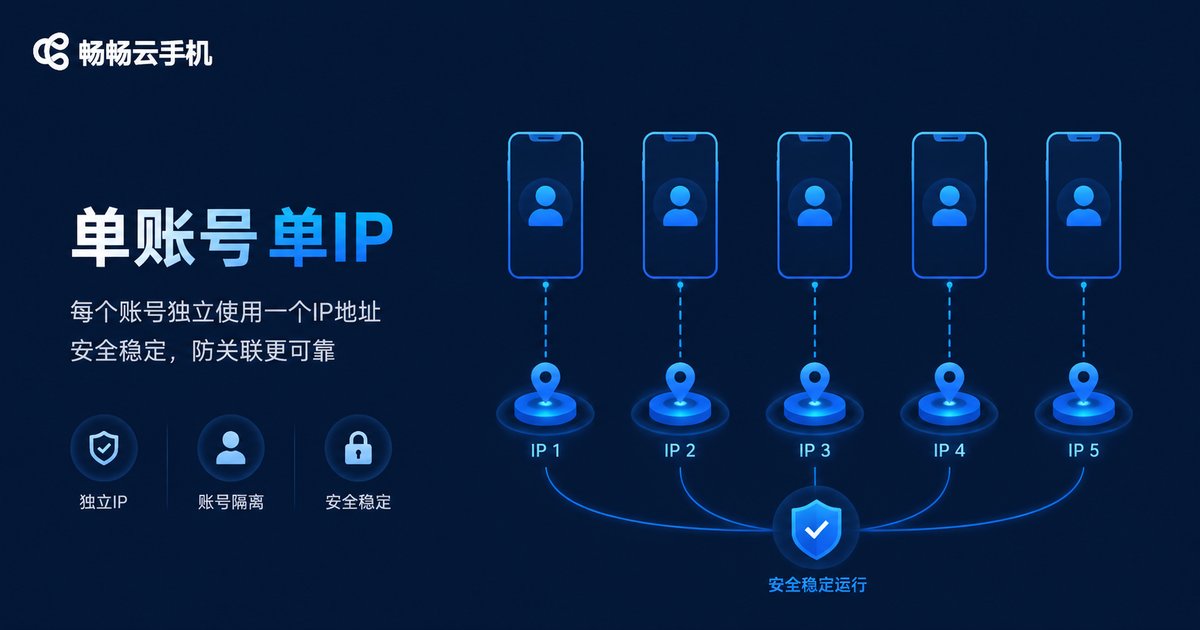
Solving device association is not enough; you also need to address IP association. One account per IP is the industry-recognized safe strategy: each WeChat account is bound to a fixed, dedicated IP — ideally a residential static IP that mimics a real user's network environment.
Risk comparison of common IP usage patterns:
| IP Usage Pattern | Risk Level | Why |
|---|---|---|
| Multiple accounts sharing one IP | High | Direct IP association; one ban takes them all down |
| Frequently switching IPs | High | Constant remote logins trigger security checks |
| Data center IPs | Medium-high | Easily identified as non-human environments |
| One account per fixed residential IP | Low | Closest to a real user's network environment |
When choosing a cloud phone, make sure it supports dedicated static IPs with a stable binding between IP and device. Frequent IP changes will undo all your previous efforts.
Best Practices for Running Multiple WeChat Accounts on Cloud Phones
With independent hardware fingerprints and IPs in place, these daily habits will keep your risk to a minimum:
1. Warm up new accounts first: Don't start marketing activities on a freshly registered account. Use it normally for one to two weeks — add a few friends, post a few Moments — to build a “real person” profile.
2. One account, one device, no switching: Keep each account on its own cloud phone instance. Don't log accounts in and out repeatedly, and don't rotate accounts on the same instance.
3. Control operation frequency: Keep friend requests, messages, and group activities at a natural pace. Avoid bulk actions in short periods and mimic real user behavior.
4. Differentiate content: Never send identical content across accounts. Vary your Moments posts and scripts to avoid being flagged as a marketing matrix.
5. Choose the right cloud phone provider: This is the foundation of the entire strategy. CCloudPhone (畅畅云手机), for example, equips every instance with an independent hardware fingerprint and a dedicated IP, eliminating association at both the device and network layers, while letting you manage multiple instances from your phone or computer anytime, anywhere — a reliable choice for multi-account operations.

FAQ
Q: Will running multiple WeChat accounts on cloud phones always lead to a ban?
No. Bans stem from account association and rule violations, not from cloud phones themselves. With independent hardware fingerprints, one account per IP, and a natural operating rhythm, the risk is fully manageable.
Q: What does “hardware fingerprint” mean?
A hardware fingerprint is the set of low-level device characteristics — IMEI, Android ID, sensor data, and more — that WeChat uses to identify a device. Cloud phones generate an independent fingerprint for each instance, preventing multiple accounts from being recognized as the same device.
Q: How many WeChat accounts can log in on one IP?
From a safety perspective, one IP should serve only one WeChat account. Sharing an IP across accounts is one of the most common causes of association.
Q: Is WeChat on a cloud phone different from WeChat on a physical phone?
To WeChat's servers, a cloud phone with an independent hardware fingerprint and a dedicated IP is simply a real Android device. The login experience is essentially identical to a physical phone.
Q: Can already-associated accounts be saved?
Accounts with light restrictions can pause marketing activities and return to normal usage for a while. But more importantly, switch to an independent device and IP environment immediately to cut off further association and protect your other accounts.