Will Cloud Phones Replace Physical Phones? Application Boundaries and a Rational Analysis
What Is a Cloud Phone? A Smartphone That Lives in a Data Center
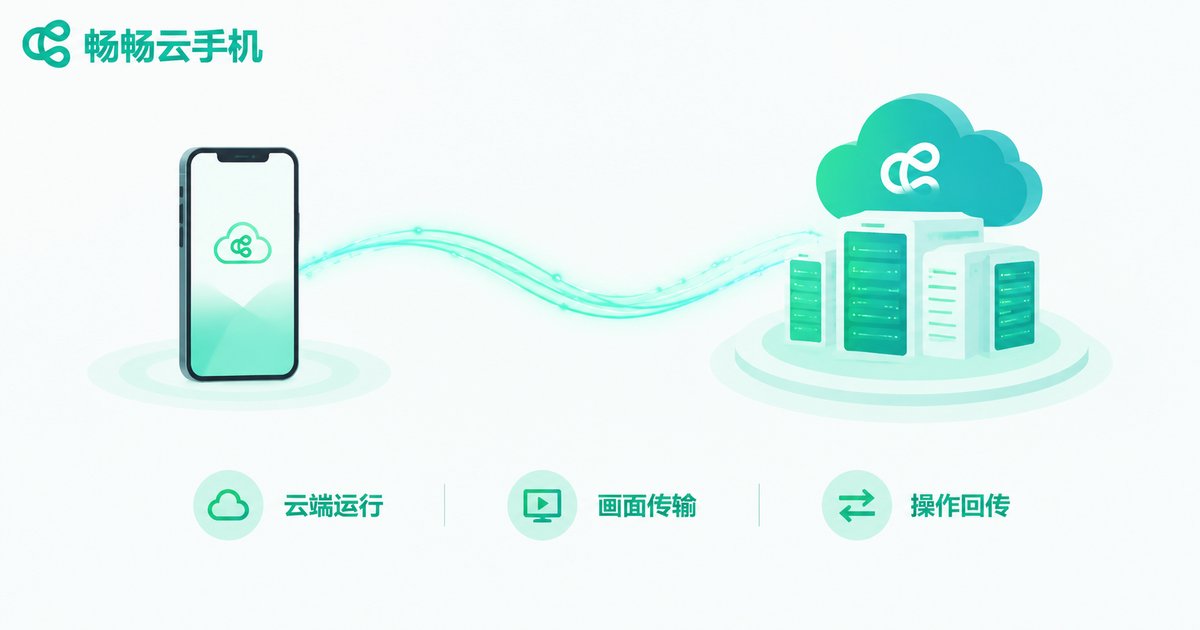
In simple terms, a cloud phone moves a complete Android system onto cloud servers. Like the phone in your pocket, it runs a full Android environment where you can install apps, sign in to accounts, and play games — but it does not rely on your local screen or chip. All computing happens in a data center, while your device only streams the display to you and sends your touches back.
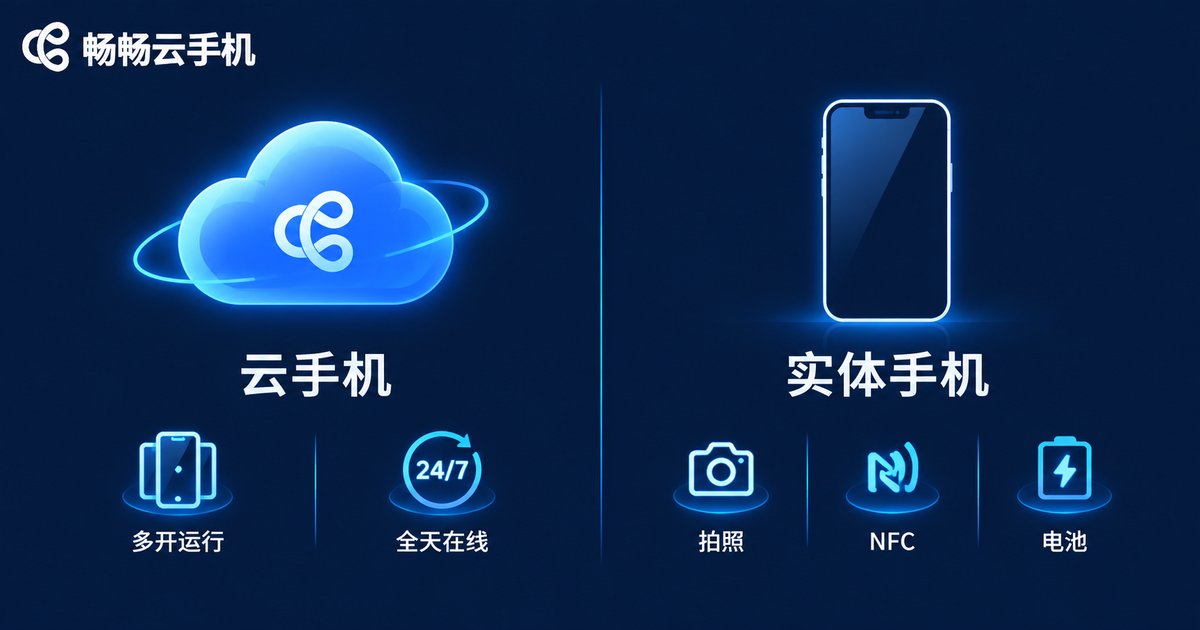
This architecture gives cloud phones several innate traits: no local storage usage, no local battery drain, 24/7 online availability, and the ability to manage many cloud phones from a single device. These traits define its application boundaries — brilliant in some scenarios, limited in others.
Where Cloud Phones Excel: Scenarios They Genuinely Dominate
Cloud phones are far from a gimmick. In the following scenarios they already outperform physical phones by a wide margin:
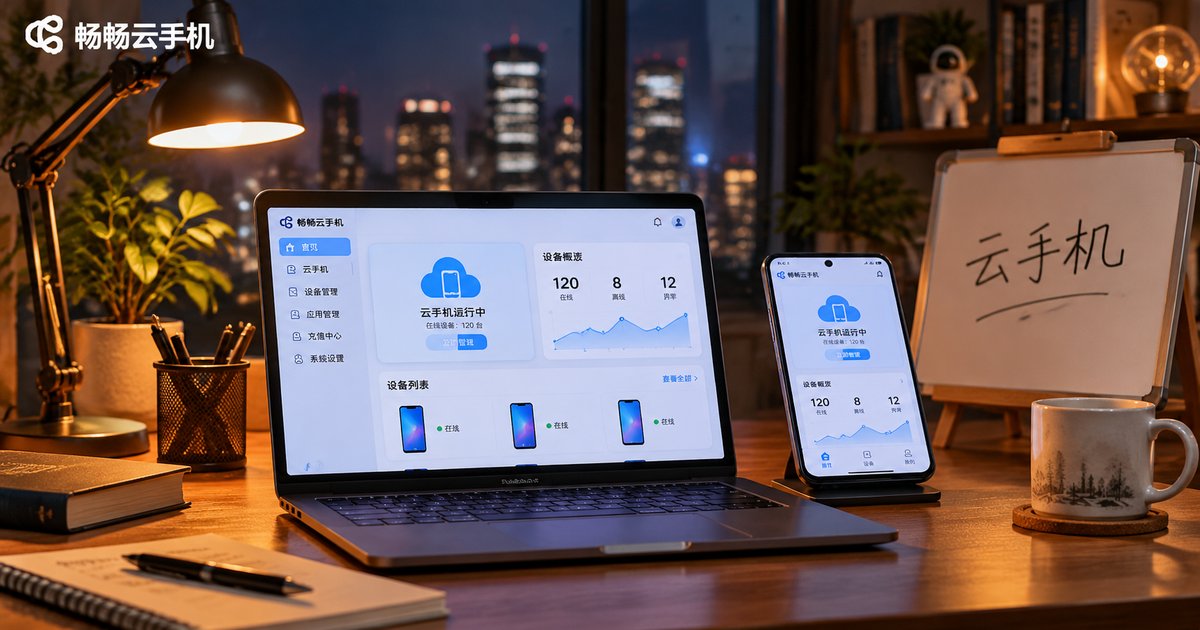
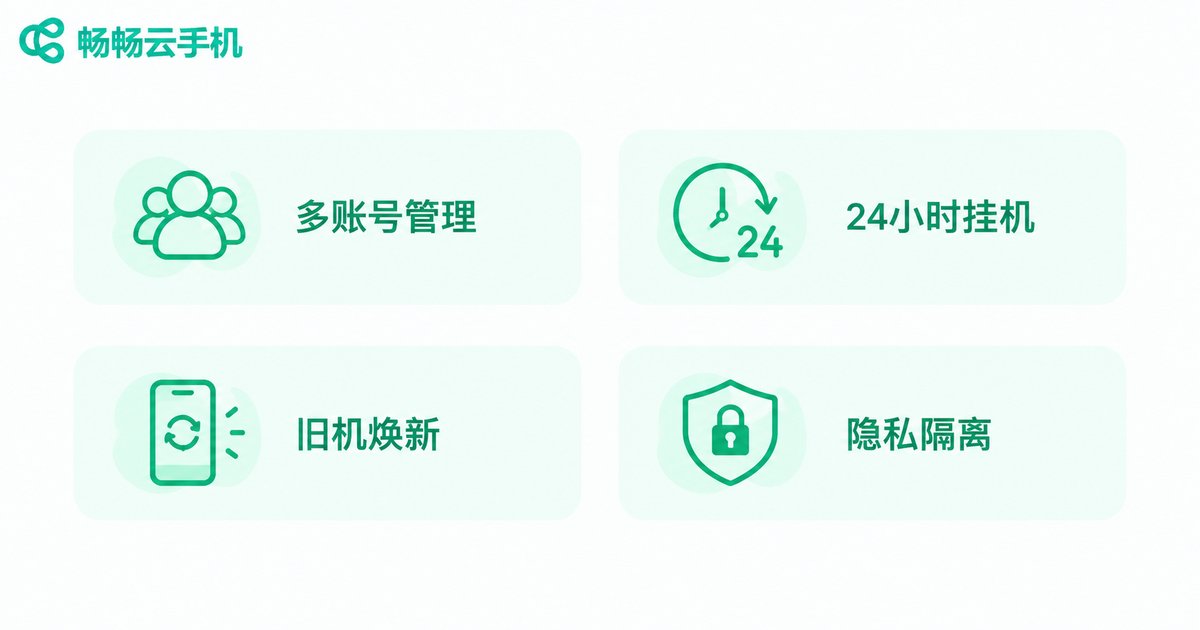
1. Multi-account and multi-instance operations. Creators running account matrices, e-commerce sellers managing multiple stores, and gamers playing several accounts all need many identities online at once. With physical phones that means a desk full of devices; with cloud phones, one screen can manage dozens of virtual phones at a fraction of the cost and effort.
2. 24/7 always-on tasks. Game idling, automated routines, and around-the-clock message monitoring require apps that never sleep. Cloud phones are hosted in professionally maintained data centers with reliable power and network, running continuously without draining your real phone's battery or performance.
3. Reviving old devices. An aging phone may struggle with heavy apps, but once it logs into a cloud phone, the computing happens in the cloud and the local device only handles streaming — smoothness improves immediately.
4. Data and privacy isolation. Separating work and personal accounts, testing apps without polluting your daily driver, keeping sensitive apps in a standalone environment — the one-phone-one-environment nature of cloud phones makes isolation effortless.
What Physical Phones Still Do Better: Gaps Cloud Phones Cannot Close
A rational analysis must also acknowledge the boundaries. The following capabilities remain — and will for the foreseeable future — firmly in the hands of physical phones:
1. Camera and imaging. The camera is physical hardware; a cloud phone has no lens. Scanning QR codes, shooting videos, and making video calls still require the device in your hand.
2. Communication and sensors. Phone calls, SMS verification via a physical SIM, NFC payments, Bluetooth accessories, and precise GPS all depend on local hardware that the cloud cannot substitute.
3. Offline and weak-network use. Every cloud phone experience is built on the network. In a subway, an elevator, or on a plane, once the connection drops, the cloud phone is temporarily out of reach.
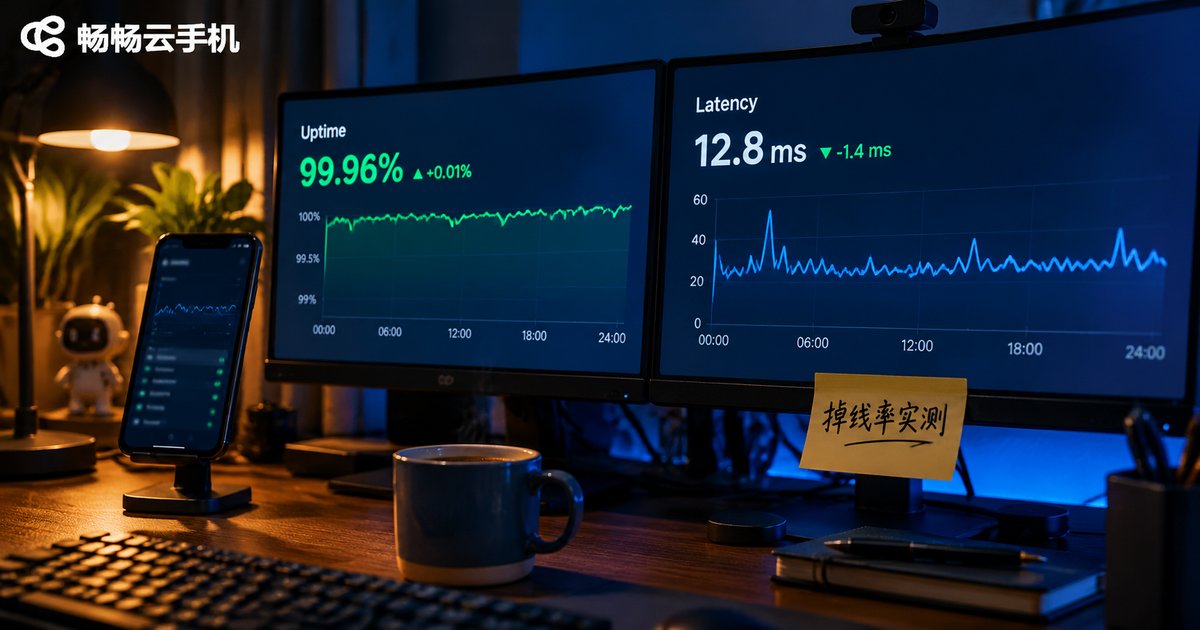
4. Ultra-low-latency play. Competitive games are extremely sensitive to latency; even a few dozen milliseconds of transmission delay can decide a close match. Players chasing the tightest control feedback will still prefer a physical device.
Cloud Phone vs Physical Phone at a Glance
| Dimension | Cloud Phone | Physical Phone |
|---|---|---|
| Camera / QR scan / NFC | Not supported | Native support |
| Multi-account | Dozens from one device, low cost | Multiple devices, high cost |
| 24/7 uptime | Data-center hosted, stable and power-saving | Heat, battery drain, hardware wear |
| Offline use | Network dependent | Fully functional |
| Old-device smoothness | Boosted by cloud computing power | Limited by hardware |
Our Verdict: Coexistence, Not Replacement
Back to the title question: will cloud phones replace physical phones? Our judgment is — not in the short term; in the long run, the two will coexist with a clear division of labor.
The physical phone remains the gateway of the personal terminal: communication, imaging, payments, and pocketable experience are irreplaceable. The cloud phone, meanwhile, acts like a second phone living in the cloud, taking over tasks that are batch-oriented, always-on, isolated, or compute-hungry, so your physical phone stays light and fast. As 5G and edge computing mature, latency will keep shrinking and the boundaries of cloud phones will keep expanding — but replacing the phone in your pocket remains a false proposition. The realistic future: one physical phone per person, plus a few cloud phones.
Thinking of Trying a Cloud Phone?
If multi-account management, idling, or old-device revival sounds like your use case, a good starting point is ccloudphone (ChangChang Cloud Phone). It provides cloud-based Android environments that support around-the-clock app running and parallel management of multiple cloud phones. After signing up, you can start directly from the web or the app with no extra hardware — an easy way to test at low cost whether a cloud phone fits your workflow.
FAQ
Q: Do I need to buy extra hardware for a cloud phone?
No. Cloud phones run on cloud servers; simply log in to ccloudphone from your existing phone, tablet, or computer, and the hardware is provided by the platform.
Q: Are my accounts and data safe in a cloud phone?
Each cloud phone is an isolated Android environment with data stored in the cloud, separate from your local device. Choose a reputable platform and keep your account security settings enabled.
Q: Will competitive games lag on a cloud phone?
Casual games and idling run smoothly; for latency-sensitive competitive matches, network fluctuation can matter. Pair your physical phone and cloud phone according to the scenario.
Q: Will cloud phones eventually replace physical phones entirely?
No. They serve different roles: physical phones handle local hardware capabilities like calls, camera, and payments, while cloud phones take on multi-account, always-on, and isolated cloud tasks. The future is complementary coexistence.