
How Are the Top 10 Cloud Phone Rankings Made? Evaluation Criteria Revealed
Introduction: Who Really Decides Those Rankings?
Search for cloud phone recommendations and you will find countless top-10 lists: some put the highest bidder first, some have not been updated in years, and others are simply collections of sponsored posts. For beginners, these rankings are not just unhelpful — they can actively mislead.
A ranking is only valuable when it is backed by a transparent, reproducible evaluation system. This article opens up the complete scoring framework behind a credible cloud phone top-10 list, so you can judge for yourself whether a product deserves its spot.
First, the Truth: Many Rankings Are Just Ad Slots
Before diving into real criteria, get to know three common types of fake rankings:
1. Pay-to-rank: the highest bidder takes the top spot, regardless of product quality.
2. Stale lists: data frozen years ago, while products have iterated several times since.
3. One-day reviews: conclusions drawn from a single day of casual use — tiny samples, wildly random results.
The filter is simple: check whether the list publishes its test environment, testing duration, and scoring weights. If none of the three are disclosed, move on.
Criterion 1: Performance and Smoothness (about 30%)
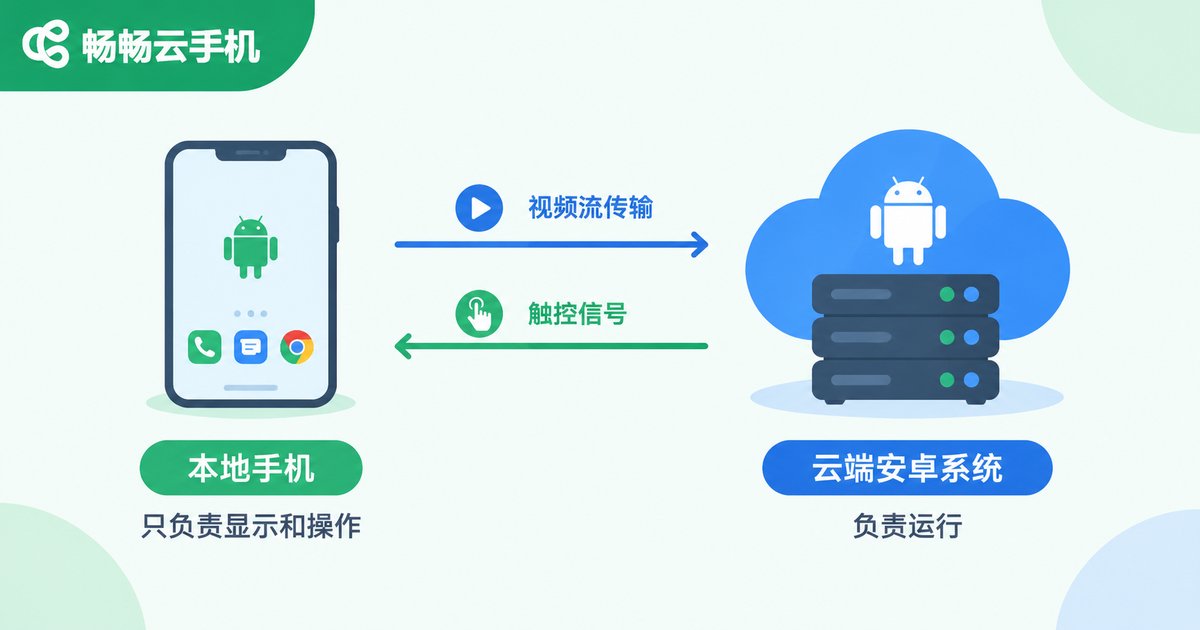
A cloud phone is essentially an Android system running on servers in a data center, so performance comes down to three things:
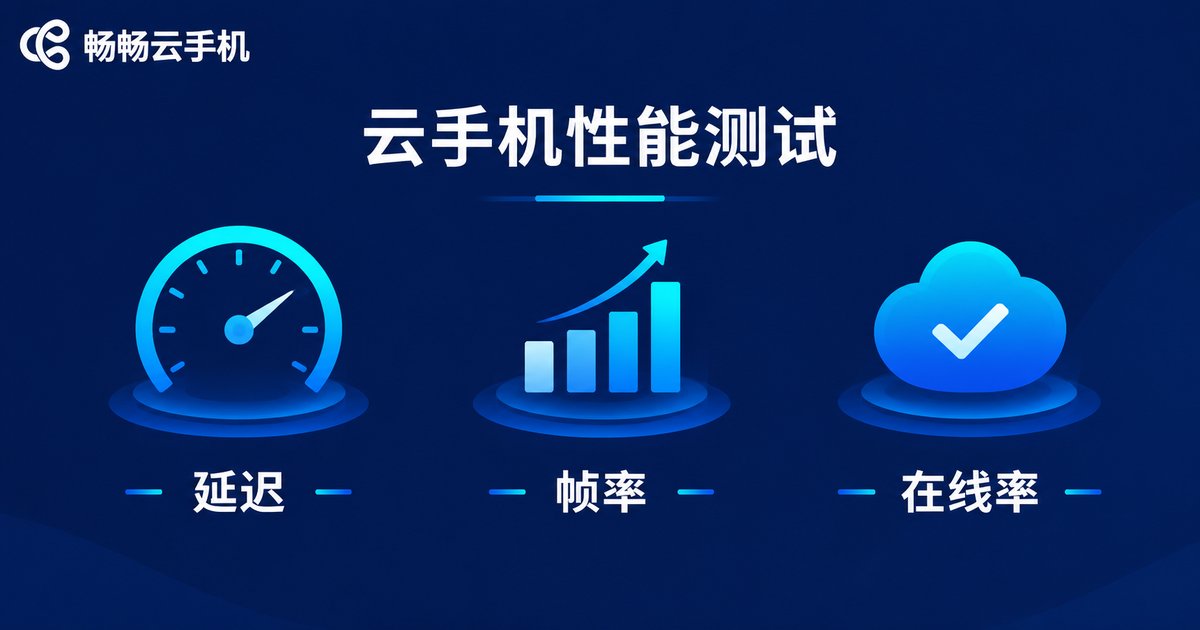
CPU/GPU specs: these decide whether heavy mobile games run well. Most mainstream cloud phones offer 4-core 8GB to 8-core 16GB plans; for demanding 3D titles, start at 4-core 8GB.
Input latency: the delay between your tap and the on-screen response. Good products stay under 50 ms; above 100 ms the lag becomes obvious.
Graphics and frame rate: a stable 60 fps and HD graphics support directly shape the gaming experience.
Criterion 2: Stability and Uptime (about 25%)
What do heavy users fear most? Getting disconnected in the middle of the night. Stability is measured by two indicators:
Uptime rate: the percentage of time a cloud phone runs normally each month. Reliable products reach 99% or higher.
Auto-reconnect: after a network hiccup, does the session recover automatically, or do you have to log into every account again by hand?
The test is unglamorous: run devices continuously for 7 days and log every disconnect and recovery. There is no shortcut — only time will tell.
Criterion 3: Feature Richness (about 20%)
Products sharing the same name can differ enormously in capability. We focus on:
| Feature | Why It Matters |
|---|---|
| Multi-instance and batch control | A must-have for studios and multi-account users; one device does the work of many |
| Root-free environment | Many scripts and tools need root; a root-free setup works out of the box |
| File upload and camera simulation | Affects login and identity verification in certain apps |
| Device model switching | Some apps restrict device models; switching adds a fallback option |
Criterion 4: Price and Value (about 15%)
Cheaper is not automatically better — what matters is what the same budget actually buys. For the same monthly cost, one product may give you a 2-core 4GB instance plus a pile of restrictions, while another offers higher specs and fuller batch-control features. We convert specs and features into a value score instead of comparing price tags alone.
Criterion 5: Support and Responsiveness (about 10%)
A cloud phone is a long-term tool, and how quickly you can reach a human when something breaks matters a lot. We actually submit tickets and questions, then record first-response time and resolution quality. Support that only pastes canned replies, or leaves tickets unanswered for days, loses big points here.
One Table to See How the Top 10 Is Calculated
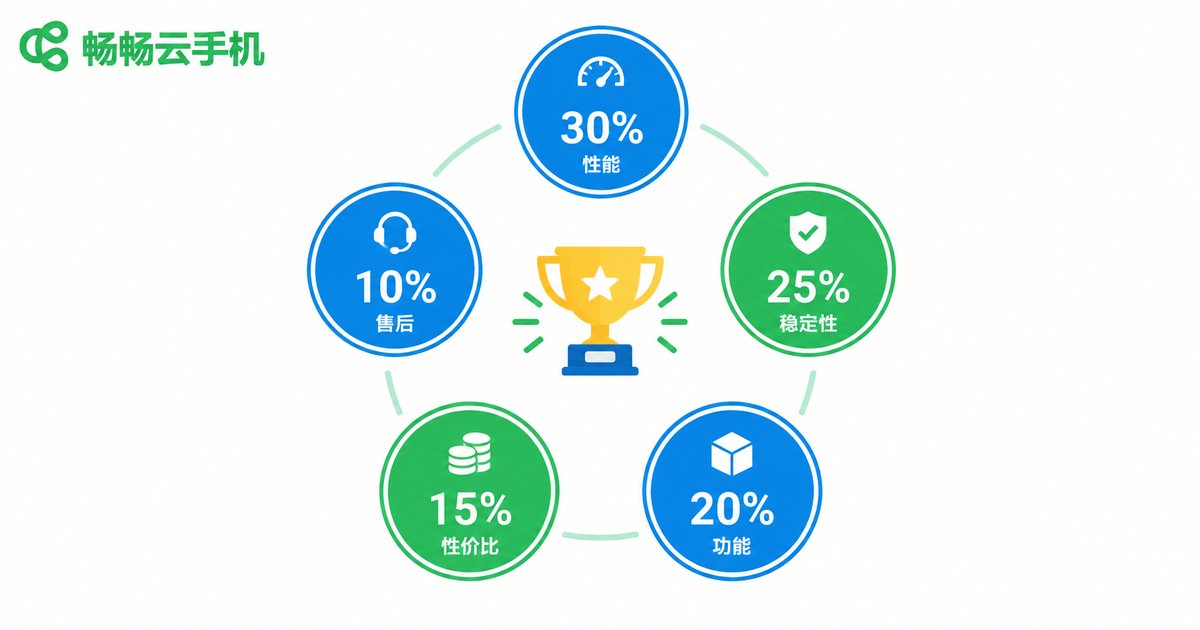
| Dimension | Weight | Key Metrics |
|---|---|---|
| Performance and smoothness | 30% | Specs, latency, frame rate |
| Stability and uptime | 25% | Uptime rate, auto-reconnect |
| Feature richness | 20% | Multi-instance, root-free, model switching |
| Price and value | 15% | Specs per dollar, features per dollar |
| Support and response | 10% | Response time, resolution rate |
The weighted total of these five dimensions produces the final score. No product with an obvious weakness can break into the top 10.
How Does ccloudphone Score Under This Framework?
Measured against these criteria, ccloudphone is a candidate worth putting on your shortlist: a smooth cloud Android environment with responsive controls, multi-instance and batch management for multi-account scenarios, a root-free setup that works out of the box, and flexible plans matched to your actual needs. For exact configurations and current pricing, refer to the information published on the official ccloudphone website.
One final reminder: a ranking is only the starting point — your own testing is the finish line. Take this framework into your trial, and the number one you pick will be the one that truly fits you.
FAQ
Q: Are top-10 cloud phone rankings trustworthy?
Check whether the list discloses its test environment, duration, and scoring weights. Rankings with a published methodology deserve attention; conclusion-only lists should be treated with caution.
Q: Will gaming on a cloud phone lag?
It depends mainly on server specs and network latency. With a 4-core 8GB plan or better and a stable connection, mainstream mobile games run smoothly.
Q: Is a root-free cloud phone enough?
For most users, yes. A root-free environment works out of the box and is safer; only a few special tools require root access.
Q: Which dimension should beginners care about most?
Start with stability and support. Insufficient performance can be fixed by upgrading, but constant disconnects and unreachable support will ruin the experience.