Cloud Phone vs Physical Phone: Script Compatibility Guide
One of the most common questions from users migrating from physical phones: can I just move my scripts over to a cloud phone and have them work?
It sounds like a simple yes-or-no question, but the real answer depends on several factors. Let's break them down one by one.
First, What Is a Cloud Phone, Really?
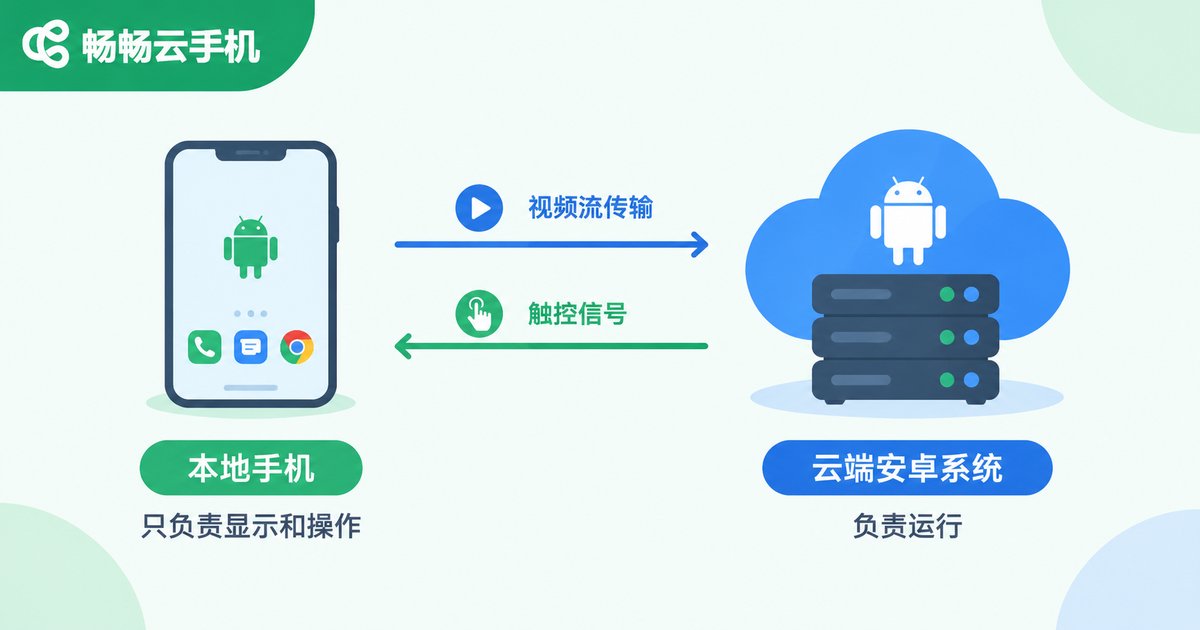
A cloud phone runs standard Android — the same underlying architecture as your physical phone. From that perspective, any script tool that works on Android should theoretically work on a cloud phone.
But "theoretically works" and "actually works well" are separated by a few key differences.
Four Factors That Determine Script Compatibility
Factor 1: Android Version
This is the most common source of compatibility issues. Your physical phone might be running Android 12 or 13, while your cloud phone might be on Android 10 or 11. If a script requires a minimum Android version (say, Android 12+) and your cloud phone doesn't meet it, it won't run.
The reverse can also happen: older scripts that only support lower Android versions may crash on newer cloud phone instances.
CCloudPhone offers multiple Android versions to choose from when creating an instance — flexibility that physical phones simply can't match.
Factor 2: Root Access
Many advanced script tools (especially game assistants and automation tools) require root access. Getting root on a physical phone is tedious and risky.
Cloud phones have a natural advantage here — CCloudPhone offers root-enabled configurations out of the box. Just pick the root-included option when purchasing.
| Script Type | Root Required? | Cloud Phone Support |
|---|---|---|
| Record & replay (macro recorders) | Usually not | Works directly |
| Image recognition | Sometimes | Choose root config |
| Memory modification | Must have root | Choose root config |
| App automation (Auto.js, etc.) | May need accessibility | Accessibility works directly |
Factor 3: Hardware Information Detection
Some scripts check device hardware info (IMEI, model, MAC address) for license verification. When you switch from a physical phone to a cloud phone, all this hardware info changes, and the script may refuse to run on an "unauthorized device."
The fix: contact the script author to rebind your device, or choose a cloud phone solution that supports custom device fingerprints.
Factor 4: Input Method Differences
On a physical phone you use finger touch; on a cloud phone you use mouse clicks. While both simulate touch events at the low level, scripts that use specific touch APIs (multi-touch, pressure sensitivity) may behave differently on a cloud phone.
Most standard scripts (tap, swipe, long-press) work perfectly on cloud phones. Only a small number that rely on specialized touch features may need parameter tweaks.
Real-World Testing: Which Scripts Migrate Seamlessly?
Based on extensive user feedback, here's how popular script tools perform on cloud phones:
- Macro recorders (key recorders): Near-perfect compatibility. Record-and-replay mode runs stably on cloud phones.
- Auto.js: Scripts requiring accessibility permissions work directly. Root-dependent features need a root-enabled config.
- Touch精灵 (TouchSprite): Most features compatible. Some touch-dependent functions may need parameter adjustments.
- Tasker (automation): Fully compatible. Tasker on a cloud phone can even achieve what's impossible on a physical phone — true 24/7 continuous execution.
Unique Advantages of Running Scripts on Cloud Phones
Beyond solving compatibility, migrating scripts to cloud phones brings benefits physical phones can't match:
- Never interrupted: Scripts won't stop due to screen locks, calls, or low battery
- Parallel multi-instance: Run different scripts on multiple cloud phones simultaneously, zero interference
- Consistent performance: No thermal throttling — script execution speed stays rock-steady
- Instant reset: Script crashed? One-click reset the cloud phone, back to a clean environment in seconds
Common Questions
Q: Will scripts run slower on a cloud phone than a physical phone?
No. Cloud phone computing power comes from server CPUs, typically stronger than mid-range phone processors. In real tests, the same script often executes faster on a cloud phone.
Q: What if the script author says "doesn't support cloud phones"?
Most of the time, the author simply hasn't tested on a cloud phone environment — not that it's genuinely incompatible. Try it yourself. Many scripts labeled "not supported" actually work fine. If you do hit a real compatibility issue, send the specific error to the author — many are willing to adapt.
Q: Can I run the same script on multiple cloud phones simultaneously?
Yes — this is one of the core advantages. Each cloud phone runs independently with its own IP and device info, no cross-interference. If you need to run scripts at scale (e.g., multi-account operations), cloud phones are the optimal solution.
The Bottom Line
Can cloud phone scripts and phone scripts be used interchangeably? In most cases, yes — but pay attention to Android version, root access, hardware detection, and input method differences.
If you already have a mature script setup on a physical phone, the migration cost to a cloud phone is usually low — often simpler than reinstalling everything on a new phone. And once migrated, the 24/7 stability, parallel multi-instance, and instant reset capabilities are things a physical phone can never deliver.