How Are Cloud Phones? In-Depth Review of Popular Models
Are Cloud Phones Worth Using? Real Experience First
"How are cloud phones?" "Are they good?" "Will they lag?" — these are questions almost everyone considering cloud phones has asked.
Based on real-world usage, this article provides an in-depth review of cloud phones across configuration, speed, stability, app compatibility, and use cases. No hype, no bias — just honest experiences.
How to Read Cloud Phone Core Configurations
CPU and Memory
A cloud phone's "configuration" determines what it can handle:
| Tier | Use Cases | Experience |
|---|---|---|
| Entry (2-core 2GB) | Idling, light social | Smooth daily use, lags with multi-tasking |
| Standard (4-core 4GB) | Daily use, light gaming | Close to mid-range phones |
| High-end (8-core 8GB+) | Heavy gaming, multi-tasking | Near flagship experience |
Real experience: A 2GB cloud phone runs WeChat, TikTok and other mainstream apps fine, but switching between multiple apps causes noticeable lag. We recommend at least 4-core 4GB as a starting point.
Network Quality
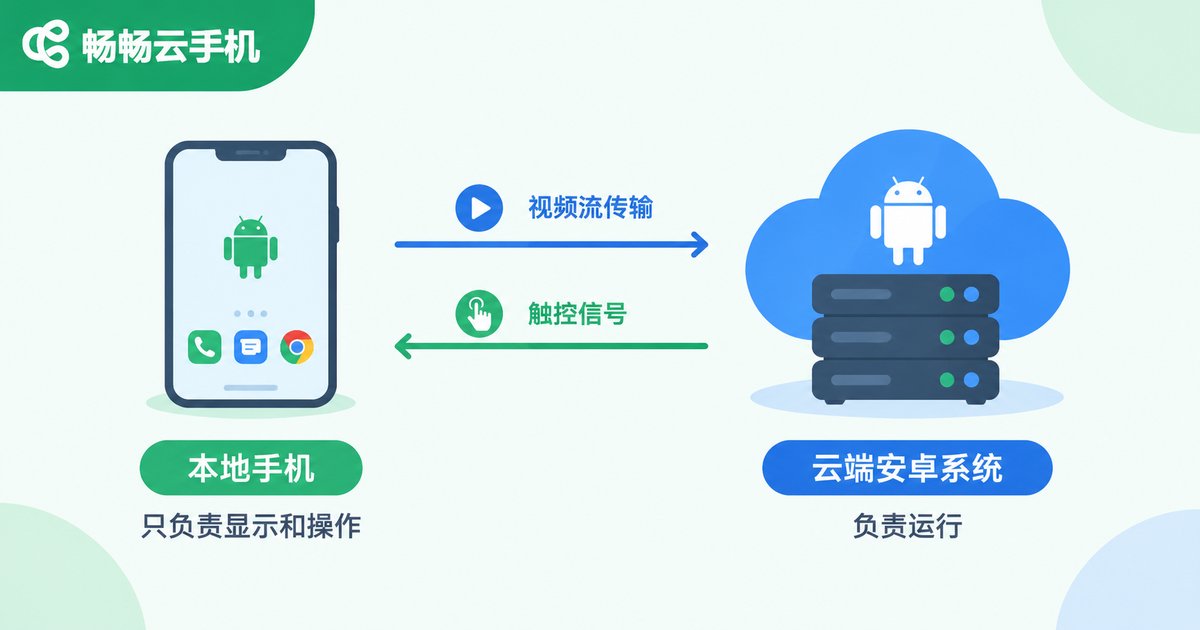
Cloud phone visuals and data travel over the network — network quality directly determines the experience:
- Latency: 30-50ms excellent, 50-100ms acceptable, over 100ms feels delayed
- Bandwidth: At least 5Mbps needed for smooth HD video
- Stability: Network jitter causes frame drops and input delay
Real experience: Choosing the cloud phone node closest to you matters. For example, if you're in southern China, selecting a South China node gives noticeably lower latency than East or North China nodes.
Real-World Usage Testing
App Installation and Running
- Mainstream apps (WeChat, TikTok, Taobao): All install and run normally
- Game apps: Most run, but some heavy 3D games need high-end configurations
- Overseas apps (WhatsApp, TikTok): Installable, but need proxy or dedicated IP
Operation Smoothness
- Tap response: Nearly identical to real phones with normal network
- Swiping: Video playback and page scrolling are smooth
- Typing: No noticeable input delay
System Stability
- Continuous use: No crashes over 48+ hours of continuous operation
- Restart recovery: Data preserved after reboot; apps need re-login
- Error handling: Occasional app freezes resolved by restarting the app
Test Results by Scenario
| Scenario | Entry Config | Standard Config | High-end Config |
|---|---|---|---|
| Social chat | ✅ Smooth | ✅ Smooth | ✅ Smooth |
| Video playback | ✅ Smooth | ✅ Smooth | ✅ Smooth |
| Light gaming | ⚠️ Playable | ✅ Smooth | ✅ Smooth |
| Heavy gaming | ❌ Laggy | ⚠️ Playable | ✅ Smooth |
| Multi-instance idling | ⚠️ Limited | ✅ Smooth | ✅ Smooth |
| Batch operations | ❌ Not recommended | ✅ Usable | ✅ Efficient |
Pros and Cons of Cloud Phones
Pros
- 24/7 online: Never shuts down; perfect for idling and remote operations
- Independent device fingerprints: Each cloud phone is a separate device, ideal for multi-account
- Instant activation: No shipping wait; available immediately after purchase
- Cloud data storage: Device changes don't affect cloud phone data
- Pay-as-you-go: Flexible usage-based billing
Cons
- Network dependent: Unusable without internet
- Input experience: Some operations (camera, QR scanning) less convenient than real phones
- Limited storage: Cloud phone storage is typically smaller than real phones
- Can't fully replace real phones: Hardware features like NFC and Bluetooth unavailable
Purchase Recommendations
- Try before paying: Use free hours or trial plans to test latency and smoothness
- Choose configuration by need: Entry for light use, high-end for heavy use
- Pick the right node: Choose the node closest to you for lower latency
- Consider service guarantees: Choose platforms with 24/7 support and fault compensation
FAQ
Q: Will cloud phones lag?
A: Depends on configuration and network. Standard config (4-core 4GB) with good network provides near mid-range phone experience for daily use. Entry config lags with large apps or games.
Q: What games can cloud phones play?
A: Most mobile games work, but heavy 3D games (Genshin Impact, etc.) need high-end configs. Competitive games (like Honor of Kings) are latency-sensitive.
Q: What's the difference between cloud phones and emulators?
A: Cloud phones run on cloud servers with independent device fingerprints and IPs. Emulators run on local computers and share the same device fingerprint. Cloud phones are better for multi-account operations and long-term idling.
Q: Is cloud phone data secure?
A: Reputable platforms have data encryption and backup mechanisms. Choose trusted platforms and back up important data regularly.
Q: Can I get a refund if unsatisfied?
A: Most platforms offer 7-day no-questions refunds (for unused time). Check the refund policy before purchasing.