
Cloud Phone Procurement Contracts in 2026: Scope of Service and Liability Clauses
Why Cloud Phone Contracts Tend to Hide Risks
A cloud phone is not a physical device you can carry away — it is a combined service of computing power, operating system, network, and operations support. When signing a contract, buyers often focus only on unit price and device count, overlooking the two areas most likely to cause disputes: scope of service and liability arrangements. By the time the business is actually running, they discover the specs do not match, the concurrency limit is too low, no one follows up on failures, and nobody is accountable when data is lost.
Below, we break down what to confirm clause by clause when procuring cloud phones in 2026, following the real order of a contract.
Scope of Service: Turn “Cloud Phone” into an Acceptance Checklist
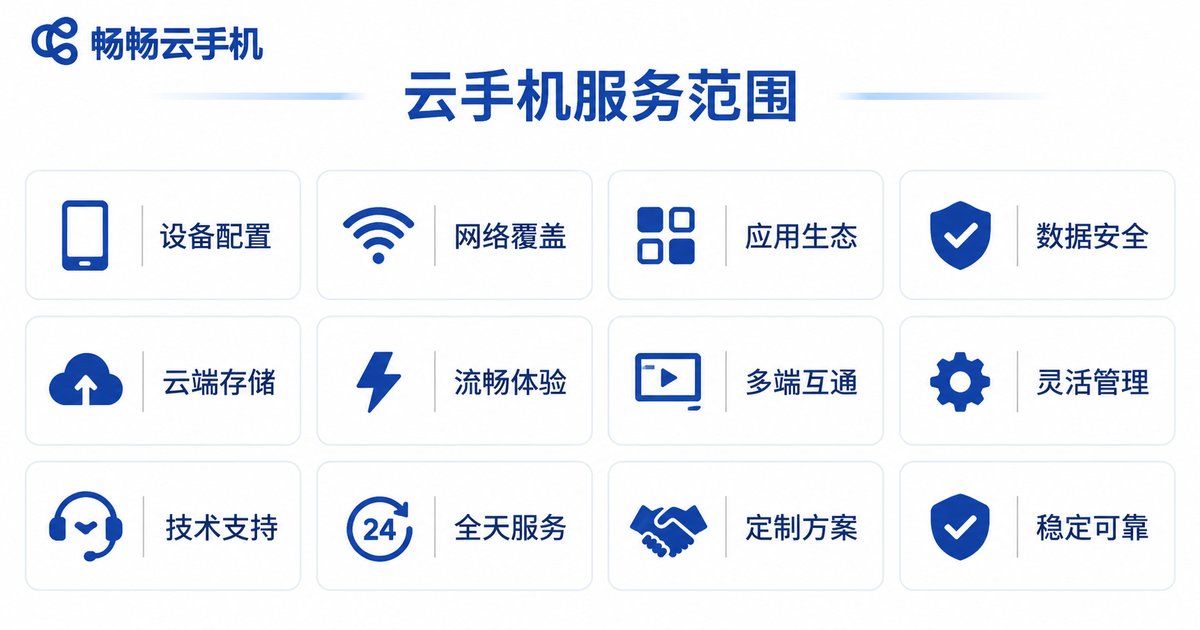
The sentence “provide XX cloud phones” carries almost no information. We recommend breaking the scope of service into quantifiable, verifiable items in an appendix:
- Device specifications: CPU cores, memory, storage, Android version, whether custom models are supported
- Quantity and concurrency: maximum online devices, devices manageable per account, minimum add-on unit
- Network: egress bandwidth, dedicated IP or not, whether traffic is included, cross-region latency
- Functional boundaries: open API, batch control, image cloning, snapshot backup, debugging interfaces
- Operations support: support hours (7×24 or 5×8), response channels, whether managed operations are included
Put all of this into a signed appendix table. The probability of later disputes drops dramatically.
| Clause | Risky wording | Recommended wording |
|---|---|---|
| Quantity & specs | Provides cloud phone service | 100 Android cloud phones, 4 cores / 8GB RAM / 64GB storage, billed monthly |
| Network | Provides network support | Dedicated egress IP per device, 20Mbps downlink per device, traffic included |
| Features | Supports batch operations | Open API provided, including start/stop, screenshot, and batch install endpoints |
| Support | Provides technical support | Ticket support 9:00–21:00 on business days, response within 2 hours |
SLA: How Uptime Is Defined and Calculated
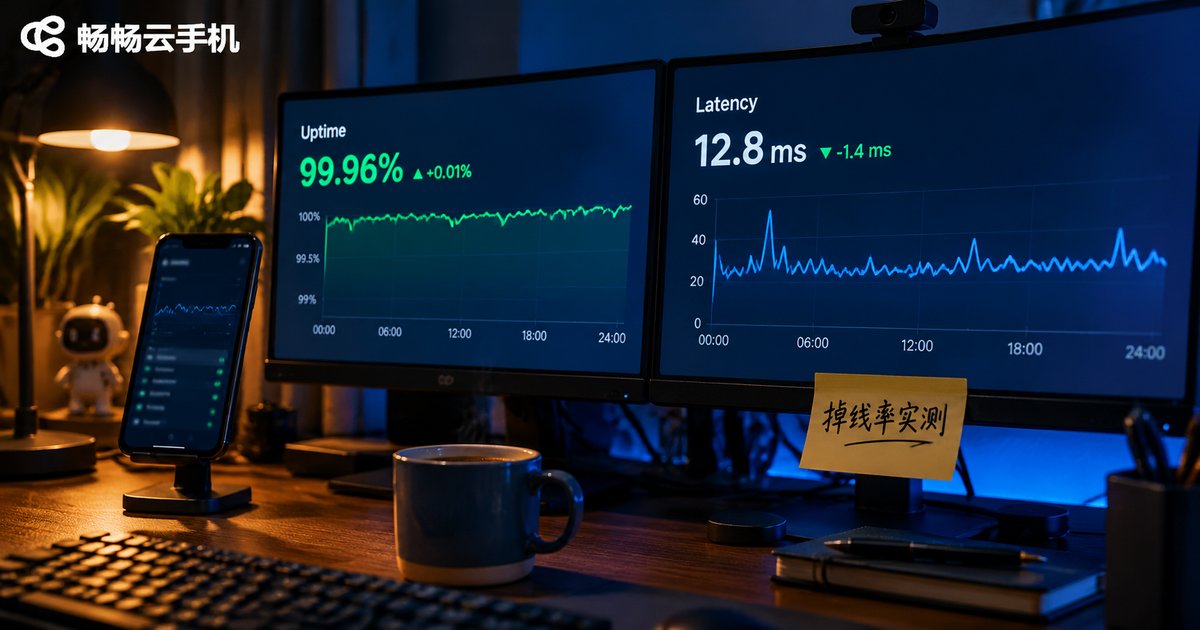
The SLA is the easiest part of a contract to write vaguely. Do not sign just because you see “99.9% availability.” Ask three questions first: What is the basis for measuring availability? When does the clock start on an outage? How is a shortfall compensated?
We recommend specifying in the contract: the measurement period (calendar month), the calculation method (unavailable minutes ÷ total minutes), exclusions (buyer-side operations, force majeure, public network issues), and compensation (service time credited based on outage duration). Also agree that if a single outage or monthly outage exceeds a certain duration, the buyer has the right to terminate or receive a fee reduction — not just an apology.
Liability: What Belongs to the Provider and What Belongs to the Buyer
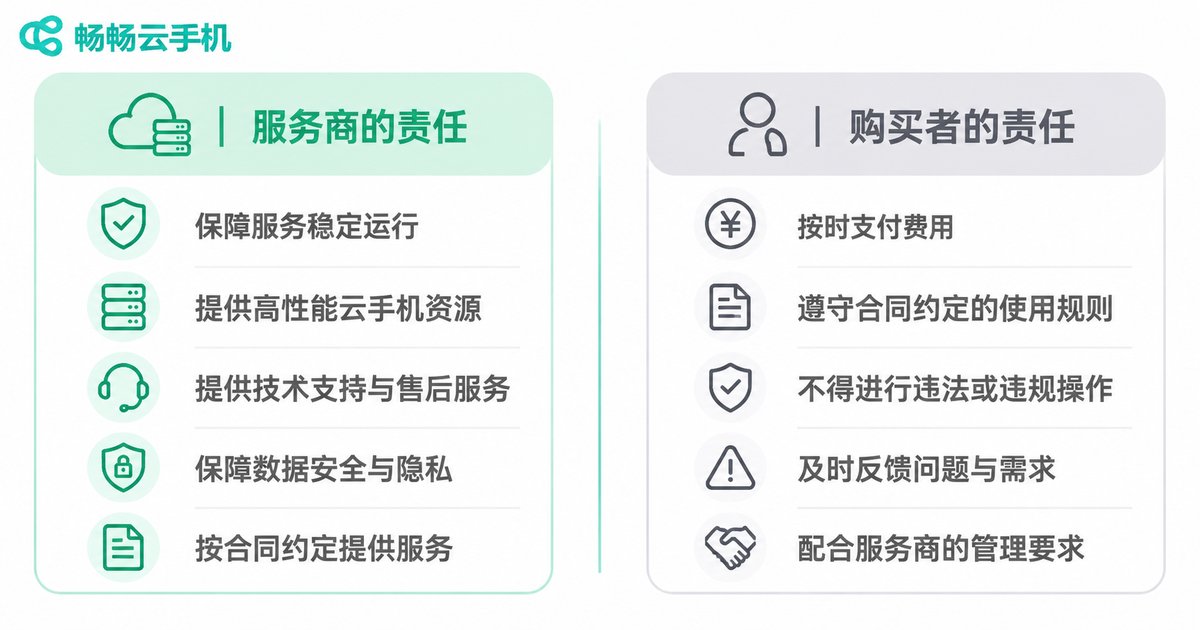
Cloud phone usage often involves accounts, content, and data. Once liability boundaries blur, problems turn into mutual finger-pointing. Spell out three blocks in the contract:
Provider responsibilities: device availability and platform stability, reliability of data storage, obligation to notify of failures, obligation to give advance notice of system upgrades.
Buyer responsibilities: real-name account registration and compliant use, legality of uploaded content, backup of your own business data, safeguarding of account credentials.
Grey areas to agree on jointly: how business interruptions caused by platform upgrades are compensated; how bans caused by non-compliant operations are handled; how long data is retained after termination and how it is exported and permanently deleted. Once these are clear, the contract is genuinely complete.
Billing and Settlement: Three Clauses That Prevent Later Price Increases
First, specify the billing unit and settlement cycle (per device/day, per month, or per hour), and clarify whether idle devices are billed. Second, define the price adjustment mechanism: how many days of written notice are required before renewal pricing changes, and whether the buyer can renew at the original price during the notice period. Third, clarify rules for suspension, cancellation, and overage usage, so you never receive a surprise invoice for “idle devices still charged” or “traffic overage doubled.”
Acceptance, Trial, and Exit Mechanisms
Run a small-scale trial before signing, and write the trial into the contract: number of trial devices, trial duration, rights and obligations of both parties during the trial, and how already-incurred fees are handled if the trial fails. The exit mechanism matters just as much: the data export window if the contract is not renewed, the shutdown schedule for devices and images, and how unused balances are handled. A good cloud phone procurement contract explains not only how the relationship starts, but also how it ends.
Choosing a Provider: Anchor Clauses to Verifiable Capabilities
No matter how well-written the clauses are, they need real technical capability behind them. When evaluating providers, verify each item in the scope of service: does it support the Android versions and device specs your business needs, does it offer an open API and a batch management console, is there a clear operations response channel, and can it reproduce your real business scenario during a trial?
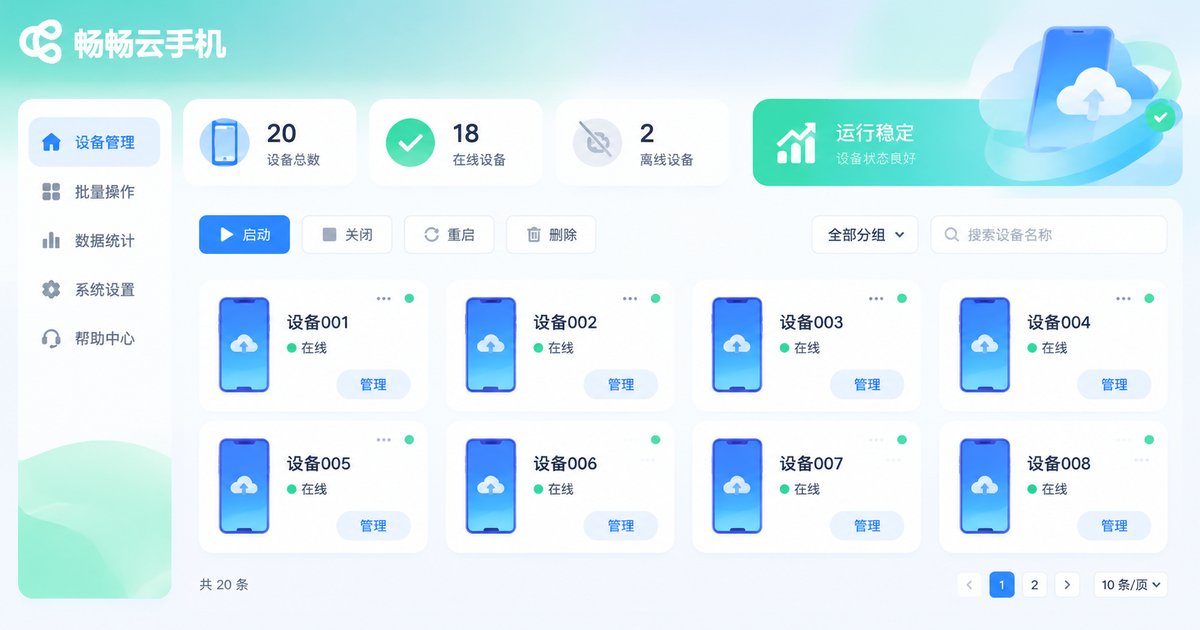
CcloudPhone (ccloudphone) provides real Android cloud phones running in the cloud. Users operate devices remotely through a web browser or client, with support for batch management and API integration. During enterprise procurement, you can confirm device specifications, concurrency scale, and service response details item by item with its business team, making it easier to write these into the contract appendix so the scope of service is genuinely acceptable and verifiable.
Frequently Asked Questions
Q: What is the minimum scope of service a cloud phone contract should specify?
At least four items: device specifications (CPU, memory, storage, Android version), quantity and concurrency limits, network and IP arrangements, and functional boundaries plus support hours. Missing any one of these invites later disputes.
Q: How can I verify the availability percentage in an SLA?
Ask the provider for queryable status records or monthly service reports, and define the measurement method and exclusions in the contract. A percentage alone means little; a method you can reconcile against means everything.
Q: Who should bear data security responsibility?
Usually both sides share it: the provider handles platform-side storage reliability and access control, while the buyer handles credential protection, content compliance, and backup of critical business data. Specify backup frequency and data export methods in the contract.
Q: What happens to data on the cloud phones after the contract ends?
Agree in advance on the retention period, export format, and deletion confirmation process. For scenarios involving business records, export proactively before expiry and obtain written confirmation that the provider has completed data erasure.
Q: Can we run a trial before signing the formal contract?
Yes, and we recommend it. Write the trial device count, duration, acceptance criteria, and fee handling for a failed trial into the contract. Running your real business scenario once is more reliable than any spec sheet.