
No Sound? Don't Rush to Reinstall\n\nYou open ChangChang Cloud Phone ready to watch videos or play games, and there's zero sound — frustrating, to say the least. But "no sound" can stem from seven or eight different causes, and blindly reinstalling the client usually wastes time without fixing anything.\n\nAudio in a cloud phone travels a more complex path than you'd expect: cloud Android system generates audio → audio encoding/compression → network transmission → local decoding → audio output device. A failure at any node silences everything. The core troubleshooting approach: work from cloud to local, eliminating each segment in turn.\n\n## Audio Pipeline Overview\n\n| Stage | Possible Failure | Troubleshooting | Difficulty |\n|:---:|:---|:---|:---:|\n| Cloud system volume | Media volume muted or at zero | Press volume keys inside cloud phone, check media volume | ★☆☆ |\n| Cloud audio service | AudioFlinger crash or occupied | Restart cloud phone instance | ★★☆ |\n| Encoding layer | Audio codec incompatible | Switch audio codec (AAC/Opus) | ★★☆ |\n| Network | Bandwidth shortage causing audio packet loss | Test latency and packet loss | ★★☆ |\n| Local decoding | Receiver doesn't support current audio format | Update client or switch codec | ★★☆ |\n| Local output | Bluetooth device hijacking audio channel | Disconnect Bluetooth, test with speakers | ★☆☆ |\n| System permissions | Client not granted audio permissions | Check system audio permission settings | ★☆☆ |\n\n## Layer 1: Cloud System Settings (30-Second Fix)\n\nMost "no sound" issues actually originate from the cloud Android system's own volume settings. Cloud phones, like physical phones, have independent media volume, call volume, and alarm volume. Many users press their local device's volume keys while operating the cloud phone — that adjusts the local volume, not the cloud volume.\n\nCorrect steps:\n\n1. Inside the ChangChang Cloud Phone screen, tap the volume up/down buttons (if the client has virtual volume keys)\n2. Or go to the cloud phone's "Settings → Sound" and manually drag the media volume slider above 80%\n3. Confirm "Do Not Disturb" mode is off — it silences all media audio\n\n> Common pitfall: Some users install silent-mode apps or automation scripts in the cloud phone that automatically set media volume to 0. Check if you've installed Tasker, MacroDroid, or similar automation tools.\n\n## Layer 2: Client Audio Channel Settings\n\nThe ChangChang Cloud Phone client itself has audio output channel options. If misconfigured, sound goes to the wrong device.\n\nGo to client "Settings → Audio" and check these options:\n\n| Setting | Description | Recommended |\n|:---|:---|:---|\n| Audio output device | Where sound comes from | Speakers / current default device |\n| Audio codec | Affects compatibility and latency | AAC (good compatibility) / Opus (low latency) |\n| Sample rate | Affects audio quality | 44100Hz (standard) / 48000Hz (HD) |\n| Audio channels | Mono / stereo | Stereo |\n| Echo cancellation | Prevents call echo | Off for gaming, on for calls |\n\nKey check: If your computer has Bluetooth headphones connected but the client audio output is set to speakers, sound comes from the speakers instead of the headphones — you think there's "no sound" when it's actually going somewhere else.\n\n## Layer 3: Bluetooth and Peripheral Conflicts\n\nBluetooth devices are a major source of audio issues. These scenarios are extremely common:\n\n- Bluetooth headphones disconnected but system still thinks they're connected: Audio routed to a nonexistent device\n- Multiple Bluetooth devices fighting for the audio channel: e.g., headphones and speaker connected simultaneously\n- Bluetooth protocol incompatibility: Some Bluetooth devices don't support the codec used by the cloud phone\n\nTroubleshooting steps:\n\n1. Turn off Bluetooth on your local device\n2. Confirm sound plays normally from speakers\n3. If it works, the issue is with the Bluetooth device\n4. Re-pair the Bluetooth device, or switch codec to AAC\n\n## Layer 4: Codec Format and Network\n\nAudio, like video, must be encoded before transmission. ChangChang Cloud Phone supports AAC and Opus codecs. AAC has the best compatibility — virtually all devices can decode it. Opus has lower latency but some older devices may not support it.\n\nHow to switch: Client "Settings → Audio → Codec Format", toggle between AAC and Opus to see which restores sound.\n\nIf the codec isn't the issue, network packet loss may be dropping audio data. Audio is more sensitive to packet loss than video — losing a video frame just causes a brief stutter, but losing audio packets causes complete sound drops. Test with:\n\n
Operations · Engineering · Trends
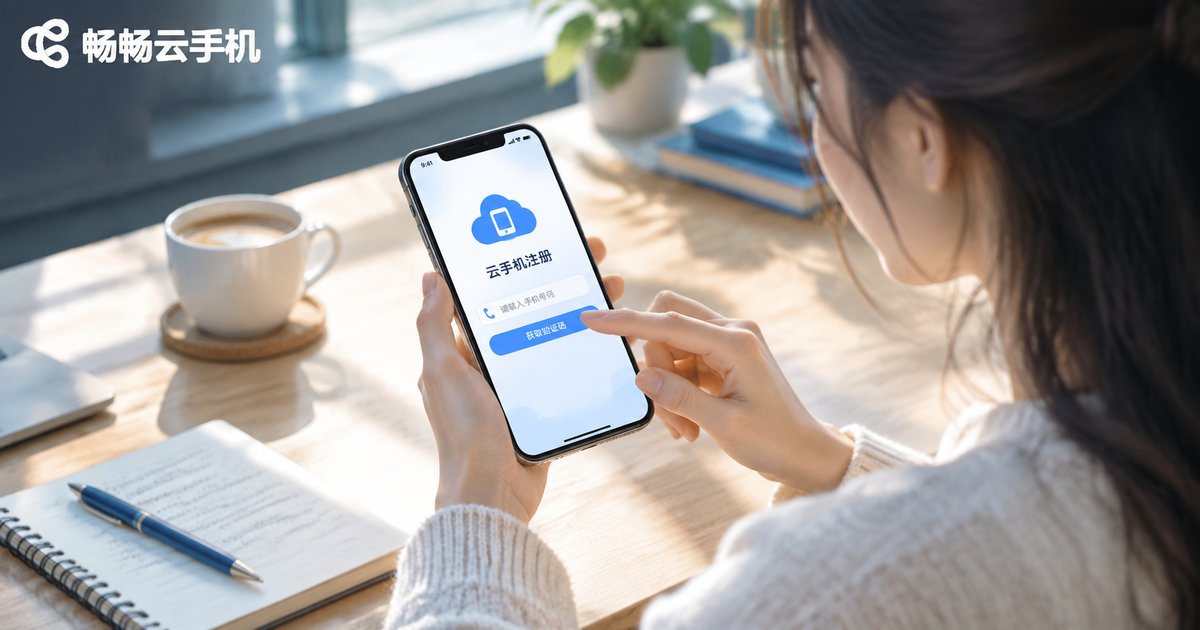
How to Register a Cloud Phone Account? Registration Process and Precautions Explained
Wondering how to create a cloud phone account? This guide walks you through the entire registration process step by step, from preparing a phone number and a stable network to receiving the SMS verification code and setting a secure password. It also covers essential precautions, such as downloading the app from official channels, protecting your verification code, and following the one-account-per-number rule. A troubleshooting table explains what to do when the code never arrives or the page fails to load. Using ChangChang Cloud Phone (ccloudphone) as an example, this article helps you finish registration in a couple of minutes and start your cloud phone experience with confidence.
Read more
Carrier Cloud Phones vs Third-Party Cloud Phones: How to Choose
Carrier cloud phones and third-party cloud phones may look similar, but they serve very different purposes. Carrier services are add-ons bundled with telecom plans — trustworthy and easy to bill, yet basic in features. Third-party platforms are professional productivity tools offering batch multi-instance management, group control, game idling, and app hosting. This article breaks down the core differences in a single comparison table and helps you decide with three key questions: choose a carrier cloud phone for light backup needs, and choose a professional third-party service such as ChangChang Cloud Phone (ccloudphone) for game idling, multi-account operations, and studio-scale workloads.
Read more
Are Cloud Phones Expensive? Why Some Cost Tens While Others Cost Hundreds per Month
Cloud phone plans can cost anywhere from a few tens to several hundred yuan per month, and the gap comes down to four things: hardware tier, number of instances, dedicated versus shared resources, and value-added features such as group control and multi-instance management. This guide breaks down how cloud phone pricing actually works, compares what budget and premium tiers can realistically do, and shares practical tips on matching a plan to your real needs—start small, trial first, and upgrade on demand—so you pay for performance you will actually use instead of specs that only look good on paper.
Read more