How to Choose the Most Cost-Effective Cloud Phone Plan? Pay-Per-Day vs Long-Term Subscription Cost Comparison
Why Your Plan Choice Directly Impacts Your Wallet
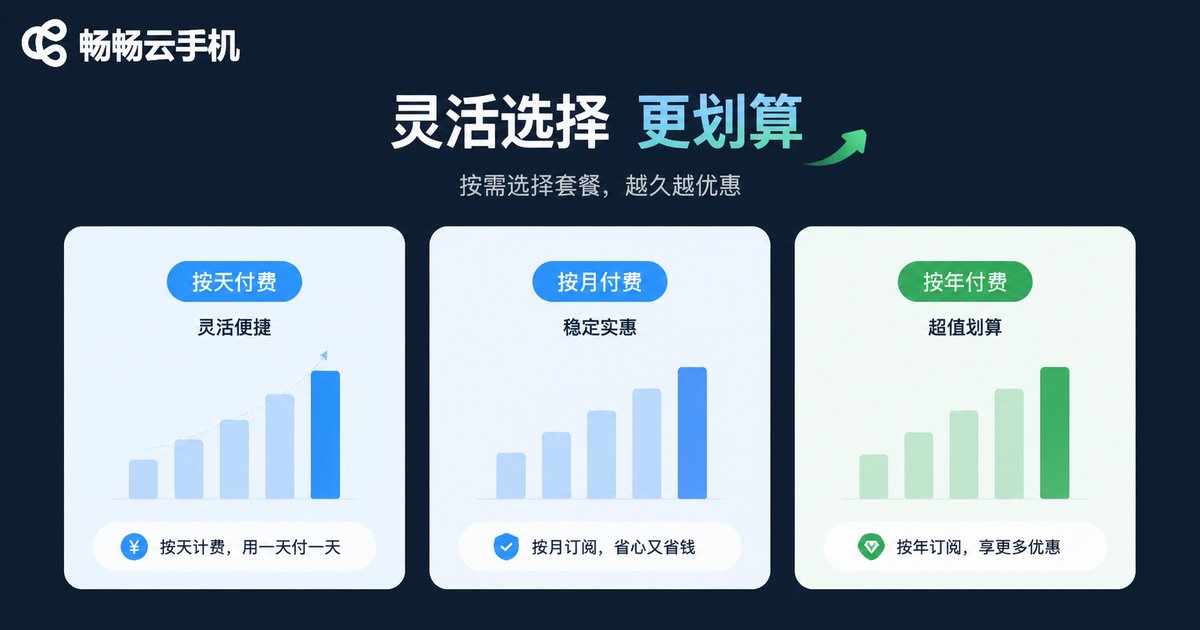
When people first try cloud phones, they often focus on features and overlook how billing models affect long-term costs. In reality, choosing the wrong plan can cost you 30% or more in extra fees. Cloud phone billing mainly falls into two models: pay-per-day and long-term subscription (monthly/quarterly/annual), each suited for different scenarios.
The key is: your usage frequency and session length determine which model is more economical. Let's break it down.
Pay-Per-Day: Flexible but Higher Unit Price
The biggest advantage of pay-per-day billing is flexibility—you pay for what you use, and you're not charged when idle. It's ideal for:
- Occasional multi-account testing
- Short-term projects that end quickly
- Trial phases when you're unsure about long-term needs
However, the daily rate is typically much higher than the equivalent monthly rate. If you use it every day for a full month, pay-per-day can cost 40%-60% more than a monthly plan.
Long-Term Subscription: Lower Unit Price but Sunk Cost Risk
The core advantage of long-term subscriptions (monthly, quarterly, annual) is a lower unit price. The longer the subscription period, the cheaper the daily rate. With ccloudphone, for example, the daily cost of a monthly plan is about 30% lower than pay-per-day, and an annual plan can bring the daily cost down to roughly half of the pay-per-day rate.
But long-term subscriptions carry a risk: if you stop using it midway, the prepaid fees are non-refundable. Therefore, long-term subscriptions are better suited for:
- Daily automated task running
- Long-term multi-account management
- Continuous game assistance and automation scripts
Cost Comparison Across Usage Scenarios
To make the difference more tangible, let's use a concrete example. Assume pay-per-day costs $0.70/day, a monthly plan is $14/month, and an annual plan is $84/year:
| Usage Scenario | Pay-Per-Day | Monthly | Annual |
|---|---|---|---|
| 2 days/week (~8 days/month) | $5.60/mo | $14/mo | $7/mo |
| 5 days/week (~20 days/month) | $14/mo | $14/mo | $7/mo |
| Daily use (30 days/month) | $21/mo | $14/mo | $7/mo |
From the table: if you use it more than 20 days per month, monthly beats pay-per-day; if you use it more than 10 days per month, annual beats pay-per-day.
Three Steps to Choose the Most Cost-Effective Plan
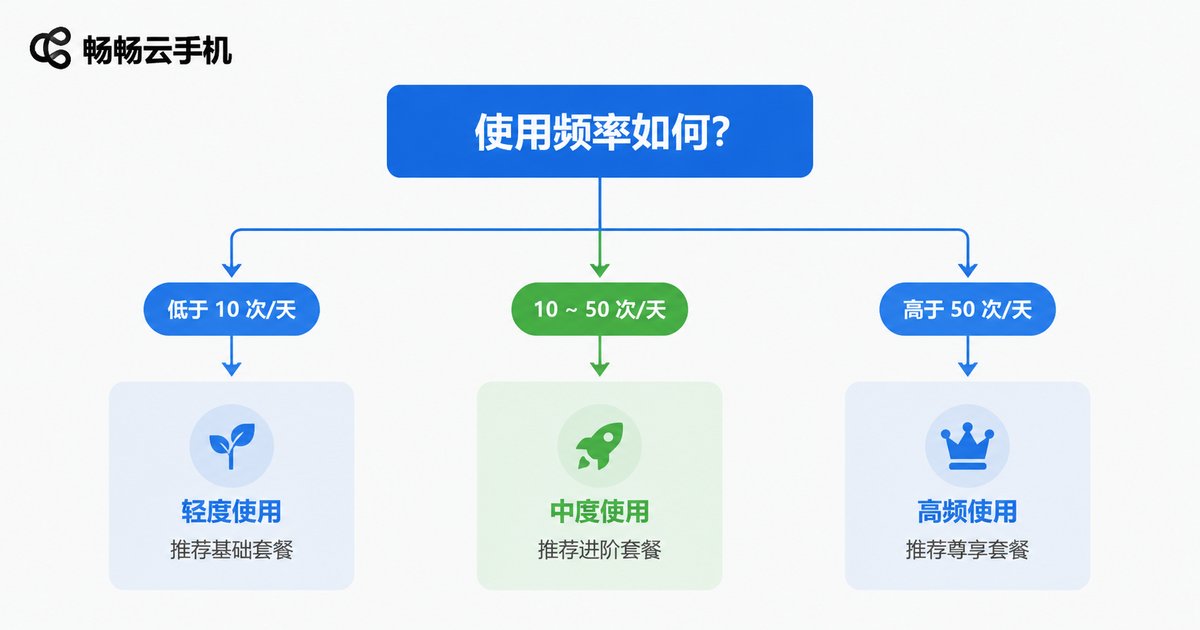
Step 1: Assess your usage frequency. Count how many days per month you actually need a cloud phone. Under 10 days: pay-per-day is cheapest; 10-20 days: monthly is reasonable; over 20 days: go straight to annual.
Step 2: Assess session length. If you only use it 1-2 hours at a time, pay-per-day may be more flexible. If you need 24/7 uptime, long-term subscriptions offer much better value.
Step 3: Consider future demand changes. If you expect usage to increase in coming months, locking in a long-term plan early secures a lower daily rate. ccloudphone offers multiple subscription periods to match your needs.
FAQ
Q: Can I switch between pay-per-day and monthly anytime?
Yes. ccloudphone allows you to switch billing models anytime—switch to monthly after your pay-per-day session ends, or switch back to pay-per-day after your monthly plan expires.
Q: What if I don't want to use my annual plan midway?
Annual plans offer long-term discounts. We recommend trying a monthly plan first to confirm your long-term needs before upgrading to annual, to avoid waste.
Q: Can multiple cloud phones share one plan?
Each cloud phone is billed independently. For multiple devices, choose the appropriate plan for each based on its usage frequency to keep overall costs under control.
Q: I'm a first-time user—which billing model do you recommend?
Start with pay-per-day for 3-5 days to familiarize yourself with features and your usage patterns, then decide whether to upgrade to a monthly or annual plan.