Cloud Phones for iOS Operations? Forget It! Native Android is the Right Way
Why Cloud Phones Are Not Suitable for iOS Operations?
Many companies consider using cloud phones to reduce hardware costs when promoting apps, publishing games, or running matrix accounts. However, some mistakenly believe that cloud phones can perfectly support iOS operations. In fact, due to Apple's closed ecosystem, iOS cloud phones have insurmountable obstacles in commercial operations.
iOS strictly restricts background processes and system-level API calls, meaning that achieving large-scale automated script execution and cluster control on iOS devices is almost impossible. Additionally, non-jailbroken iOS devices cannot be deeply customized, and jailbreaking not only violates Apple's user agreement but also makes the device extremely unstable, failing to meet 24/7 commercial operation needs.
Four Advantages of Native Android Cloud Phones
Unlike iOS, the Android system, with its open-source nature, has become the best carrier for cloud phone technology. Native Android cloud phones show incomparable advantages in operational scenarios:
1. Deep Customization & Root Access: The native Android system allows Root access, enabling operators to easily modify device information (like IMEI, MAC addresses), pre-install apps, and even flash custom ROMs to meet complex anti-association needs.
2. Seamless Integration with Automation Scripts: Using Accessibility Services or Xposed frameworks, Android cloud phones can perfectly run various automation scripts for batch registration, auto check-ins, and game AFK, greatly improving operational efficiency.
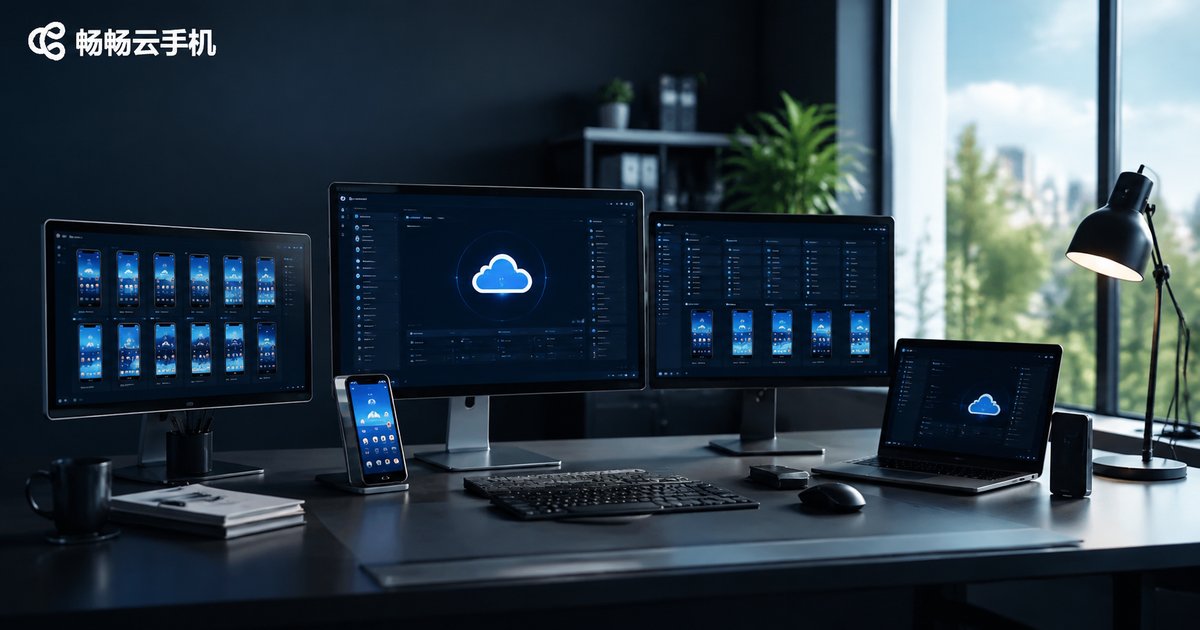
3. True Multi-Instance & Cluster Control: The native Android environment supports app multi-instance. Through the cloud control platform, one computer can control hundreds or thousands of cloud phones, achieving matrix operations.
4. High Cost-Performance & Elastic Scaling: Compared to expensive Apple real devices, Android cloud phones are extremely cost-effective and support adding or reducing instances on-demand to easily handle business peaks.
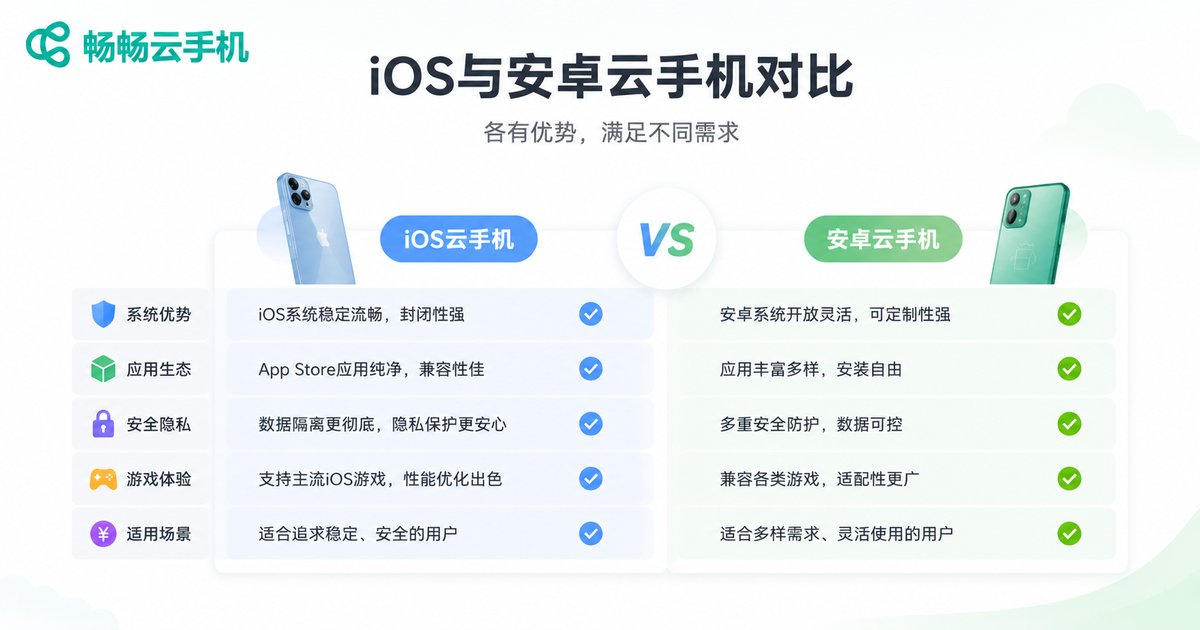
| Comparison Dimension | iOS Devices/Cloud Phones | Native Android Cloud Phones |
|---|---|---|
| System Ecosystem | Closed, heavily restricted | Open-source, highly free |
| Automation Support | Poor, easy to get banned | Excellent, rich interfaces |
| Cluster Control | Limited | Supports large-scale control |
| Hardware Cost | High | Low, elastic scaling |
ccloudphone: The Best Choice for Native Android Operations
Since native Android is the right path, choosing a reliable cloud phone service becomes crucial. ccloudphone provides a one-stop cloud operation solution for enterprises and individual users with its pure native Android underlying architecture.
ccloudphone not only provides a clean Android running environment, ensuring the ultimate stability of script execution, but also supports independent IP allocation and one-click device parameter modification, perfectly solving account association issues. Whether for app testing, game multi-instance AFK, or social media matrix operations, ccloudphone can provide a smooth experience comparable to real devices at extremely low hardware costs, making it your right-hand assistant for reducing costs and increasing efficiency.
Frequently Asked Questions
Q: Why is it not recommended to use iOS cloud phones for operations?
A: The iOS system is closed, does not support Root or deep customization, and makes it difficult to achieve automated scripts and cluster control. It is also expensive and unsuitable for large-scale commercial operations.
Q: What operational scenarios is ccloudphone suitable for?
A: ccloudphone is widely used in app matrix promotion, game AFK farming, cross-border e-commerce multi-account management, social media marketing, and other scenarios requiring multi-instance and automation.
Q: Does ccloudphone run a native Android system?
A: Yes, ccloudphone uses a native Android underlying architecture with excellent compatibility, capable of perfectly running the vast majority of apps and scripts on the market.