Does Cloud Phone Support Mainstream Mobile OS? A Cross-Platform Cloud Test
"I have an iPhone — can I use a cloud phone?" "Can a cloud phone run iOS apps?" These are the two most common beginner questions, and they actually point to two different concepts: what OS the cloud instance runs versus whether your own device can connect to it. Confusing the two is the root of most misunderstandings.
Here's the short answer: ChangChang Cloud Phone instances run Android, while the client apps cover virtually every mainstream platform — Android, iOS, Windows, macOS, and even a plain web browser can connect. Below are the real test results.
1. First, Untangle the Two "System" Layers
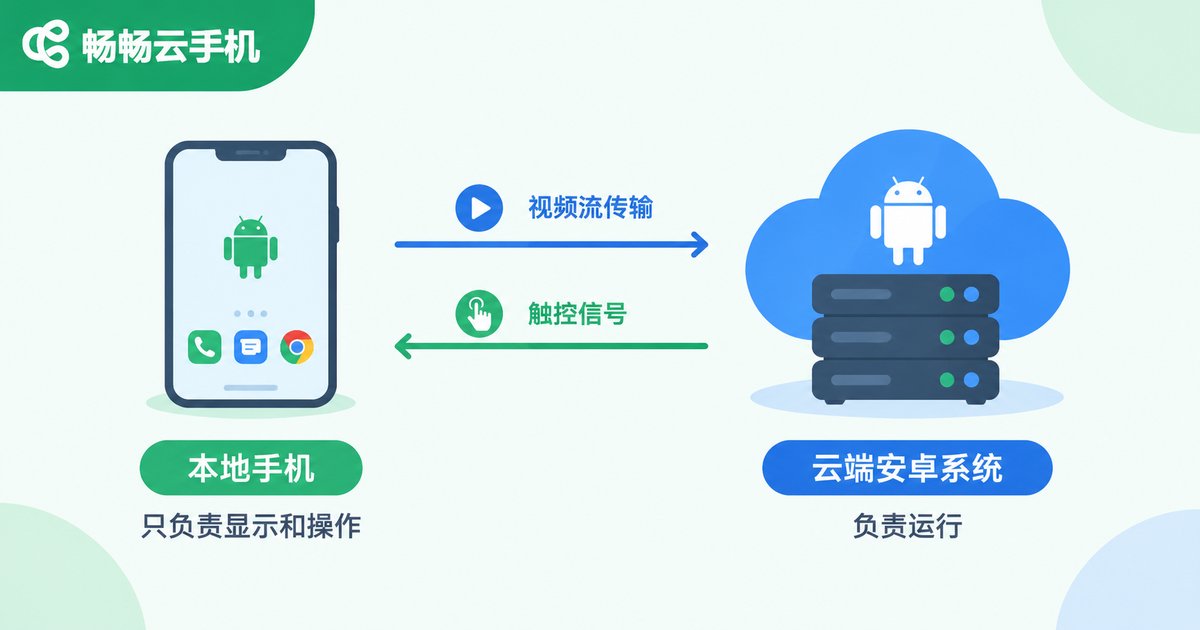
A cloud phone involves two operating systems — don't mix them up:
| Layer | What It Is | With ChangChang Cloud Phone |
|---|---|---|
| Cloud instance OS | The operating system running inside the cloud phone itself | Native Android (multiple versions available) |
| Client OS | The system of the device you use to control the cloud phone | Android / iOS / Windows / macOS / Web |
In other words, any device can connect to a cloud phone, but the cloud phone itself runs Android. "Running iOS apps in the cloud" is impossible across the entire industry today — that's a consequence of Apple's closed ecosystem policy, not any single vendor's technical limitation.
2. Hands-On Test Across Five Client Platforms
Using the same account and the same cloud instance, we connected from five environments and recorded the experience:
| Platform | Connection | Latency (same Wi-Fi) | Max Quality | Feature Completeness |
|---|---|---|---|---|
| Android client | Native app | ~35ms | 1080P HD | ★★★★★ Full features |
| iOS client | Native app | ~40ms | 1080P HD | ★★★★★ Full features |
| Windows client | Desktop app | ~30ms | 2K optional | ★★★★★ Key/mouse mapping |
| macOS client | Desktop app | ~32ms | 2K optional | ★★★★★ Key/mouse mapping |
| Web version | Direct in browser | ~55ms | 1080P | ★★★★☆ No install; a few advanced features need the app |
Details worth noting:
- Latency differences mainly come from decoding. Native clients use hardware decoding; the web version relies on the browser's software decoder, so it's slightly slower — perfectly fine for AFK gaming and light operations.
- Desktop clients shine at multi-instance management. The Windows/macOS apps support tiled windows, so monitoring a dozen instances at once stays manageable.
- The web version is truly install-free. Borrowing someone's computer or checking in from an internet café? Open a browser and you're in. Log out and nothing is left behind.
3. The Three Questions iOS Users Ask Most
"Does controlling an Android cloud phone from an iPhone feel clunky?" Not at all. You're watching a real-time stream of the cloud phone's screen, and touch gestures are mapped across completely. The Android back and multitask buttons have counterparts in the client toolbar — the logic matches using a physical Android phone.
"Can I transfer files into the cloud phone?" Yes. The iOS client uploads images and APKs straight from Photos or the Files app, and exporting back works too.
"What happens when iOS kills the app in the background?" This is the key insight: the cloud phone runs in the cloud, not on your device. Even if you swipe the client away or power off your phone, the instance stays online 24/7. Reopen the client and the screen picks up exactly where you left off — that's the core advantage over local emulators.
4. Why Cloud Phones Don't Run iOS
Many iPhone users want a "cloud iPhone," so a dose of realism is needed:
- Apple's licensing restrictions: iOS is only licensed to run on Apple's own hardware. Any third-party cloud virtualization violates the software license agreement.
- Hardware binding: iOS is deeply tied to Apple's A-series chips and Secure Enclave — generic servers simply can't boot it.
- Industry reality: services claiming to offer "iOS cloud phones" are either remote rentals of physical iPhones (expensive and scarce) or outright scams.
The pragmatic approach: use your iPhone to control an Android cloud phone. For the vast majority of scenarios — AFK gaming, app multi-opening, social media management — the Android app ecosystem covers everything you need.
5. Cross-Platform Data Sync Test
ChangChang Cloud Phone stores instance data in the cloud, so seamless hand-off between devices comes naturally. Our test flow:
- Installed a game on the instance via the Windows client and started AFK farming;
- Switched to the iPhone client while out — the game was still running, screen state identical;
- Checked again in the evening via the web version — tasks progressing normally.
Throughout, the instance never rebooted and the app never interrupted. This "switch devices freely, the cloud phone never sleeps" experience is something a local phone simply cannot deliver.
6. Which Client for Which User
| Use Case | Recommended Client | Why |
|---|---|---|
| AFK gaming, checking in anytime | Mobile app (Android/iOS) | Always with you, timely push notifications |
| Studio-scale multi-opening | Windows/macOS client | Key mapping + multi-window efficiency |
| Quick emergency check | Web version | No install, use and go |
| Streaming/recording the instance | Desktop client | Higher quality ceiling, capturable by OBS |
FAQ
Q1: Are there cloud phones running iOS? No. Due to Apple's licensing policy, every cloud phone instance in the industry runs Android. ChangChang Cloud Phone offers multiple Android versions, covering the vast majority of app requirements.
Q2: Does using a cloud phone drain my iPhone's battery? No. The client only decodes a video stream — power draw is comparable to watching videos. In our test, one hour of viewing an instance on an iPhone used about 8% battery, far less than gaming locally.
Q3: Is the web version safe? Can I use it on a public computer? Connections are encrypted, and credentials expire when the browser closes. Still, on shared devices, make sure to fully log out and use a private window — basic security hygiene.
Q4: Is the cloud phone I see on Android the same one as on iOS? Yes, exactly the same. Instances are bound to your account, not your device. Log in on any platform and you'll see the same instances with identical data.
Q5: Can I use a TV or tablet? Android tablets run the client directly; iPads use the iOS version; any large screen with a browser can use the web version. The bigger display actually makes the cloud phone clearer.
Wrapping Up
On cross-platform support, ChangChang Cloud Phone's answer is: one unified Android instance in the cloud, with entry points on every platform. The device in your hand is just the "remote control" and "display" — the real phone always lives in the cloud. Don't overthink client choice: mobile app for daily use, desktop for batch management, web for emergencies. Combined, they cover every scenario.