Are Basic Cloud Phone Plans Enough for 3D Games? Real Performance Across Configurations
The Short Answer: Can a Basic Plan Run 3D Games?
It is the first question most first-time cloud phone users ask: is a basic plan actually good enough for 3D games? The honest answer is — yes, but it depends on the game and the visual quality you expect. Lighter 3D titles such as MOBAs and card games run comfortably on a basic plan, while open-world and high-fidelity racing games — true hardware killers — will push it to its limits. Below, we walk through real test results for every configuration tier.
Four Specs That Decide Cloud Phone Gaming Performance
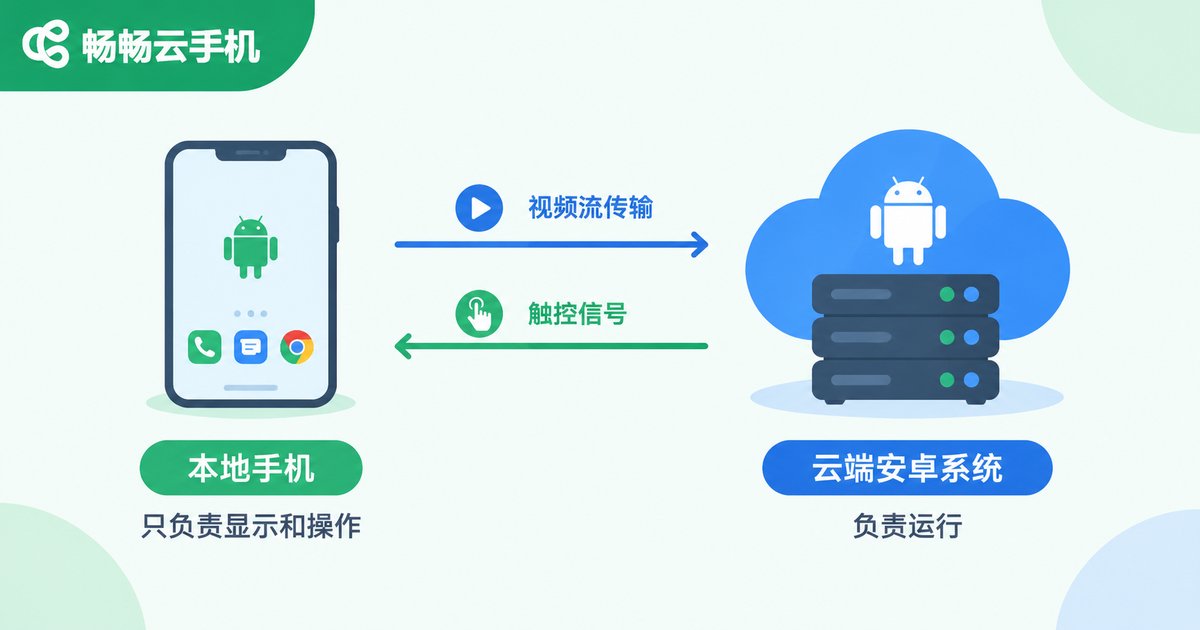
A cloud phone is essentially a virtual phone running in a data center, and the game is streamed to your screen as video. Its gaming performance comes down to four specifications:
1. CPU cores: determine loading speed and how well complex scenes are handled — too few cores mean slow loading and frame drops in team fights.
2. RAM: determines whether the game and other apps can run together; with low memory, background apps get killed.
3. GPU rendering power: sets the ceiling for graphics quality and frame-rate stability — the single most important spec for 3D games.
4. Network quality: cloud phone visuals travel over the network, so insufficient bandwidth or high latency will cause stuttering no matter how strong the hardware is.

Real Performance: Three Tiers, Three Game Genres
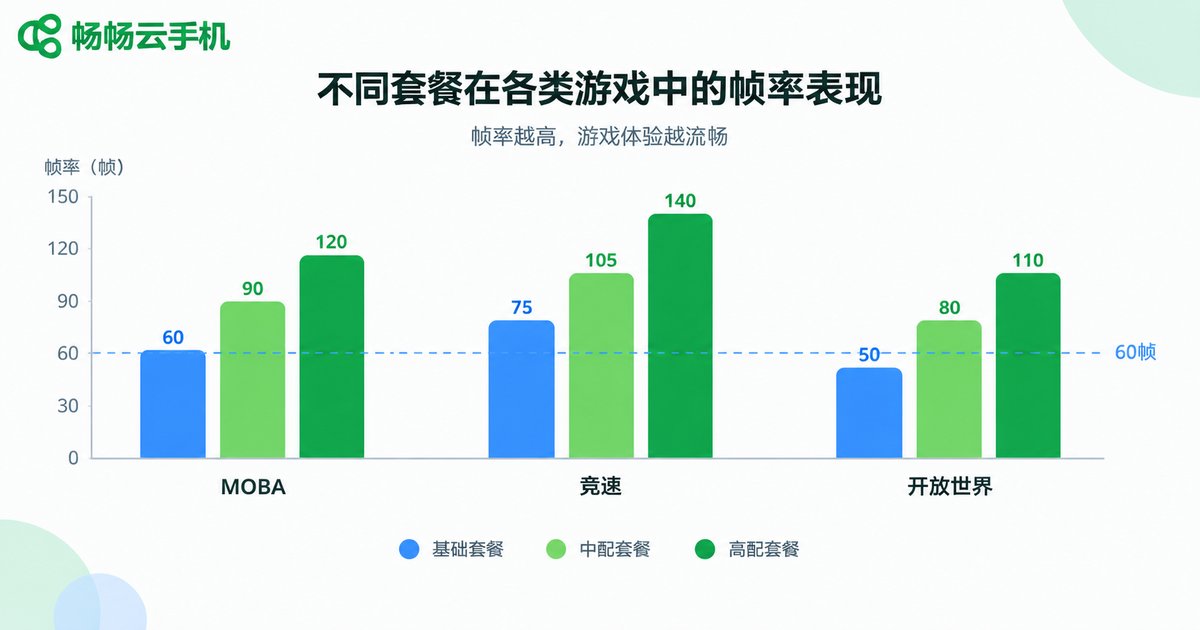
We tested three common cloud phone configuration tiers across three typical 3D game genres. The results below are reference frame rates at medium-low graphics settings:
| Plan Tier | Typical Specs | MOBA (5v5) | Racing | Open World |
|---|---|---|---|---|
| Basic | 2 cores / 3-4 GB RAM | 40-55 fps, mostly smooth | 30-45 fps, occasional dips | 20-30 fps, clearly laggy |
| Mid-tier | 4 cores / 6-8 GB RAM | 55-60 fps, stable | 45-60 fps, fairly smooth | 30-45 fps, acceptable |
| High-tier | 8 cores / 12+ GB RAM | 60 fps capped | 60 fps capped | 45-60 fps, playable at high settings |
The table makes one thing clear: a basic plan handles MOBA games without much trouble, but open-world titles drop to 20-30 fps and feel noticeably unresponsive. If those are your main games, step up to at least a mid-tier plan.
Three Real Weaknesses of Basic Plans in 3D Games
Based on real testing, basic plans show three main weaknesses in 3D games:
Weakness 1: graphics must be turned down. To preserve frame rates you often have to settle for medium-low settings, with visibly reduced lighting and effects.
Weakness 2: frame rates fluctuate in long sessions. Entry-level hardware has little headroom, so after an hour or two of continuous play, frame rates fluctuate more than when you first start.
Weakness 3: multi-instance is out of reach. A basic plan barely fits one 3D game in memory — running several instances for idle farming is unrealistic.
That said, if you only play a couple of MOBA matches or a quick race each day, a basic plan offers excellent value — there is no need to pay for a high tier you will not use.
How to Choose: A Three-Step Method
Step 1: look at your game genre. MOBA, card, and idle games work on a basic plan; racing and shooters need mid-tier; open-world and graphics-heavy titles need high-tier.
Step 2: look at your play time. One to two hours a day is fine on lower tiers; long sessions or heavy use call for higher specs.
Step 3: start low and test. Test the smoothness with the games you actually play, and upgrade only if it falls short — this keeps your budget where it matters.
Why We Recommend ChangChang Cloud Phone
Among cloud phone services, we recommend ChangChang Cloud Phone (ccloudphone) for three practical reasons:
Plans for every need: the official website offers multiple tiers, from budget-friendly entry plans that run MOBA-style 3D games smoothly to stronger configurations for demanding 3D titles — pick exactly what your games require.
Clear, smooth streaming: game video is specially optimized with stable latency control, so controls feel responsive and the picture stays sharp.
Zero learning curve: just open the official site ccloudphone.com, register, and start — the interface is simple enough for complete beginners.

In one sentence: a basic plan can run 3D games — how well depends on the game genre and your graphics expectations. Choose the tier that matches your needs, test before you commit, and spend your budget where it counts.
Frequently Asked Questions
Q: Will MOBA games lag on a basic cloud phone plan?
A: Usually not. MOBA titles are not hardware-hungry; a basic plan reaches 40-55 fps at medium-low settings, which is enough for everyday play. A stable, low-latency network is the prerequisite.
Q: Can a basic plan run open-world 3D blockbusters?
A: You can get into the game, but the experience is mediocre: around 20-30 fps at the lowest settings, with clear stuttering in combat. Choose a mid- or high-tier plan for these games.
Q: Does my local phone's hardware affect cloud phone frame rates?
A: Not much. The game runs on the cloud server; your local device only receives the video stream and sends inputs. Even old, low-end phones can play demanding games smoothly through a cloud phone — local hardware mainly affects video decoding efficiency.
Q: If I start with a basic plan, can I move to a higher configuration later?
A: Cloud phone plans are generally divided into configuration tiers. Check the plan details on the ChangChang Cloud Phone official website before purchasing and pick the tier that matches your games.
Q: What network do I need for 3D gaming on a cloud phone?
A: Aim for at least 10 Mbps download and latency under 50 ms. Wi-Fi beats mobile data, and the 5 GHz band is more stable than 2.4 GHz. The better your network, the closer the experience feels to a real phone.