How to Ensure Cloud Phone Data Security? Privacy Leakage Risks and Preventive Measures for Cloud Storage
Cloud Phone Data Security: Opportunities and Risks
Cloud phones extend our digital lives to the cloud, bringing the great convenience of breaking hardware limitations. However, storing data on remote servers also raises concerns among many users about privacy leakage risks. Understanding these risks and taking effective preventive measures is the prerequisite for using cloud phones with peace of mind.
Main Privacy Leakage Risks in Cloud Storage
When using a cloud phone, since data is no longer solely saved on local physical devices, it mainly faces the following security threats:
| Risk Type | Description | Potential Impact |
|---|---|---|
| Data Transmission Interception | Data intercepted by third parties during transmission between local and cloud | Account passwords, communication records leaked |
| Unauthorized Storage Access | Cloud provider insiders or hackers gain server access | Private photos, files stolen |
| Multi-tenant Data Crossover | Incomplete data isolation among users on the same physical server | Data misread or maliciously acquired by other users |
How to Prevent Cloud Phone Data Leakage?
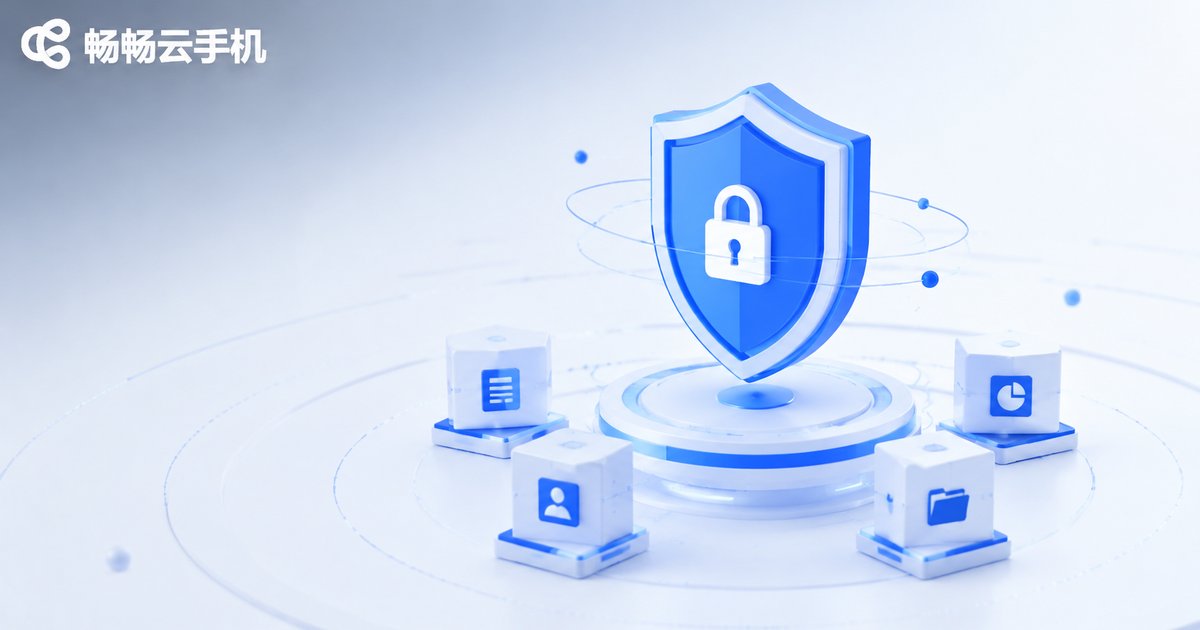
Ensuring cloud phone data security requires joint efforts from users and service providers. As a user, cultivate good security habits; as a provider, offer underlying architectural guarantees.
User-side Preventive Measures:
1. Set strong, unique passwords and enable Two-Factor Authentication (2FA).
2. Locally encrypt sensitive files before uploading to the cloud.
3. Regularly check the login device records of the cloud phone and log out abnormal sessions promptly.
Provider-side Preventive Measures:
1. Adopt end-to-end encryption technology to ensure data security during transmission and static storage.
2. Implement strict permission management and a zero-trust architecture.
3. Provide an isolated running environment to ensure absolute data isolation between users.
ccloudphone: Protecting Your Data Security Comprehensively
Among many cloud phone services, ccloudphone always puts user data security first. We build an indestructible cloud fortress for you through multiple technical means:
1. Military-grade Data Encryption: ccloudphone uses advanced encryption algorithms to fully encrypt transmission channels and cloud storage. Even if data is intercepted, it cannot be decrypted or read.
2. Completely Isolated Running Environment: Each ccloudphone instance runs in an independent virtual sandbox with strict underlying resource isolation, eliminating data crossover risks in multi-tenant environments.
3. Zero-log Privacy Commitment: We respect user privacy and do not record users' browsing history or operation logs, truly achieving "data owned by the user."
Frequently Asked Questions
Q: When using ccloudphone, can the service provider see my account password?
No. ccloudphone uses end-to-end encryption technology. All your operation data is encrypted before transmission, and the server only stores ciphertext. Staff cannot and are unable to decrypt your private data.
Q: If my local phone is lost, will the data in the cloud phone be leaked?
No. Cloud phone data is stored in secure cloud servers. The loss of the local phone does not affect cloud data security. You only need to log in to your ccloudphone account through another device, change the password, or log out the lost device.
Q: How does ccloudphone prevent hackers from attacking cloud servers?
We have deployed enterprise-grade firewalls, real-time Intrusion Detection Systems (IDS), and regular security vulnerability scans, combined with strict access control policies, to resist external attacks comprehensively from the physical layer to the application layer.