Which Cloud Phone Is Worth Your Money? Real User Reviews
Search "which cloud phone is best" on any forum, and you'll find a chaotic landscape: some posts dump spec sheets, others drop affiliate links with "this is the one," and a few write 3,000 words only to conclude "it depends."
For someone who actually wants to buy, this noise is worse than silence. So this article skips the spec tables, skips the fluff, and breaks things down across the three dimensions that actually matter.
First, What Does "Good" Even Mean?
Everyone defines "good" differently. For some, cheap is good. For others, zero lag is good. For a third group, running 20 instances simultaneously is good.
Let's break it into three measurable dimensions:
| Dimension | What to measure | Who cares most |
|---|---|---|
| Performance | Smoothness, app compatibility, latency | Gamers, power users |
| Stability | Uptime, disconnection rate, data security | AFK grinders, long-term projects |
| Value | Monthly/annual cost, feature set | Budget-conscious, casual users |
These three are in natural tension — high performance usually means higher cost, and low prices often compromise on stability. "Good" isn't an absolute; it's the best balance of performance, stability, and price within your budget.
Three Traps Most First-Time Buyers Walk Into
Trap 1: Spec Inflation
Many providers advertise "8 cores, 16 GB RAM" while actually running shared CPUs where multiple users fight for the same physical resources. During peak hours, your cloud phone might lag so badly you can't even swipe the home screen.
How to spot it: During your trial, run a 3D mobile game with real hardware requirements for 30+ minutes. If it stays smooth, the specs are real. If it doesn't, nothing else matters.
Trap 2: Unpredictable Latency
Cloud phone responsiveness depends entirely on network latency. Above 100ms, you'll feel a noticeable disconnect — tap something and wait half a second for a response. In gaming, that's fatal.
Latency is determined by data center location and bandwidth quality. Before committing, confirm whether the server is geographically close to you, or just try it and feel the delay yourself.
Trap 3: Ghost Customer Support
A cloud phone is a service, not a one-time purchase. When something breaks and you can't reach anyone, it's more infuriating than the bug itself.
One simple test: Send a support inquiry outside business hours (say, 10 PM or a weekend) and time how long it takes to get a meaningful reply. This test is more honest than any SLA promise.
Which Tier Fits Which User?
Instead of asking "which cloud phone is best," figure out which user category you fall into:
- Casual users (1-2 hours daily, mainly check-ins and light tasks): Entry-level 4-core 4 GB is plenty. Focus on price and baseline stability.
- Moderate users (4-8 hours daily, AFK dungeon grinding, 2-3 concurrent instances): Mid-tier or above. Prioritize multi-instance support and latency. Look for services that allow simultaneous instances.
- Heavy users (24/7 operation, game farming, 5+ concurrent instances): Performance first. Must go high-tier, with heavy emphasis on 24/7 stability and data security.
CCloudPhone offers multiple configuration tiers covering all three categories. In practice, the standard 4-core 4 GB setup handles mainstream mobile games smoothly, while the high-tier configurations are built for professional farming and multi-account operations.
An Insider's Buying Framework
If you read every cloud phone thread on the internet, one pattern emerges: the most common complaint isn't "missing feature X" — it's "it crashed while I was using it."
So the insider's priority list goes like this:
- Stability first — can it run 24/7 without crashing?
- Latency second — does it feel responsive?
- Price last — pick the best value among options that pass the first two tests.
This sounds simple, but in practice, many people get lured by low prices and ignore the first two. They end up with a "cheap but unusable" cloud phone — which is the most expensive kind.
Common Questions
Q: Do I need root access on a cloud phone?
Depends on your use case. Most daily AFK and gaming scenarios don't require root. But if you need to run automation scripts, modify game data, or deeply customize the system environment, root access becomes necessary. Check whether the provider supports it and whether there's an extra fee.
Q: What's the difference between a cloud phone and an emulator?
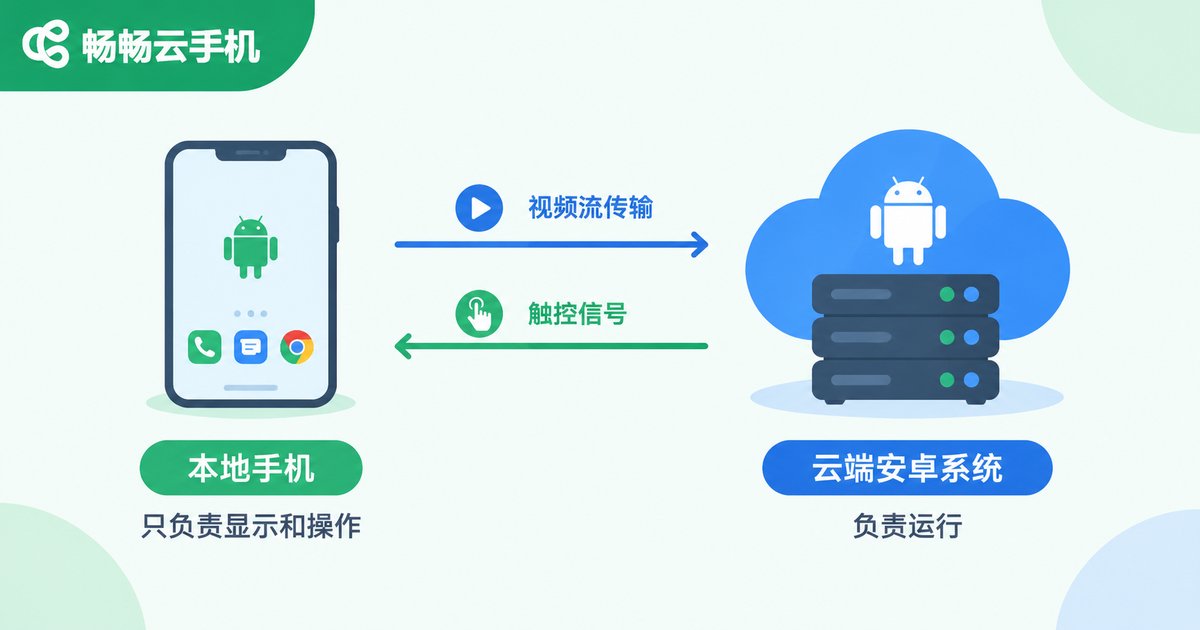
The key difference is where it runs. An emulator runs on your computer, consuming your CPU and RAM — shut down your PC, and it stops. A cloud phone runs on a remote server, uses zero local resources, and keeps running even with your computer off. If you just occasionally play mobile games on PC, an emulator works. If you need 24/7 AFK, a cloud phone is the only option.
Q: Is my data secure?
This is the most sensitive topic around cloud phones. Two things matter most: whether the provider offers isolated storage (your data physically separated from other users), and whether you can back up and wipe your data at any time. During your trial, check how transparent the privacy policy and data deletion process are.
The Bottom Line
"Which cloud phone is best?" doesn't have a universal answer — but it does have a universal method: define your usage intensity and core needs, then filter using the "stability > latency > price" priority.
Don't let low prices pull you off course, and don't blindly chase the highest specs. The one that fits you is the one that's good.