What is Cloud Phone VM? Performance & Independence Guide
What Exactly Is a Cloud Phone Virtual Machine?
Many people conflate "cloud phone" with "virtual machine," but they're different concepts. Precisely, cloud phones use virtualization technology internally, but a cloud phone is not a virtual machine.
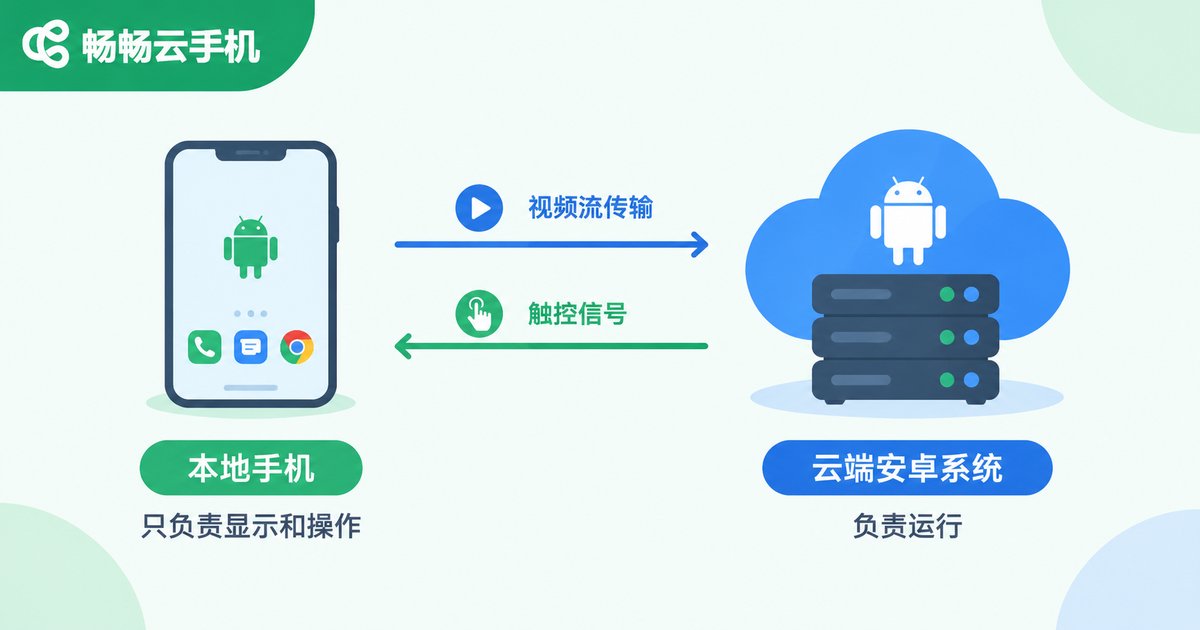
Each ChangChang Cloud Phone instance is essentially an Android system running on cloud ARM servers. It's implemented through containerization or virtualization, but it runs a real Android system — not a simulated environment.
Three Virtualization Technology Routes
| Route | Principle | Advantage | Disadvantage |
|---|---|---|---|
| Containerization | Shares host kernel, isolates user space | Fast startup, low resource usage | Slightly weaker isolation |
| VM | Full hardware virtualization, independent kernel | Strongest isolation | Slow startup, high resource usage |
| ARM Translation | Translates ARM instructions on x86 | Can use x86 servers | High performance loss |
ChangChang Cloud Phone primarily uses containerization on ARM-native servers — Android runs directly on ARM chips without instruction translation, matching real device performance.
Performance: Is It Enough?
CPU Performance
ChangChang Cloud Phone runs on ARM-native servers. CPU performance depends on your chosen tier:
| Tier | CPU | Use Case | Performance Reference |
|---|---|---|---|
| Entry | 2 cores | Light app use | Equivalent to mid-low real device |
| Standard | 4 cores | Daily AFK, social media | Equivalent to mid-range real device |
| High-Performance | 8 cores | Heavy gaming, intensive testing | Equivalent to flagship real device |
Memory & Storage
| Config | RAM | Storage | Multi-tasking |
|---|---|---|---|
| Entry | 2GB | 16GB | 3-5 apps simultaneously |
| Standard | 4GB | 32GB | 8-10 apps simultaneously |
| High-Performance | 8GB | 64GB | 15+ apps simultaneously |
Network Performance
ChangChang Cloud Phone uses data center dedicated lines — latency and bandwidth outperform typical home networks. App network requests from the cloud phone may be faster than your local device.
Independence: How Independent Is Each Instance?
This is the core value of cloud phone virtualization — each instance is fully independent:
| Independence Dimension | Description | Practical Value |
|---|---|---|
| System | Each instance has a complete Android system | No mutual interference |
| Data | Data fully isolated between instances | Secure anti-association |
| Device Info | Independent IMEI, Android ID, MAC | Platforms can't associate |
| Network | Different IPs assignable | Anti-IP association |
| Runtime | One crash doesn't affect others | Stable and reliable |
This independence is achieved through container-level isolation. Each instance runs in its own container with independent filesystem, process space, and network stack. From an app's perspective, it runs on an independent physical phone.
Cloud Phone Virtualization vs. Traditional VMs
| Comparison | ChangChang Cloud Phone | Traditional VM (Emulator) |
|---|---|---|
| Architecture | ARM native | x86 translating ARM |
| Performance Loss | Almost none | 20-40% |
| Device Info | Independent real info | Simulated, detectable |
| App Compatibility | Near real device | Frequent issues |
| Multi-Instance | Dozens per server | Limited by computer performance |
| 24/7 Operation | Naturally supported | Computer must stay on |
FAQ
Q: Does cloud phone virtualization affect app operation?
No. ChangChang Cloud Phone uses ARM-native execution — the app environment is identical to a real device. All apps install and run normally without emulator compatibility issues.
Q: How many cloud phones can one physical server run?
Depends on server specs and per-instance tier. A high-spec ARM server typically runs 20-50 standard-config cloud phone instances simultaneously.
Q: Do cloud phone instances affect each other?
No. Container-level isolation ensures complete independence — CPU, memory, and network are all isolated. One instance crashing or getting malware doesn't affect others.
Q: Does virtualization reduce performance?
Containerization has minimal performance loss (typically under 5%), negligible. ChangChang Cloud Phone runs on ARM-native servers with performance approaching same-spec real devices.
Q: Can I choose the virtualization method myself?
ChangChang Cloud Phone automatically selects the optimal virtualization approach based on your use case. Users don't need to worry about underlying technical details — just choose your tier and let the platform handle the rest.
Final Thoughts
Cloud phone virtualization is essentially running multiple independent Android system instances on cloud servers through containerization. Each instance performs near real-device level, with independence far exceeding emulators, plus elastic scaling and 24/7 operation.
Understanding these underlying principles helps you better judge whether cloud phones fit your business needs. For users requiring multi-instance, anti-association, and continuous operation, ChangChang Cloud Phone's virtualization solution offers the best cost-performance ratio.